Understanding money Worksheets for 4-Year-Olds
3 filtered results
-
From - To
Our "Understanding Money" worksheets for 4-year-olds help introduce the foundational concepts of money in a fun and engaging way. Through colorful, interactive activities, young learners will become familiar with identifying coins and bills, counting money, and understanding its basic uses. These worksheets are designed to make learning about money an enjoyable experience while building essential early math skills. Perfect for preschool and at-home learning, our worksheets foster confidence and curiosity, setting the stage for financial literacy in young minds. Visit us to download and print a variety of free worksheets that make learning about money easy and fun for your child.
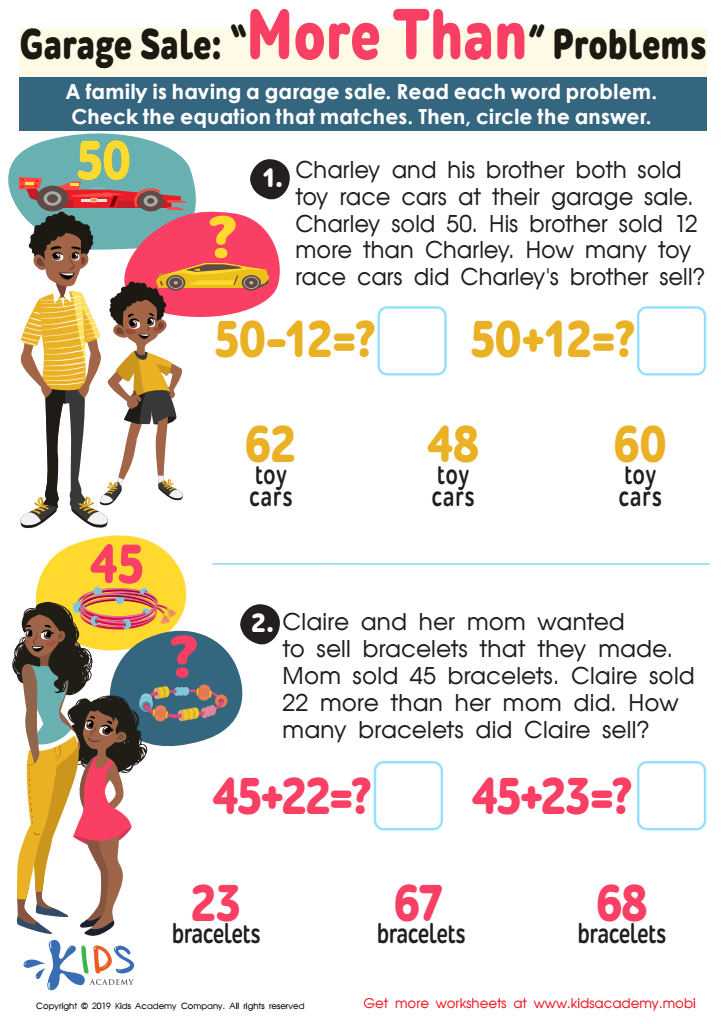
Garage Sale - More yhan Worksheet
 Assign to My Students
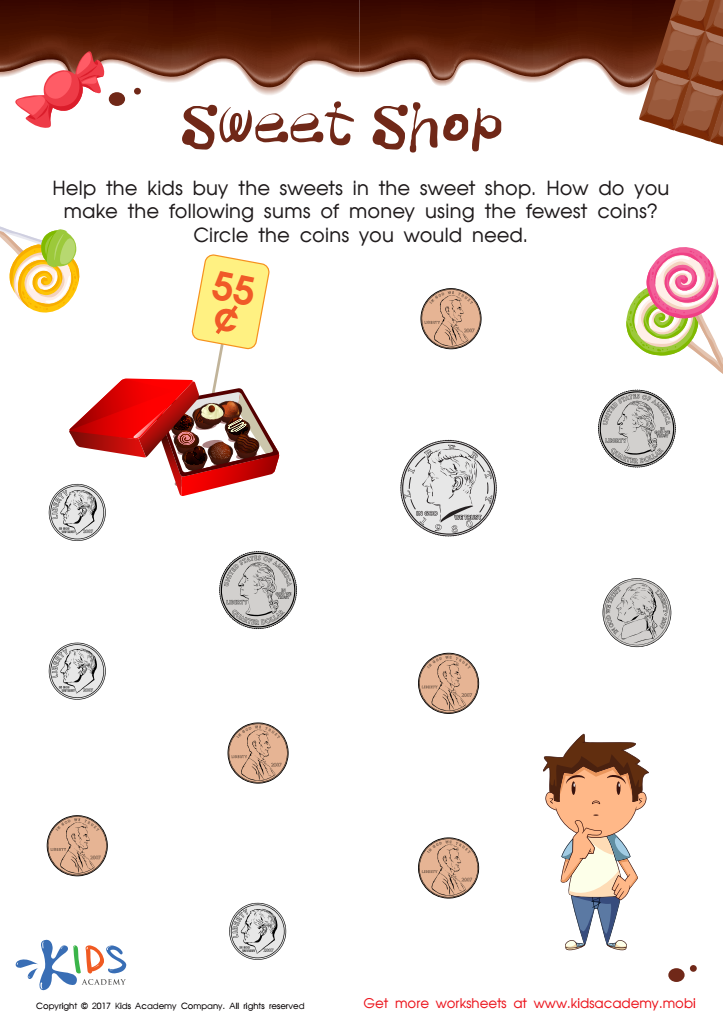
Sweet Shop – Counting Coins Worksheet
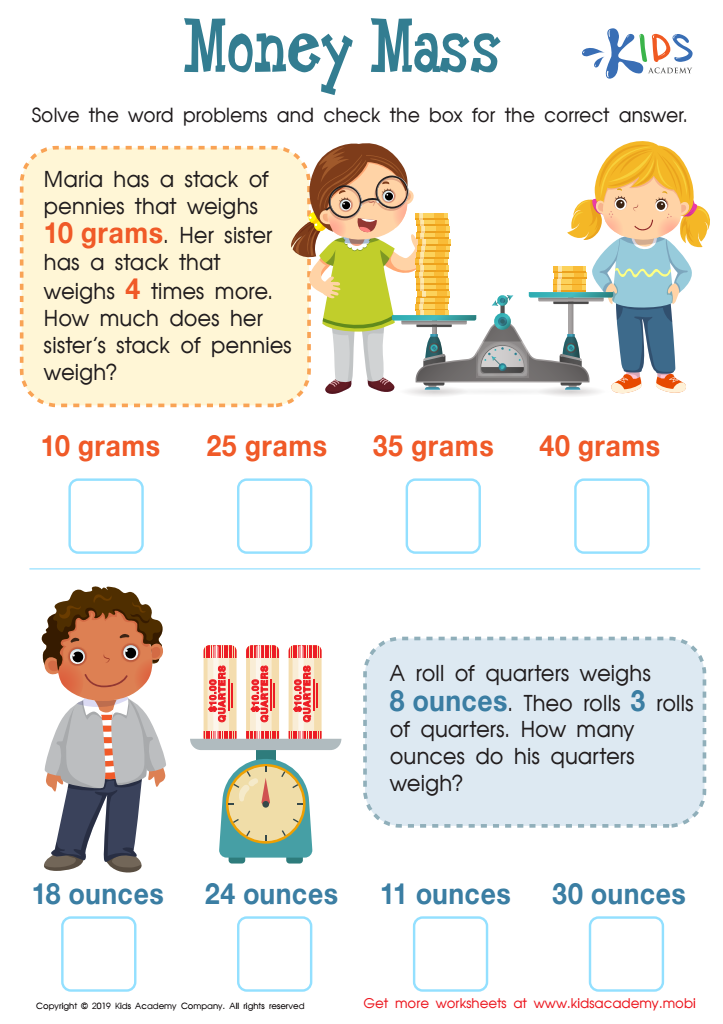
Money Mass Worksheet







Understanding money at an early age can have a significant impact on a child's future financial literacy and overall life skills, making it crucial for parents and teachers to address these concepts with 4-year-olds. Introducing money helps children develop basic math skills such as counting, addition, and subtraction. When children recognize coins and bills, they practice numerical recognition and value differentiation, foundational skills for more advanced math later on.
Additionally, understanding money fosters critical thinking and decision-making skills. Early experiences with money teach children about choices, needs versus wants, and delayed gratification, helping them develop patience and the understanding that savings can lead to future benefits. These lessons are integral for cultivating responsible financial behavior and can prevent issues like impulsive spending when children grow older.
Furthermore, engaging children in discussions about money instills values like generosity and gratitude. Learning about money through activities such as pretend play or real-life shopping scenarios makes the abstract concept tangible, promoting curiosity and enthusiasm. Parents and teachers, by incorporating simple, age-appropriate money lessons into everyday activities, set the stage for a future generation that is financially savvy, empathetic, and well-prepared for real-world challenges. Importantly, such early education creates a strong foundation for lifelong learning and healthy financial habits.








