
Understanding patterns Worksheets for 4-Year-Olds
12 filtered results
Difficulty Level
Grade
Age
-
From - To
Subject
Activity
Standards
"Understanding Patterns Worksheets for 4-Year-Olds" by Kids Academy offer engaging activities for young learners to develop critical thinking. These colorful and easy-to-follow worksheets are designed to sharpen your child’s ability to recognize, predict, and create patterns, nurturing their early math and cognitive skills. Perfect for preschoolers, each printable sheet provides a fun and interactive way to explore sequences, shapes, and colors. Foster your child's analytical abilities and prepare them for future academic success while they play and learn with our expertly crafted pattern worksheets! Explore our collection and watch your child thrive in a foundational learning environment.
Favorites
With answer key
Interactive
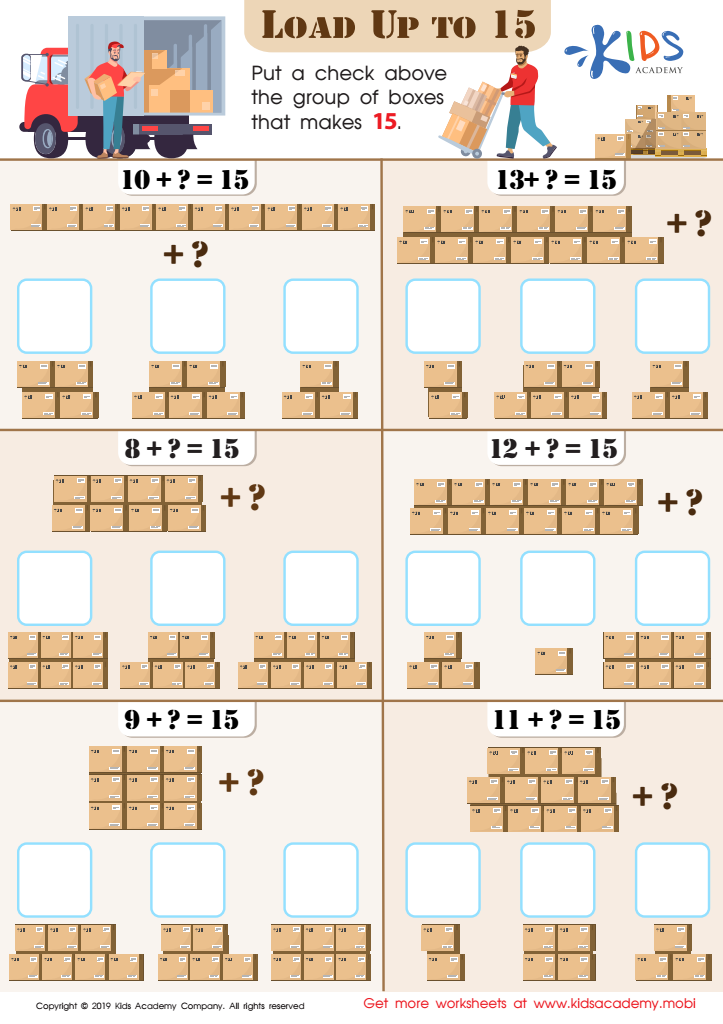
Load up to 15 Worksheet
Your students can practice addition and counting skills with this worksheet. Each equation has 6 boxes to count. Check the group that equals 15 to complete the exercise. Help your kindergartners if they need it.
Load up to 15 Worksheet
Worksheet
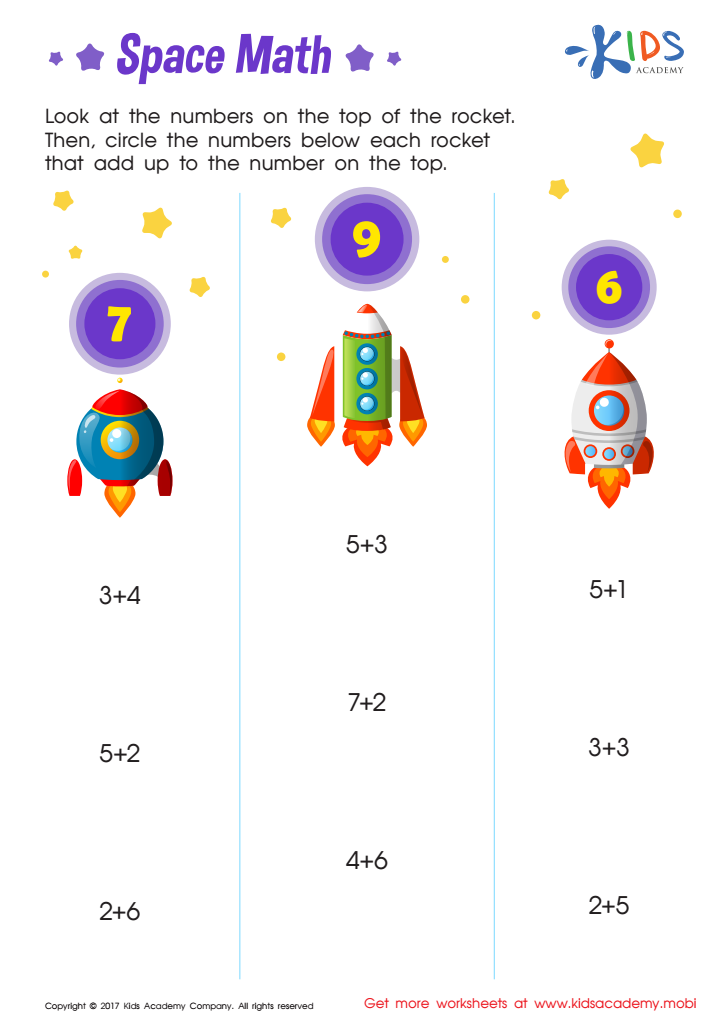
Addition: Space Math Worksheet
Fun and engaging space-themed practice with vivid pictures and matching numbers will make learning more meaningful. Take their math skills out of this galaxy today with Kids Academy!
Addition: Space Math Worksheet
Worksheet
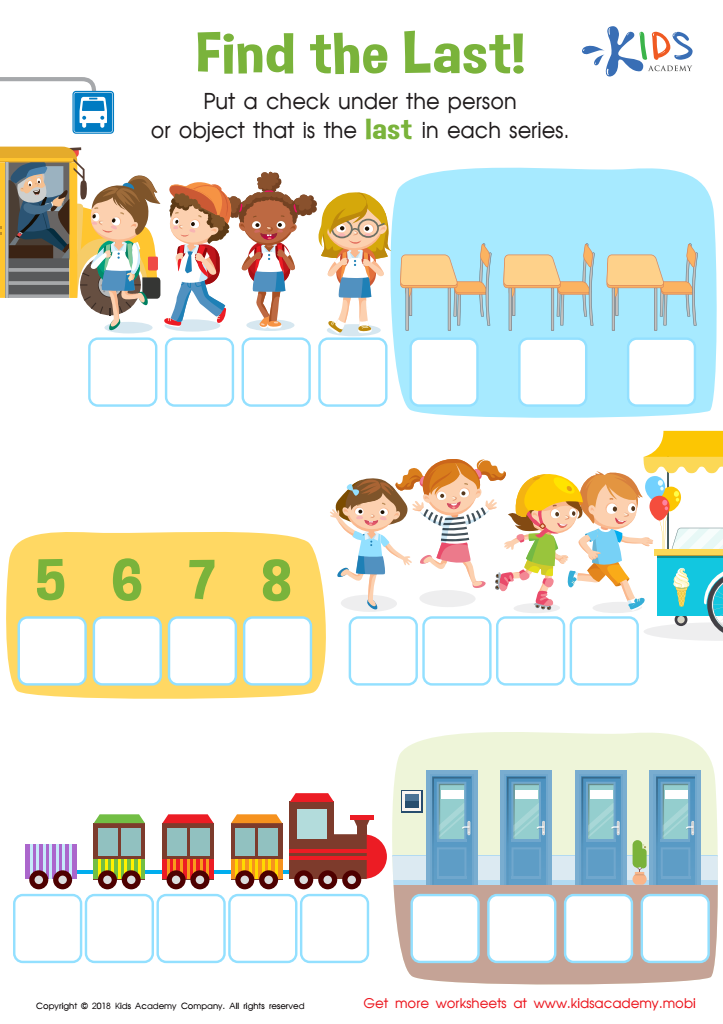
Find the Last! Worksheet
Teach young students about sequence words with this free worksheet. Have them look at sets of people or objects and choose the one that is last. Engage them further by having them describe or act out their day, and what happens last? Enjoy this printout and have fun!
Find the Last! Worksheet
Worksheet
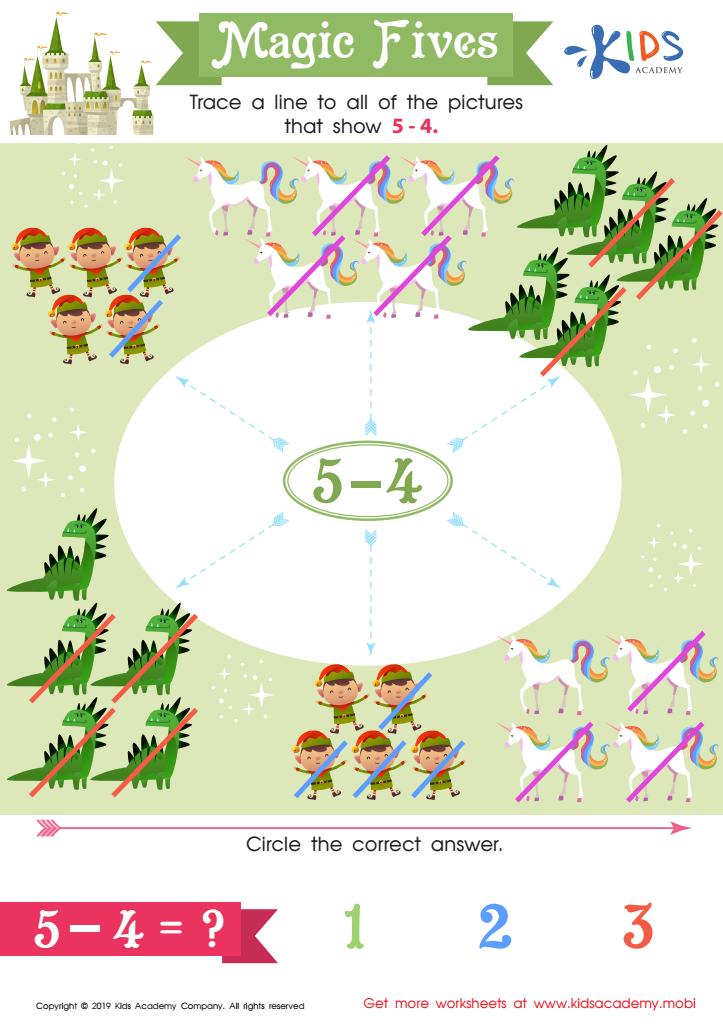
Magic Fives Worksheet
Help your students identify the objects & people in the worksheet. Point to the equation 5 -4 in the center, then get them to count the items and trace a line connecting those that add up to 5 - 4.
Magic Fives Worksheet
Worksheet
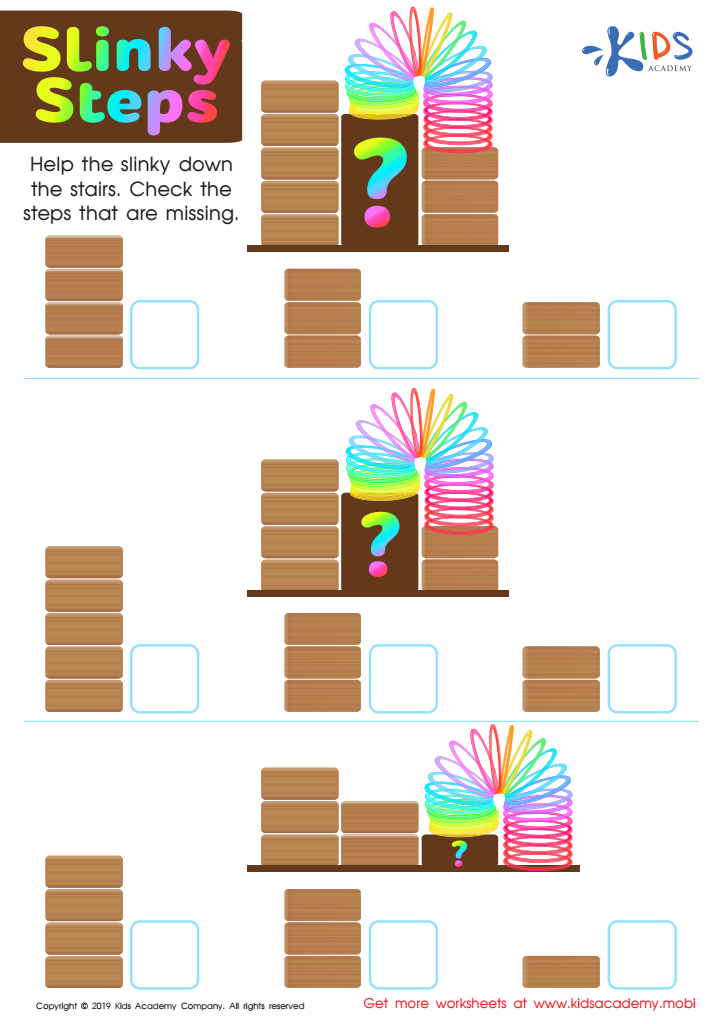
Slinky Steps Worksheet
Help your kids improve their counting and math skills with this fun worksheet! Challenge them to help the slinky make its way down the stairs by selecting and checking the missing steps. Your assistance is key - get the printout and let them practice. It's the best way to becoming better in maths!
Slinky Steps Worksheet
Worksheet
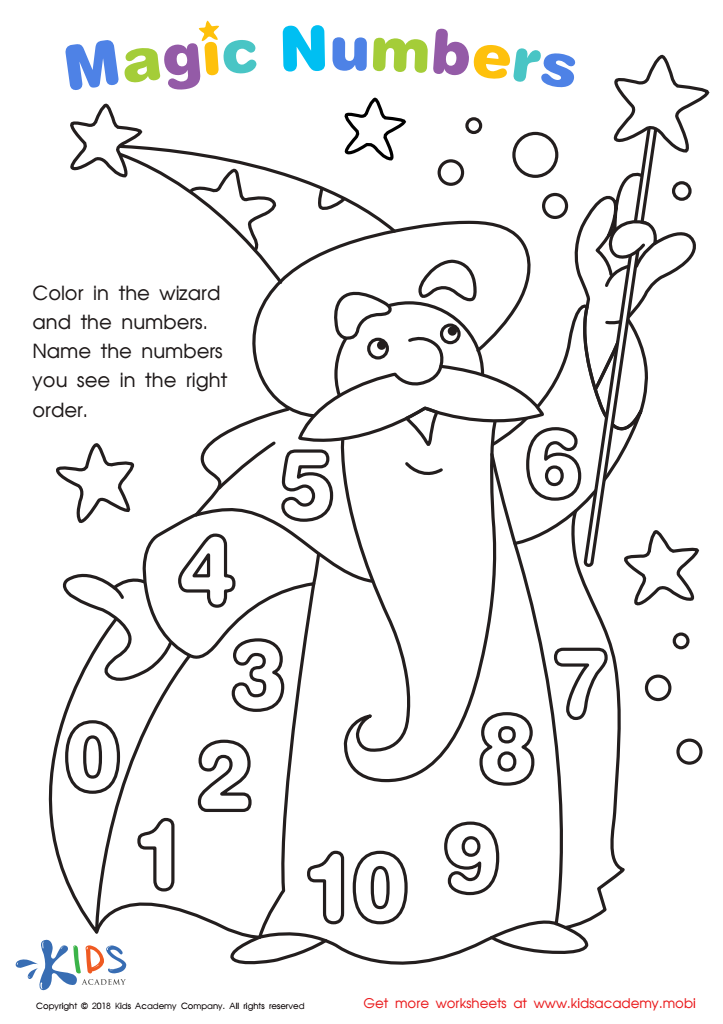
Magic Numbers Worksheet
Does your child have an interest in magic? Here's something they'll love - a coloring sheet featuring a wizard! Ask them to name the numbers from smallest to highest, then let them pick colors to color in the wizard and the numbers. It's sure to excite them!
Download (PDF)
 Assign to My Students
Assign to My Students
Magic Numbers Worksheet
Worksheet
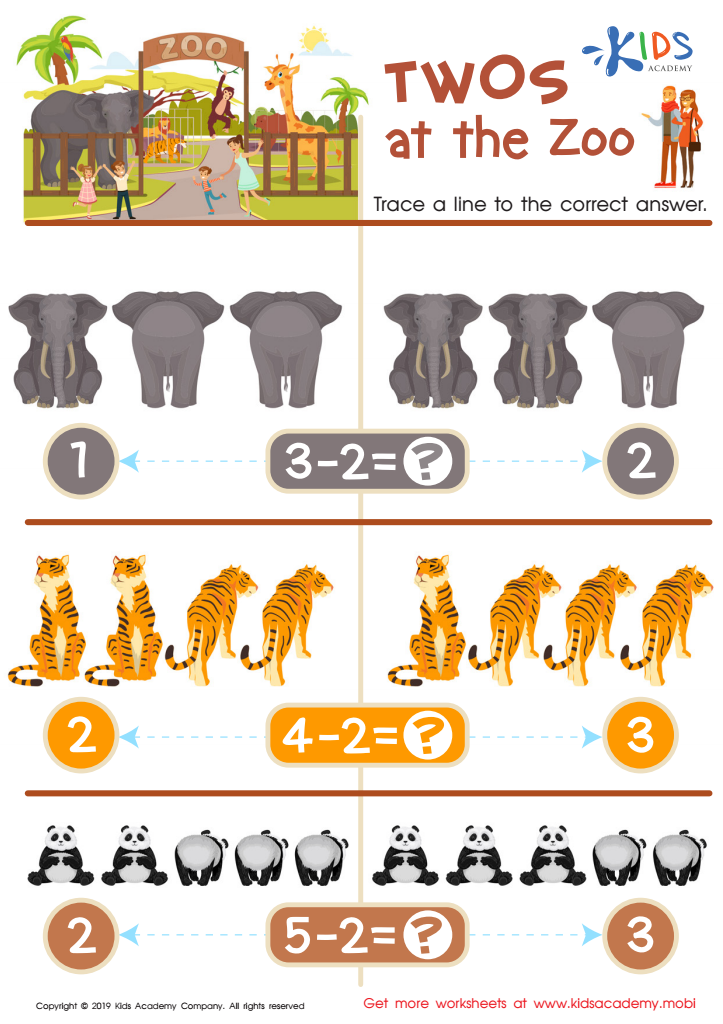
Twos at the Zoo Worksheet
At the zoo, your kids can have fun with animals. Ask them to name their favorite ones and identify them in the printout. Count animals in each group together, then help your kids solve the equations and trace a line to the answer. It's an enjoyable way to combine learning and exploration!
Twos at the Zoo Worksheet
Worksheet
Join Kids Academy for Free
Who is primarily going to use this learning content?








Understanding patterns is a foundational skill for 4-year-olds that benefits both parents and teachers to nurture. Patterns are fundamental to mathematical thinking, which is crucial for success in subjects like math and science later on. Recognizing and predicting patterns helps young children develop critical thinking and problem-solving skills. These abilities are not just limited to academics but also apply to everyday situations, fostering better cognitive development.
For parents, encouraging pattern recognition can be as simple as observing and discussing patterns in routines, clothing designs, or nature walks. This form of interaction enhances the child's learning environment beyond the classroom and builds a strong educational foundation at home.
For teachers, integrating pattern activities into lessons can make learning engaging while simultaneously building analytical skills. Activities such as sorting objects by color, shape, or size, and creating simple repeating sequences with beads or blocks, can significantly help. Understanding patterns also aids in language development by helping children grasp the predictable structure of sounds and sentences.
By caring about the development of pattern recognition in 4-year-olds, parents and teachers lay the groundwork for higher-order thinking skills. This early investment pays dividends by preparing children for more complex academic tasks and fostering a lifelong ability to think critically and creatively.








