
Underwater animal identification Worksheets for 4-Year-Olds
3 filtered results
Difficulty Level
Grade
Age
-
From - To
Subject
Activity
Standards
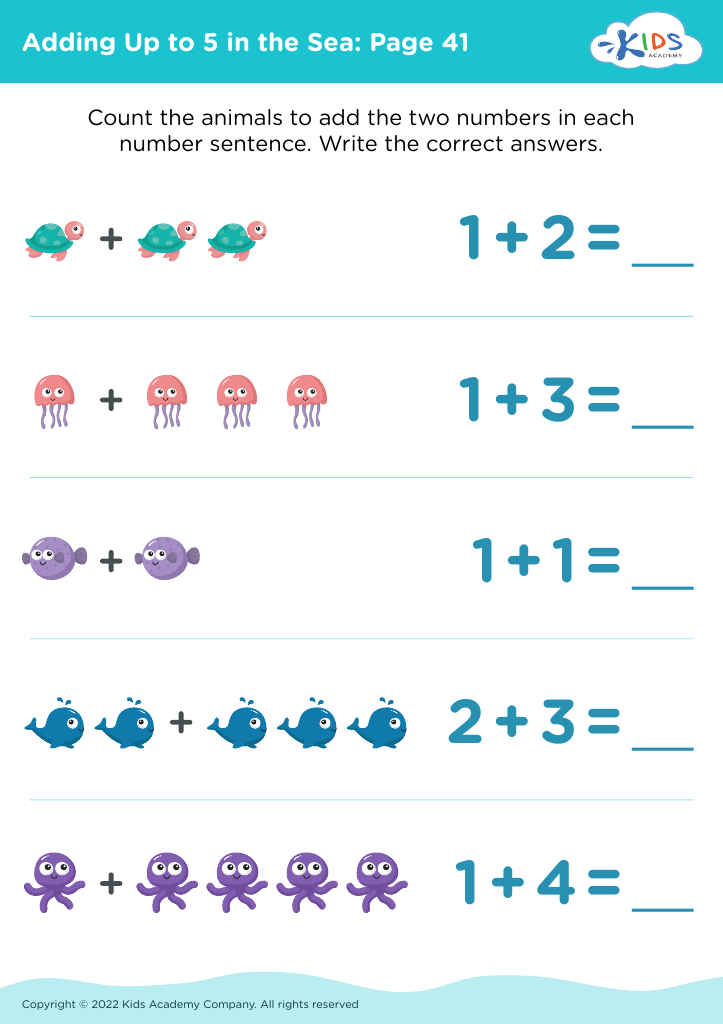
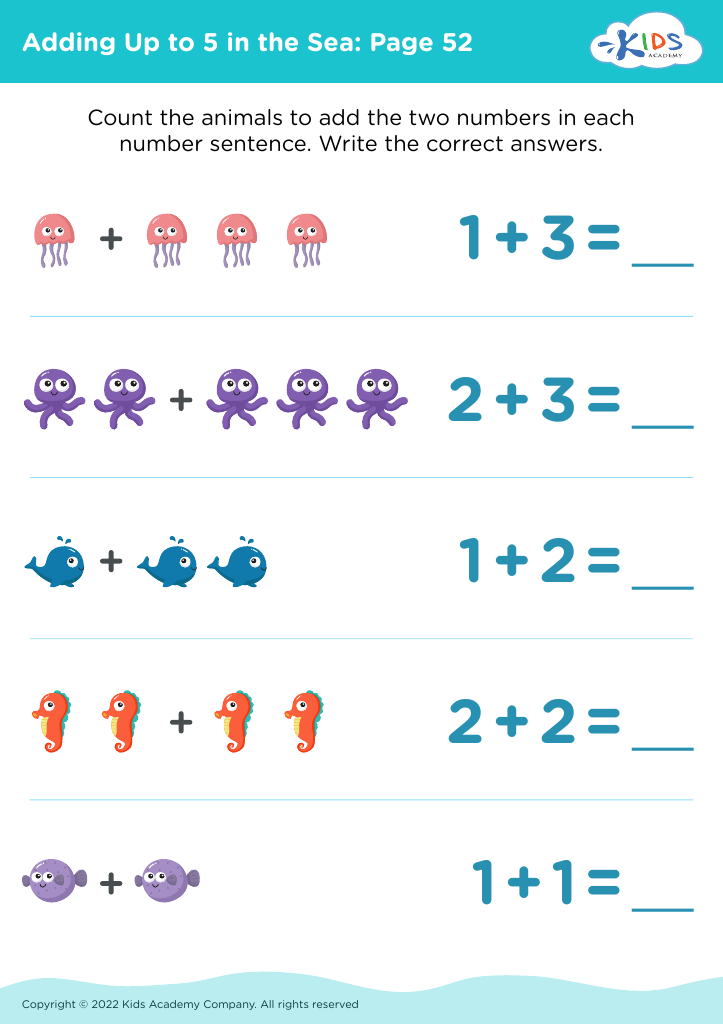
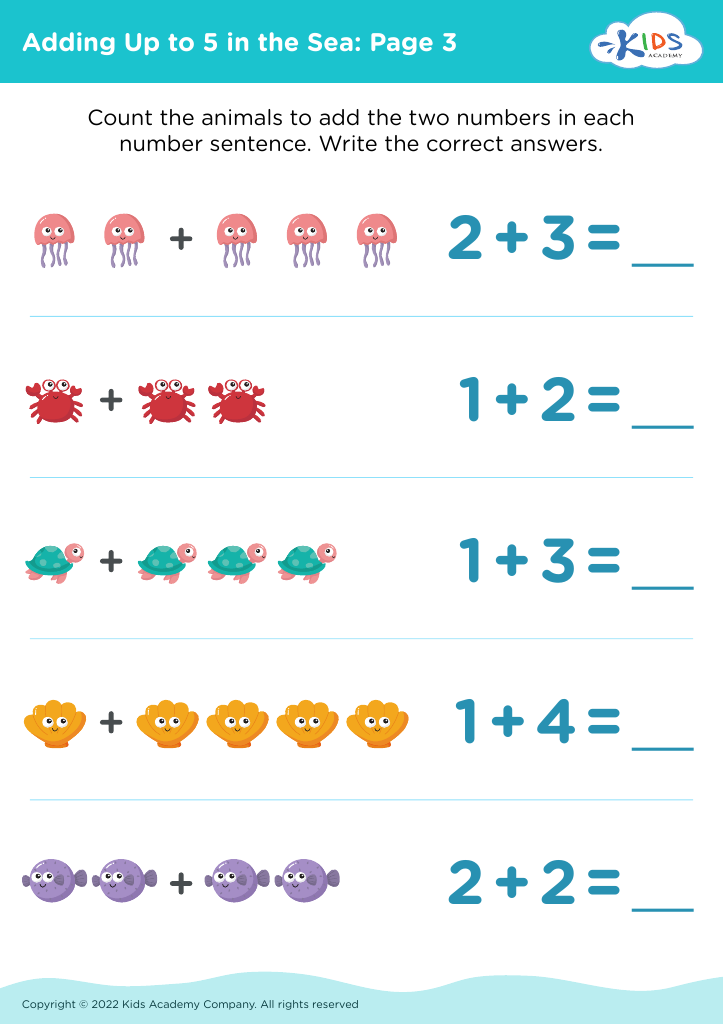
Welcome to our Underwater Animal Identification Worksheets for 4-Year-Olds! These engaging and interactive worksheets are designed to introduce young learners to the fascinating world of marine life. Our colorful activities help children develop essential skills such as observation, vocabulary, and problem-solving as they identify various underwater animals. Perfect for use in the classroom or at home, these worksheets provide a fun and educational experience that sparks curiosity and encourages a love for nature. Dive into learning with vibrant illustrations and age-appropriate tasks that will keep your preschoolers excited about exploration and discovery in the ocean! Get started today!
Favorites
With answer key
Interactive
Join Kids Academy for Free
Who is primarily going to use this learning content?








Teaching four-year-olds about underwater animal identification is important for various reasons. First, it stimulates curiosity and sparks a love for learning about the natural world. Young children exhibit a natural interest in animals, and exploring underwater life adds an element of wonder to their education. This inquiry can foster a lifelong appreciation for marine biodiversity.
Second, identifying underwater animals enriches children’s vocabulary and language skills. As they learn the names and characteristics of different species, they enhance their communication abilities, which is crucial in early development. Engaging children in discussions about these animals also fosters social skills.
Additionally, understanding underwater ecosystems encourages environmental awareness from a young age. Teaching children about the importance of water conservation and the impact of pollution fosters a sense of responsibility. It lays the groundwork for future stewardship of their environment, making them more likely to care about conservation efforts as they grow.
Finally, engaging in fun activities related to underwater animals, such as crafts, songs, or storytelling, supports cognitive development by enhancing memory and critical thinking skills. Overall, early exposure to this topic enriches both academic and personal growth in young children.








