Weather Vocabulary Worksheets for 4-Year-Olds
4 filtered results
-
From - To
Discover our engaging Weather Vocabulary Worksheets tailored for 4-year-olds! Designed to boost early learning skills, these fun and interactive worksheets introduce young children to essential weather-related terms through vivid illustrations and simple exercises. Your child will enjoy recognizing and naming common weather conditions, enhancing their vocabulary and comprehension. Perfect for preschoolers, these worksheets not only promote language development but also foster a fascination for the natural world. Explore our collection dedicated to making learning about weather an exciting adventure for your child. Ideal for at-home activities or supplemental classroom resources. Start exploring today!
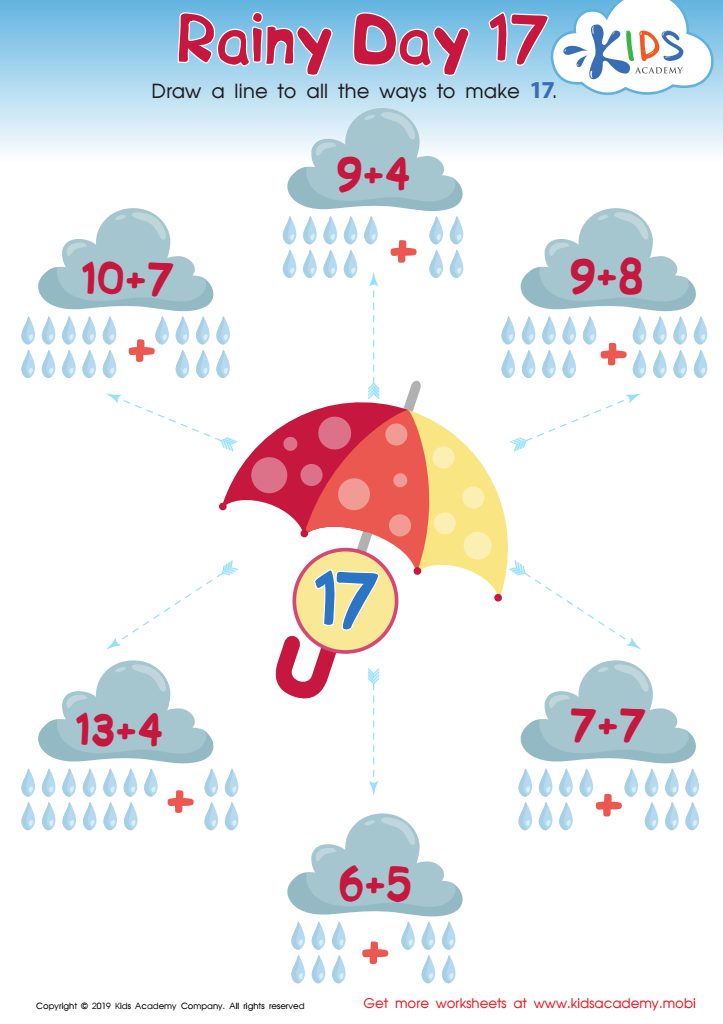
Rainy Day 17 Worksheet
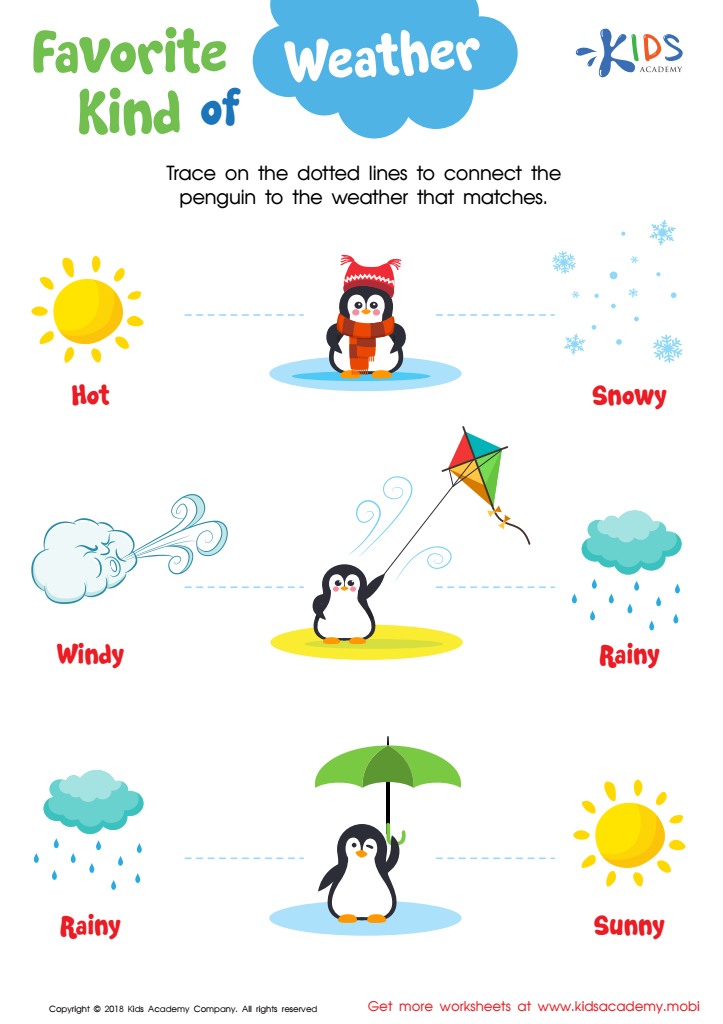
Favorite Kind of Weather Worksheet
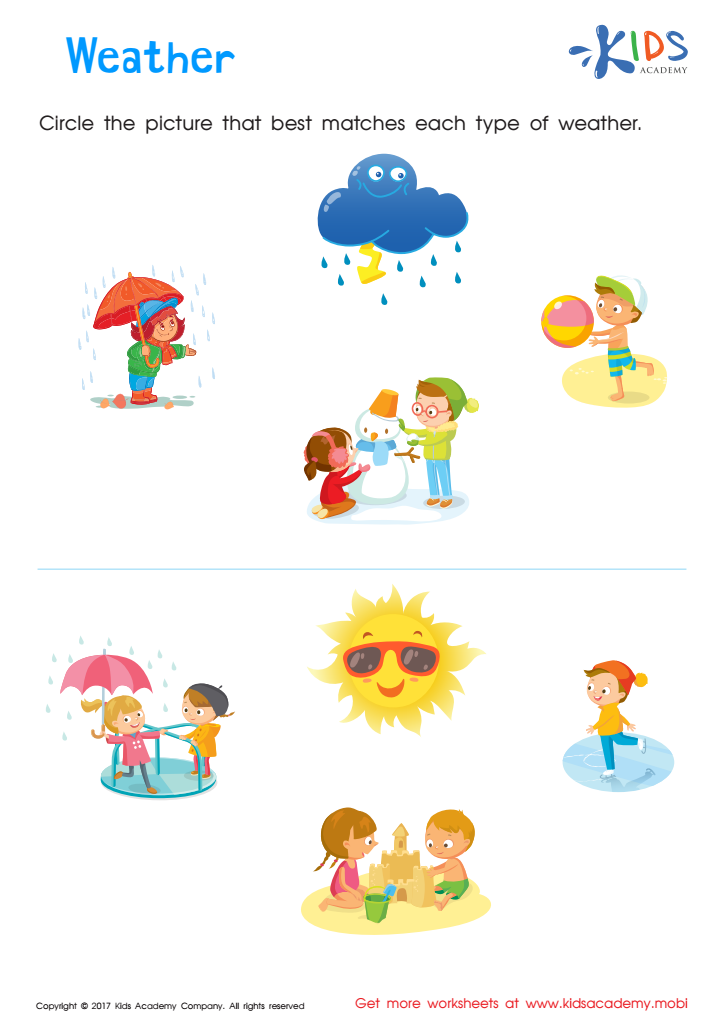
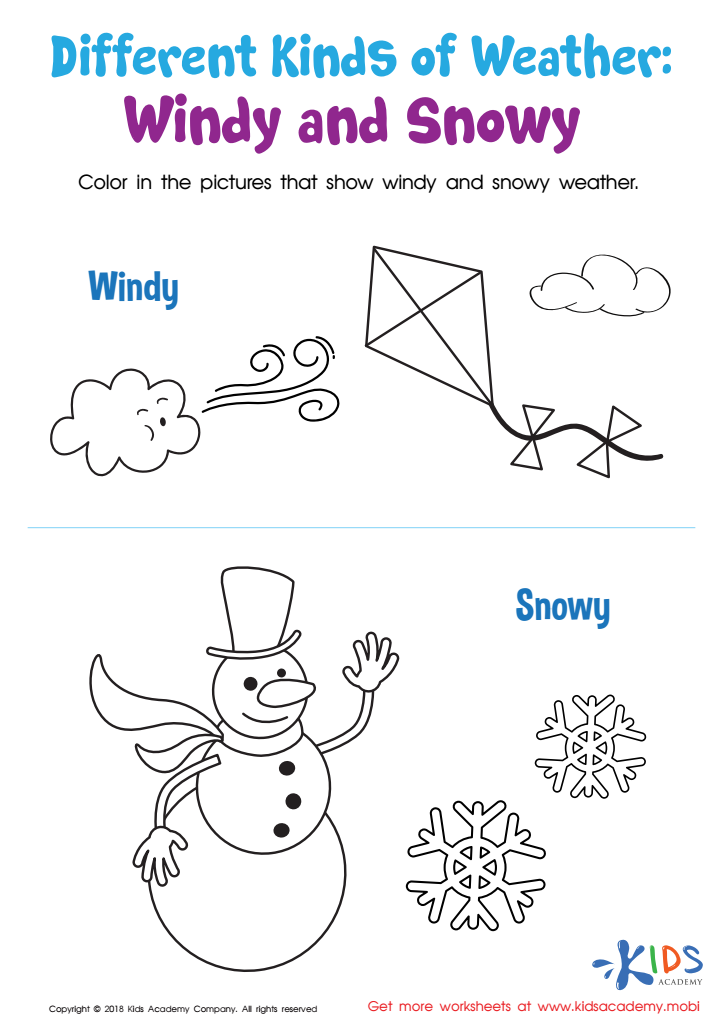
Different Kinds of Weather: Windy and Snowy Worksheet
 Assign to My Students








Understanding weather vocabulary is essential for young children, as it enhances their ability to grasp and communicate concepts related to their immediate surroundings. At 4 years old, children are naturally curious about the world, and weather is a daily phenomenon that they experience. When parents and teachers introduce basic weather terms—like sunny, rainy, windy, or cloudy—they empower children to describe the environment accurately, fostering higher language development.
Early comprehension of weather conditions is also a practical skill; knowing whether it's cold or hot outside helps in deciding appropriate clothing and engaging safely in activities. This awareness can increase a child's sense of autonomy and responsibility, given that they start recognizing how weather impacts their day-to-day routine. For instance, understanding that rainy days might require a raincoat or that sunny days necessitate wearing a hat teaches them about preparation and safety.
Moreover, early weather education can segue into foundational scientific concepts, piquing a child's interest in environmental science and nature. Discussing why it rains, how the wind blows, or why the sun shines opens up dialogues for those fundamental "Why?" questions they love to ask.
Overall, integrating weather vocabulary aligns with holistic educational goals, blending language skills, emotional and social development, and early scientific inquiry crucial for their growth.








