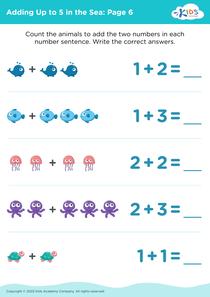
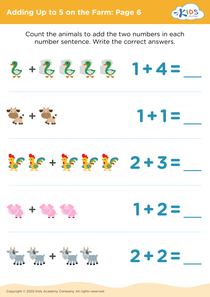
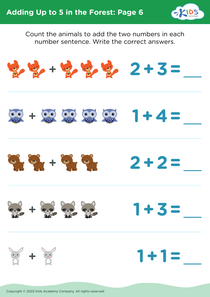
Basic addition practice Adding at the Zoo Worksheets for 4-Year-Olds
3 filtered results
-
From - To
Welcome to our "Basic Addition Practice: Adding at the Zoo Worksheets" designed specifically for 4-year-olds! These fun and engaging worksheets invite young learners to explore addition through adorable zoo-themed illustrations. Your child can count animals and complete simple addition exercises that support essential early math skills. Each worksheet encourages hands-on learning, fostering curiosity and a love for mathematics. Our interactive approach ensures that learning is both enjoyable and effective. Perfect for preschool or home use, these worksheets provide a fun way for your little one to build a solid foundation in basic math concepts. Join us in making math exciting today!
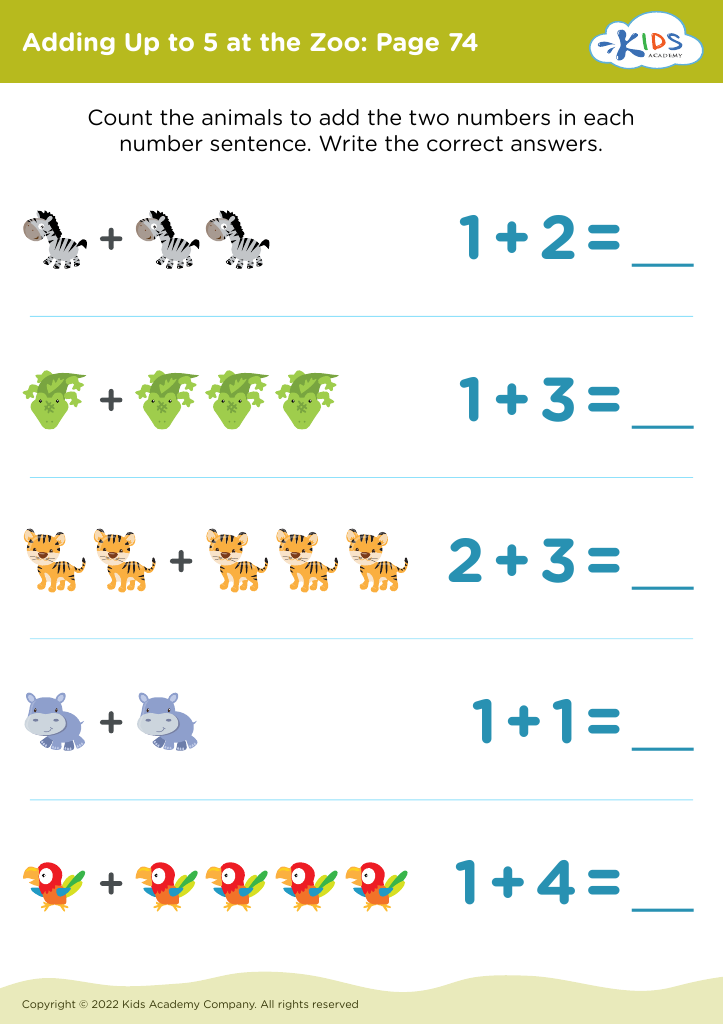
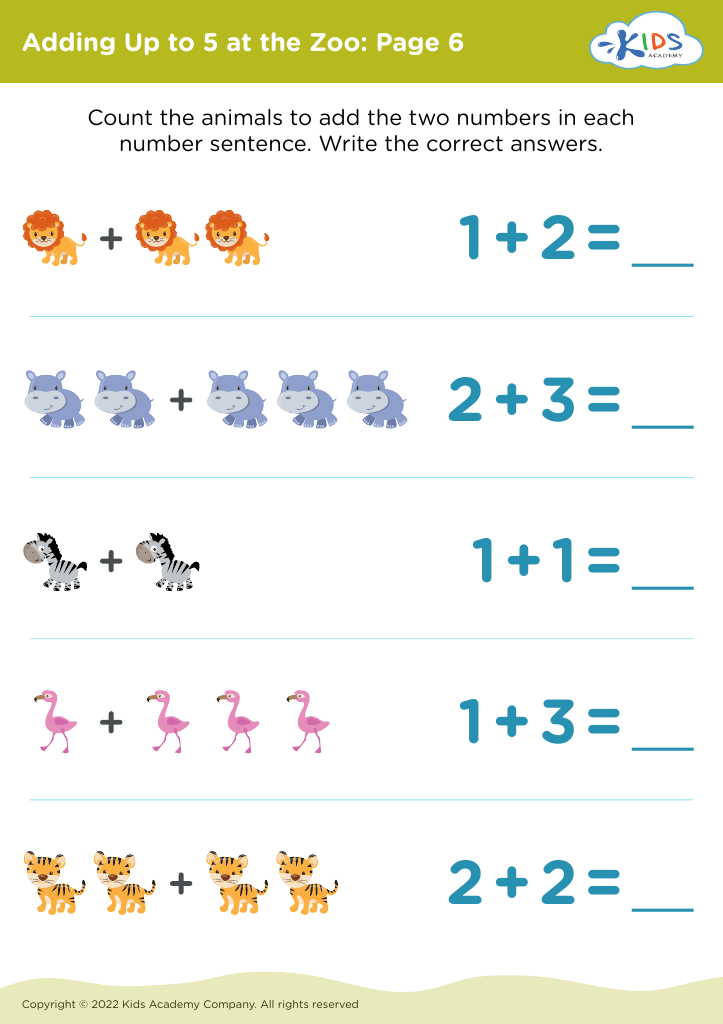
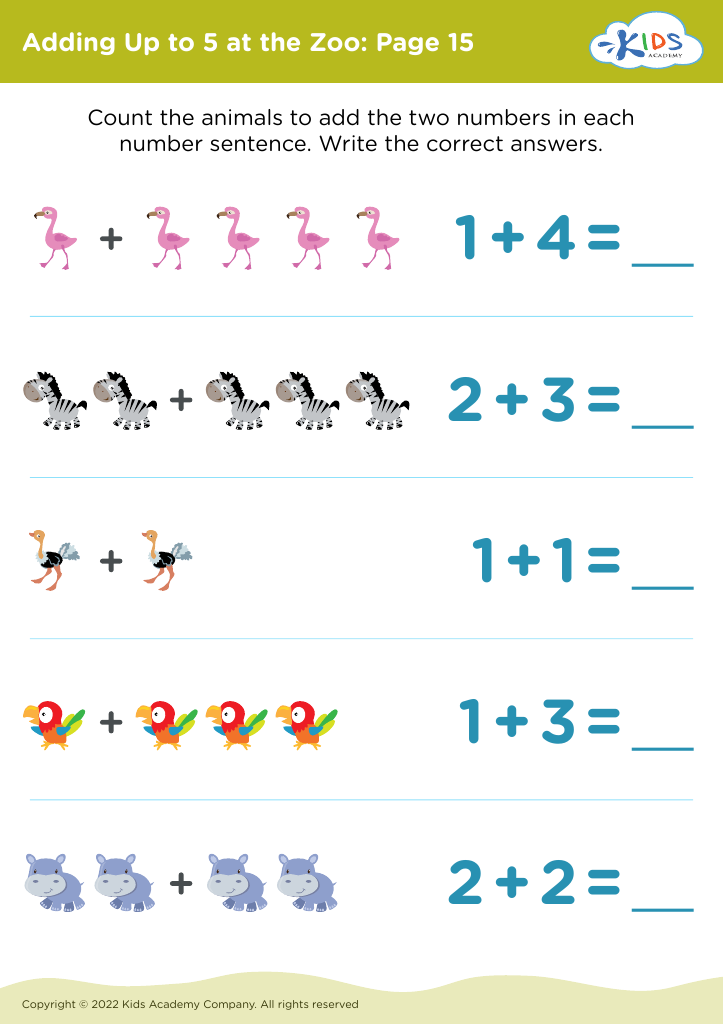



Basic addition practice, like the "Adding at the Zoo" activity for 4-year-olds, is crucial for early childhood development for several reasons. First, it introduces foundational math concepts in a fun and engaging manner that holds children's interest. Using relatable themes, such as animals at the zoo, makes learning more meaningful and helps children connect math to the real world, thereby boosting their understanding and retention.
Furthermore, activities like "Adding at the Zoo" promote cognitive development by enhancing critical thinking and problem-solving skills. As children add animals together, they are not only gaining mathematical skills but also developing their ability to analyze and interpret information, laying a strong groundwork for future learning.
Parents and teachers should care about this practice because it sets the stage for a positive attitude toward math. Early, enjoyable experiences can foster a lifelong interest in learning and inquiry. Too often, children develop a fear of math due to stressful experiences later in their education. By encouraging playful math activities, adults can ensure that children feel confident and capable in their abilities, paving the way for continued success in school and beyond. Plus, these exercises foster essential social skills as children often collaborate and communicate during lessons.