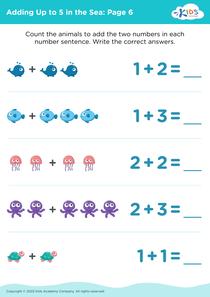
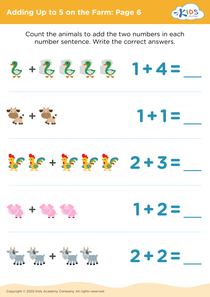
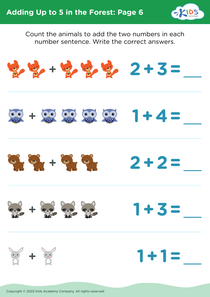
Cognitive Development Adding at the Zoo Worksheets for 4-Year-Olds
18 filtered results
-
From - To
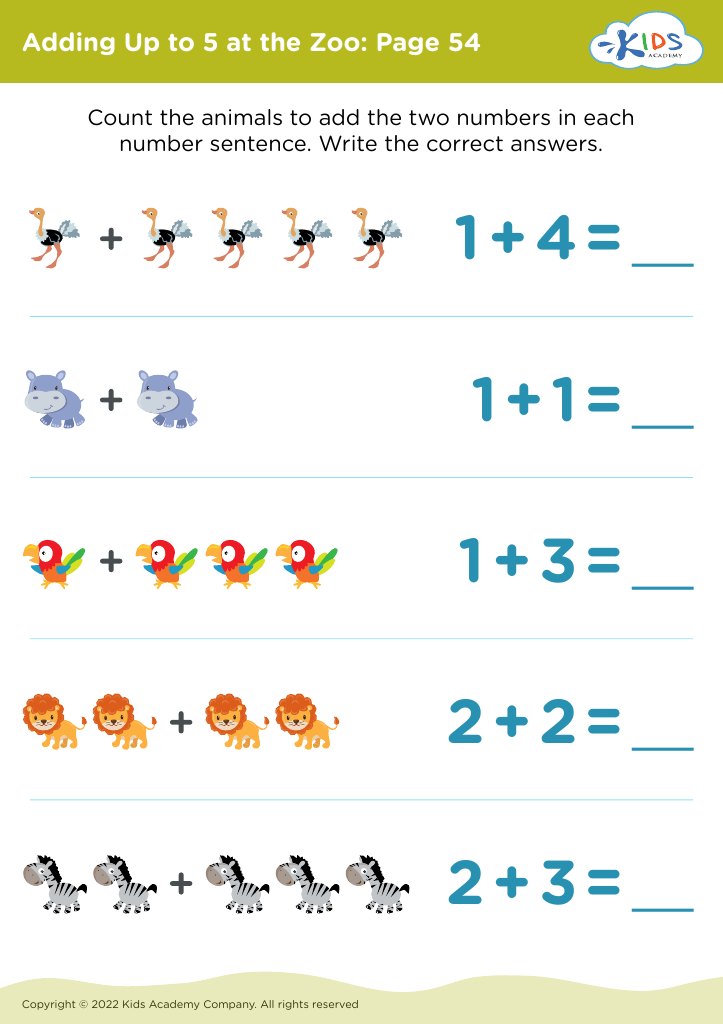
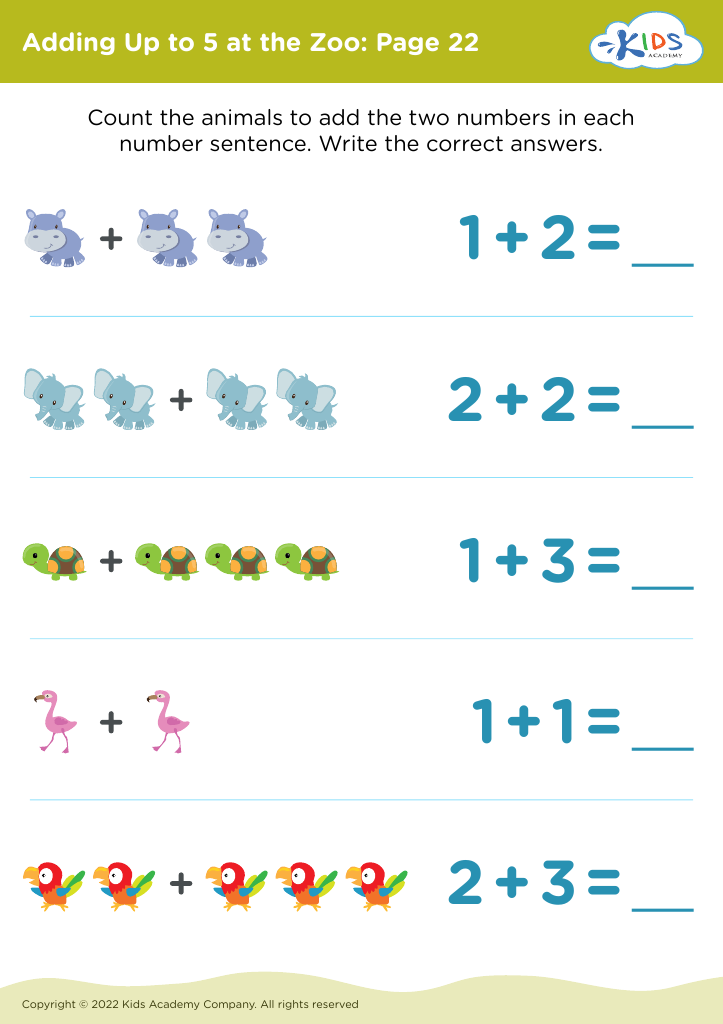
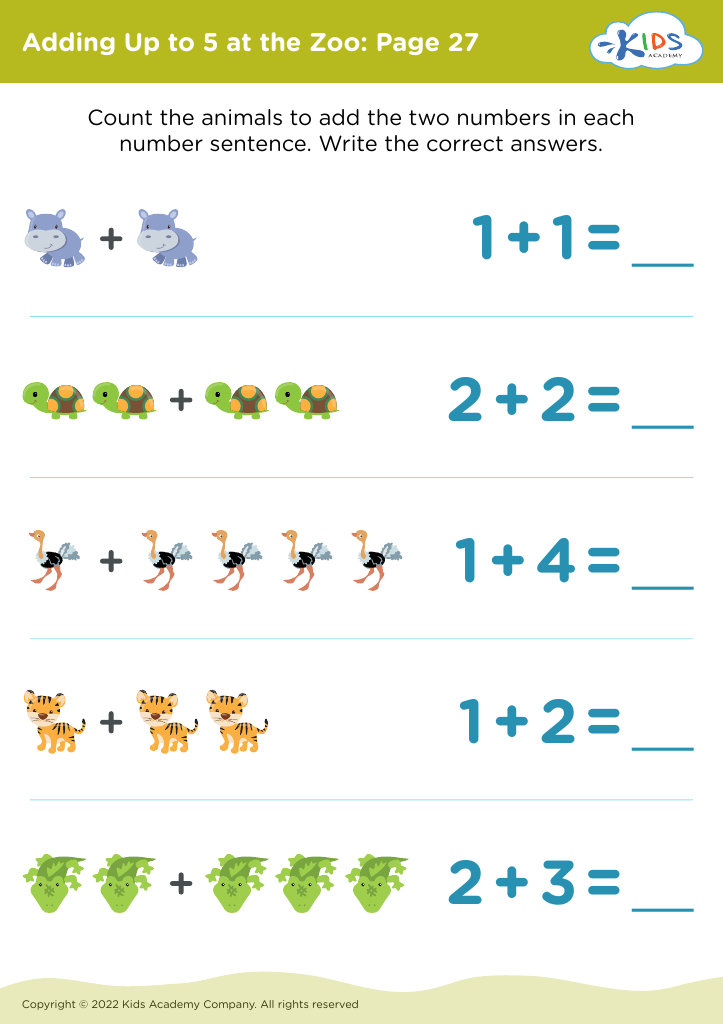
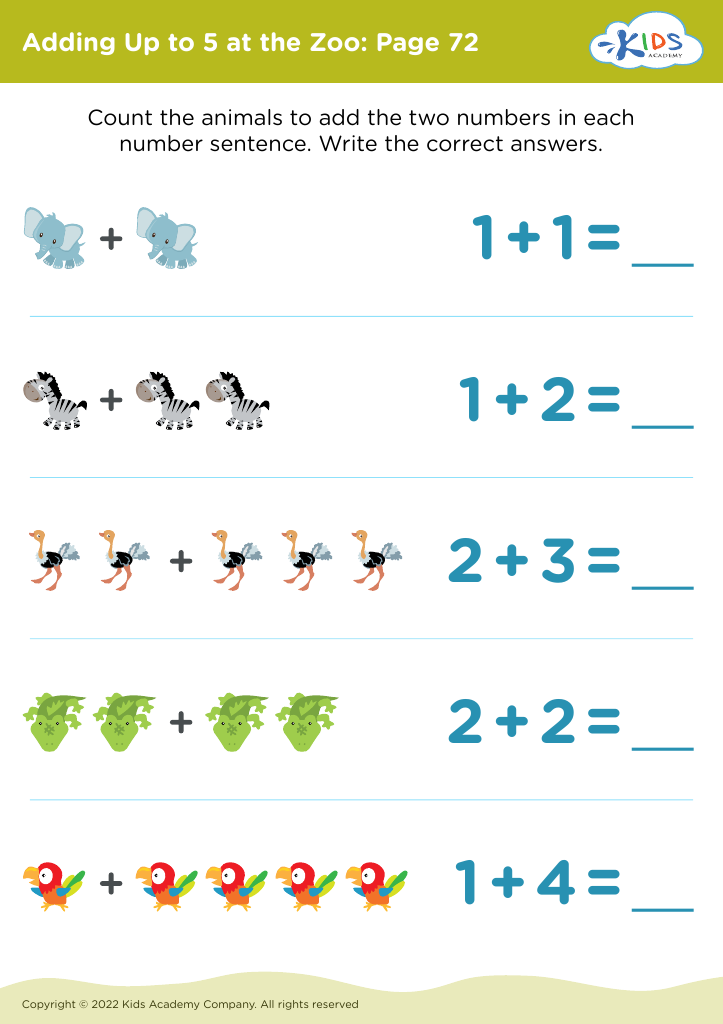
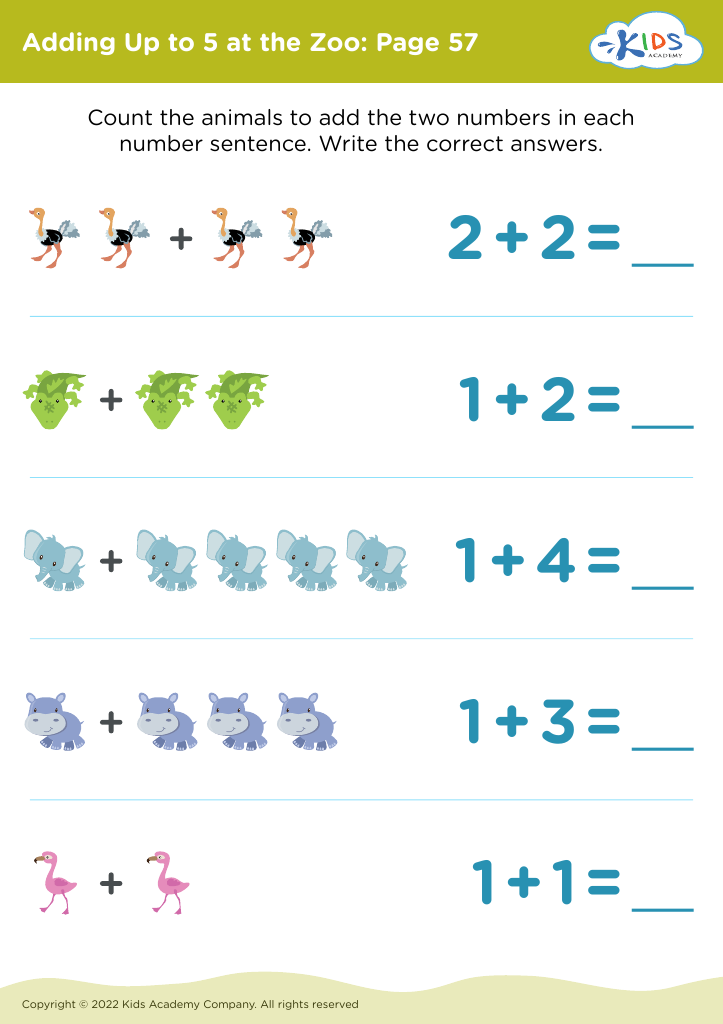
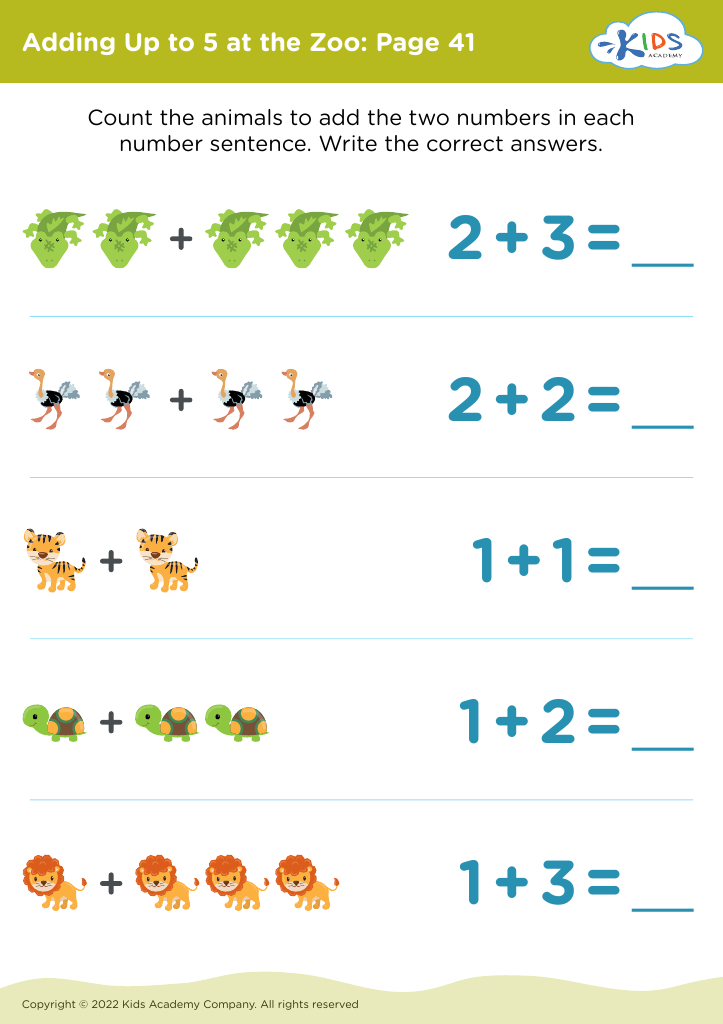
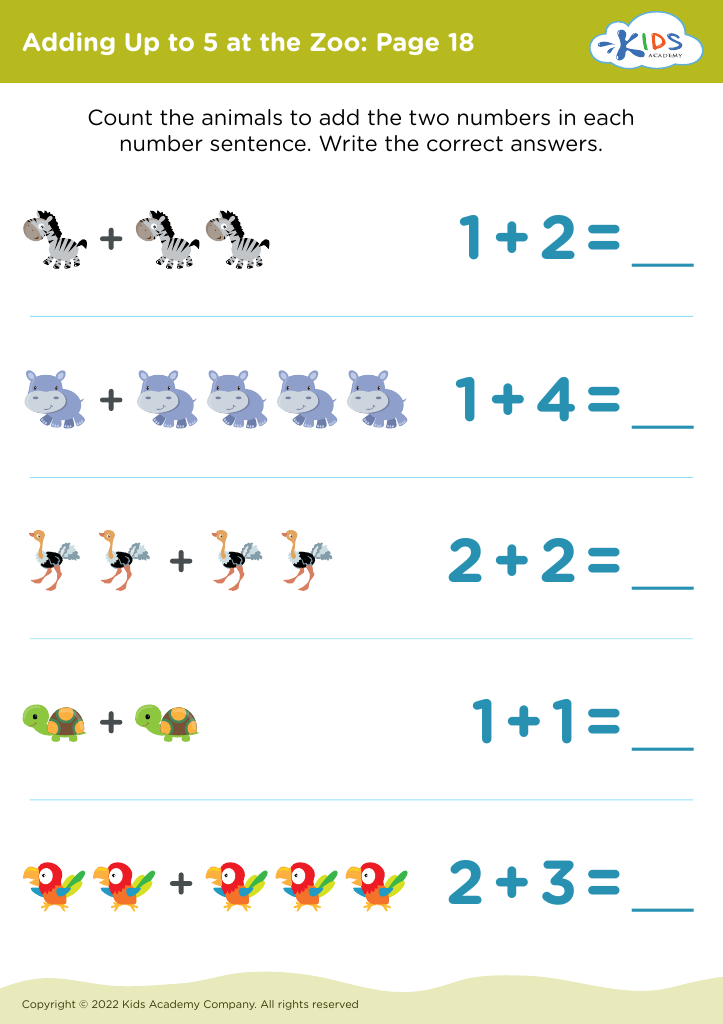
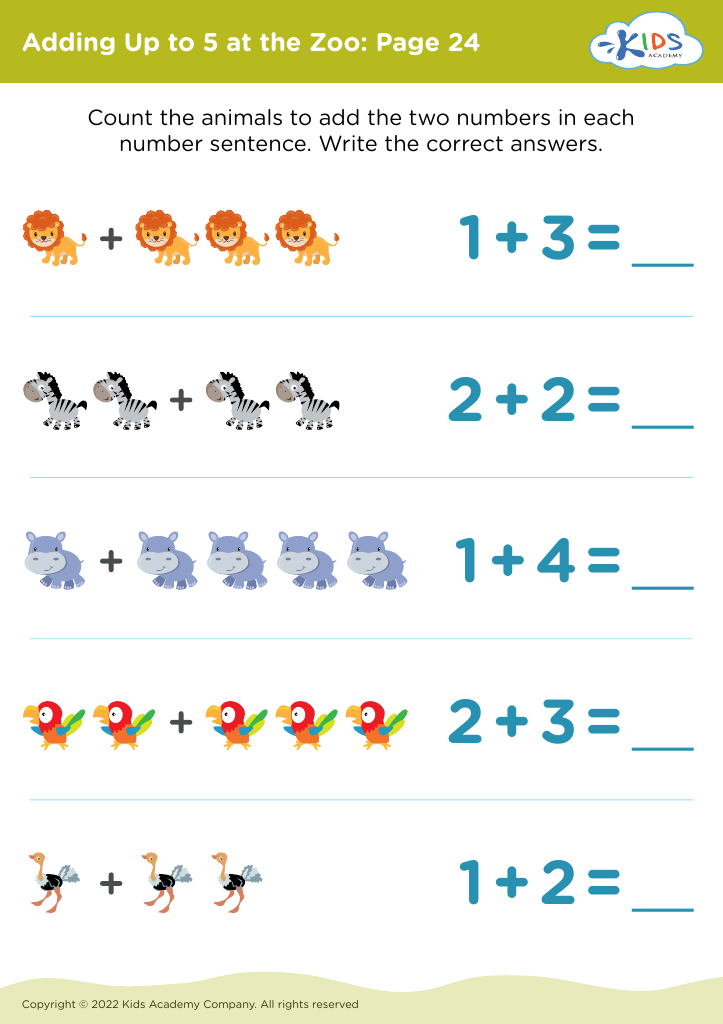
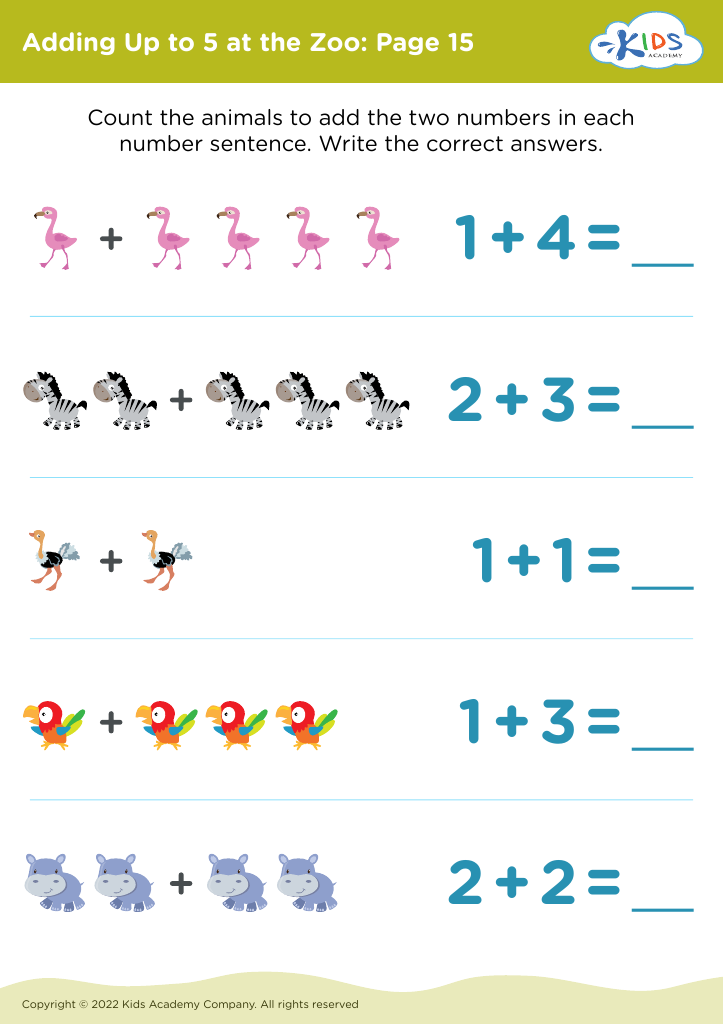
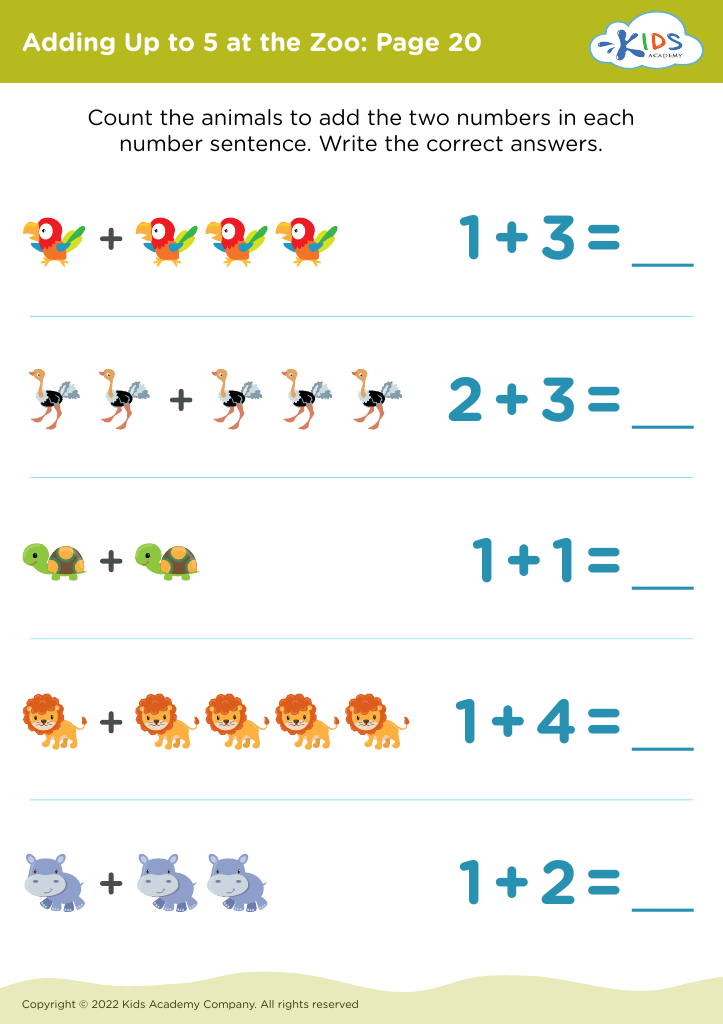
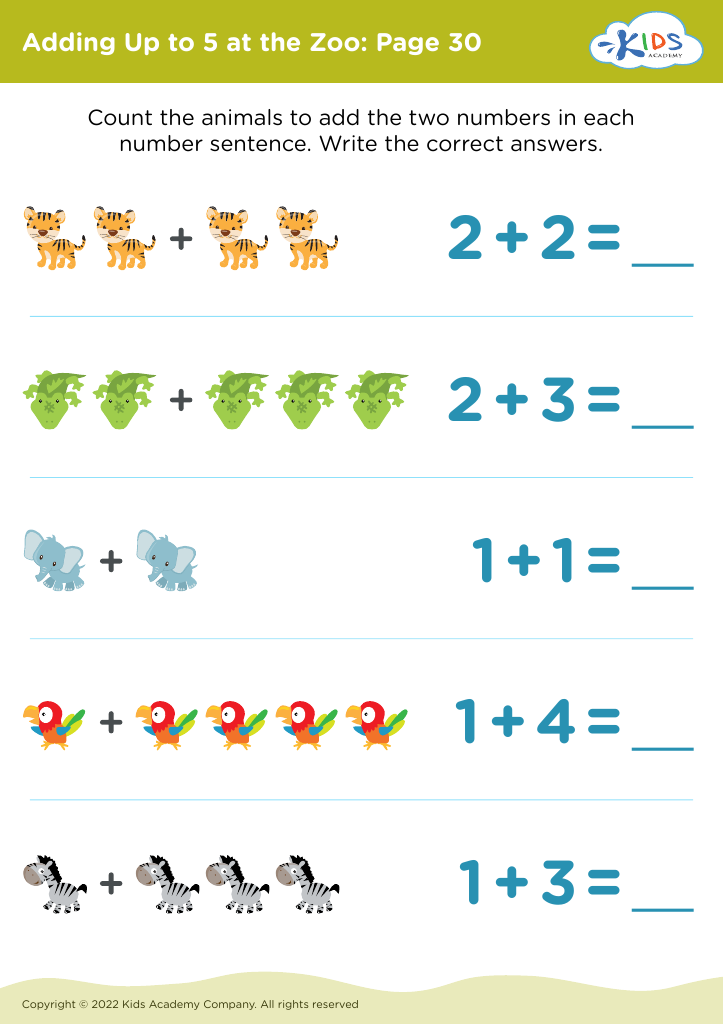
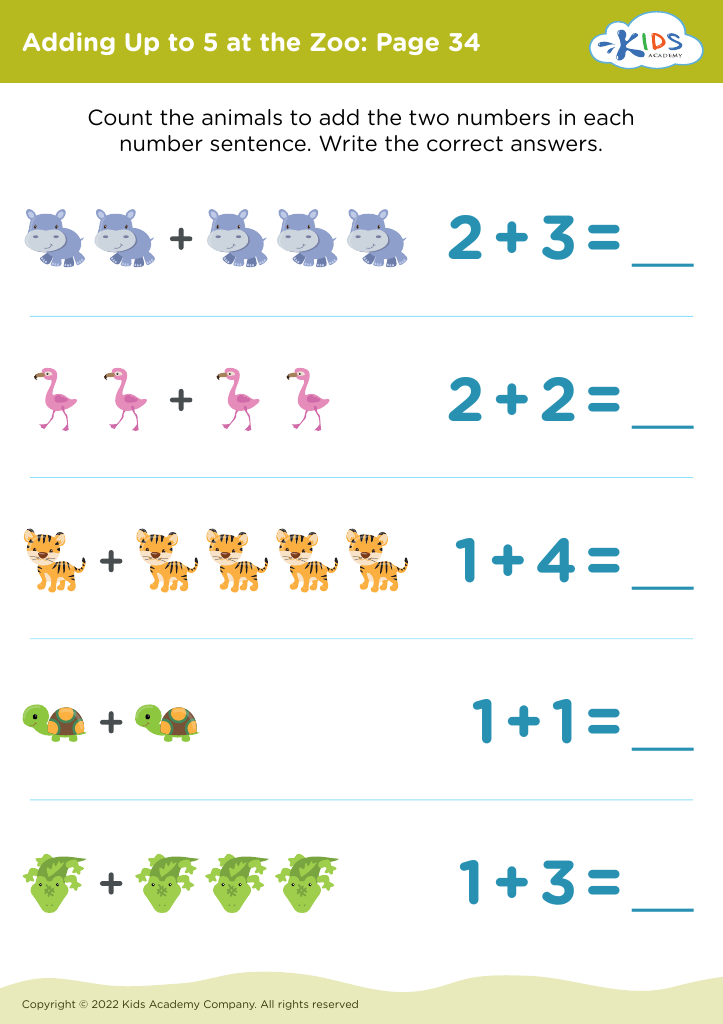
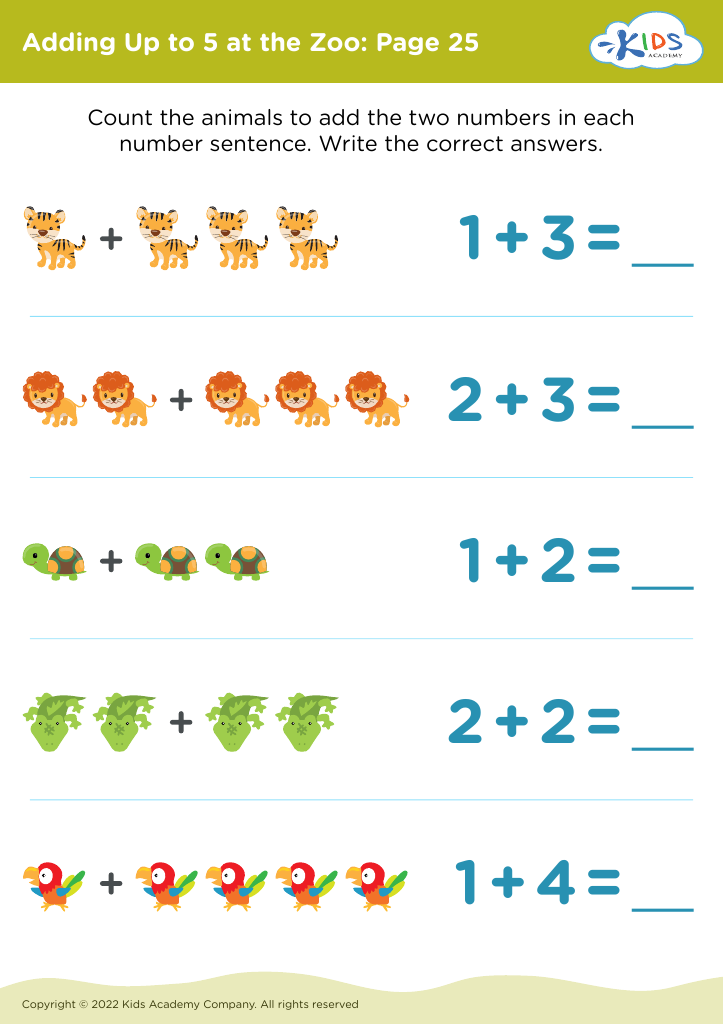
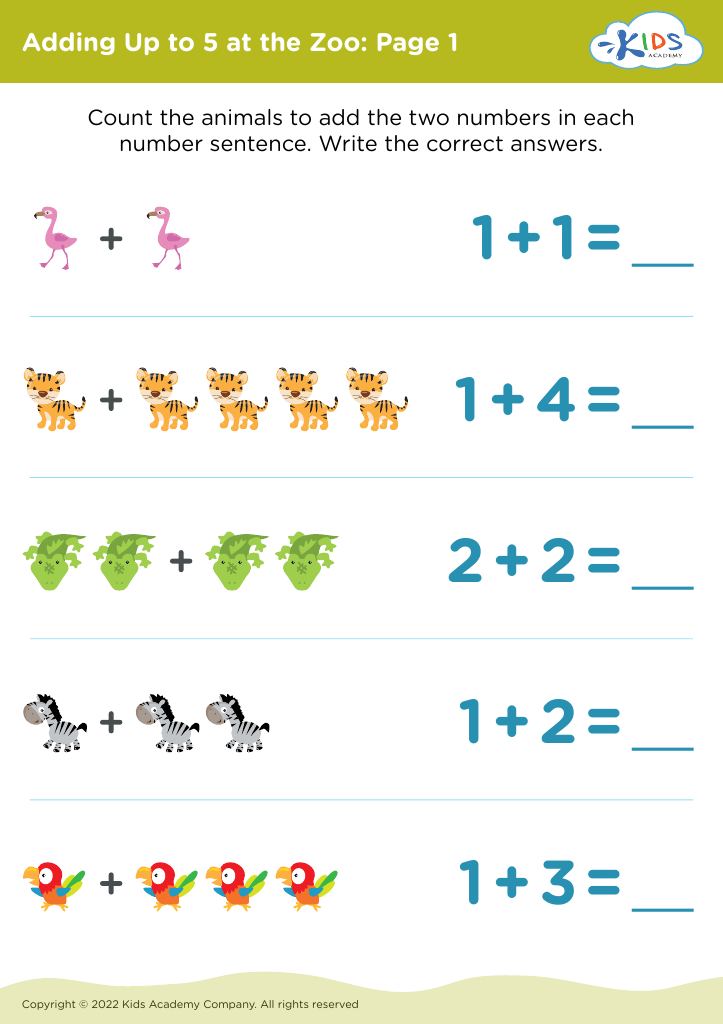
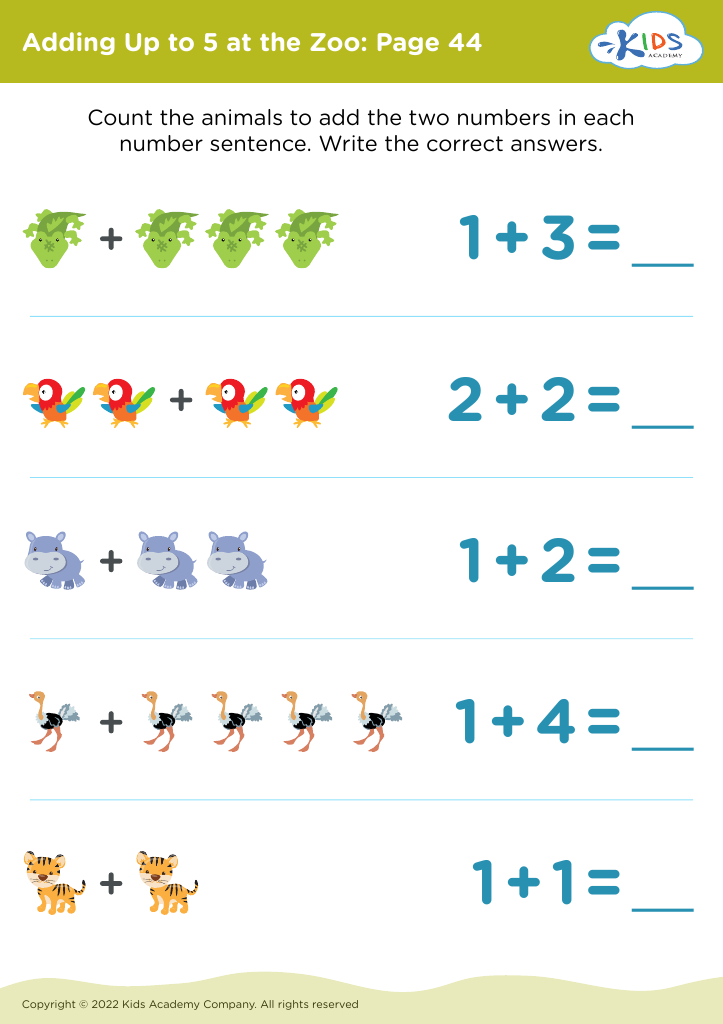
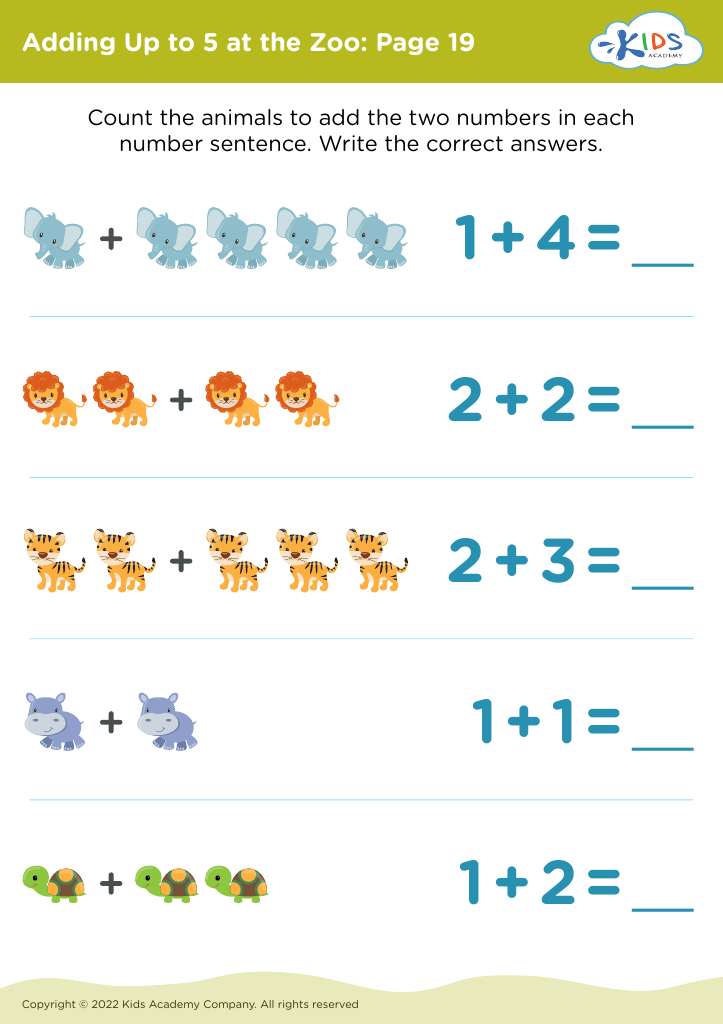
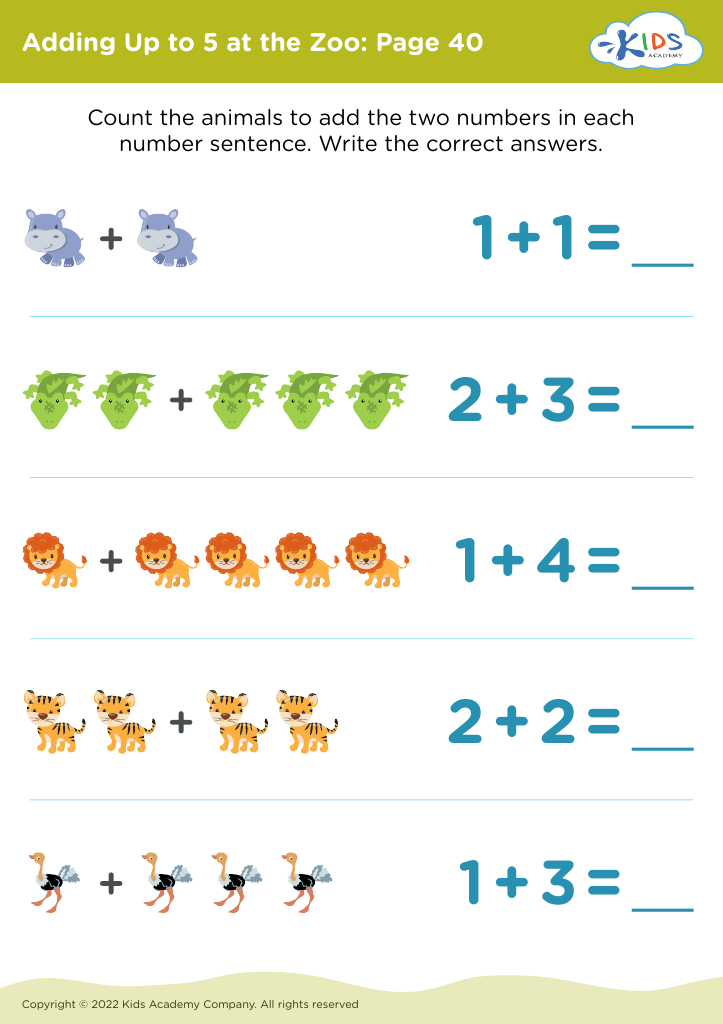
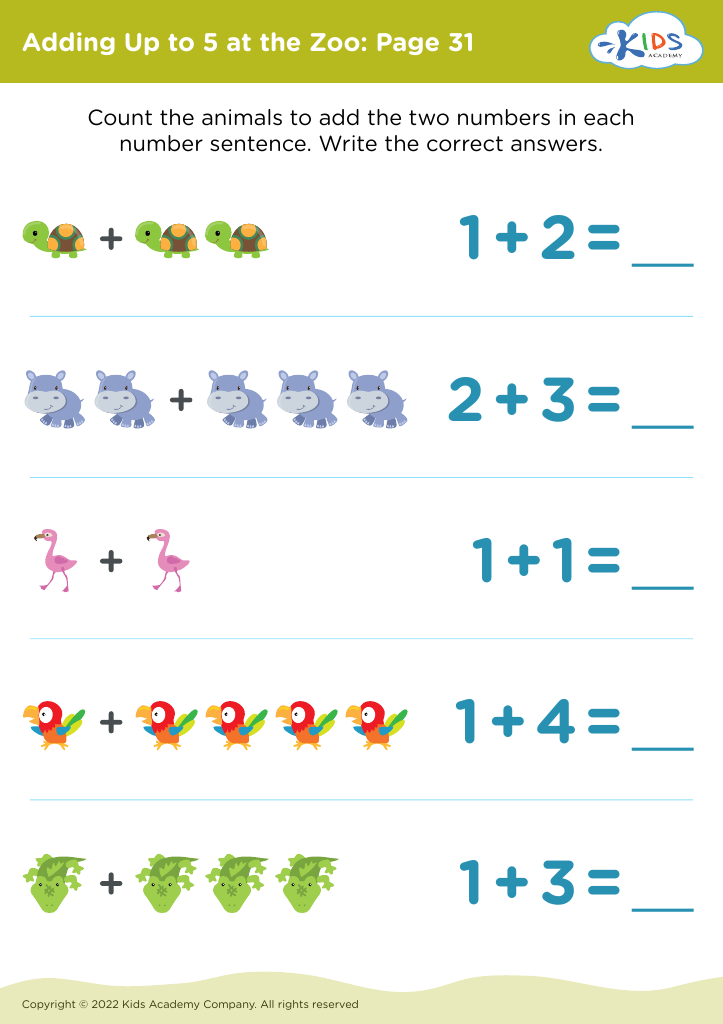
Enhance your child's cognitive development with our "Adding at the Zoo" worksheets, specially designed for 4-year-olds! These engaging activities help young learners practice basic addition skills through fun and interactive zoo-themed exercises. Children will count animals, solve simple addition problems, and explore colorful visuals that promote learning in an enjoyable way. By incorporating animals and exciting narratives, these worksheets captivate young minds, making math concepts more accessible and relatable. Perfect for preschool classrooms or home learning sessions, our worksheets support early math skills while fostering critical thinking and problem-solving abilities. Watch your child's confidence grow with the joy of learning!



Cognitive development is crucial for young children, as it forms the foundation for their learning, thinking, and problem-solving abilities. For four-year-olds, experiences like visiting a zoo provide rich opportunities to enhance cognitive growth. By observing animals, children engage in critical thinking and observation skills as they compare sizes, colors, and behaviors. This sparks curiosity and encourages questions about the natural world.
When teachers and parents prioritize cognitive development through activities such as a zoo visit, they promote language skills by introducing new vocabulary related to animals and their habitats. Discussing animal characteristics also helps children practice classification and categorization, essential skills in cognitive development.
Furthermore, these experiences foster social skills through interactive activities, such as group discussions or collaborative games about animals they see. Children learn to express their thoughts, listen to peers, and appreciate different perspectives, enhancing both cognitive and interpersonal development.
Overall, these interactive learning experiences dynamically involve children while instilling a lifelong love for learning. This is why both parents and teachers should prioritize cognitive development through engaging activities like zoo visits, ensuring a well-rounded foundation for each child’s future academic success.