Understanding Quantities Adding at the Zoo Worksheets for 4-Year-Olds
6 filtered results
-
From - To
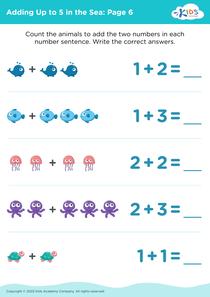
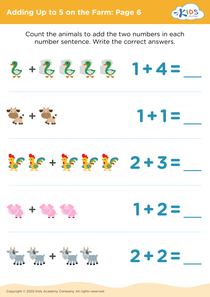
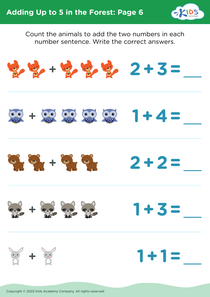
Explore our "Understanding Quantities: Adding at the Zoo" worksheets designed specifically for 4-year-olds! These engaging and interactive worksheets provide young learners with a fun way to develop essential math skills. By incorporating adorable zoo animals, children will practice recognizing quantities and simple addition in a delightful context. Our activities enhance cognitive skills, encourage number recognition, and foster early math understanding through colorful illustrations and relatable themes. Whether at home or in the classroom, these worksheets aim to make learning enjoyable and effective. Start your child’s math journey today with a fun visit to the zoo! Perfect for preschool education!
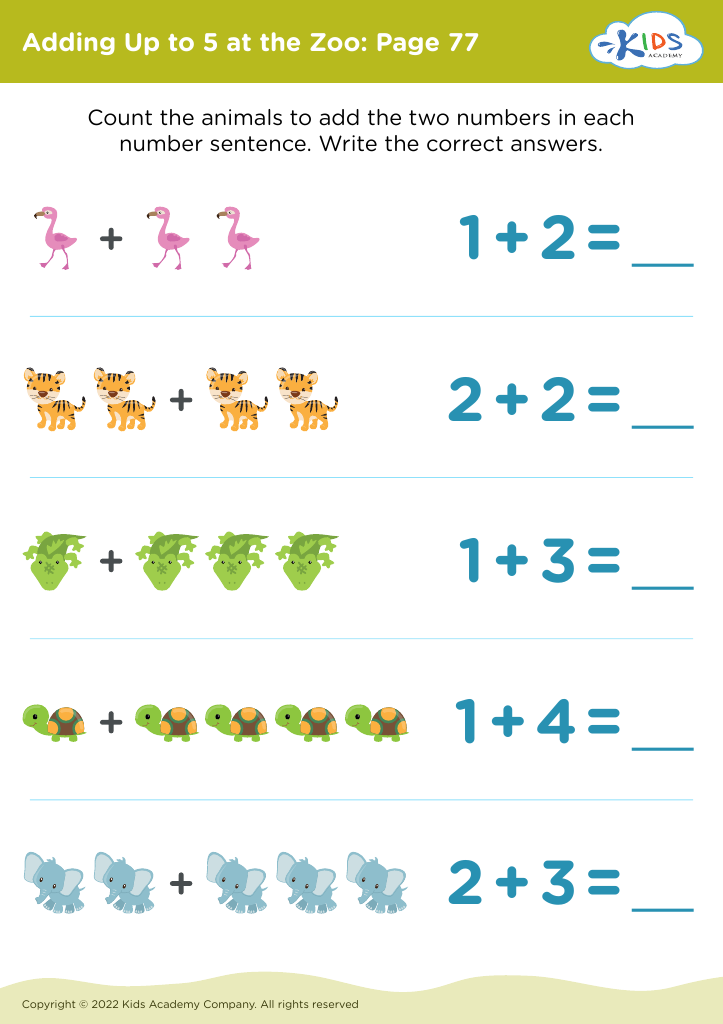
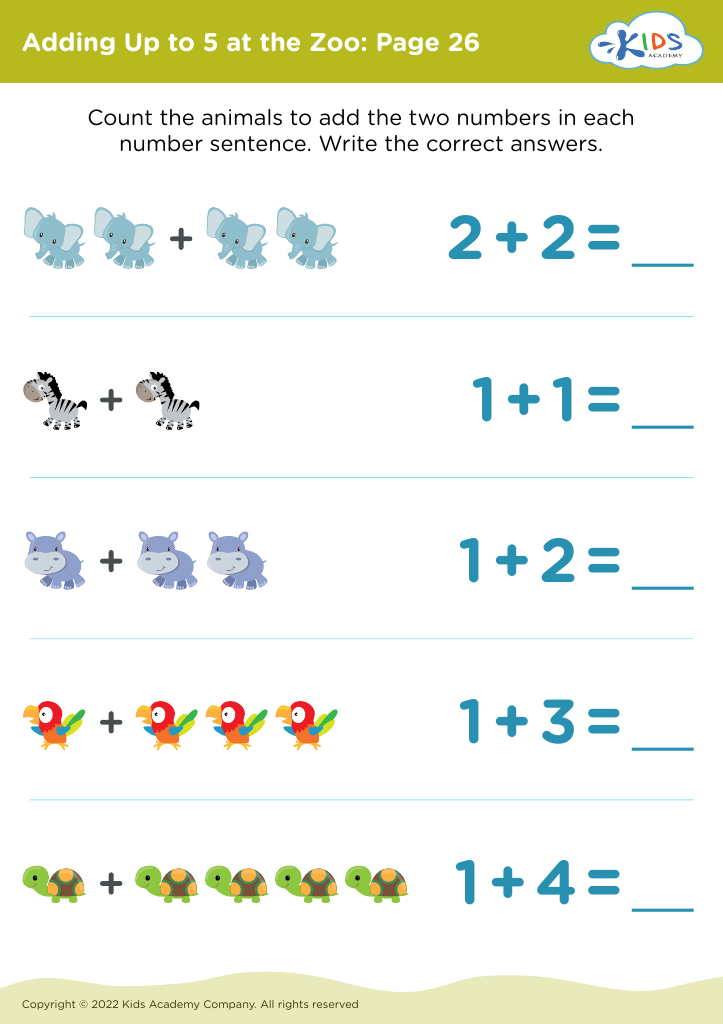
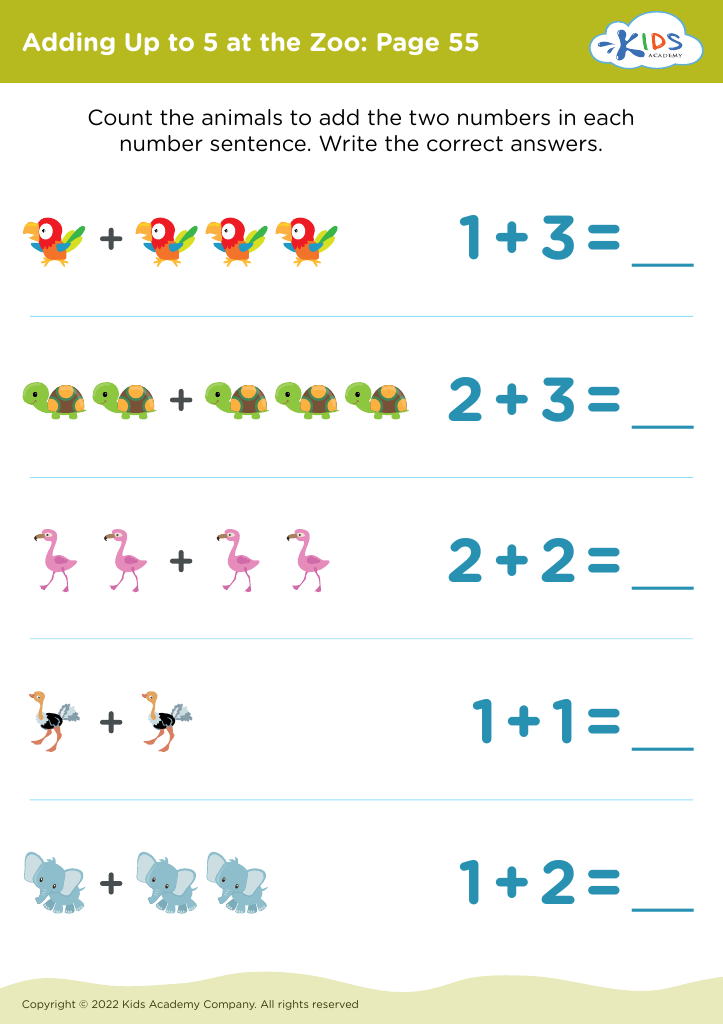
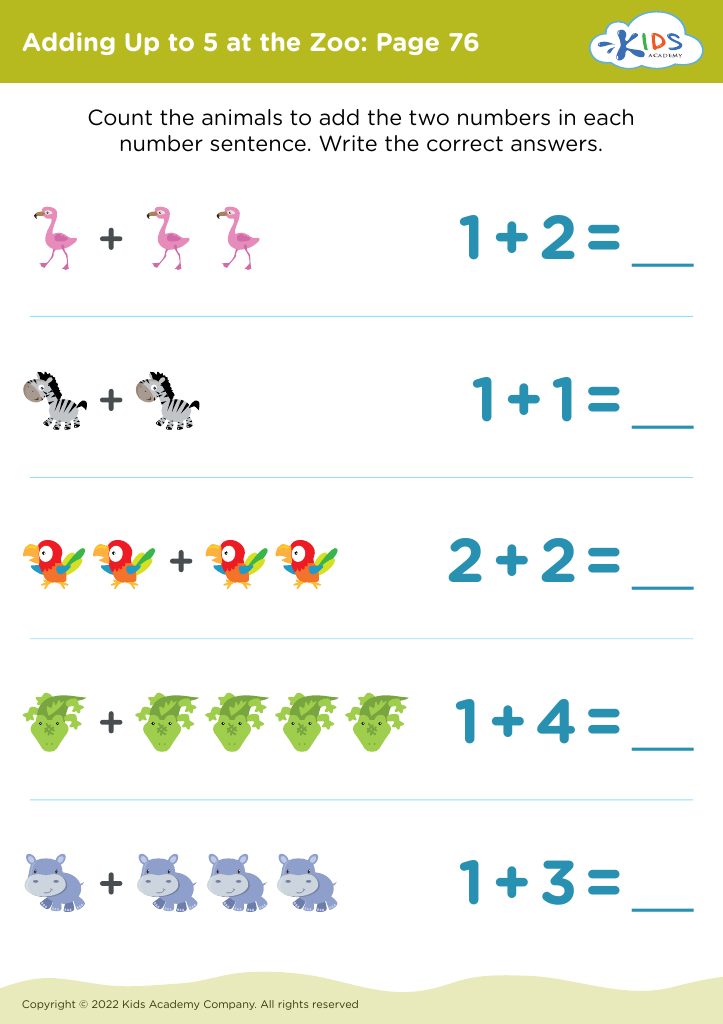
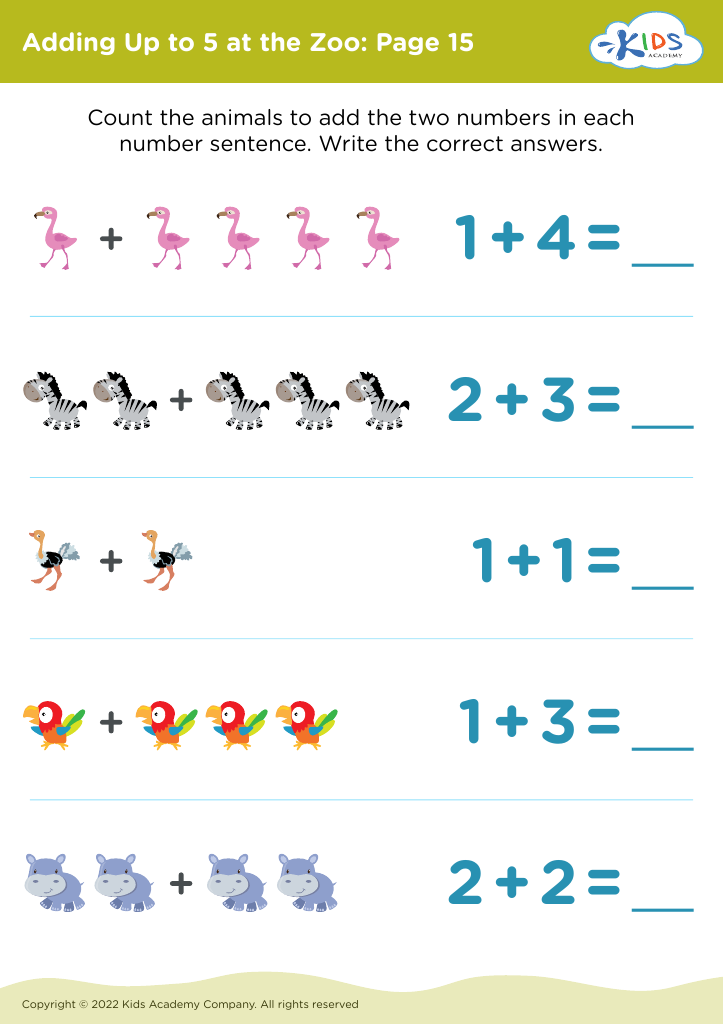
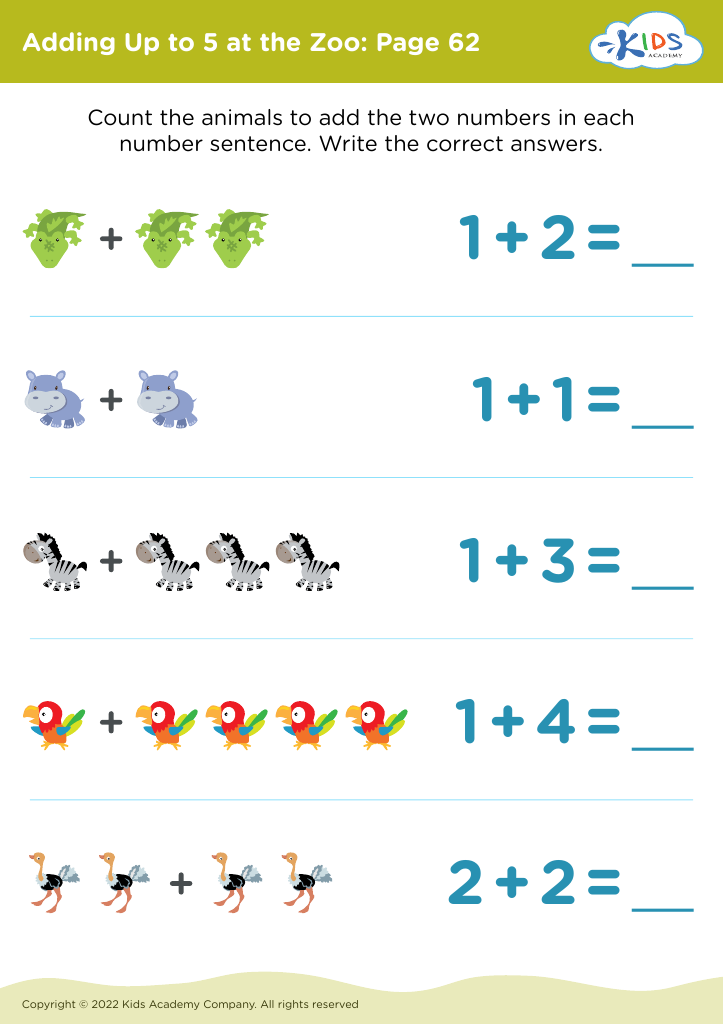



Understanding quantities and addition is crucial for young learners, especially at the foundational stage of their educational journey. "Understanding Quantities Adding at the Zoo" introduces basic math concepts through engaging and relatable experiences, such as counting animals at the zoo. This colorful approach not only captures the attention of 4-year-olds but also connects mathematical concepts to their everyday lives.
Parents and teachers should care about this type of learning for several reasons. Firstly, early exposure to math helps develop critical thinking and problem-solving skills that are vital for later academic success. Activities centered on counting and adding promote number sense and enhance cognitive development.
Additionally, learning in a playful environment, such as pretending to count animals, encourages a positive attitude towards mathematics, reducing future math anxiety. It also nurtures a love for learning, stimulating curiosity and imagination.
Furthermore, such activities support social skills as children often work together during interactive play, sharing ideas and strategies. By prioritizing fun and meaningful math experiences, parents and teachers lay a strong foundation for literacy and numeracy, ensuring children are prepared for more complex concepts in primary education. Overall, incorporating playful math experiences enriches children’s learning and prepares them for future academic challenges.