Counting proficiency Adding in the Forest Worksheets for 4-Year-Olds
3 filtered results
-
From - To
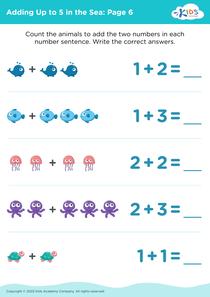
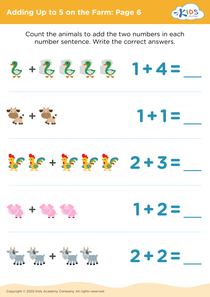
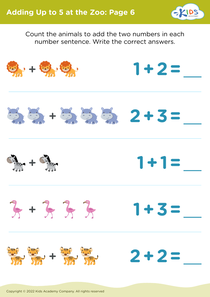
Transform your child's math journey with our "Counting Proficiency: Adding in the Forest Worksheets" designed specifically for 4-year-olds. These engaging, nature-themed activities make learning to count and add both fun and interactive. Each worksheet introduces basic addition concepts through vibrant forest scenes and friendly animal characters, capturing children's imaginations while enhancing their numerical skills. With a focus on building a strong foundation in counting proficiency, these worksheets promote cognitive development and critical thinking. Ideal for home or classroom use, they come with essential tools to support early learners on their mathematical adventure. Foster your little one's love for math today!
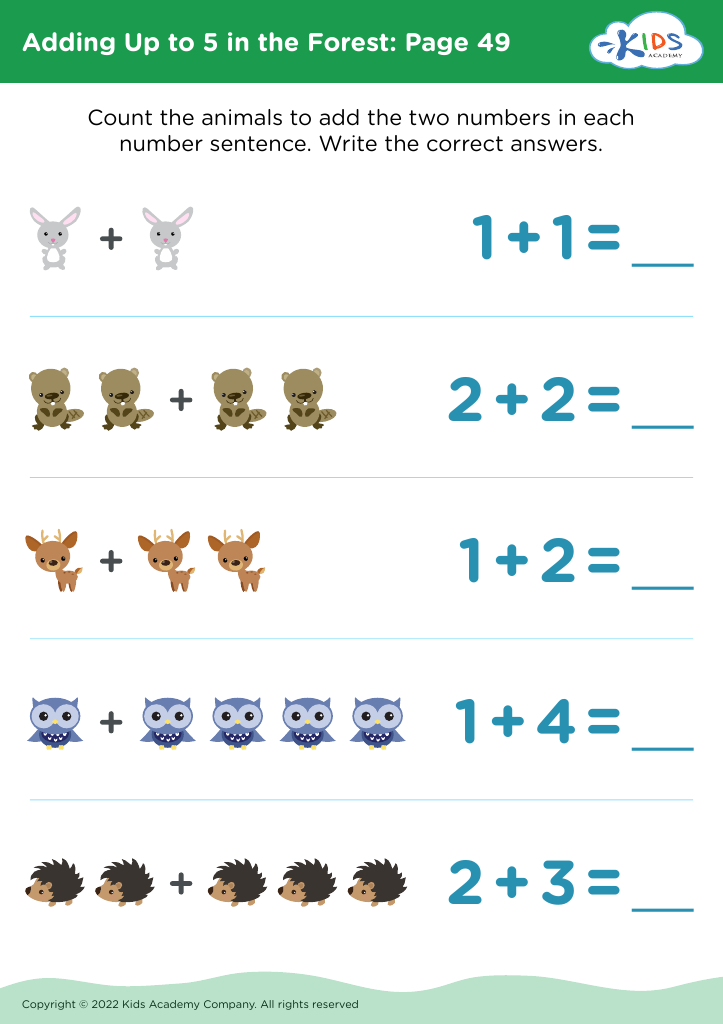
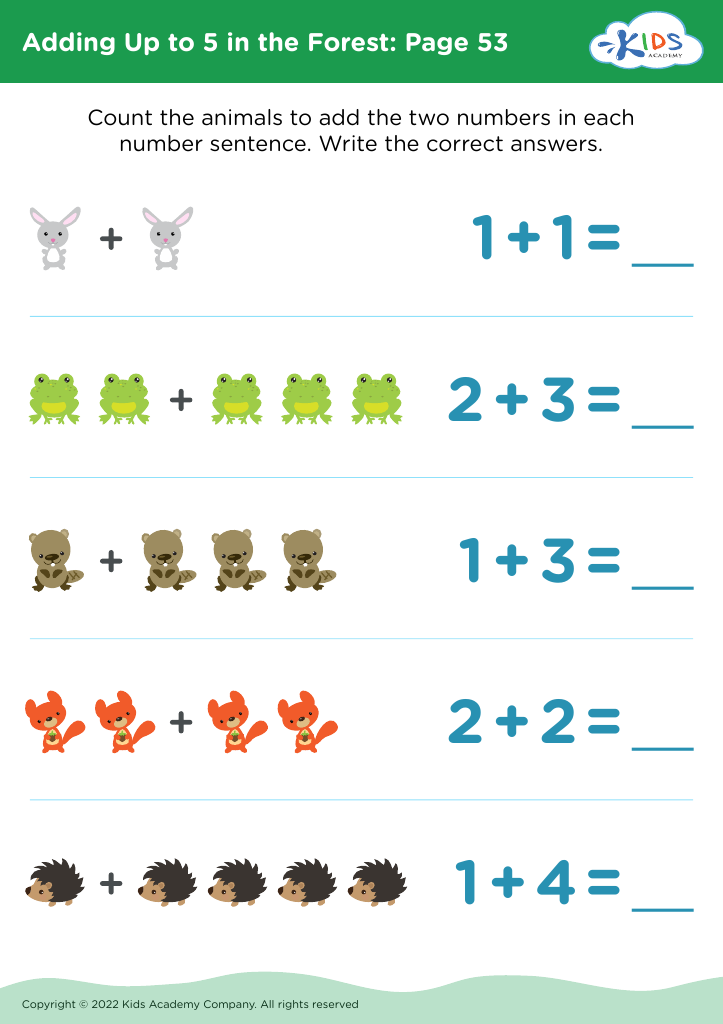
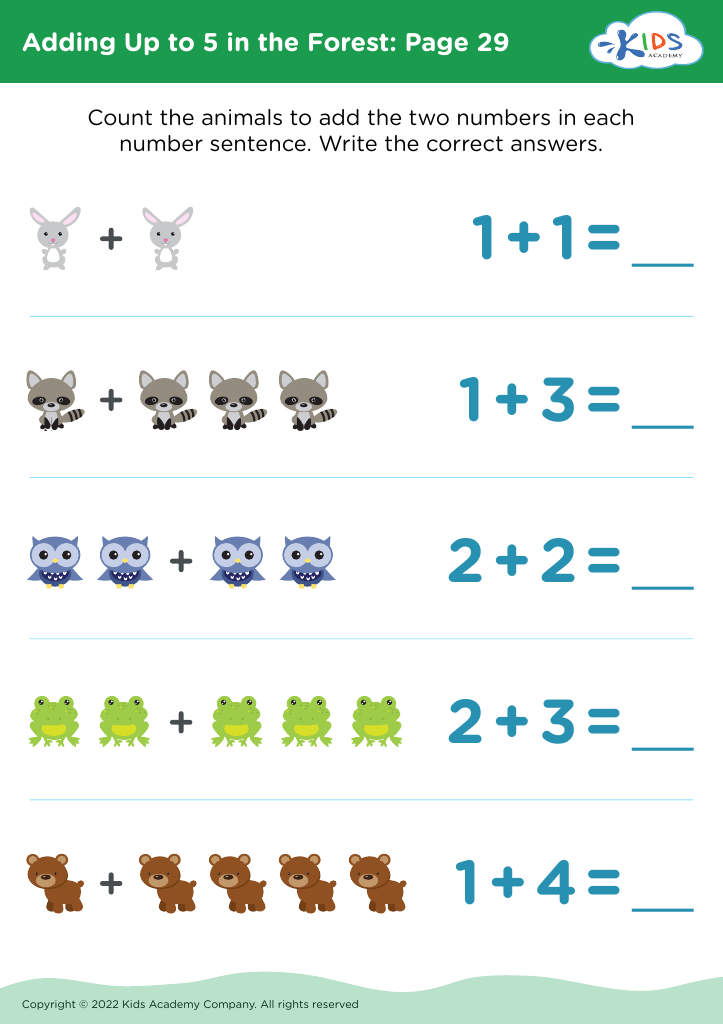



Counting proficiency, particularly in contexts like "Adding in the Forest," is crucial for 4-year-olds as it lays the foundation for their mathematical understanding and cognitive development. At this early age, children are naturally curious about their surroundings, and integrating counting into playful, engaging scenarios makes learning both enjoyable and effective.
Parents and teachers should care about this because counting proficiency enhances a child's ability to problem-solve, think critically, and approach future math concepts with confidence. When children learn to count and add through experiential activities, such as counting items they find in a forest, they associate numbers with real-world contexts, making concepts more relatable and meaningful.
Furthermore, early counting skills contribute to better academic performance later on. Research shows that children who have a strong grasp of counting and number recognition are more likely to excel in math during their later schooling years. Encouraging and facilitating these early mathematical experiences helps build a positive attitude toward math, reducing anxiety or aversion as they progress through their education. In summary, nurturing counting proficiency in young children not only enriches their immediate learning experience but also paves the way for lifelong academic success.