Hand-eye Coordination Adding in the Sea Worksheets for 4-Year-Olds
4 filtered results
-
From - To
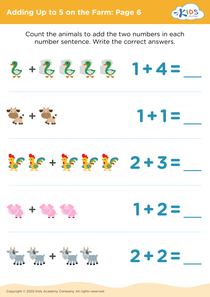
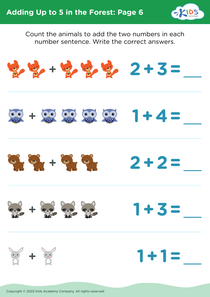
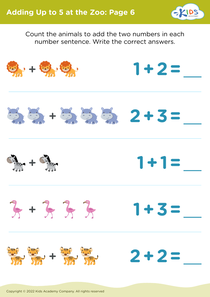
Boost your child's hand-eye coordination and math skills with our "Hand-eye Coordination Adding in the Sea Worksheets" designed specifically for 4-year-olds. These engaging worksheets combine fun aquatic themes with essential addition exercises, helping little ones learn while they play. Each activity is crafted to enhance motor skills and cognitive development, making math enjoyable and interactive. Dive into an ocean of learning as your child identifies numbers, counts, and adds colorful sea creatures. Perfect for at-home practice or classroom use, these worksheets provide a playful and effective way to nurture early math understanding and hand-eye coordination in your child. Explore the sea of learning today!
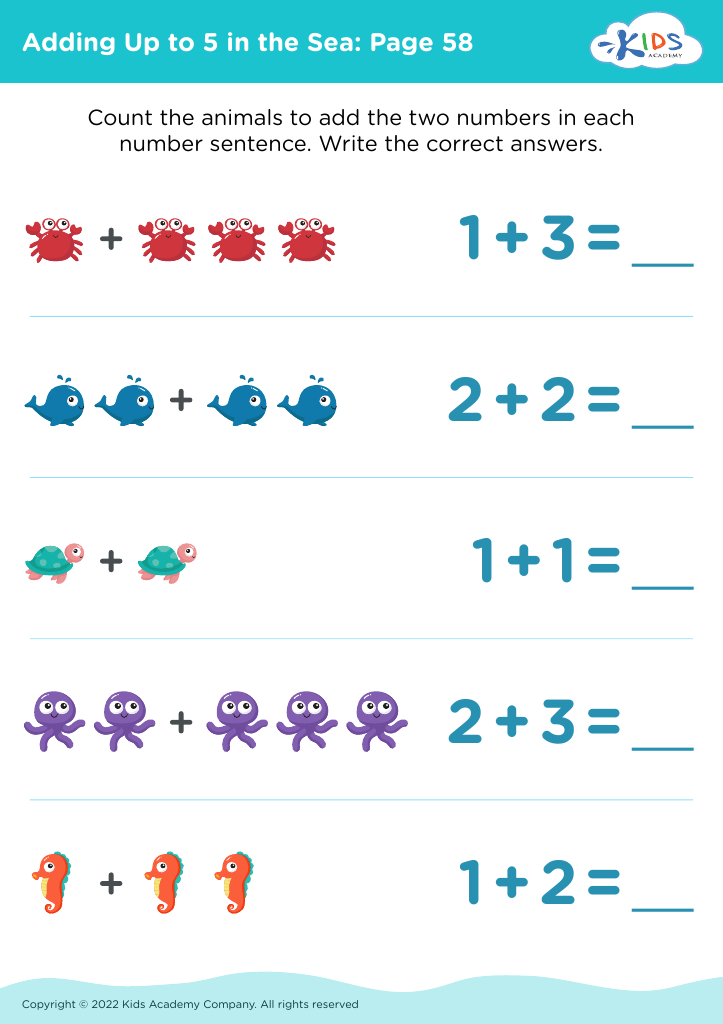
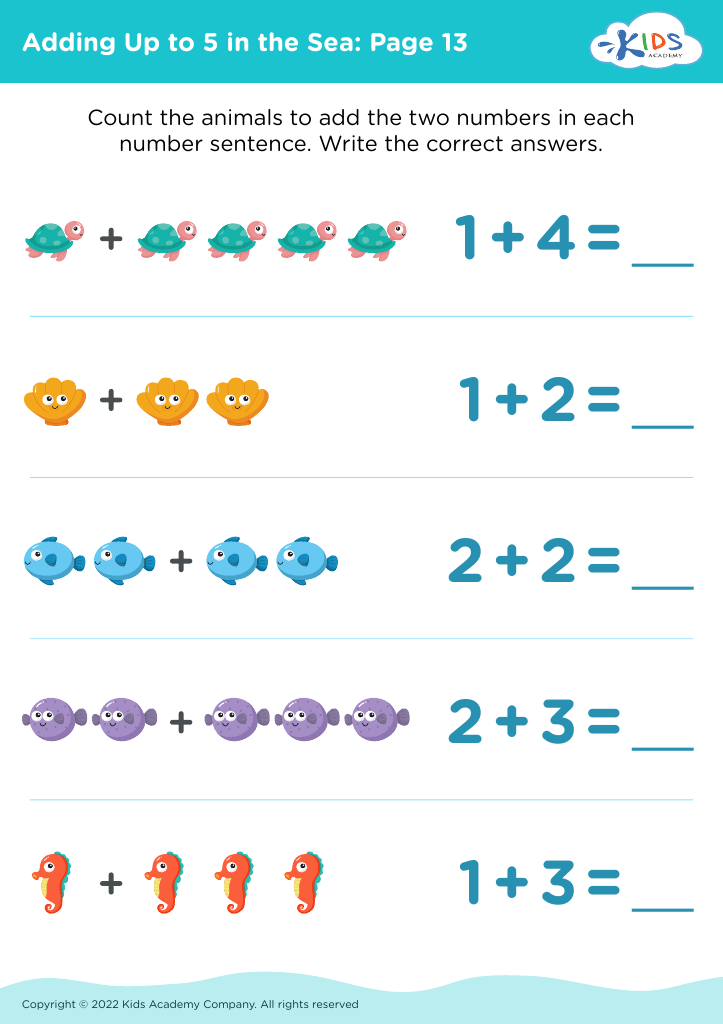
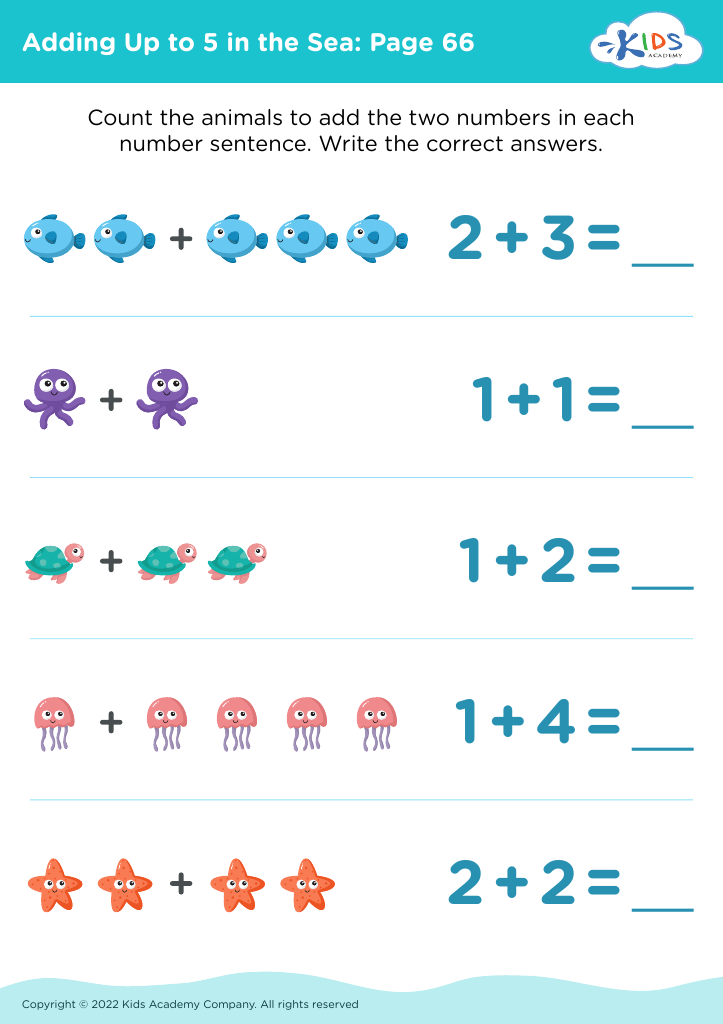
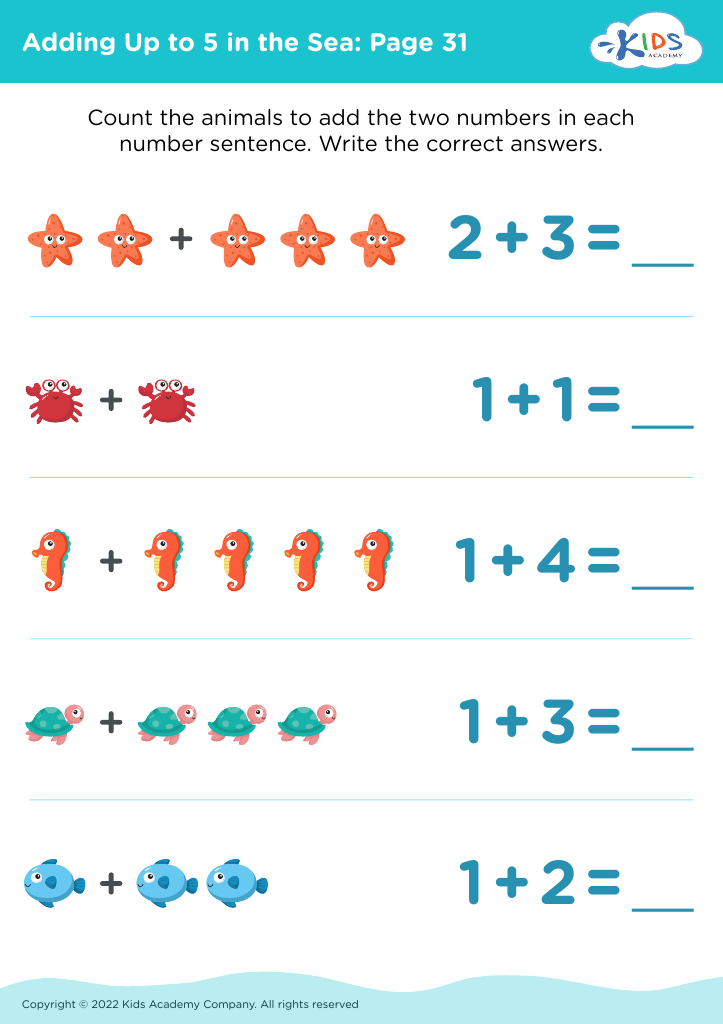



Hand-eye coordination is a crucial skill that significantly impacts a child’s development, especially for 4-year-olds. This essential ability enables children to integrate visual input with physical actions, facilitating tasks like writing, drawing, and playing sports. When parents or teachers engage children in activities that enhance this skill, such as “Adding in the Sea,” they are not only promoting physical dexterity but also cognitive development.
Incorporating fun activities like “Adding in the Sea” encourages young learners to solve problems and develop their mathematical skills while refining their hand-eye coordination. Such games, often involving physical movement, can spark children’s interest in learning and foster a love for mathematics. Importantly, activities that challenge a child’s coordination can help build confidence and perseverance as they learn to set and achieve small goals.
Furthermore, strong hand-eye coordination lays a foundation for fine motor skills, which are vital for daily tasks like using scissors, buttoning clothing, and later, typing. Therefore, parents and teachers should care about fostering these skills at an early age. By creating engaging and supportive learning environments, they empower children to thrive both academically and socially, ensuring holistic development in these formative years.