Sea creatures identification Adding in the Sea Worksheets for 4-Year-Olds
3 filtered results
-
From - To
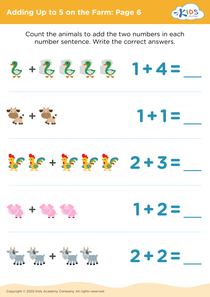
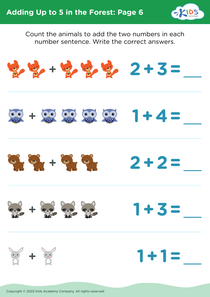
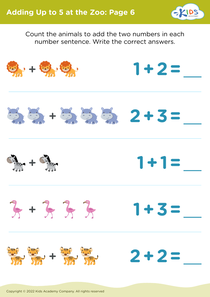
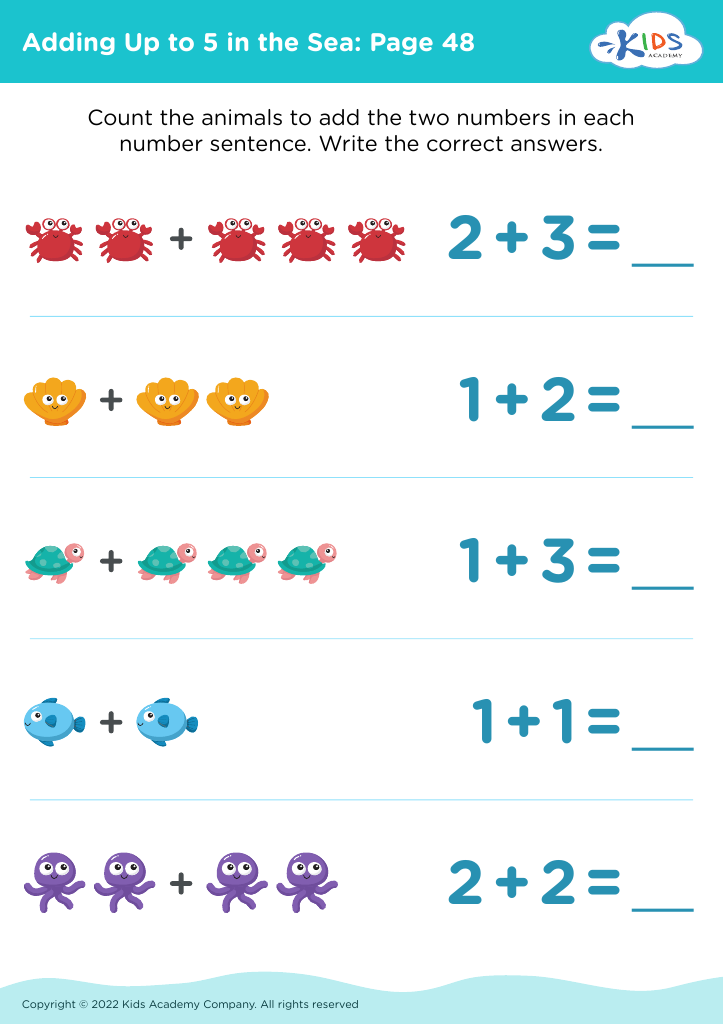
Discover the exciting world of sea creatures with our "Adding in the Sea Worksheets" designed specifically for 4-year-olds! This engaging resource combines fun with education by helping young learners identify various sea creatures while mastering basic addition skills. Bright illustrations captivate children's attention as they explore different species like dolphins, starfish, and turtles. Each worksheet encourages creativity and critical thinking, promoting a love for marine life as students count, and add, and recognize the beauty of the ocean. Perfect for preschool and kindergarten classrooms, these worksheets offer a delightful way to make math come alive in the sea! Dive in today!
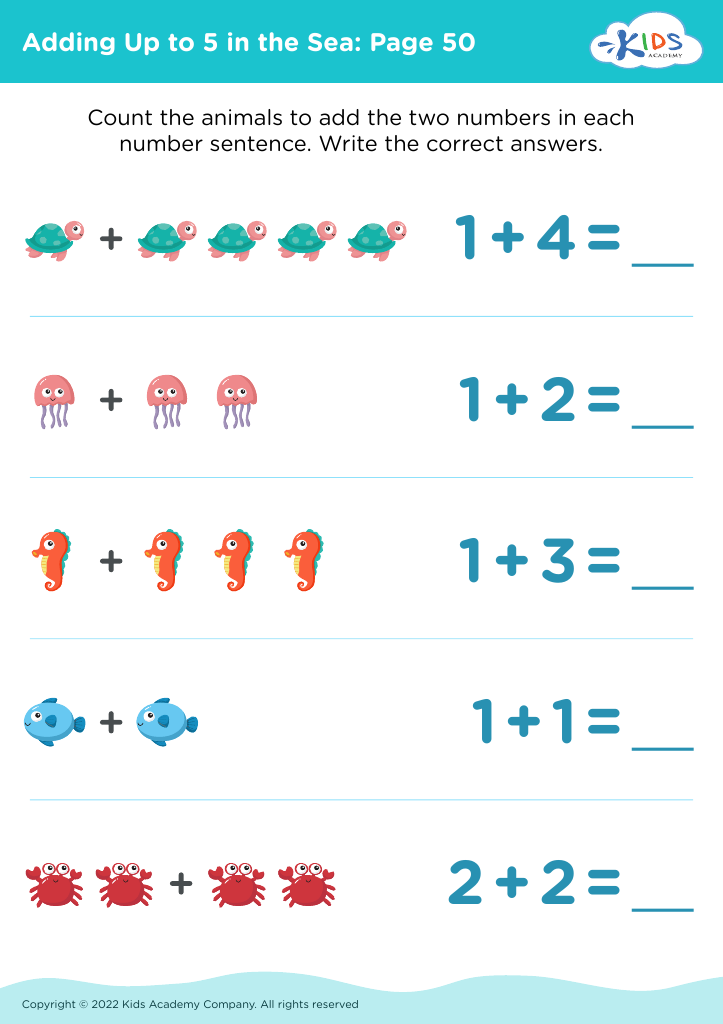
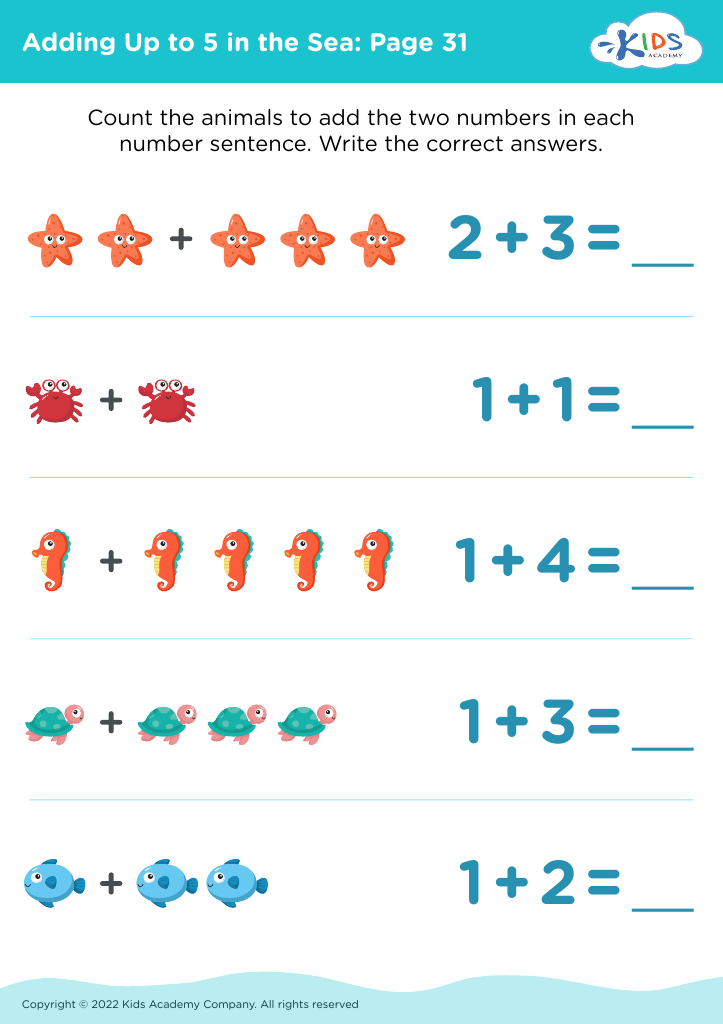



Understanding sea creature identification is important for both parents and teachers of 4-year-olds because it fosters curiosity and a love for learning about the natural world. At this young age, children are naturally inquisitive, and introducing them to the diverse life in the oceans can spark their imagination and creativity.
Learning about sea creatures helps develop essential cognitive skills. As they identify and categorize different animals, kids enhance their vocabulary and critical thinking skills. Activities like sorting pictures of fish, dolphins, and starfish can be fun and educational. Moreover, it encourages teamwork and communication when children work together to learn.
Sea creatures also provide valuable discussions about the environment, teaching children about conservation and the importance of protecting our oceans. Parents and teachers can instill a sense of responsibility toward nature at a young age, encouraging future eco-conscious citizens.
Furthermore, engaging with marine life can create meaningful moments for families and classmates. Playful activities like crafts or storytelling about sea life not only enrich a child’s learning experience but also strengthen bonds, making education enjoyable. By nurturing this knowledge, parents and teachers help shape a healthier relationship between children and the environment.