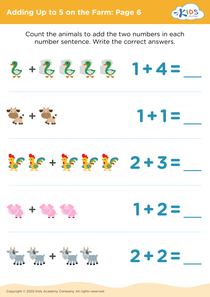
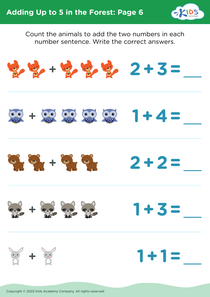
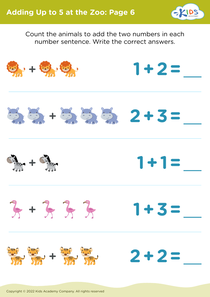
Underwater animal identification Adding in the Sea Worksheets for 4-Year-Olds
3 filtered results
-
From - To
Dive into the world of marine life with our "Underwater Animal Identification Adding in the Sea Worksheets" for 4-year-olds! This engaging resource helps young learners recognize and identify various underwater animals while practicing essential addition skills. Perfect for preschool classrooms and home learning, these worksheets combine fun visuals of sea creatures with simple math exercises to make learning enjoyable. Children will strengthen their math skills and enhance their vocabulary as they explore fascinating animals like dolphins, starfish, and jellyfish. Encourage a love for both marine biology and mathematics with these interactive worksheets designed specifically for little hands and curious minds.
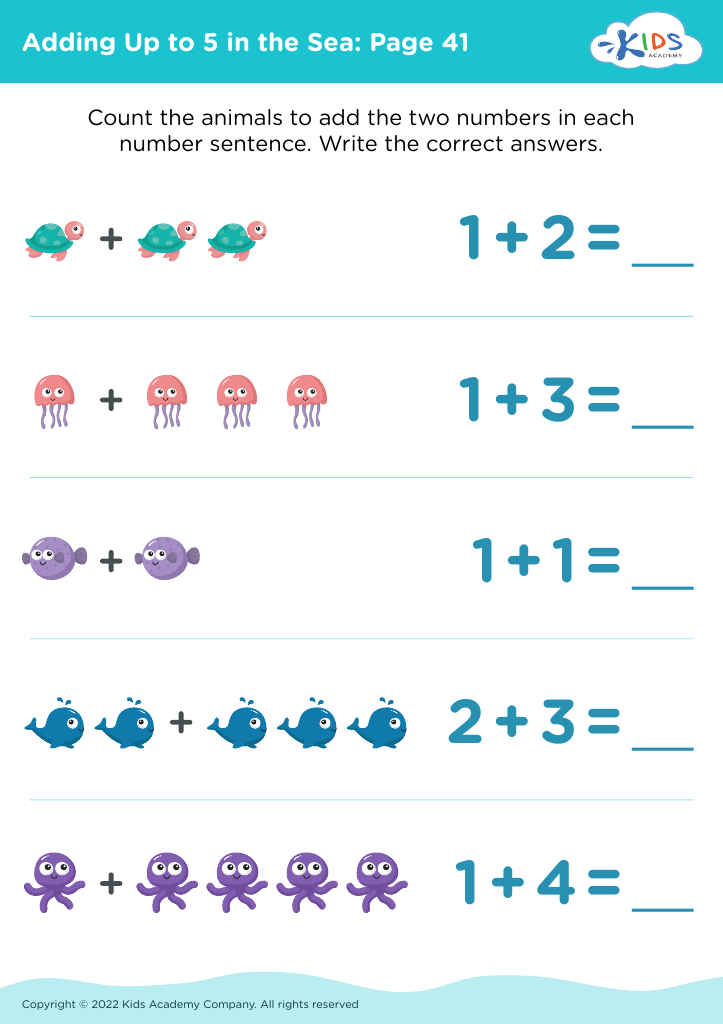
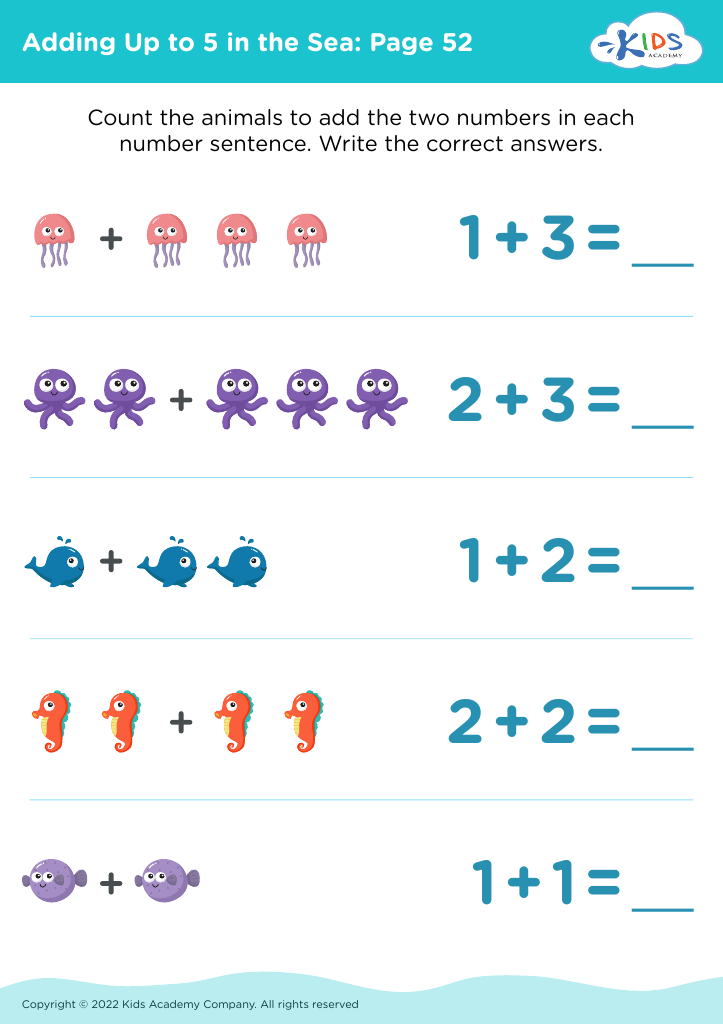
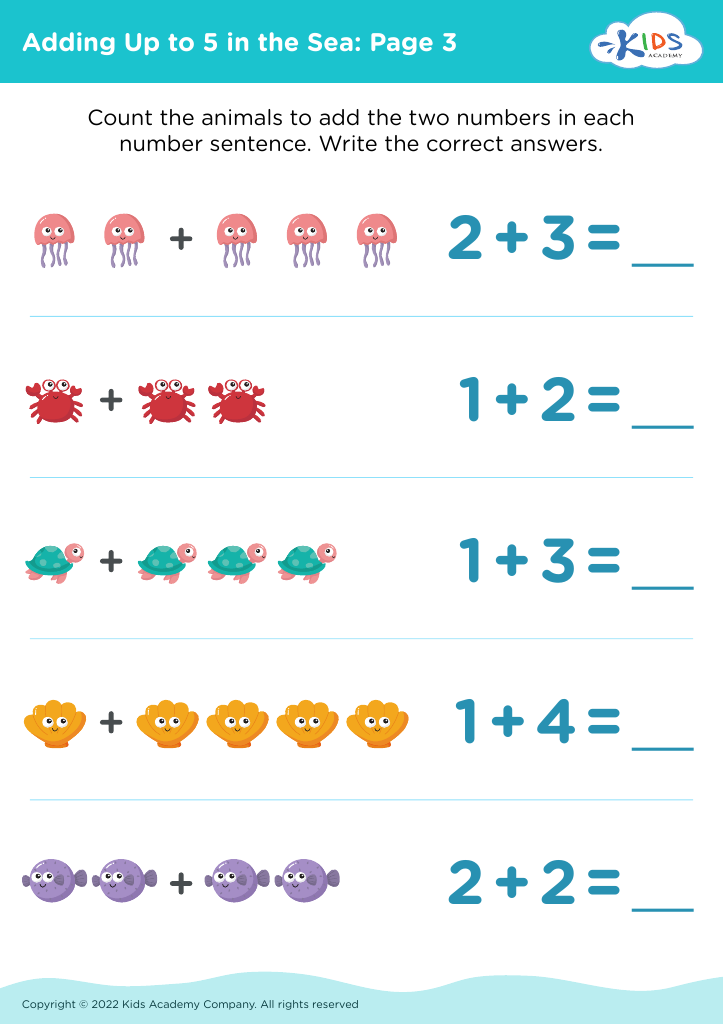



Introducing underwater animal identification through "Underwater Animal Identification: Adding in the Sea" is essential for both parents and teachers, especially for 4-year-olds, as it combines learning with excitement. At this developmental stage, children are naturally curious about the world around them, and underwater animals offer a fascinating topic that can spark their interest in science and nature.
Engaging kids in identifying various sea creatures promotes cognitive development, enhancing their observation skills and critical thinking abilities. Through playful activities, they can learn to categorize animals by characteristics such as color, size, or habitat. This not only builds their vocabulary but also enriches their understanding of the environment, fostering a sense of responsibility for ocean life.
Additionally, using artistic and interactive methods allows for kinesthetic learning, catering to different learning styles. Parents and teachers can instrumentalize this topic to teach basic math skills—like counting or sorting—while incorporating fun aquatic themes.
Ultimately, exploring underwater animal identification empowers children to appreciate biodiversity and understand ecosystems at an early age. Involvement in such activities helps shape them into environmentally conscious individuals who value and protect our oceans in the future.