Visual perception Adding in the Sea Worksheets for 4-Year-Olds
3 filtered results
-
From - To
Welcome to our "Visual Perception Adding in the Sea Worksheets" for 4-year-olds! These engaging worksheets are designed to enhance young learners' visual perception skills while introducing them to basic addition concepts. With delightful ocean-themed illustrations, children will be captivated as they explore counting and adding colorful sea creatures. Each sheet encourages critical thinking and develops cognitive skills through fun, interactive exercises that blend learning with play. Perfect for home or classroom use, our worksheets support early math education by laying a strong foundation for future mathematical abilities. Dive into the underwater adventure of learning today!
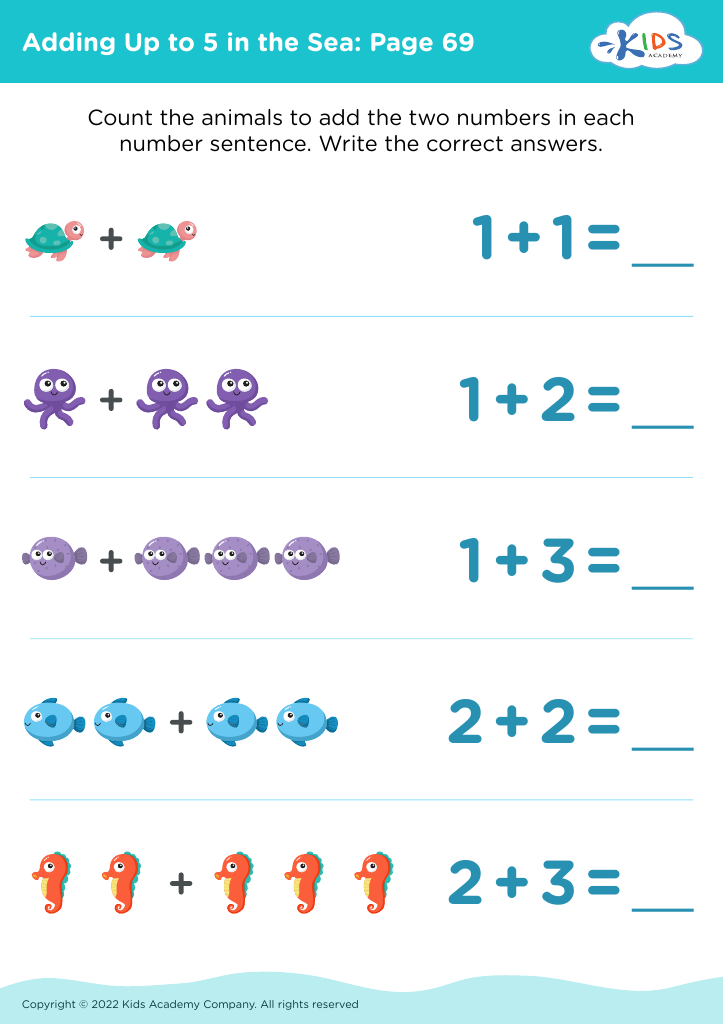
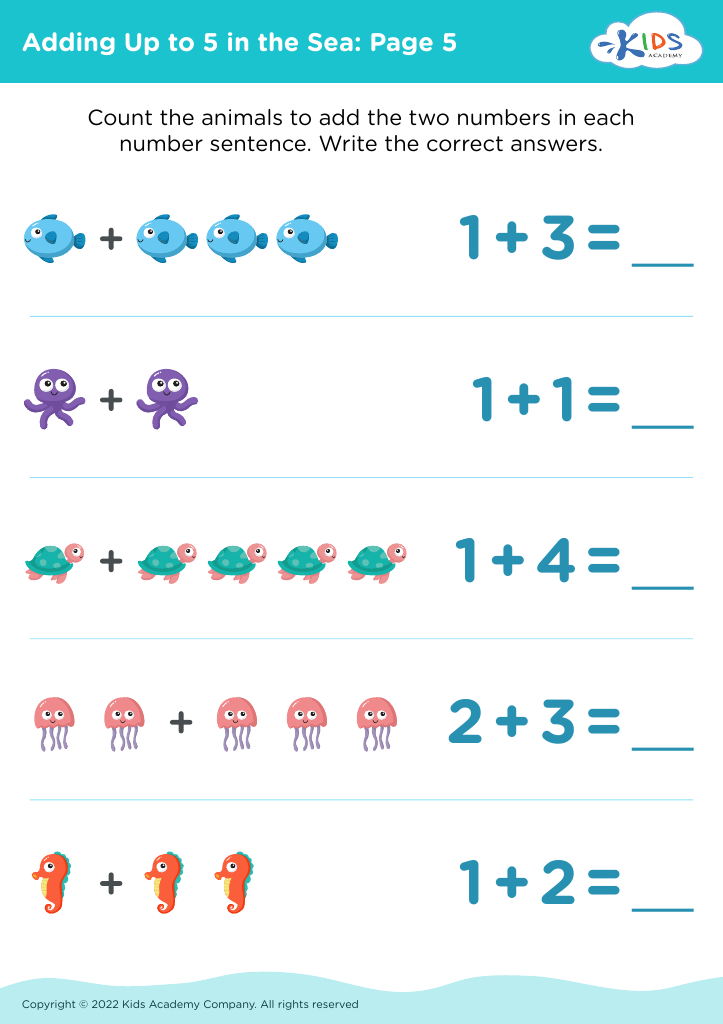
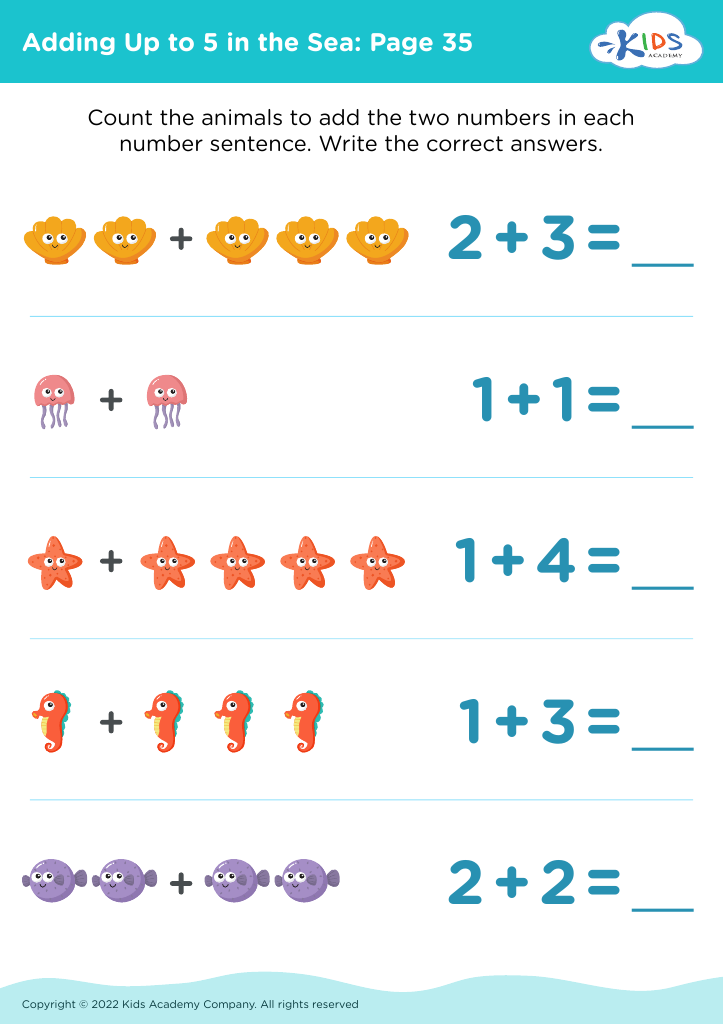



Visual perception is a critical skill for young children, particularly in the context of early learning activities such as "Adding in the Sea." At the age of four, children are developing their ability to interpret visual information, which forms the foundation for later academic skills, including reading, writing, and math.
Engaging kids with activities like "Adding in the Sea" encourages them to recognize and interpret numbers and shapes in a playful setting. This not only fosters mathematical understanding but also enhances their ability to make connections with real-world visuals, such as counting fish, identifying beach items, or comparing sizes. By integrating visual perception into these playful learning experiences, parents and teachers can help enhance a child's attention to detail, spatial awareness, and problem-solving abilities.
Moreover, caring about visual perception means acknowledging that it plays a large role in a child's overall development. Strong visual processing skills can aid in developing fine motor skills and increase confidence when interacting with their environment. In essence, fostering visual perception through activities like this supports holistic learning and prepares children for success in more formal educational settings. It creates a strong link between play and learning, enriching a child's early educational experience.