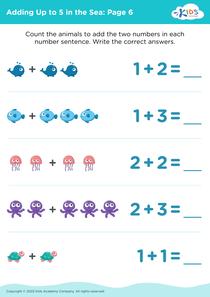
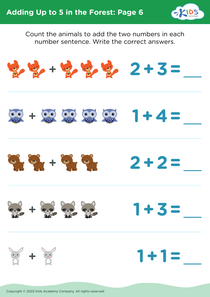
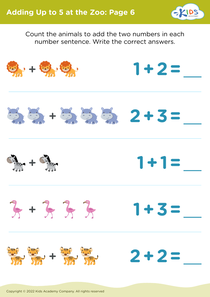
Addition Practice Adding on the Farm Worksheets for 4-Year-Olds
5 filtered results
-
From - To
Introduce your 4-year-old to the fun world of mathematics with our "Addition Practice Adding on the Farm Worksheets"! These engaging worksheets combine farm-themed illustrations with simple addition exercises to create an enjoyable learning experience. Designed specifically for preschoolers, they help young learners practice counting and basic addition, enhancing both their math and fine motor skills. Perfect for parents and teachers alike, these printables provide an educational activity that keeps little ones entertained while fostering important early math foundations. Download our farm-themed addition worksheets and watch your child's confidence in math grow as they solve each problem with ease!
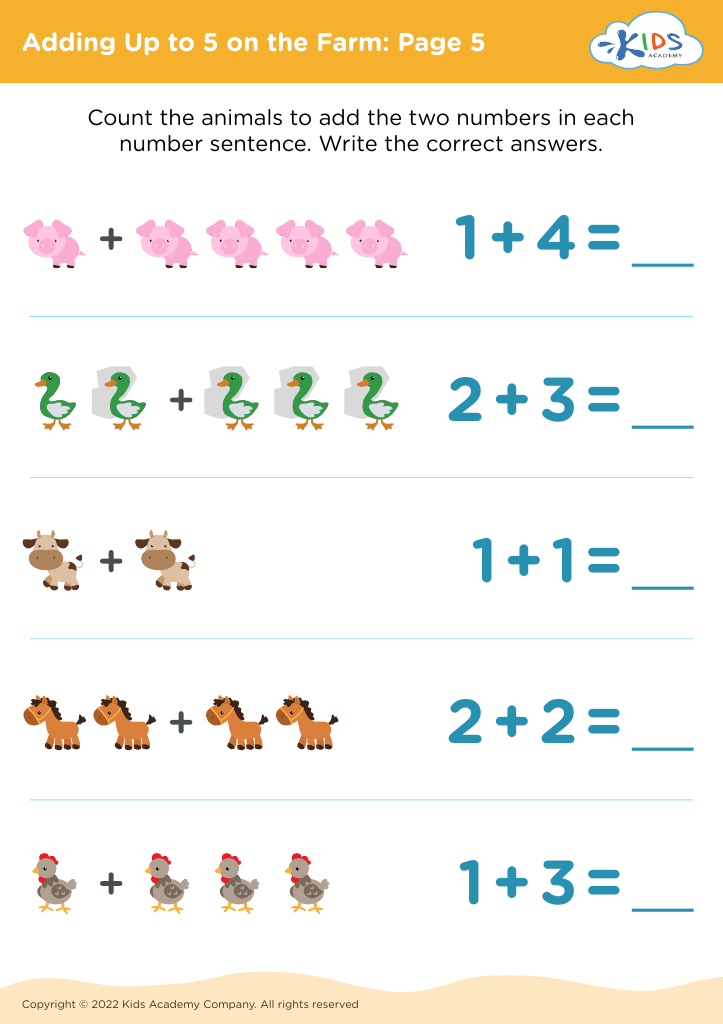
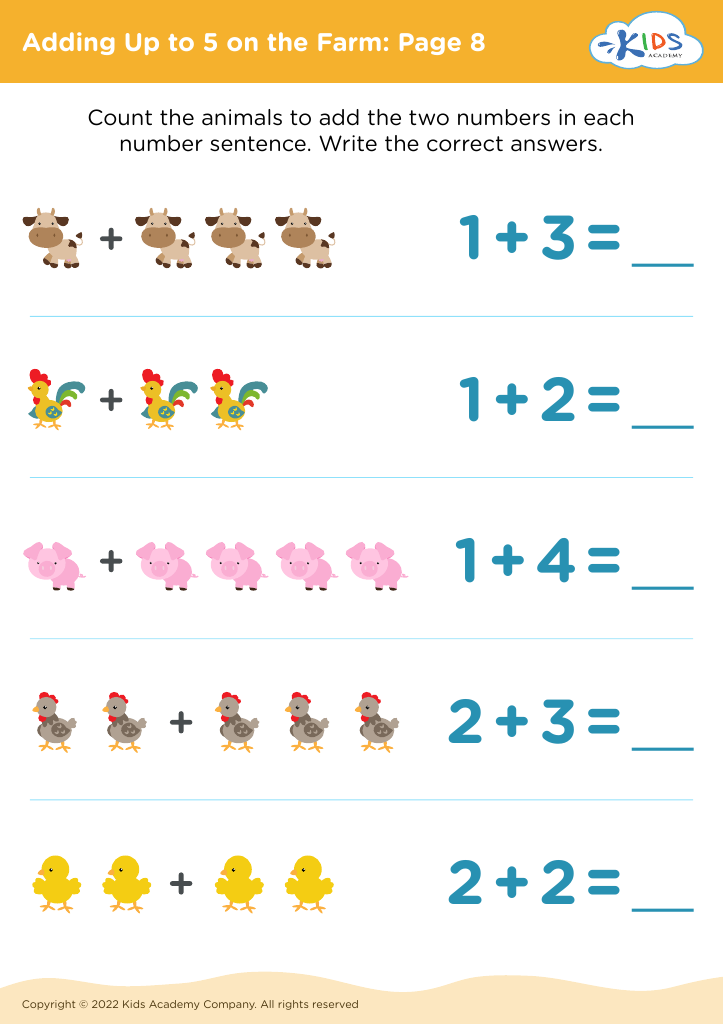
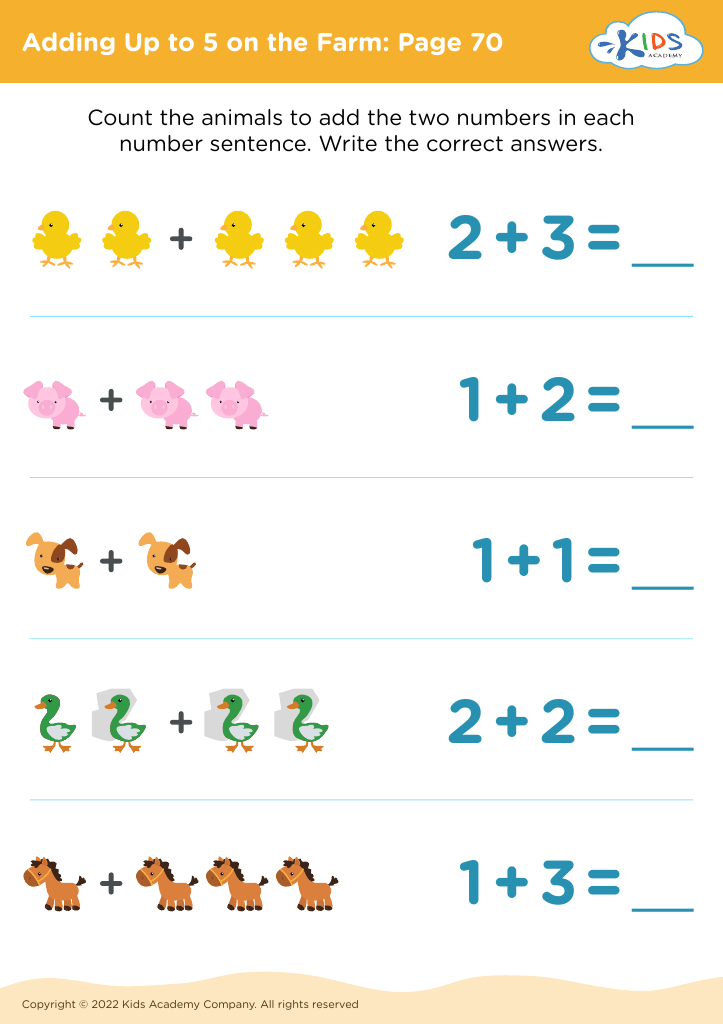
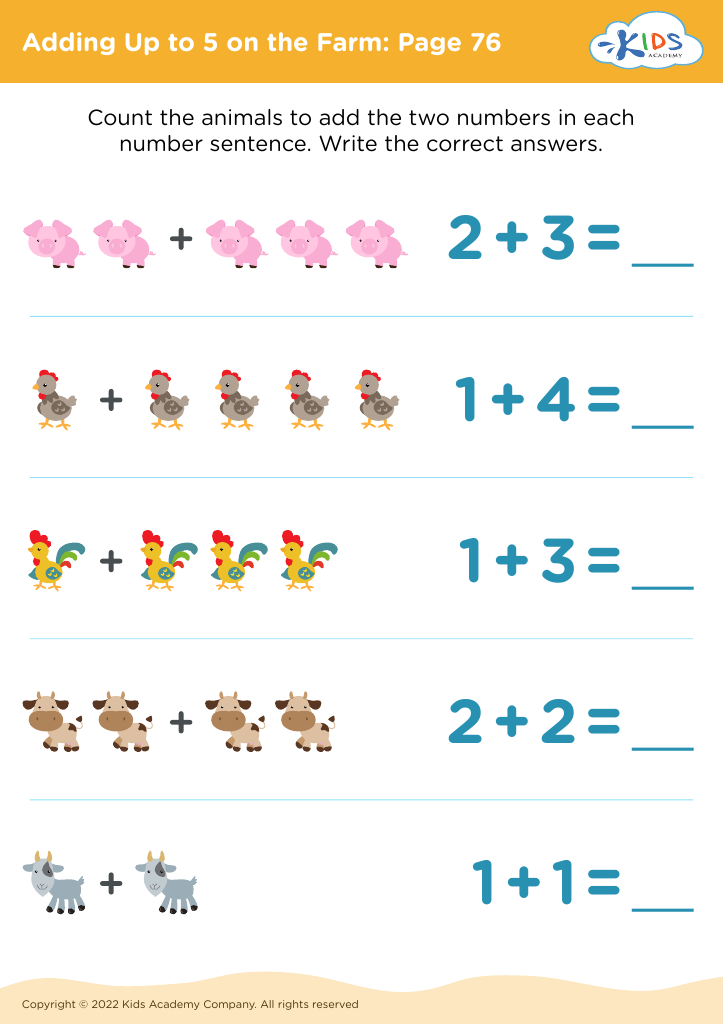
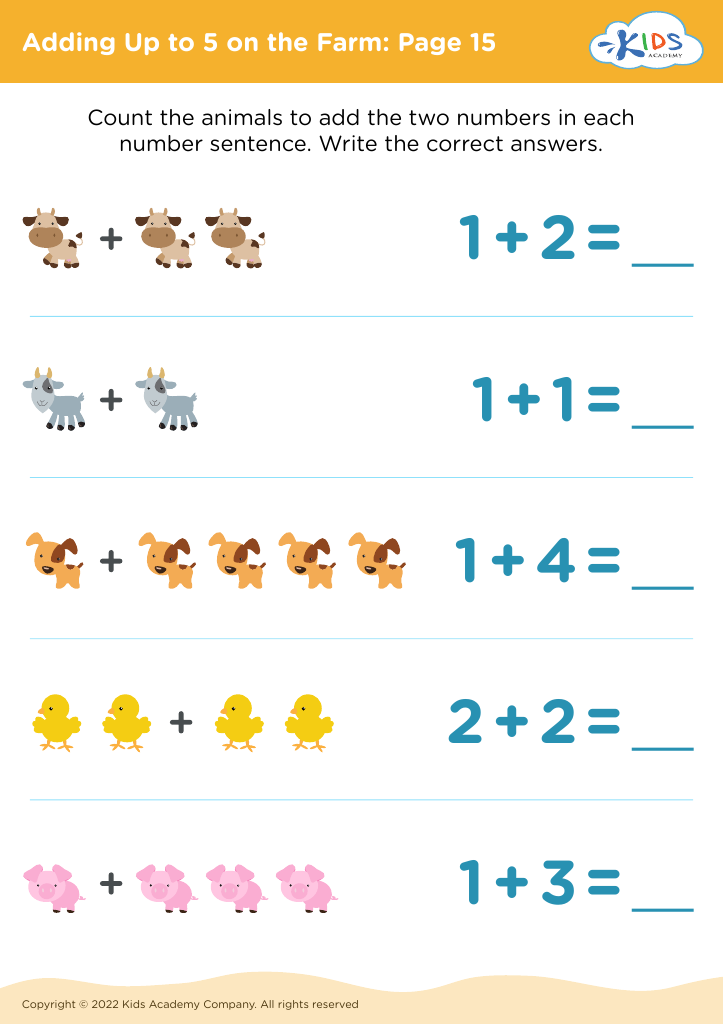



Parents and teachers should care about Addition Practice Adding on the Farm for 4-year-olds because early math skills are foundational for future academic success. Engaging children in activities like adding farm animals or produce integrates learning with fun, making educational concepts accessible at a young age. By using a thematic approach, such as a farm setting, children can relate to real-world experiences, which enhances their understanding and retention of numerical concepts.
Moreover, addition exercises improve cognitive skills, problem-solving abilities, and logical reasoning. When children are taught to perform basic arithmetic through playful scenarios, they not only learn to count but also develop a love for learning. This foundational math practice encourages curiosity and sets the stage for more complex mathematical concepts.
Furthermore, early exposure to math activities instills confidence in young learners. When children succeed in adding small groups of farm animals or counting items, they build a positive association with math. This confidence can motivate them to tackle new challenges eagerly.
Incorporating math practice into everyday situations, such as playing with farm animals, allows children to see the practical application of their skills. Parents and teachers play a crucial role in facilitating this interactive learning process, thereby fostering a lifelong appreciation for mathematics.