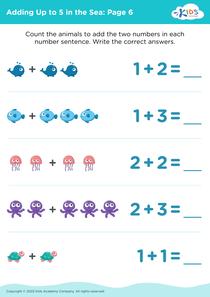
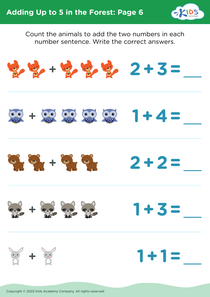
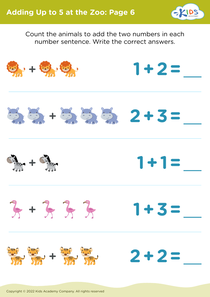
Animal recognition Adding on the Farm Worksheets for 4-Year-Olds - Page 2
31 filtered results
-
From - To
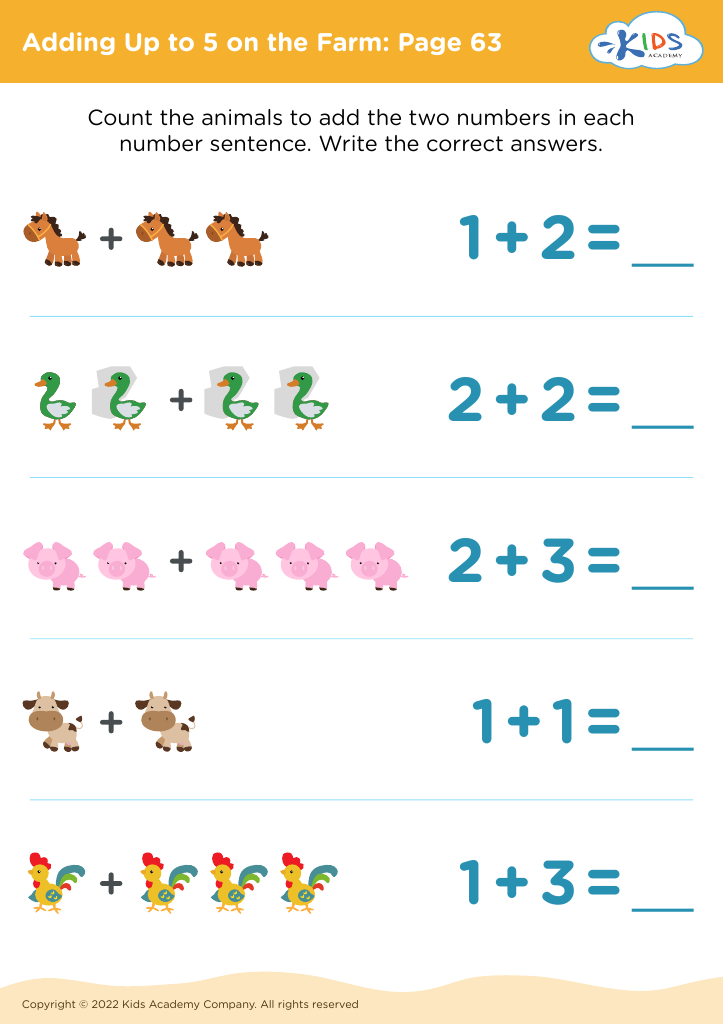
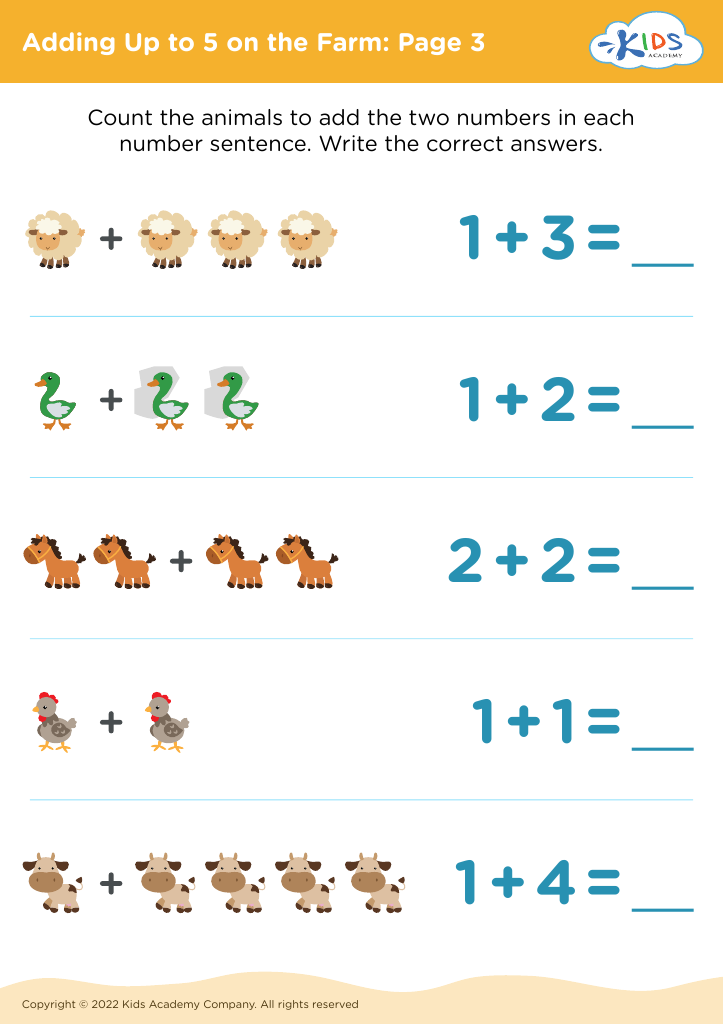
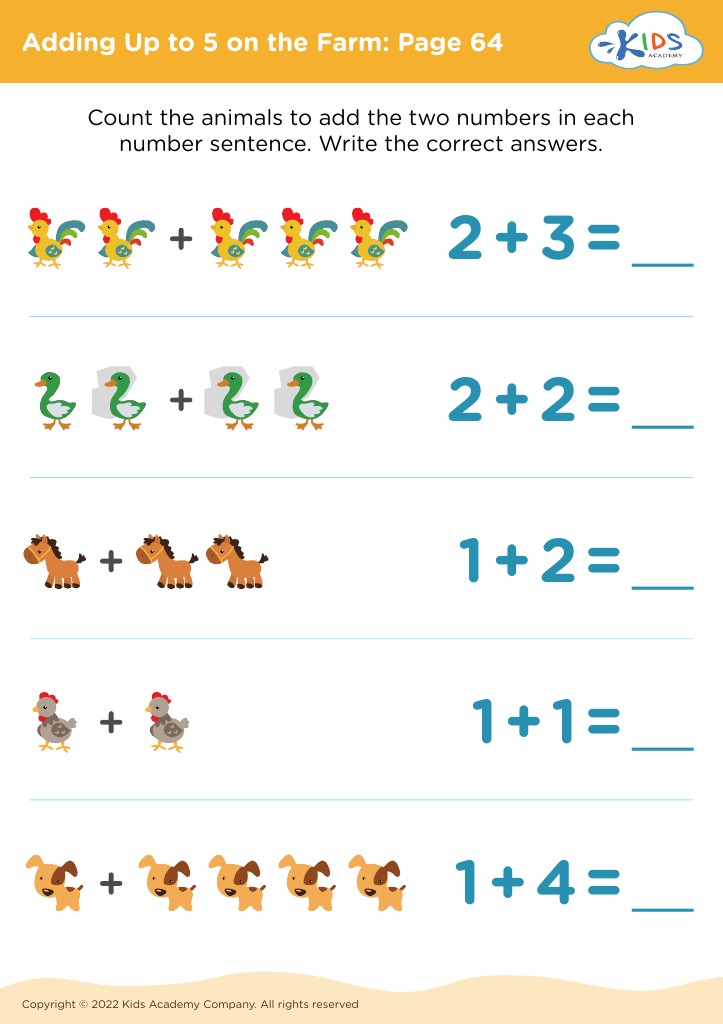
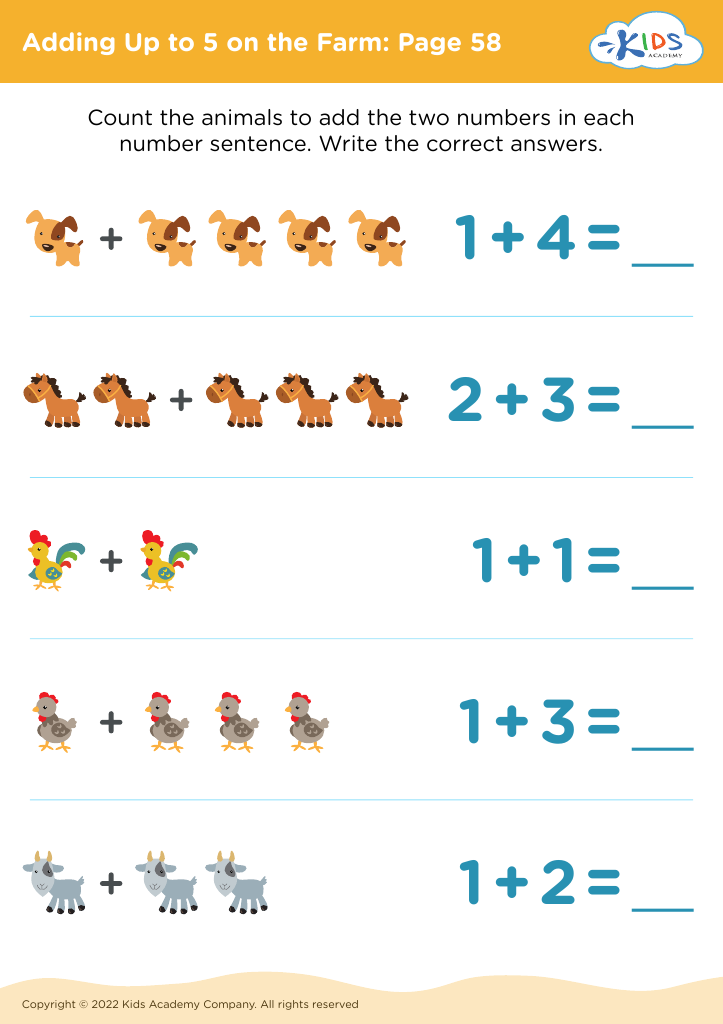
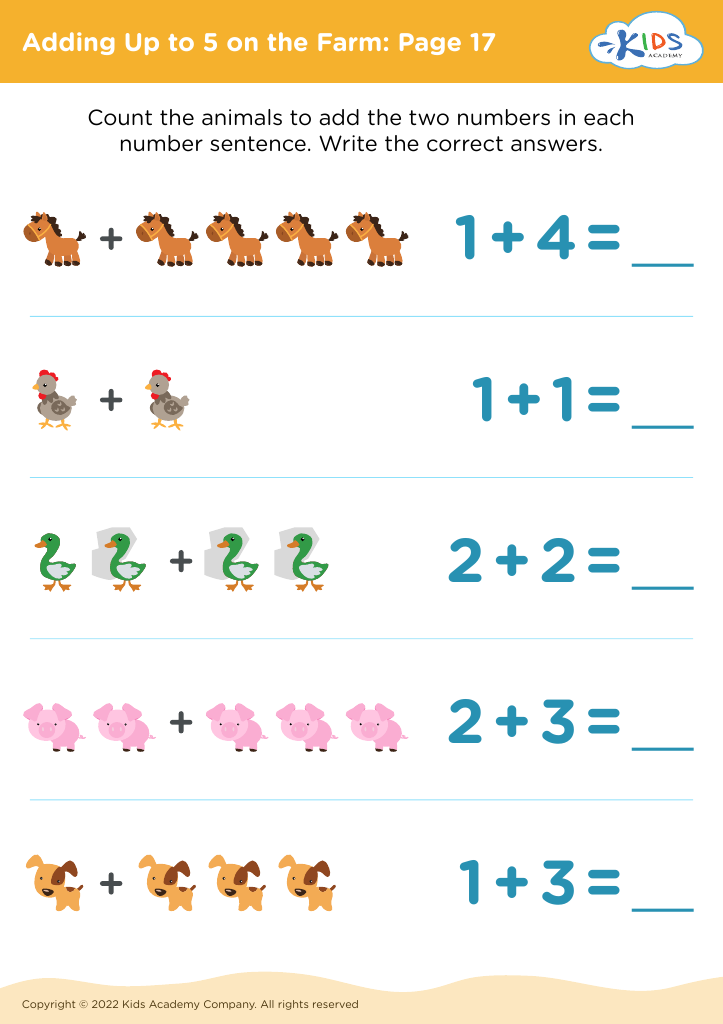
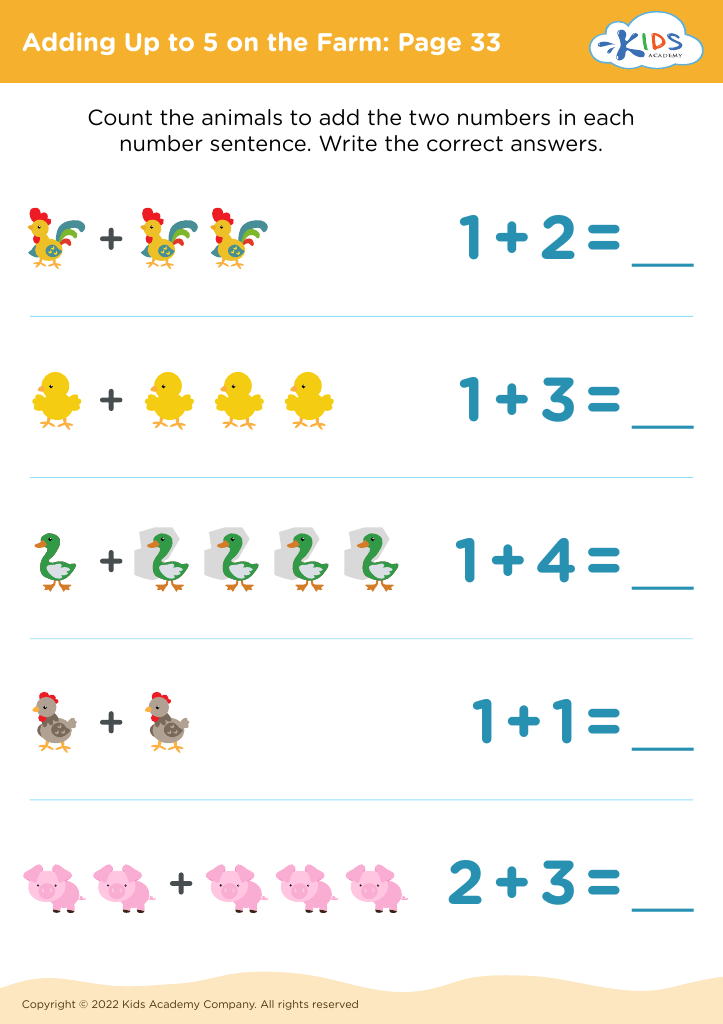
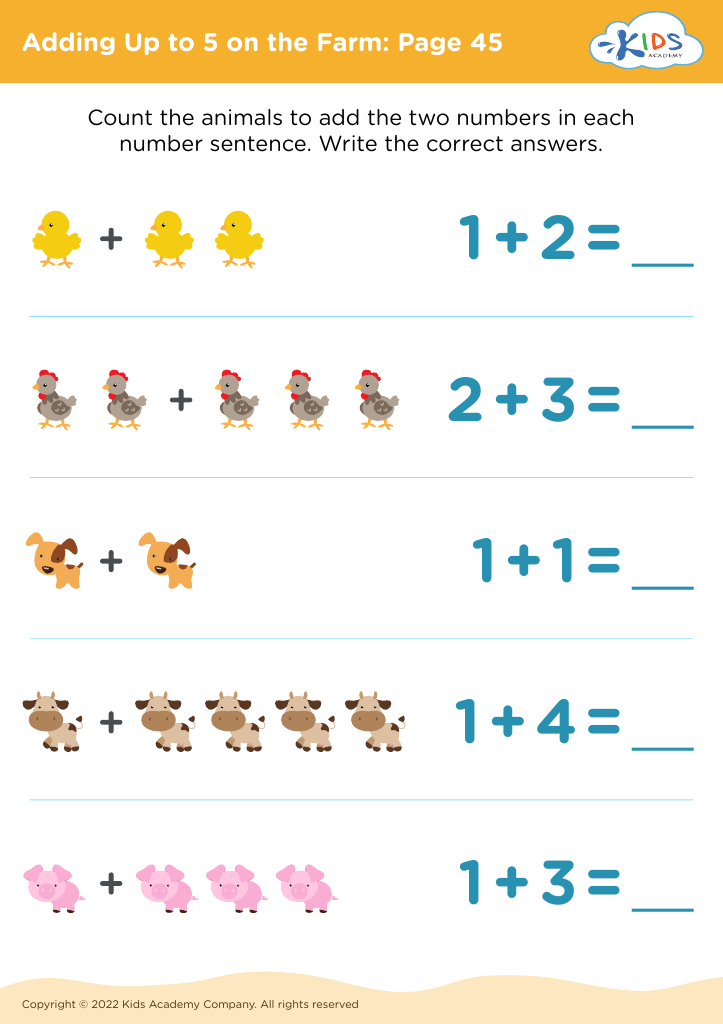



Parents and teachers should prioritize activities such as Animal Recognition and Adding on the Farm for 4-year-olds because these exercises play a crucial role in early childhood development. Firstly, animal recognition stimulates cognitive development and improves memory skills as children learn to identify and name various farm animals. This helps build their vocabulary and language skills, setting a strong foundation for future learning.
Mathematical activities like adding farm animals introduce basic arithmetic in a fun and engaging way. Developing numeracy skills early can greatly enhance a child's confidence and interest in mathematics, which is essential for their academic success. Farm-themed activities make abstract concepts more concrete, allowing young learners to see and count tangible objects.
These activities on a farm theme provide a multisensory learning experience by engaging sight, touch, sound, and sometimes even smell. Such holistic engagement fosters better retention and understanding. Moreover, interacting with animal images, toys, or even real animals can teach empathy, responsibility, and care for living creatures.
By blending education themes with playful learning, both parents and teachers can ensure that foundational concepts are not only taught efficiently but also become a joyful and integral part of a child's everyday life, encouraging lifelong curiosity and love for learning.