Problem Solving Adding on the Farm Worksheets for 4-Year-Olds
3 filtered results
-
From - To
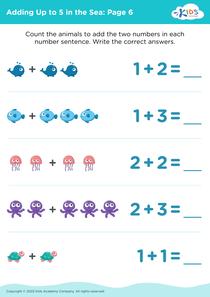
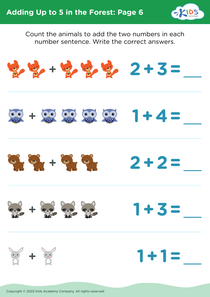
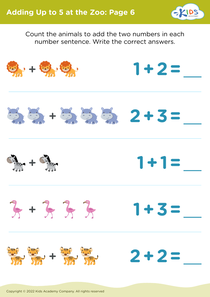
Discover engaging "Problem Solving Adding on the Farm" worksheets designed specifically for 4-year-olds! These fun, interactive activities introduce young learners to basic math concepts through a delightful farm theme. Children will solve addition problems involving familiar farm animals, fostering their arithmetic skills while nurturing their love for learning. Each worksheet emphasizes critical thinking, helping little ones develop problem-solving abilities in a hands-on way. Perfect for parents and teachers, these printable resources promote early math skills in an enjoyable context, laying a strong foundation for future success. Download now and watch your child's confidence blossom as they master addition in a playful environment!
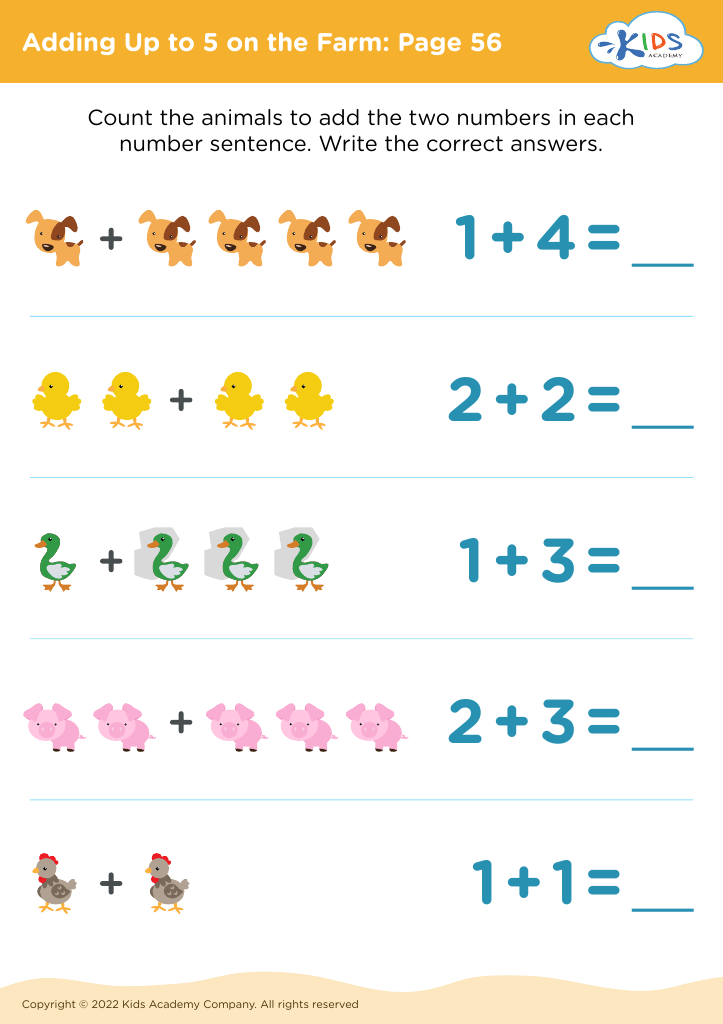
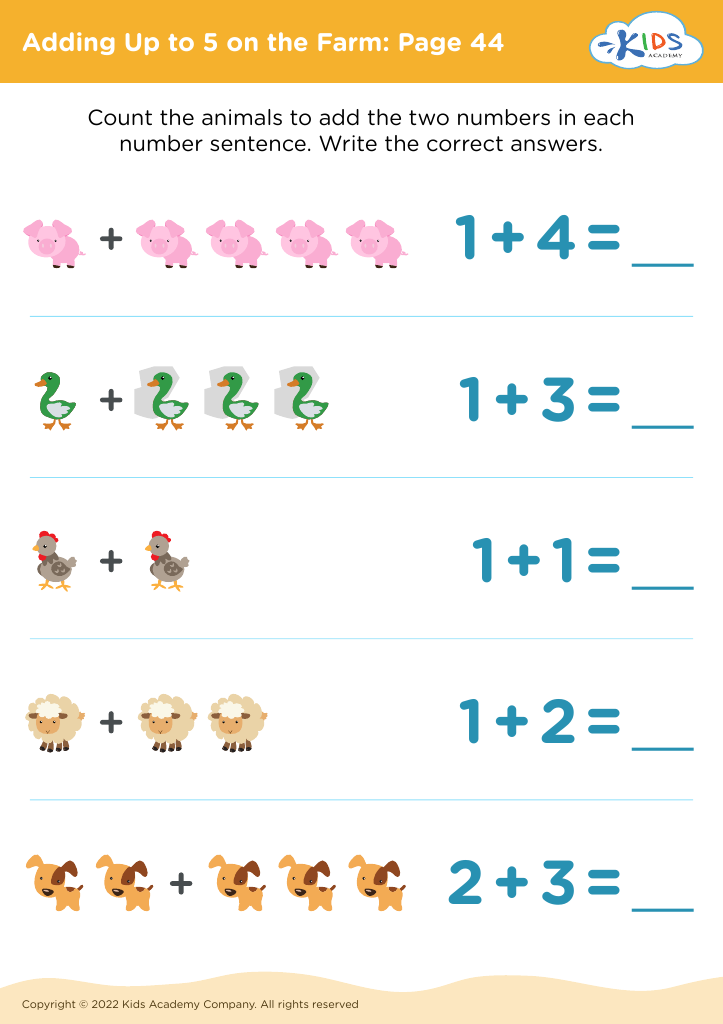
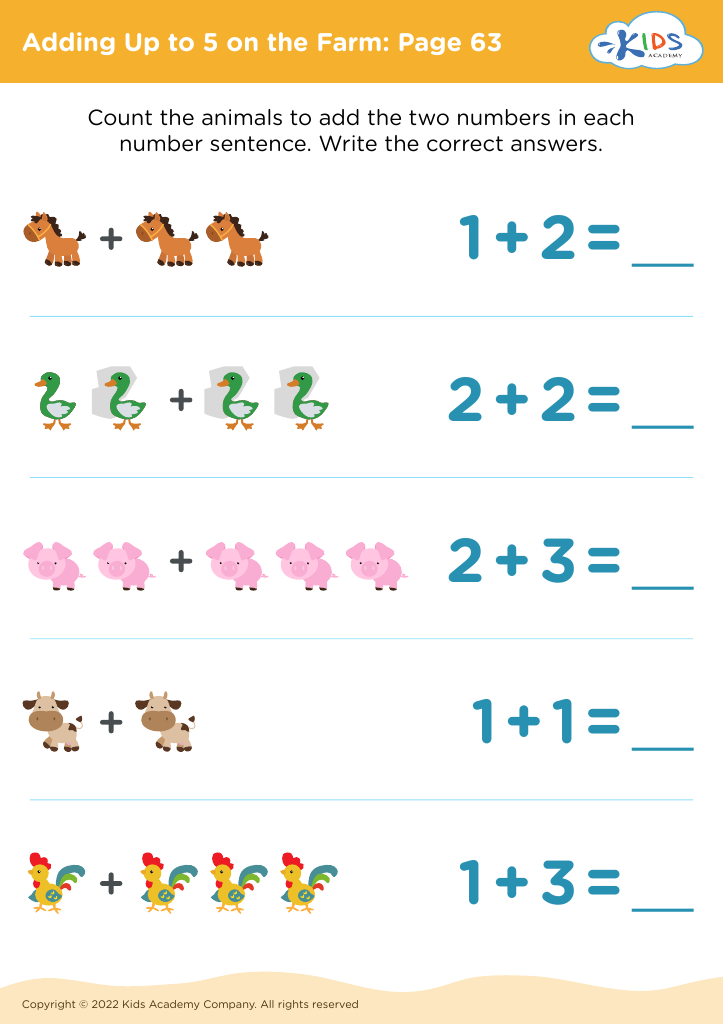



Problem solving is a vital skill that significantly impacts a child's development, making activities like Problem Solving Adding on the Farm essential for 4-year-olds. Engaging children in such playful, thematic learning fosters critical cognitive skills and supports their emerging math abilities. When children add animals on a farm, they’re not just learning numbers but also enhancing their reasoning and decision-making skills. This interactive approach enables them to visualize concepts, forge connections between numbers and real-life scenarios, and promotes active thinking.
Furthermore, problem solving encourages creativity and resilience. Children learn that there’s often more than one way to solve a problem; this understanding nurtures flexibility in thinking, as well as perseverance when they encounter challenges. It also helps children develop language skills as they begin to articulate their thought processes and reasoning.
For parents and teachers, participating in this kind of learning means they can track progress, understand a child's thought dynamics, and provide tailored support as needed. Ultimately, fostering problem-solving skills early ensures that children build a solid foundation for future academic success and lifelong learning, empowering them to face challenges with confidence and strategy beyond the classroom.