Visual Learning Adding on the Farm Worksheets for 4-Year-Olds - Page 2
25 filtered results
-
From - To
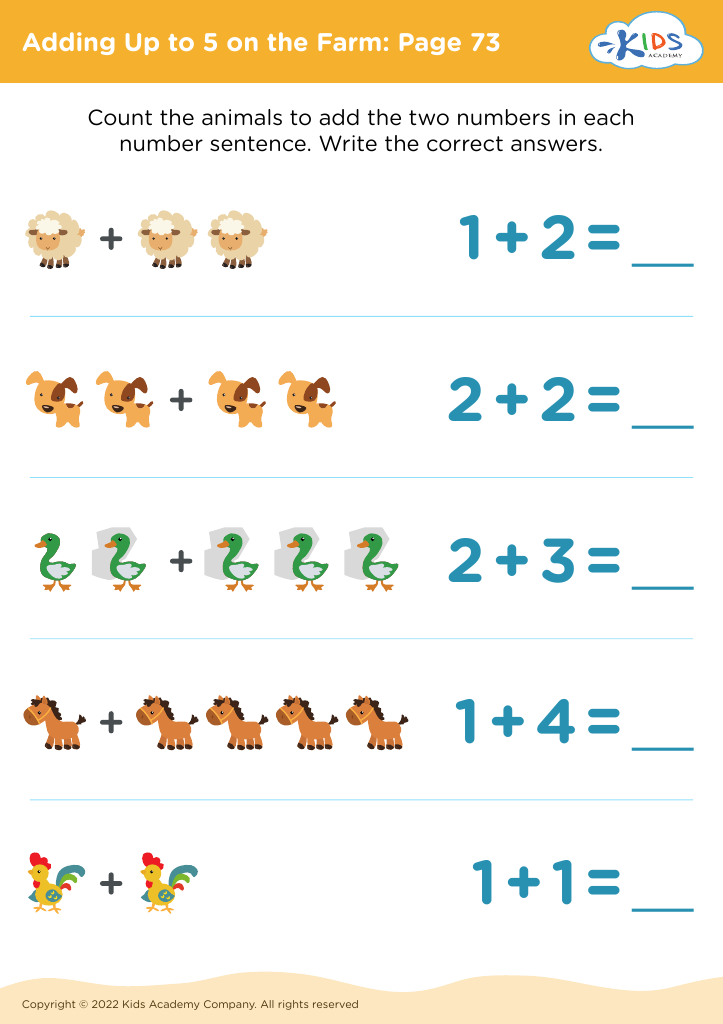



Visual learning is a powerful method that taps into a child's natural inclination to process information through sight. For 4-year-olds, incorporating visual learning strategies, especially with engaging themes like "Adding on the Farm," can significantly enhance their understanding of basic math concepts. Young children are often curious and eager to connect what they see and experience in the real world with their learning.
Utilizing farm-related visuals—such as animals, crops, and farming tools—makes abstract math concepts like addition tangible. When children visualize animals such as two cows and three more arriving, they can count and physically manipulate these objects, helping them grasp the concept of "adding" more intuitively.
Parents and teachers should care about visual learning because it not only promotes cognitive development but also supports retention and makes learning enjoyable. This engagement fosters a love for learning early on. Furthermore, using relatable contexts, like farms, can make lessons culturally relevant and meaningful, thus increasing motivation and participation. By embedding visual learning into early education, caregivers help children build a strong foundation in math, critical thinking, and engagement skills that are crucial in their future academic endeavors.