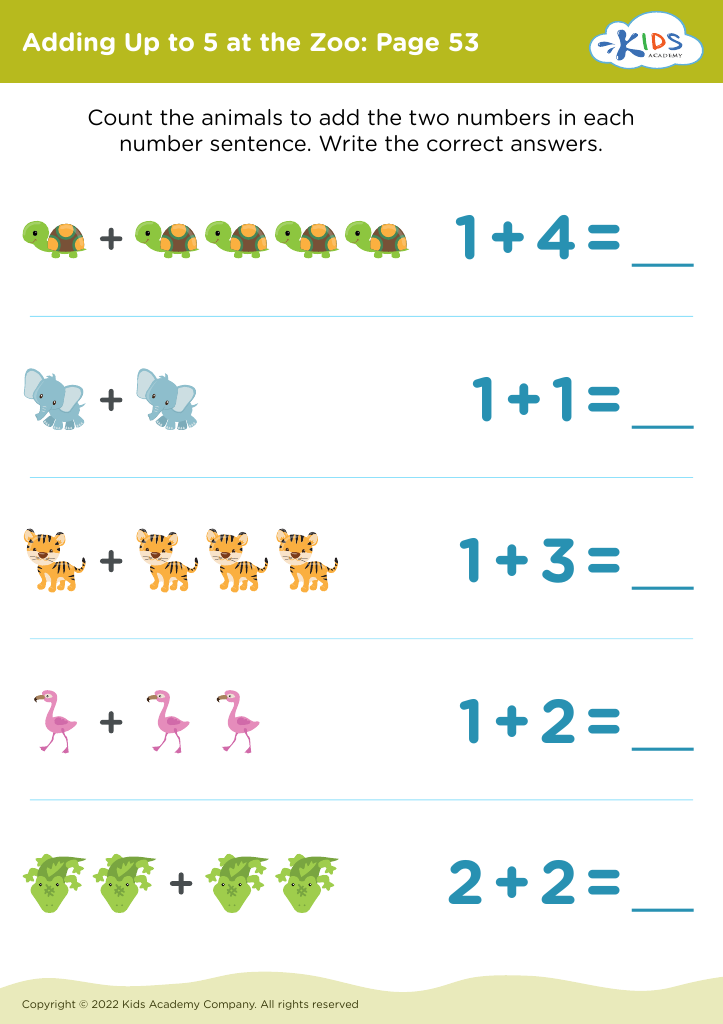
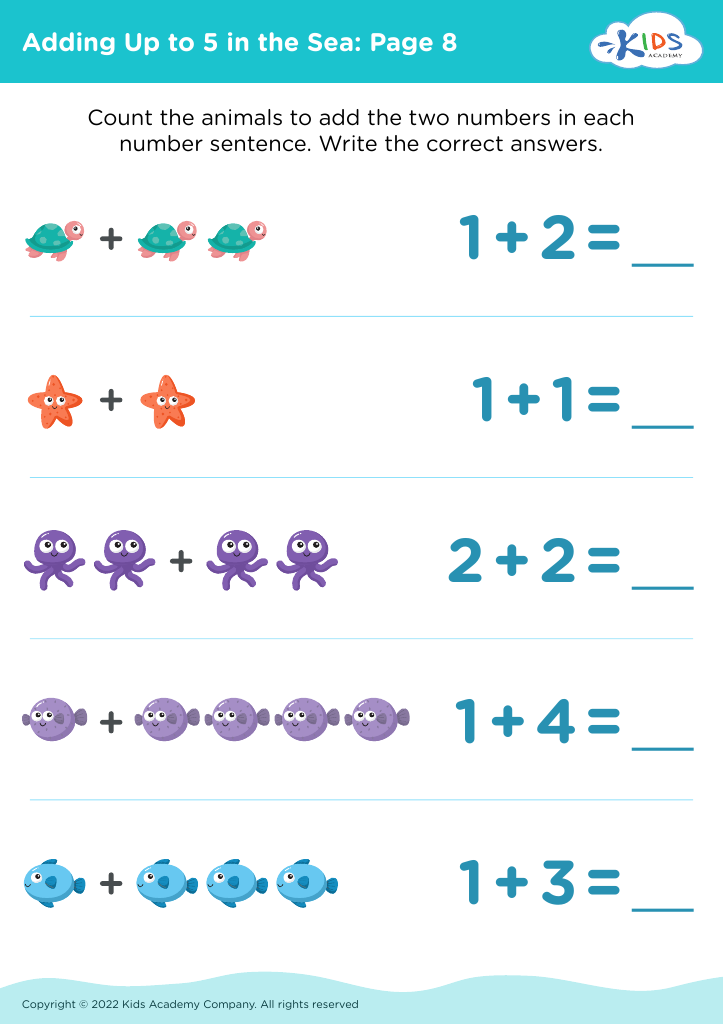
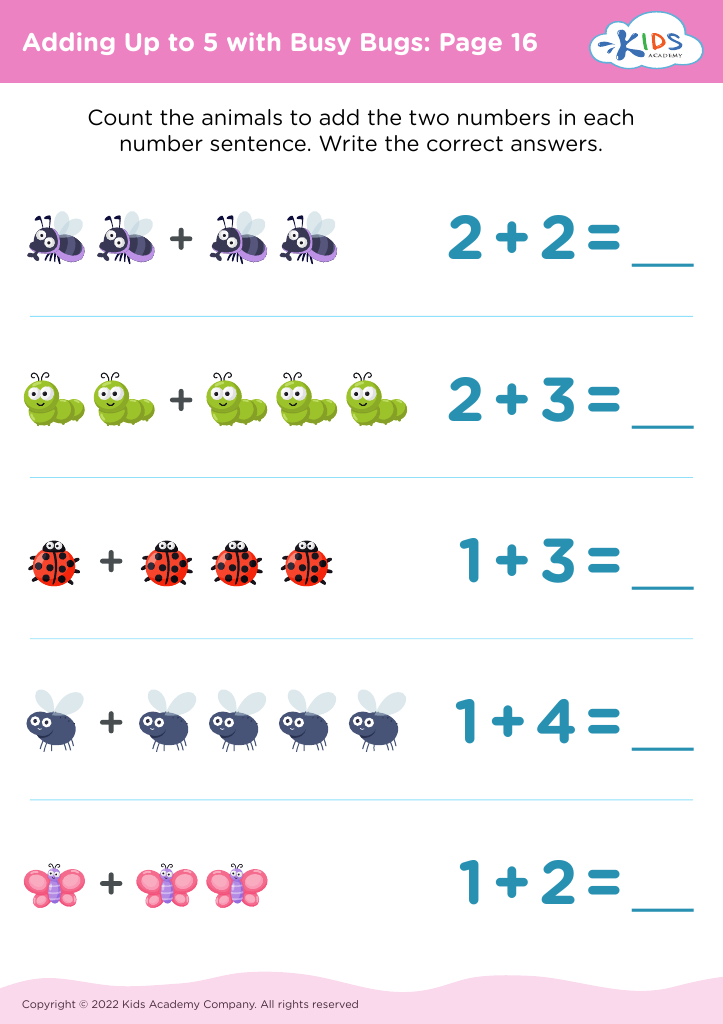
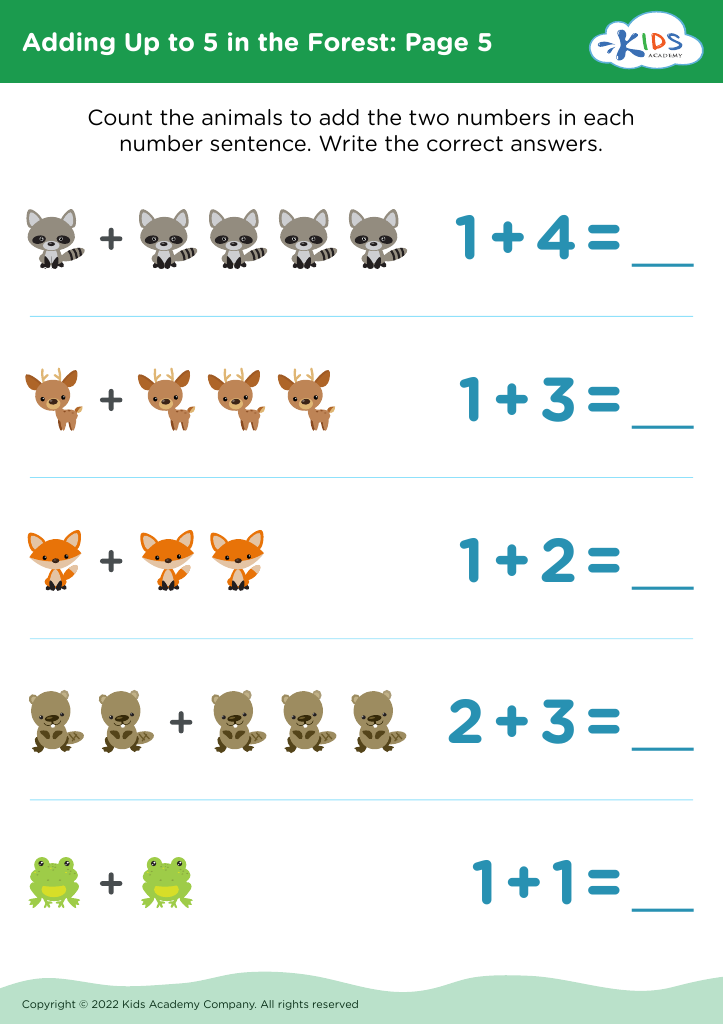
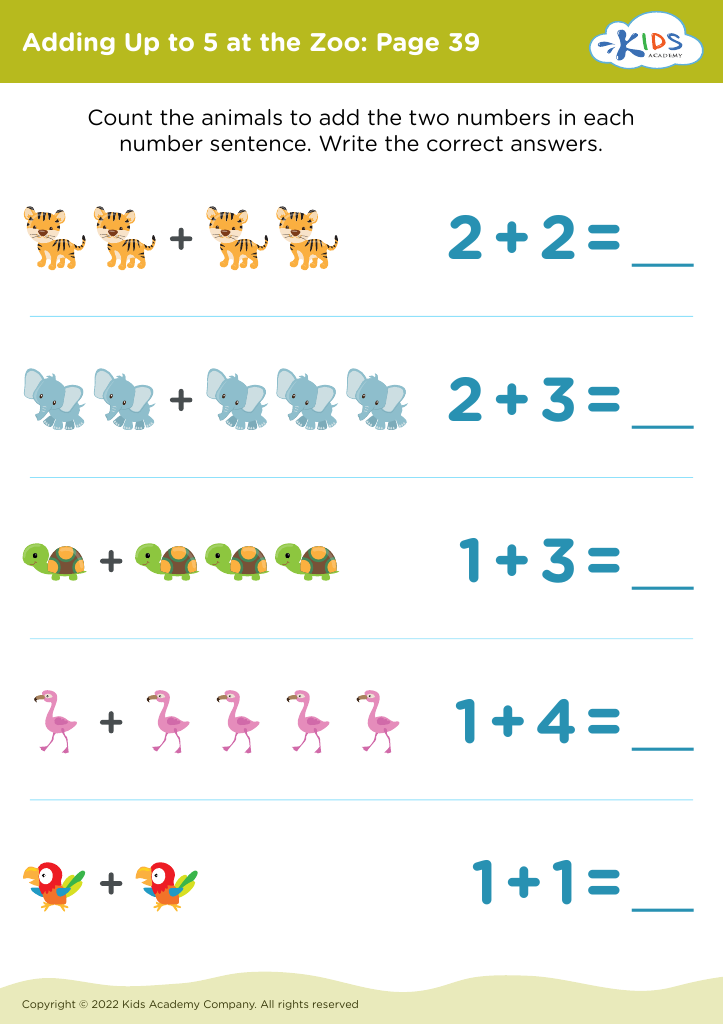
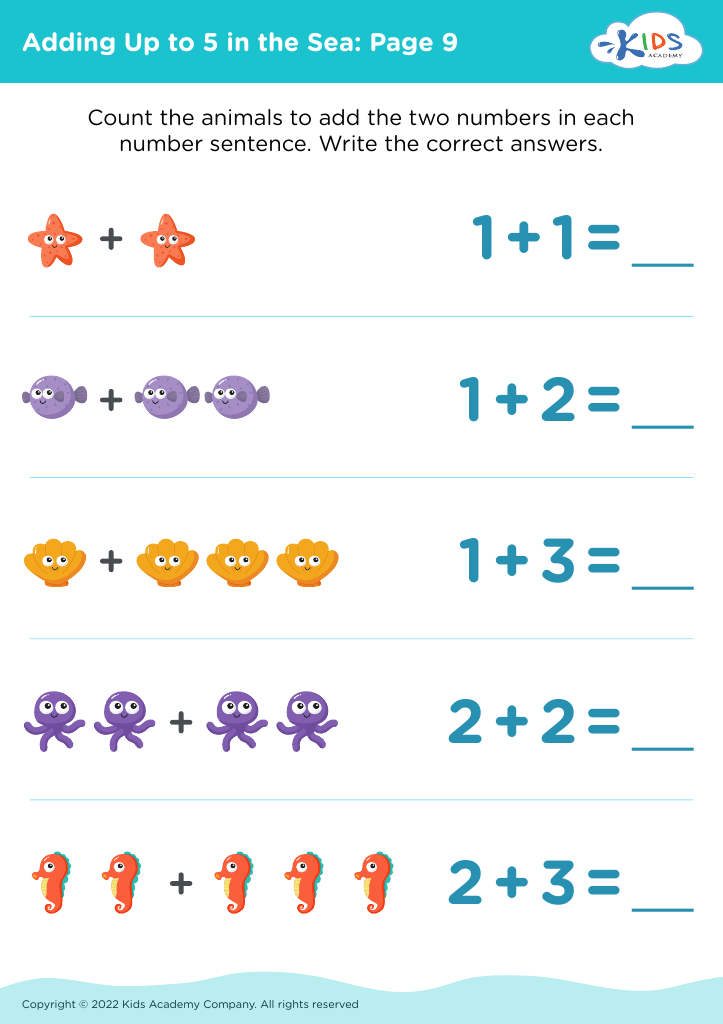








Parents and teachers should care about developing addition skills up to 5 in 4-year-olds because these foundational math skills are crucial for early cognitive and academic development. At this age, children's brains are highly receptive to new information. Learning basic addition helps them build a strong mathematical foundation, fostering skills like counting, number recognition, and understanding numerical relationships. These early math skills are strongly linked to future academic success, not just in math but across various subjects, as they enhance problem-solving, logical thinking, and attention to detail.
Moreover, mastering addition up to 5 can boost a child's confidence and enthusiasm for learning. When parents and teachers create enjoyable, hands-on activities around addition, kids view math as a fun and integral part of their daily lives. This positive early experience with math can lead to a sustained interest and positive attitude towards more advanced mathematical concepts later on.
Additionally, learning to add small numbers involves visualizing groups, using fingers, or simple objects, which builds early counting strategies and arithmetic fluency. These skills are essential for higher mathematical operations and critical life skills such as measuring, cooking, and making financial decisions. Therefore, nurturing these abilities at an early age creates a solid base for lifelong learning and real-world applications.








