Filters

90 filtered results

Clear all filters
Favorites
With answer key
Interactive

90 filtered results

Difficulty Level

Grade


Check out this FREE Trial Lesson on Adding Up to 5 for age 4!

T

Favorites
With answer key
Interactive
  • 4
  • Animal recognition
  • Adding Up to 5
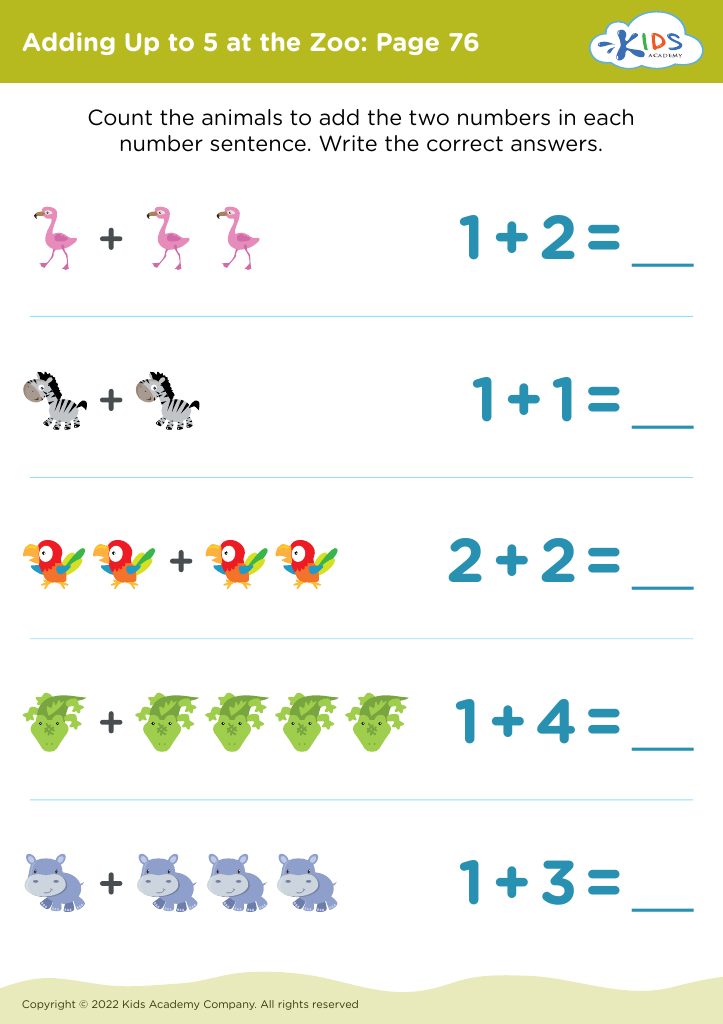
Adding Up to 5 at the Zoo: Page 76
Worksheet
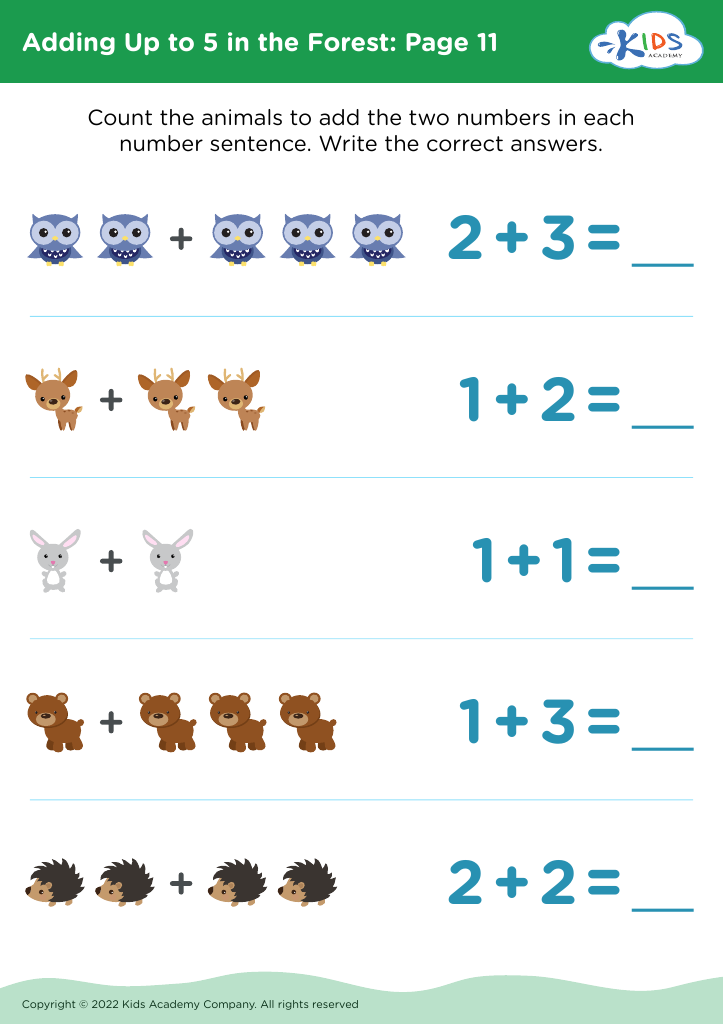
Adding Up to 5 in the Forest: Page 11
Worksheet
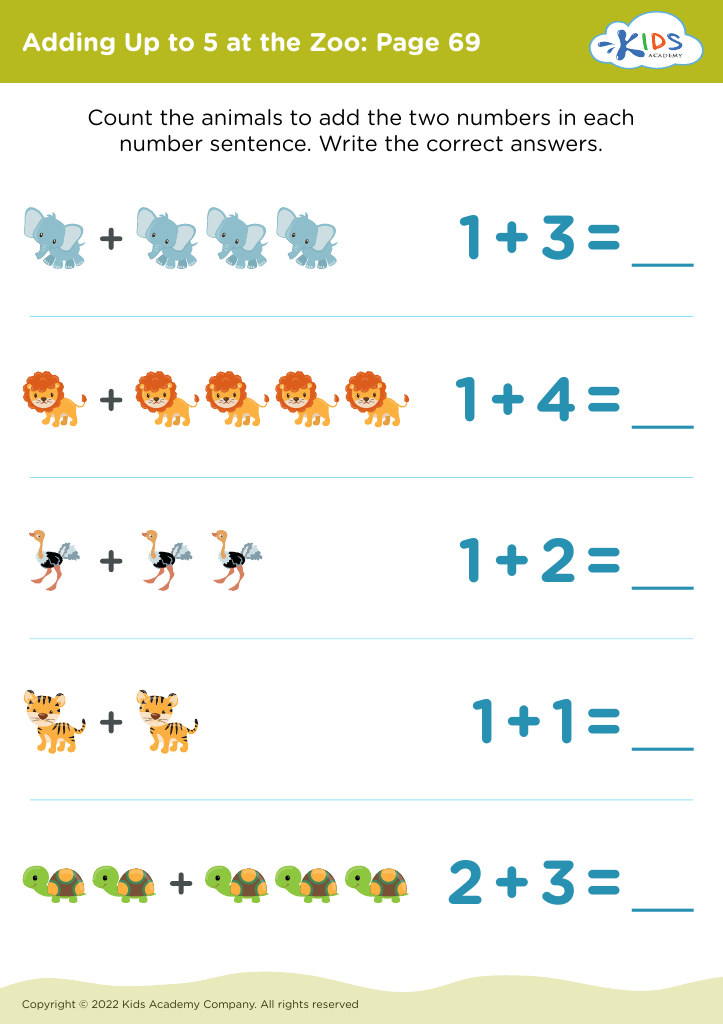
Adding Up to 5 at the Zoo: Page 69
Worksheet
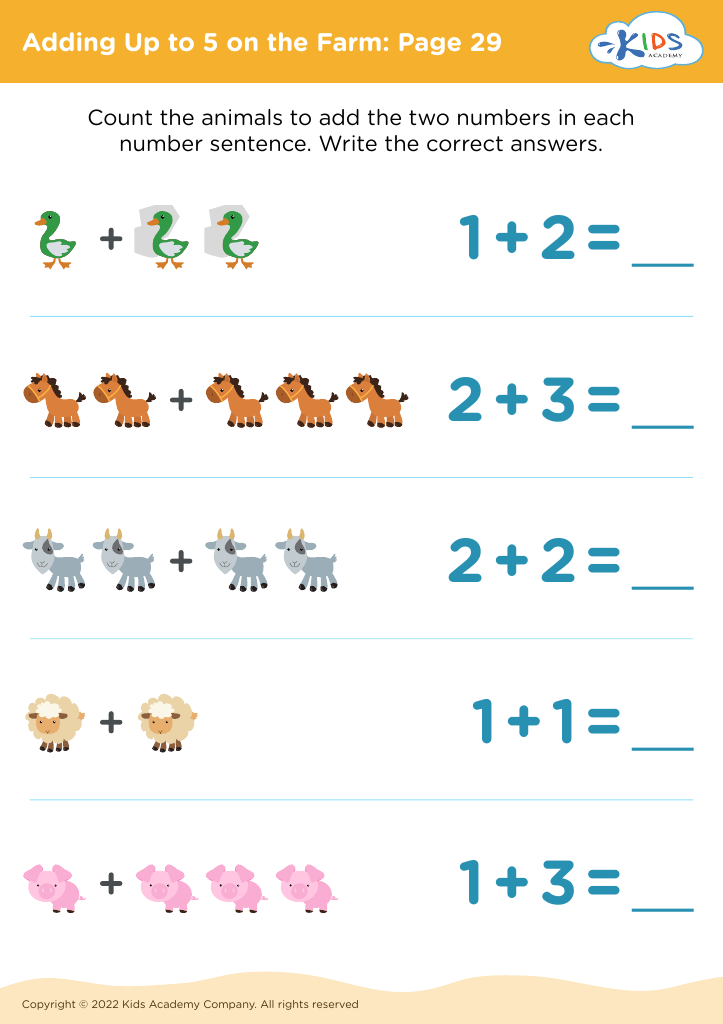
Adding Up to 5 on the Farm: Page 29
Worksheet
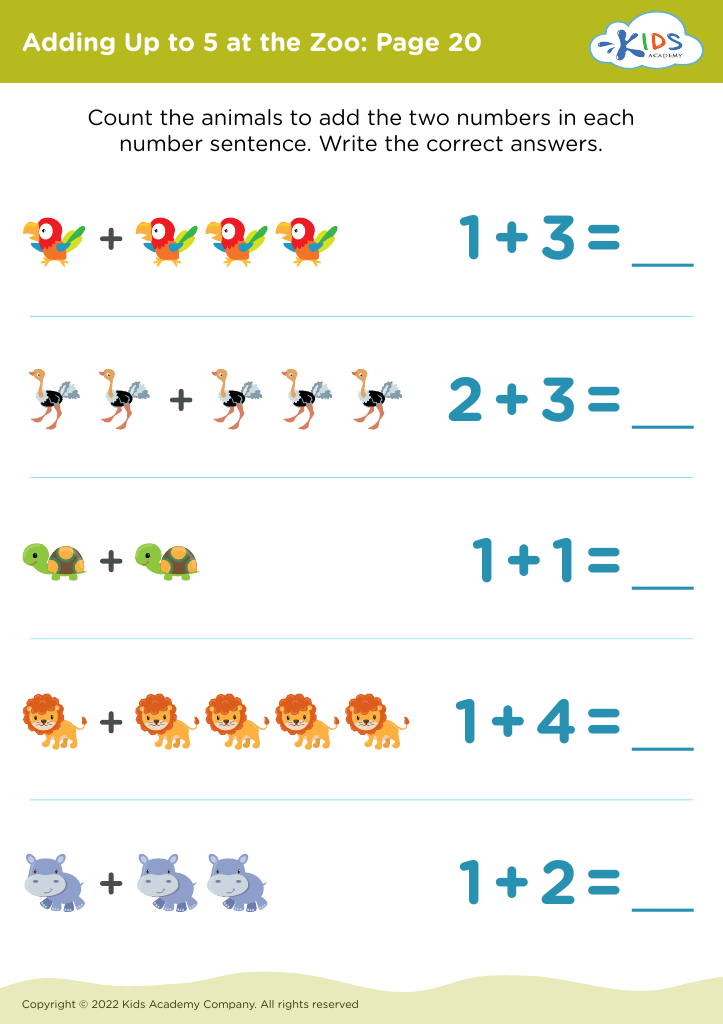
Adding Up to 5 at the Zoo: Page 20
Worksheet
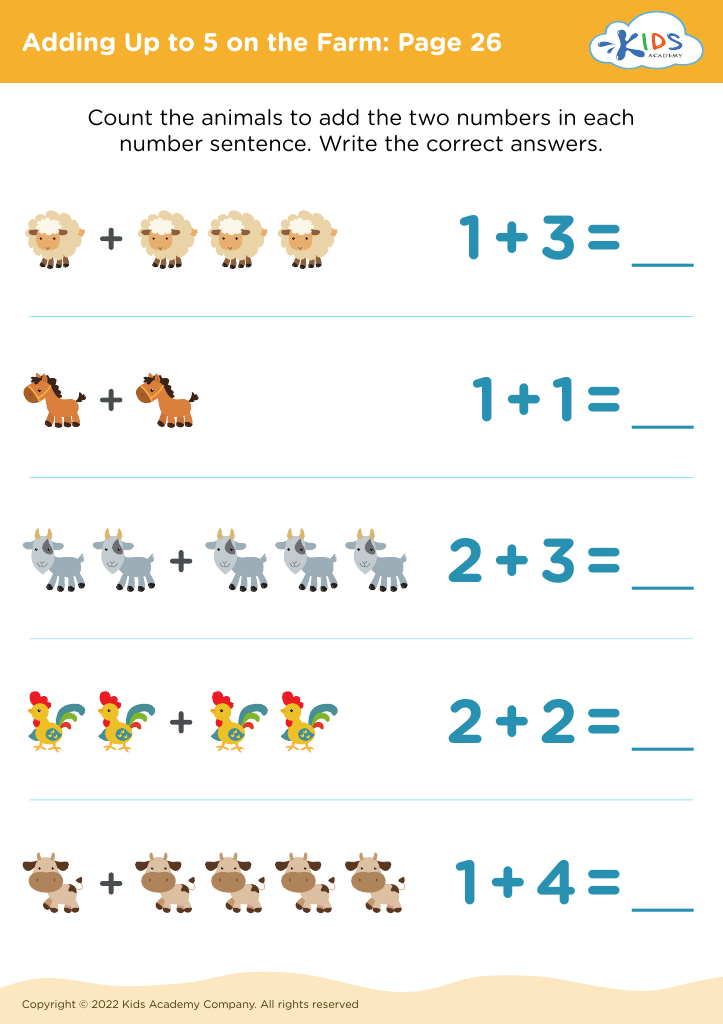
Adding Up to 5 on the Farm: Page 26
Worksheet
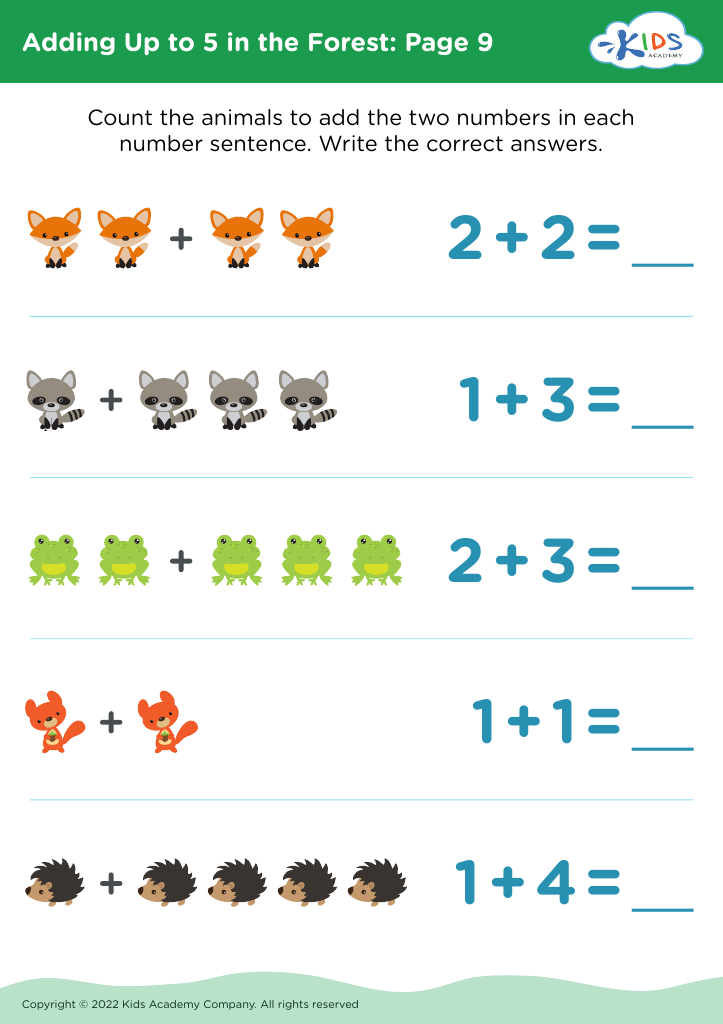
Adding Up to 5 in the Forest: Page 9
Worksheet
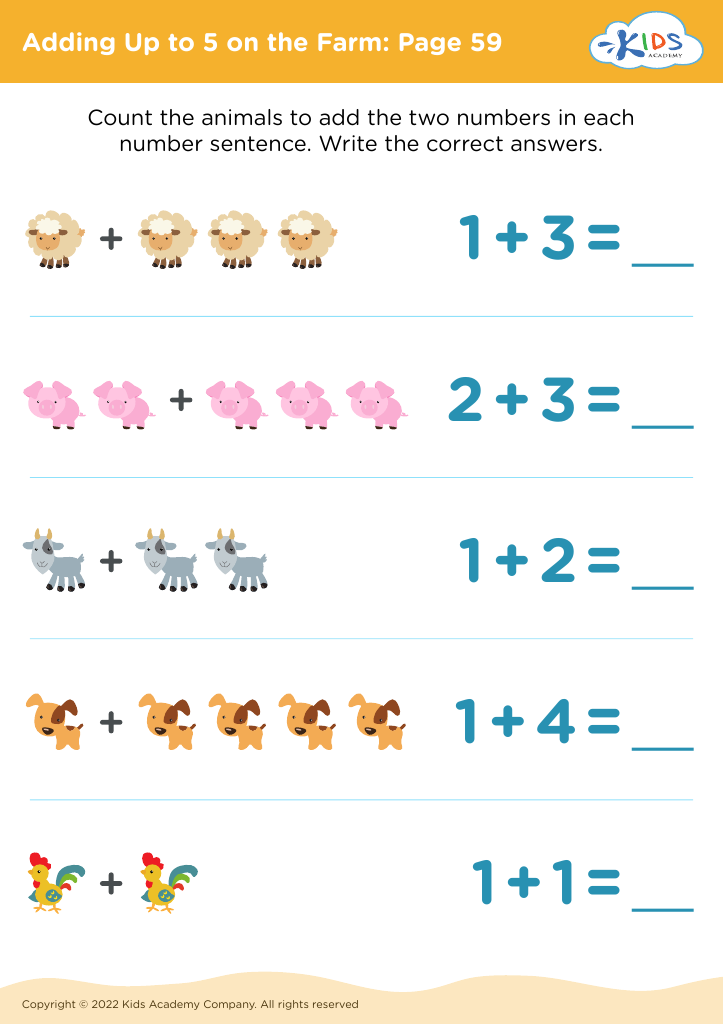
Adding Up to 5 on the Farm: Page 59
Worksheet
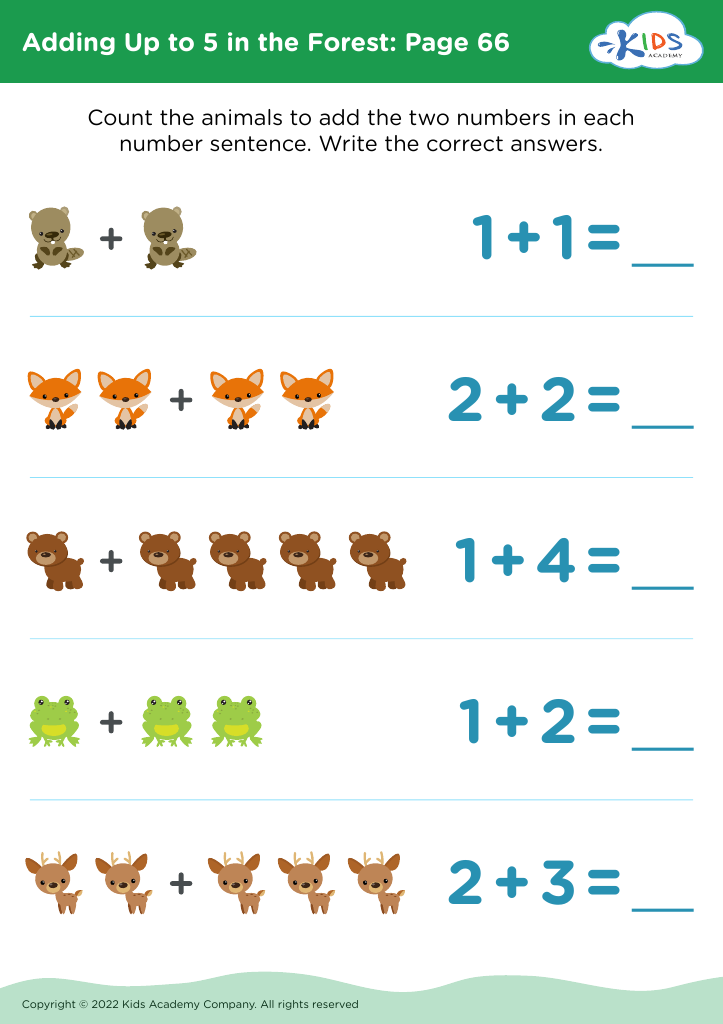
Adding Up to 5 in the Forest: Page 66
Worksheet
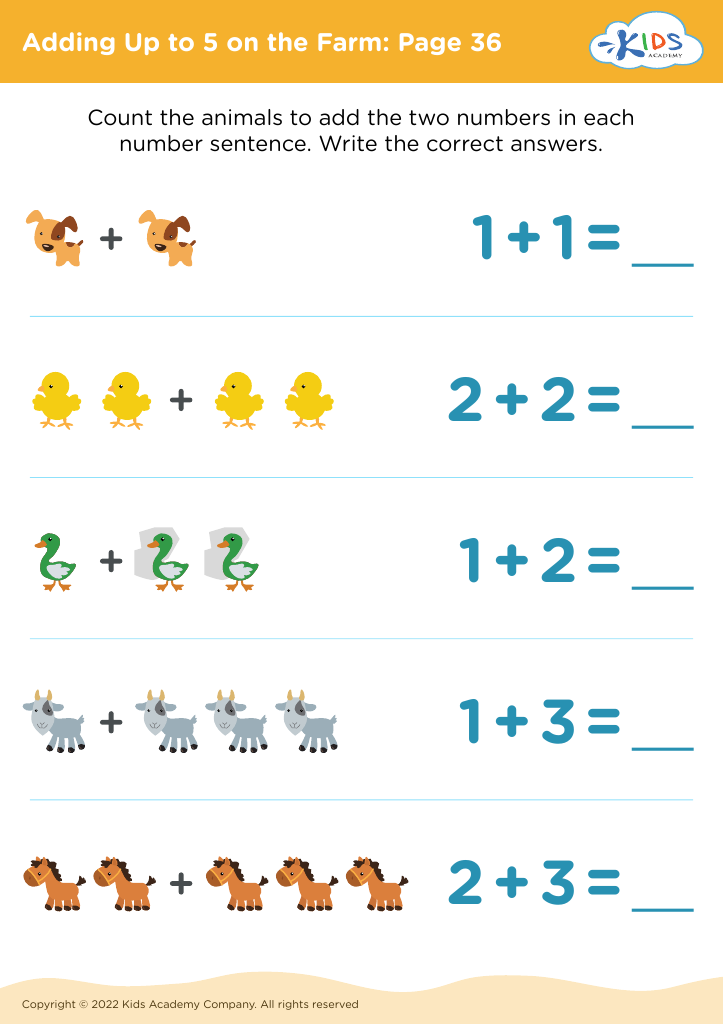
Adding Up to 5 on the Farm: Page 36
Worksheet
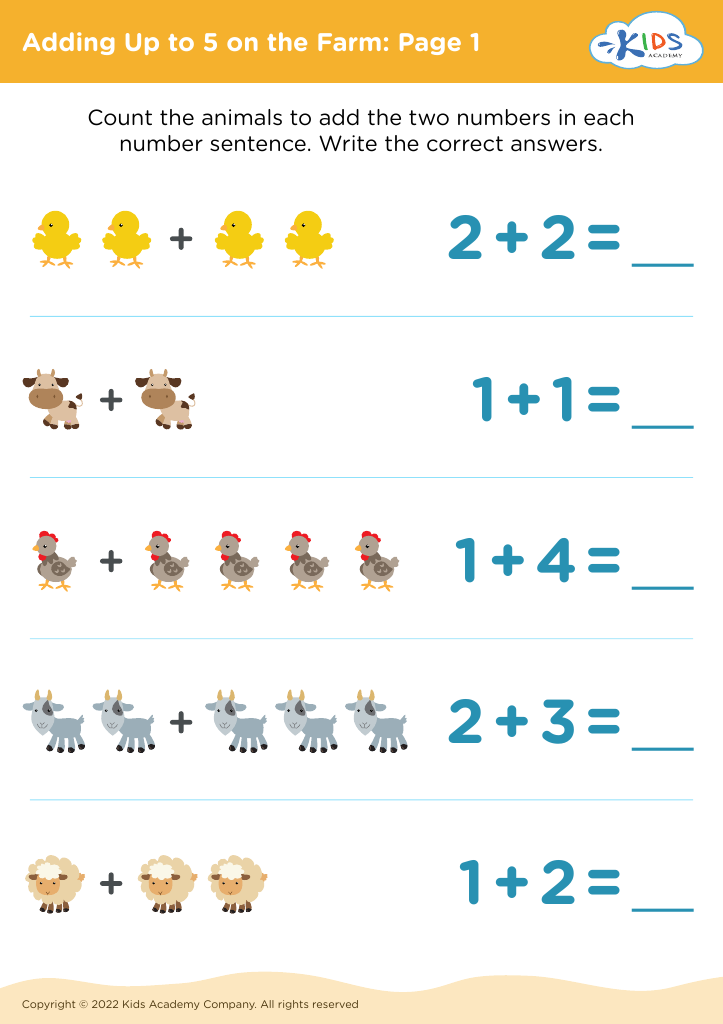
Adding Up to 5 on the Farm: Page 1
Worksheet
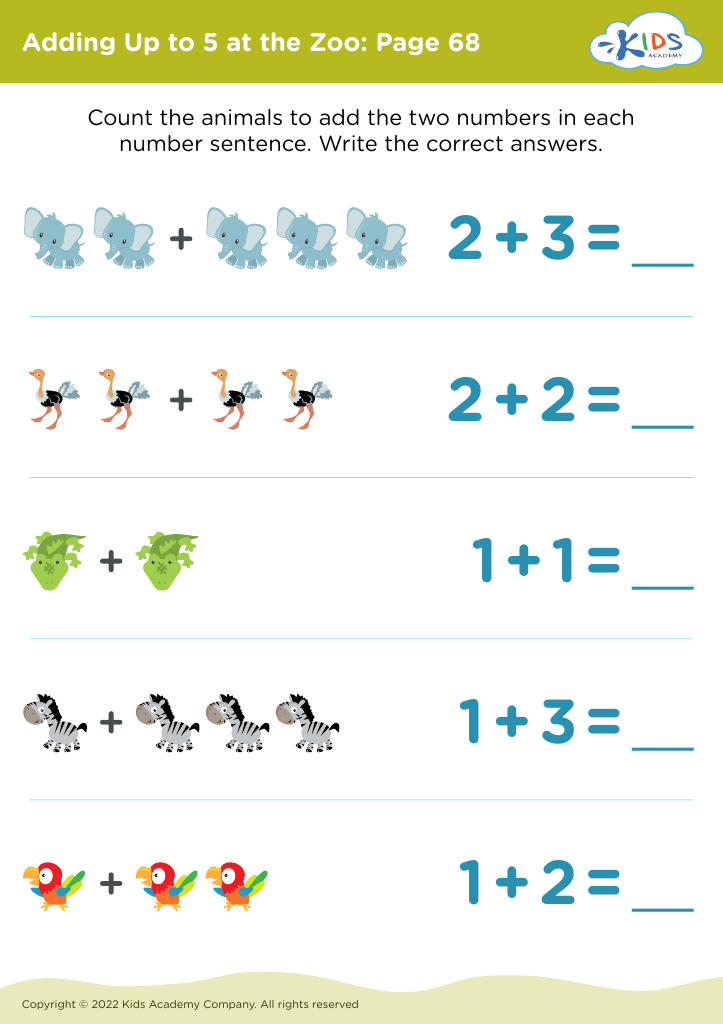
Adding Up to 5 at the Zoo: Page 68
Worksheet
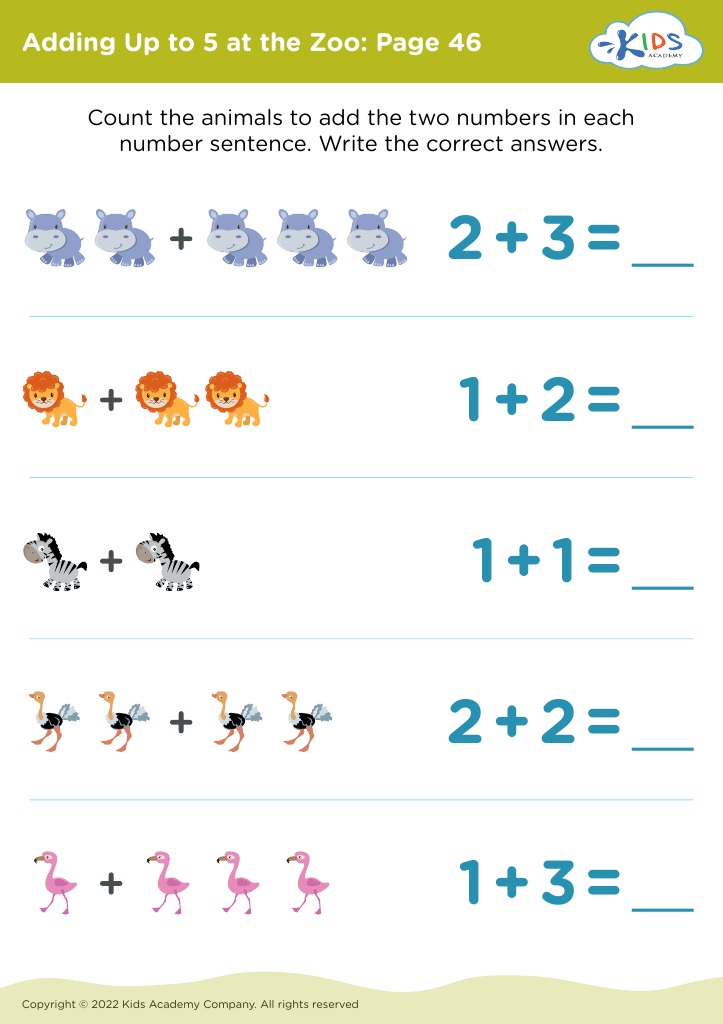
Adding Up to 5 at the Zoo: Page 46
Worksheet
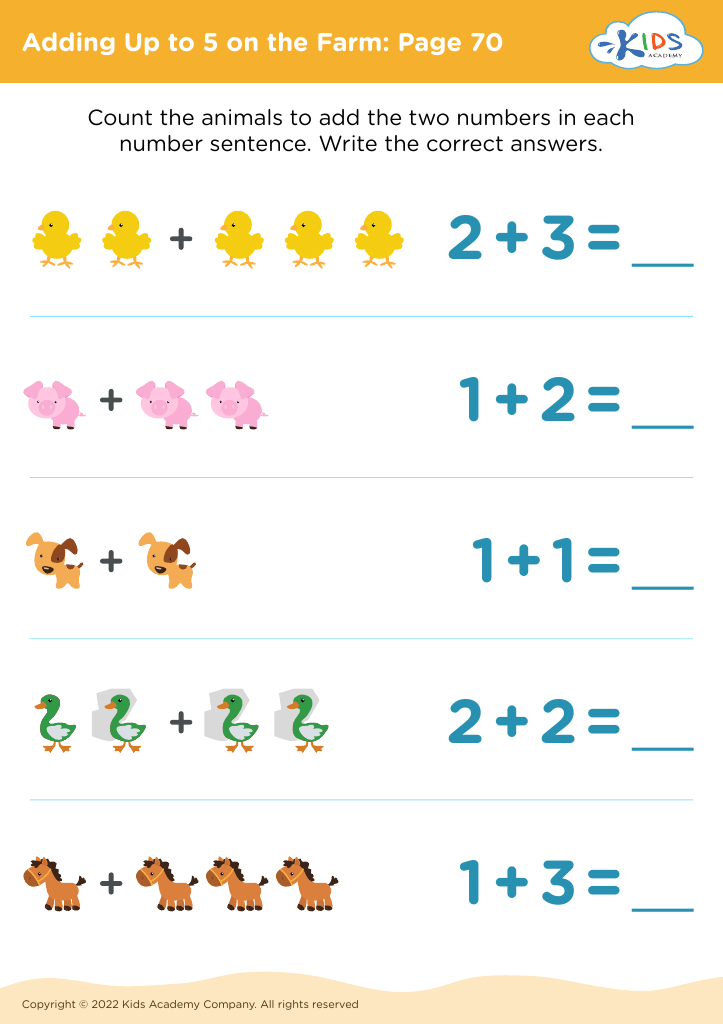
Adding Up to 5 on the Farm: Page 70
Worksheet
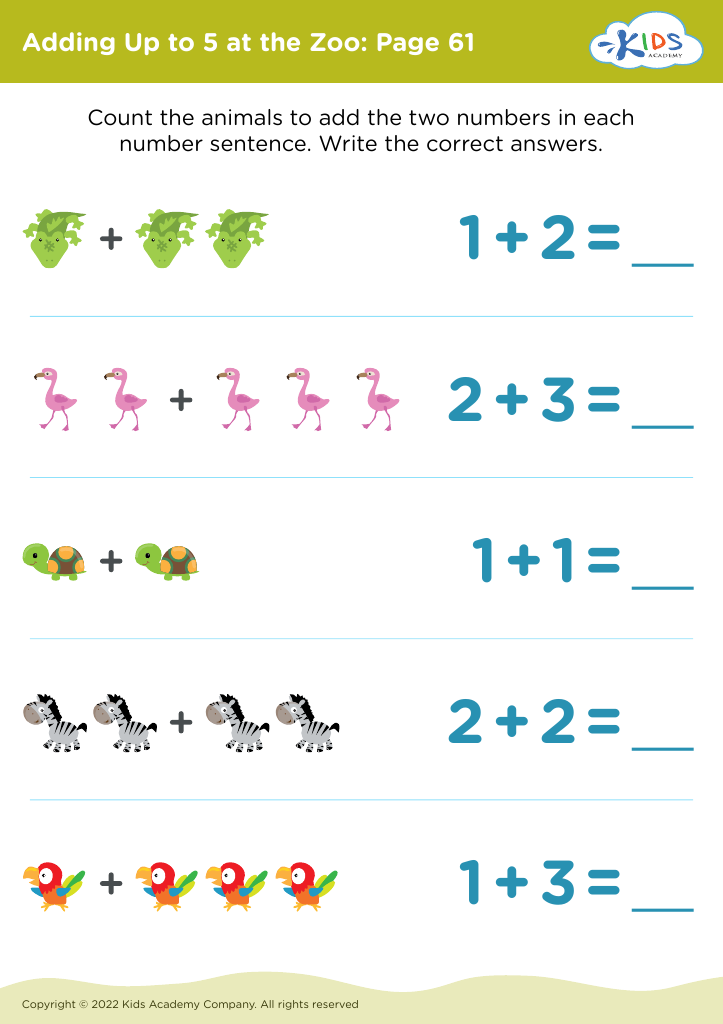
Adding Up to 5 at the Zoo: Page 61
Worksheet
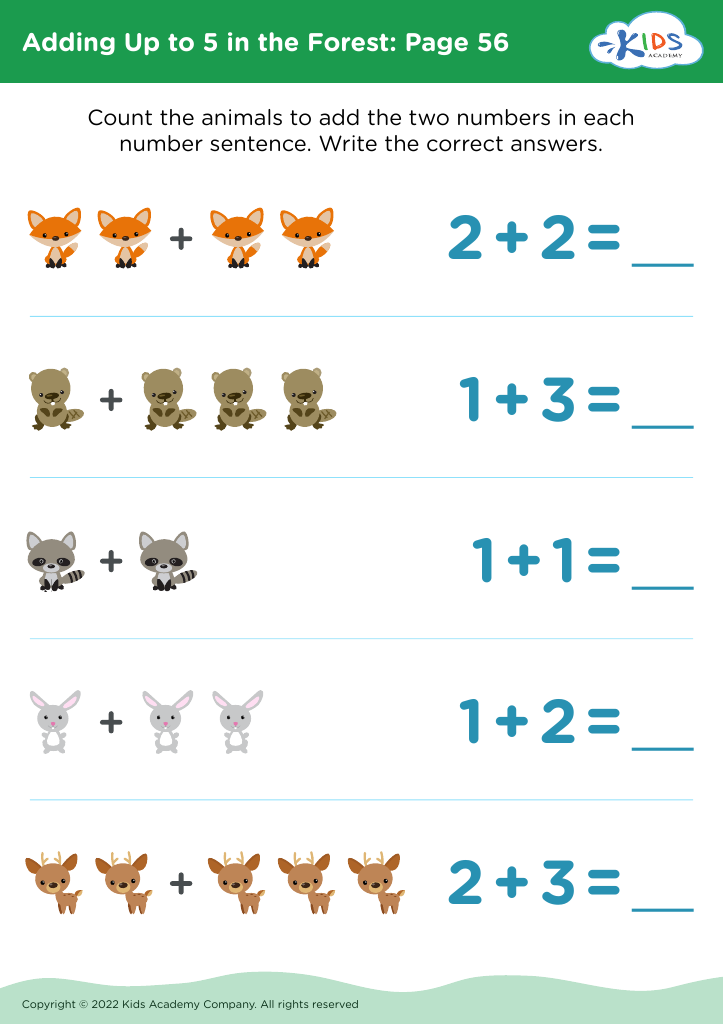
Adding Up to 5 in the Forest: Page 56
Worksheet
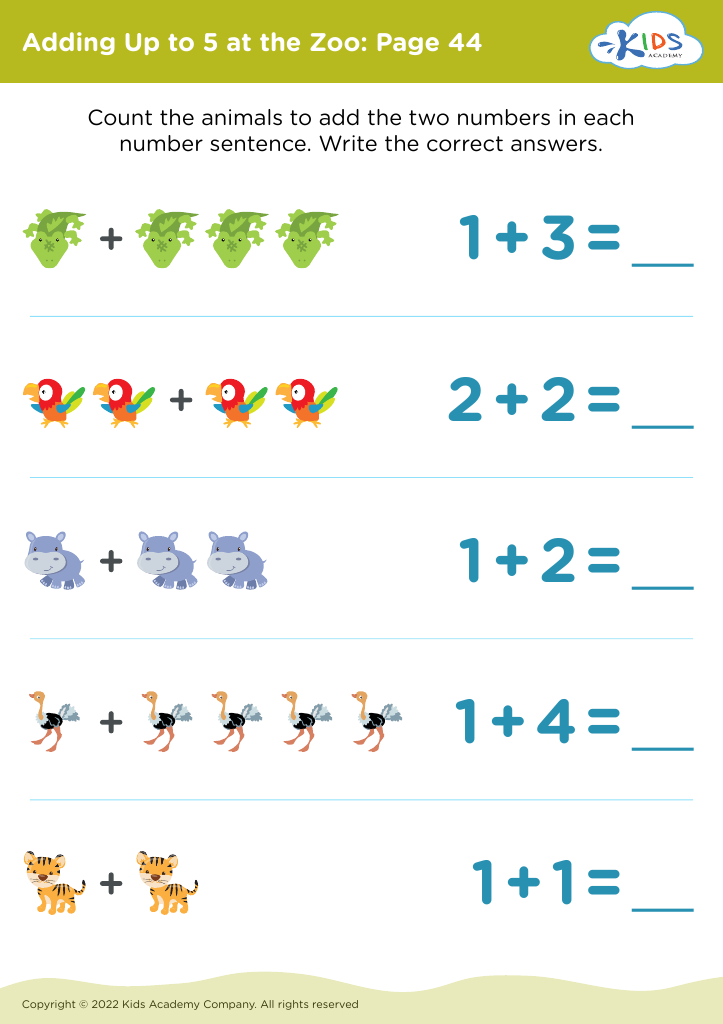
Adding Up to 5 at the Zoo: Page 44
Worksheet
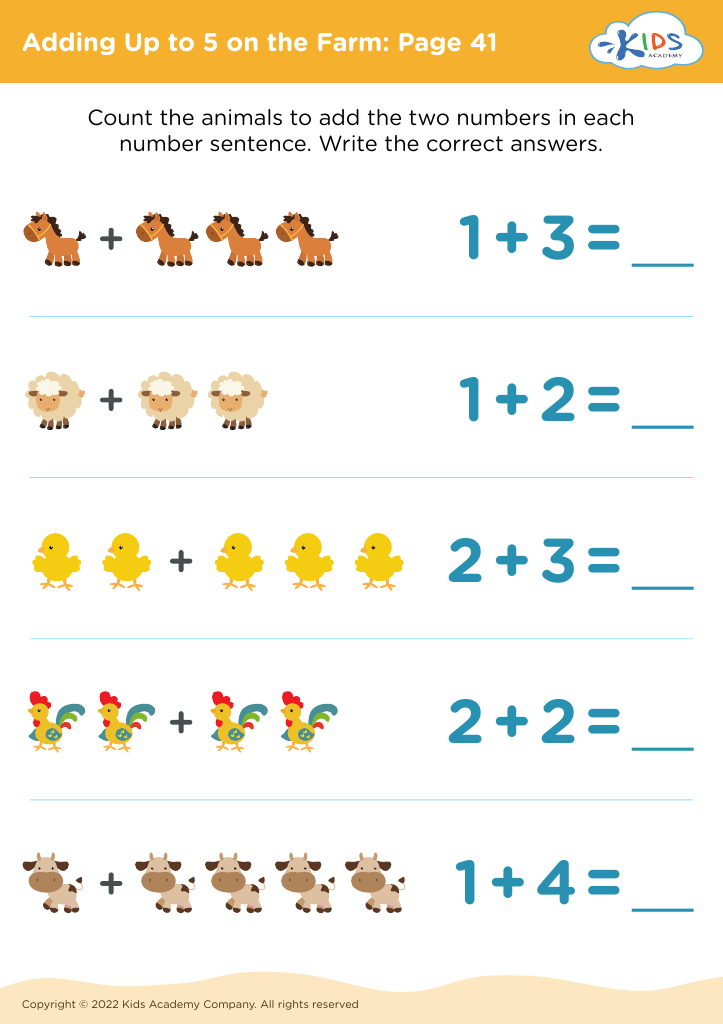
Adding Up to 5 on the Farm: Page 41
Worksheet
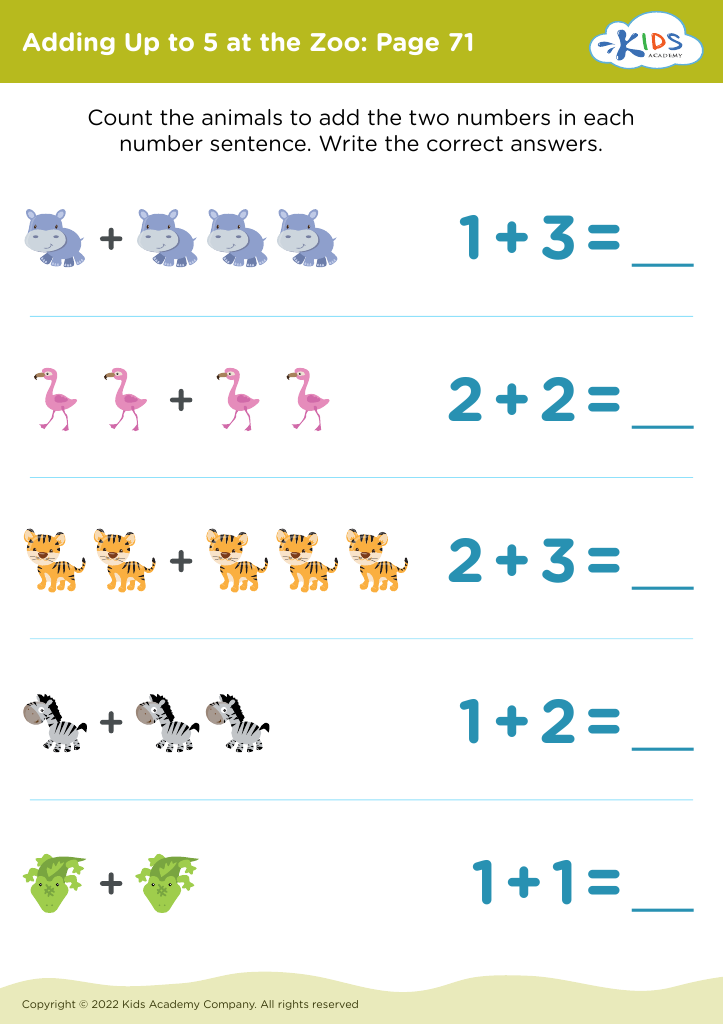
Adding Up to 5 at the Zoo: Page 71
Worksheet
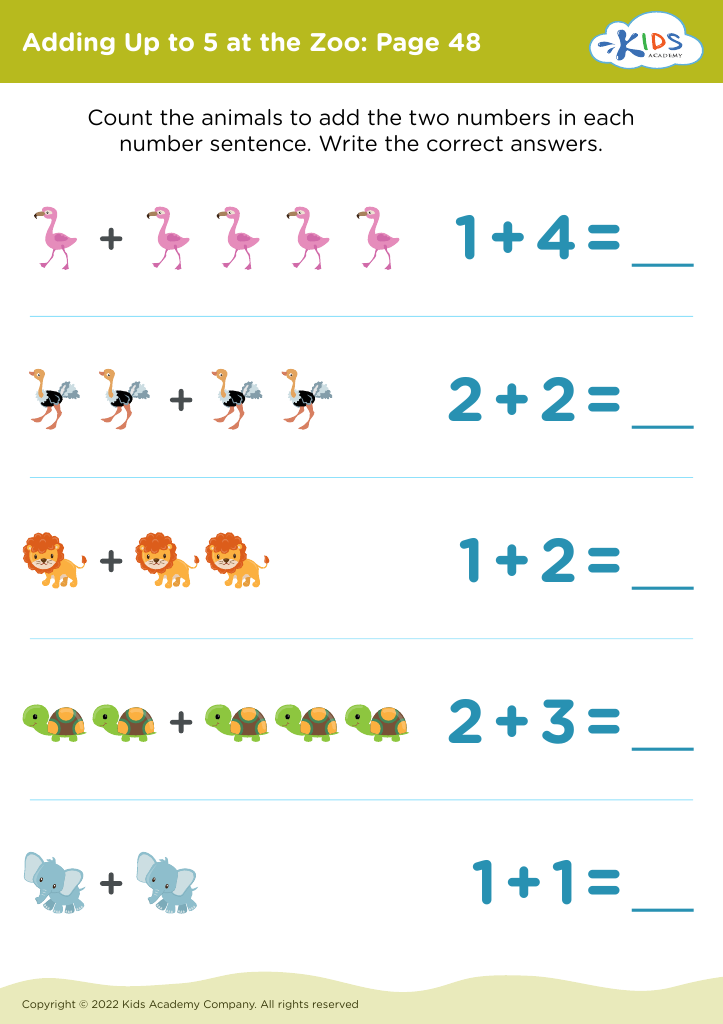
Adding Up to 5 at the Zoo: Page 48
Worksheet
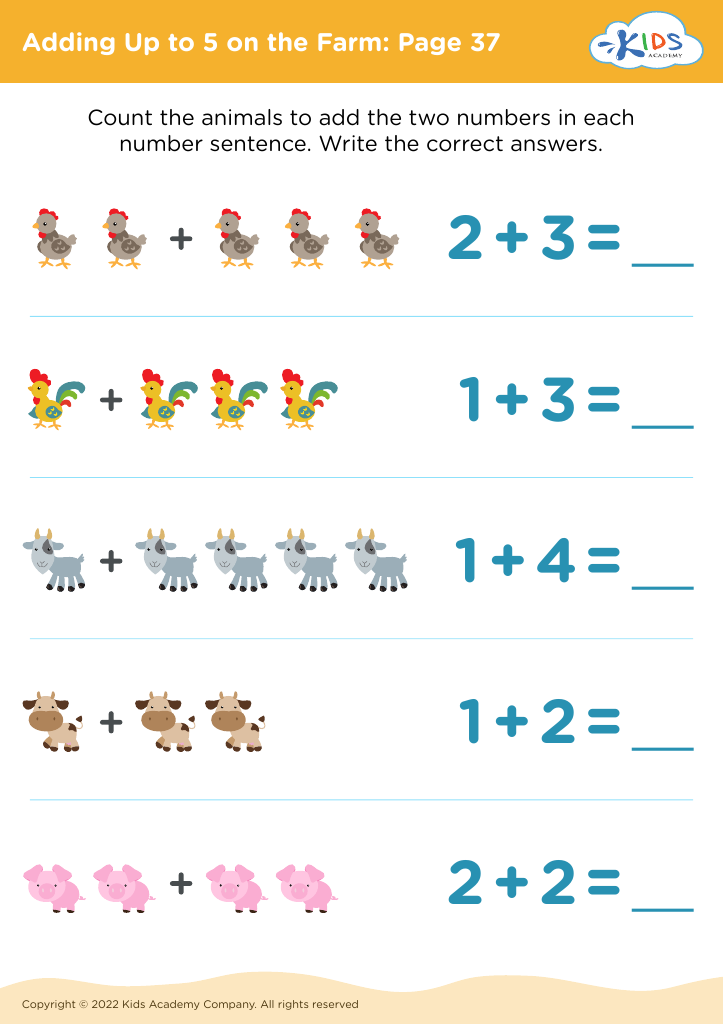
Adding Up to 5 on the Farm: Page 37
Worksheet
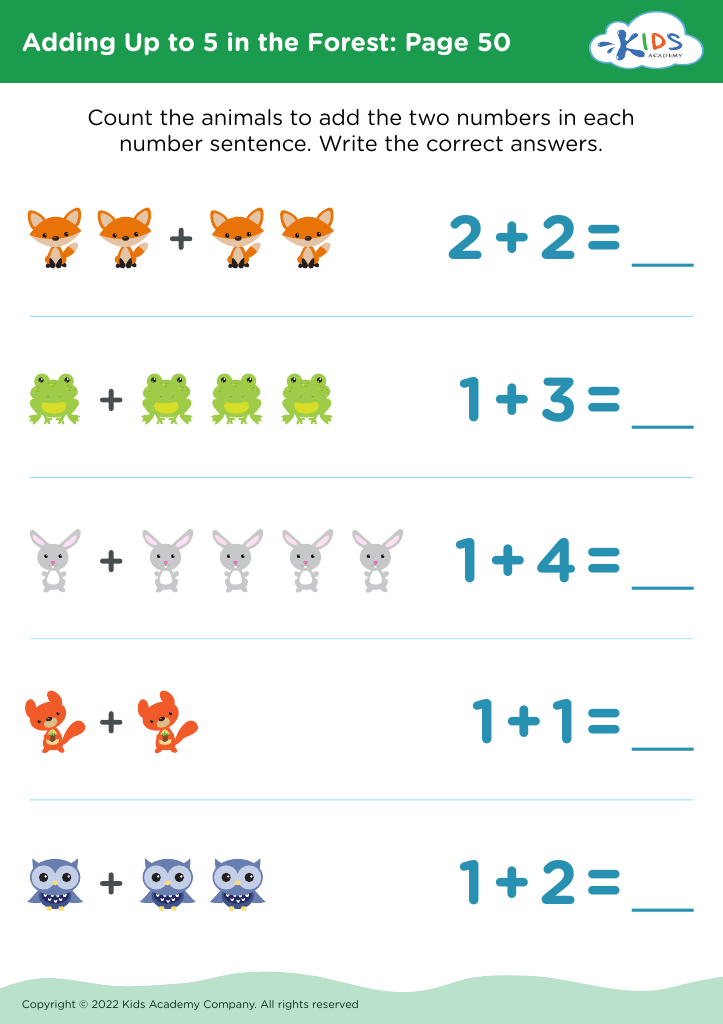
Adding Up to 5 in the Forest: Page 50
Worksheet
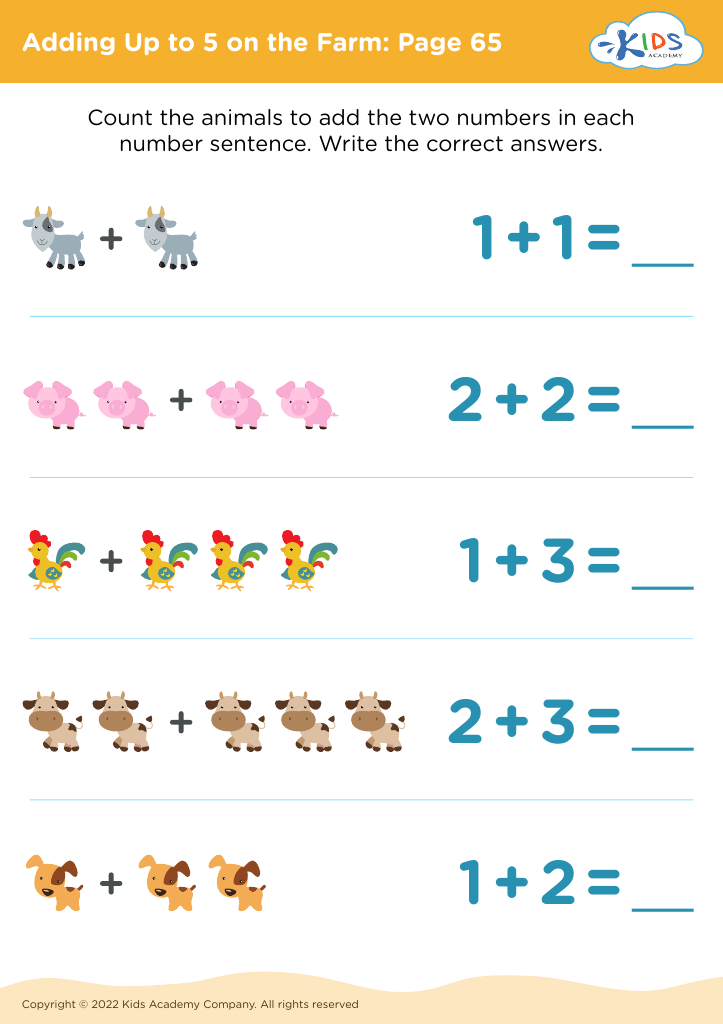
Adding Up to 5 on the Farm: Page 65
Worksheet
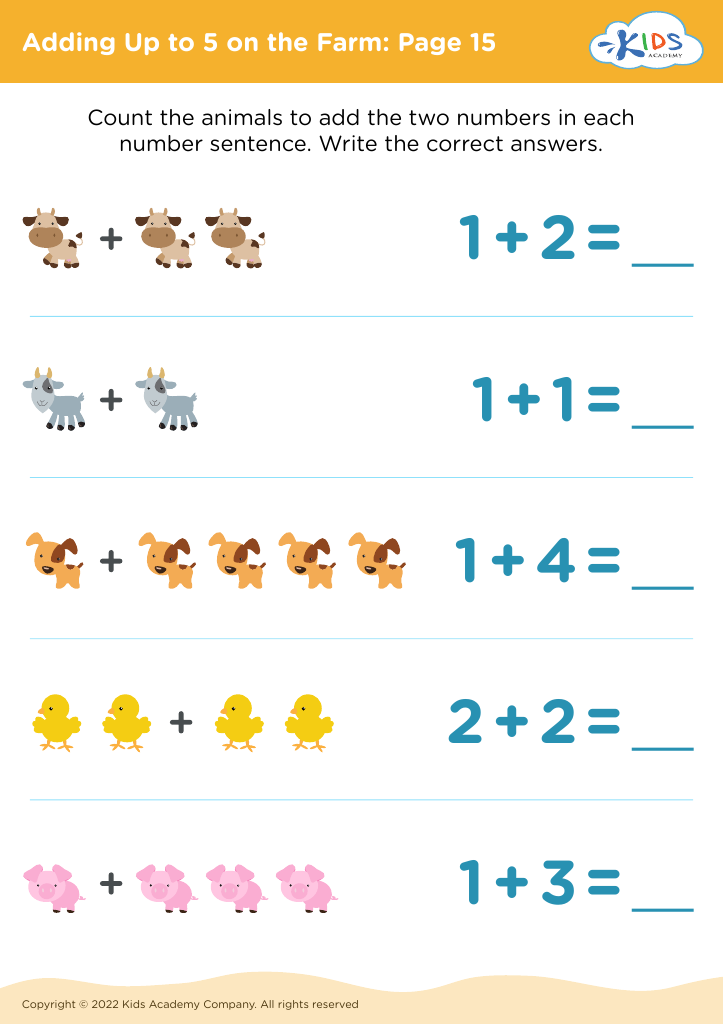
Adding Up to 5 on the Farm: Page 15
Worksheet


Animal recognition, combined with mathematical skills like adding up to 5, plays a crucial role in early childhood education. For parents and teachers, fostering these skills can enhance a child's cognitive development and boost their confidence.

First, recognizing animals helps children develop critical observation and categorization skills. Identifying various animals encourages curiosity about the world, prompting them to ask questions and engage in exploration. This inquiry is key to cognitive growth.

Additionally, incorporating addition into play with animals makes math fun and relevant. For instance, if a lesson involves counting and adding animal figures, children can physically move the toys, providing a tactile experience that supports engagement. This hands-on learning aids in understanding basic math concepts, laying a foundation for future mathematical understanding.

Furthermore, connecting animals with numbers can cultivate an appreciation for nature, nurturing empathy towards living creatures. This holistic approach helps children make connections between math and real-life concepts, thus enhancing their learning experience.

Ultimately, parents and teachers should care about combining animal recognition with basic math skills because it helps build foundational cognitive, emotional, and social skills that contribute to a child's overall development and preparedness for future learning.