Filters

95 filtered results

Clear all filters
Favorites
With answer key
Interactive

95 filtered results

Difficulty Level

Grade


Check out this FREE Trial Lesson on Adding Up to 5 for age 4!

Match Exactly the Same

Favorites
With answer key
Interactive
  • 4
  • Cognitive Development
  • Adding Up to 5
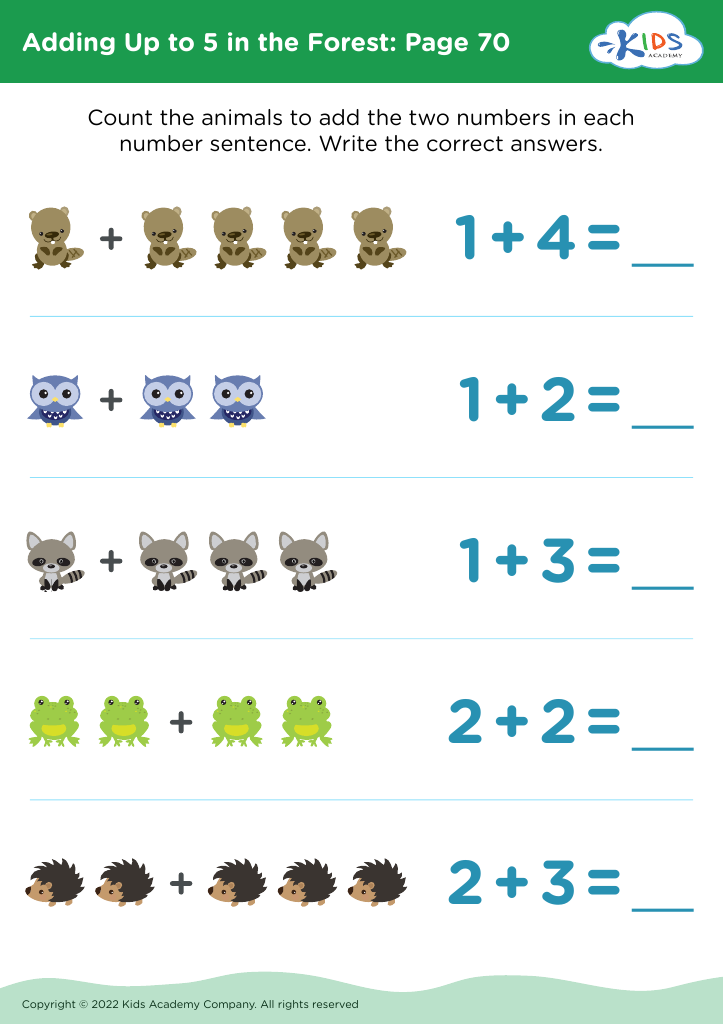
Adding Up to 5 in the Forest: Page 70
Worksheet
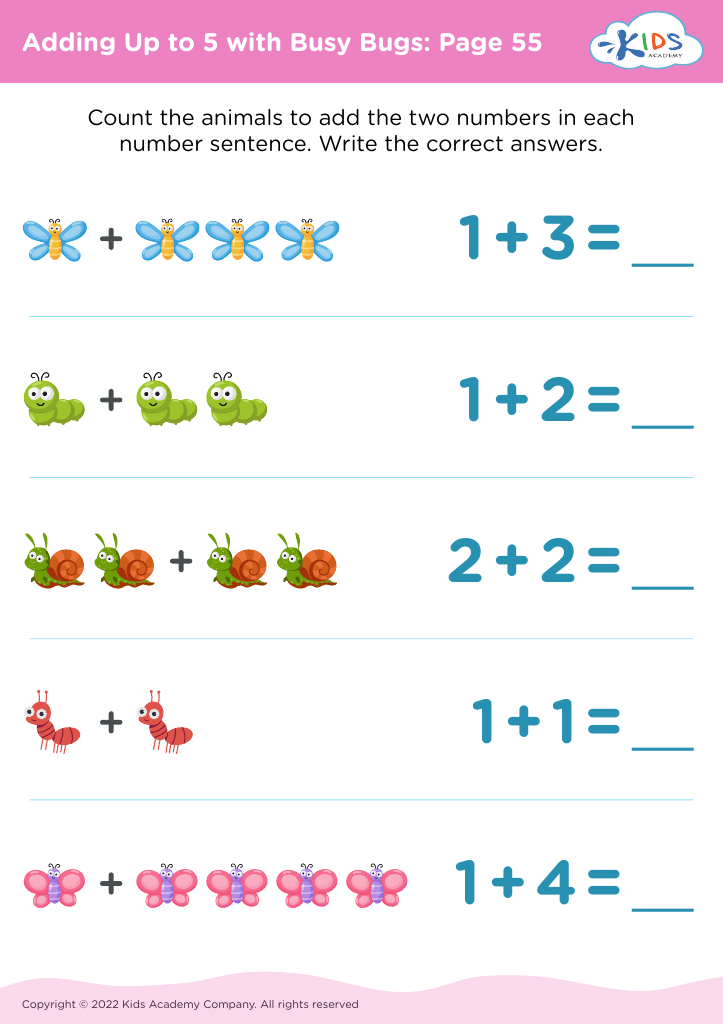
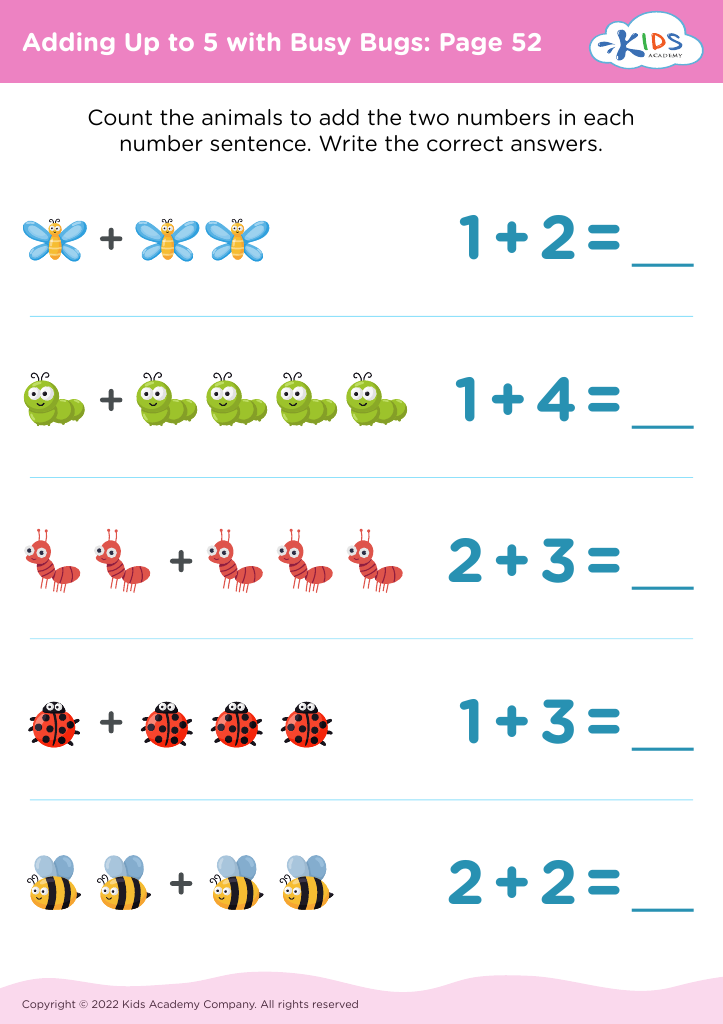
Adding Up to 5 with Busy Bugs: Page 55
Worksheet
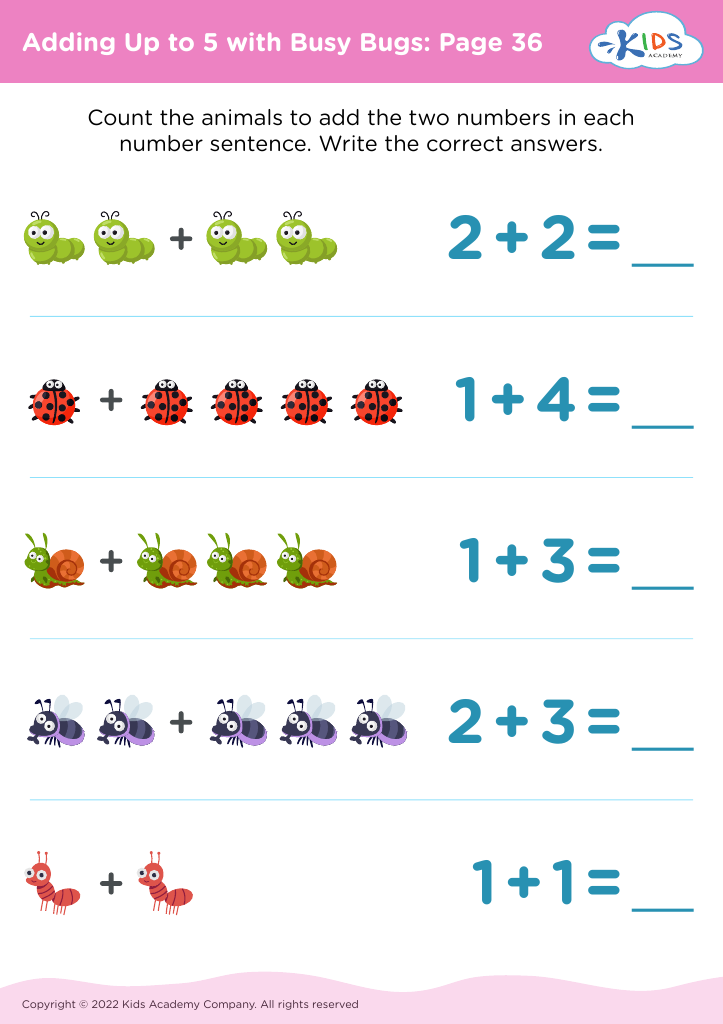
Adding Up to 5 with Busy Bugs: Page 36
Worksheet
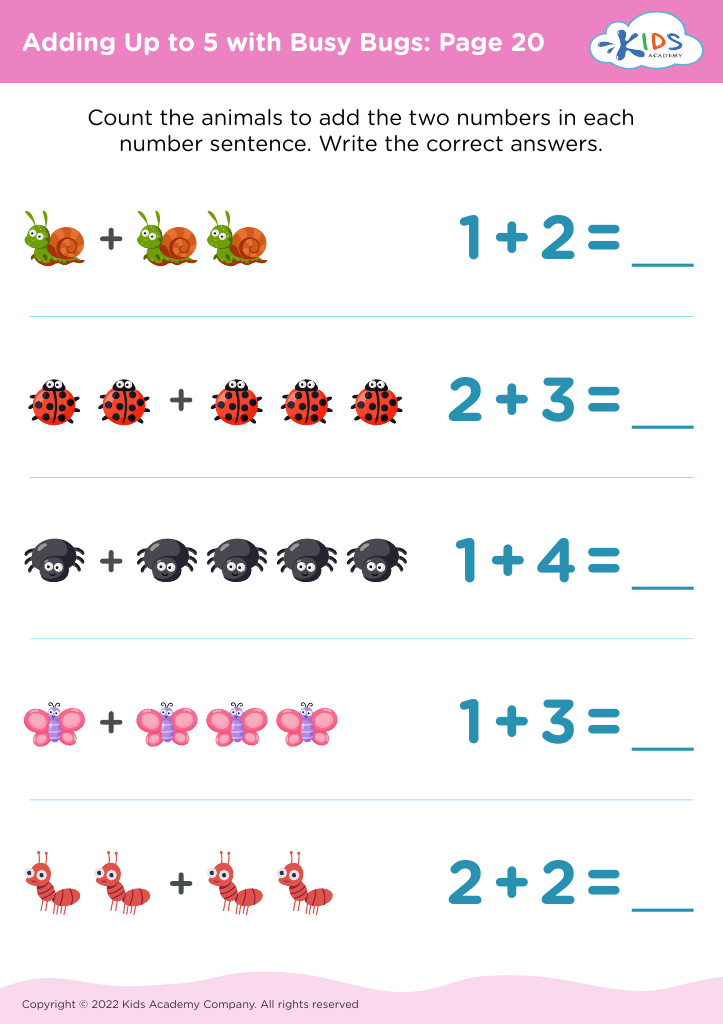
Adding Up to 5 with Busy Bugs: Page 20
Worksheet
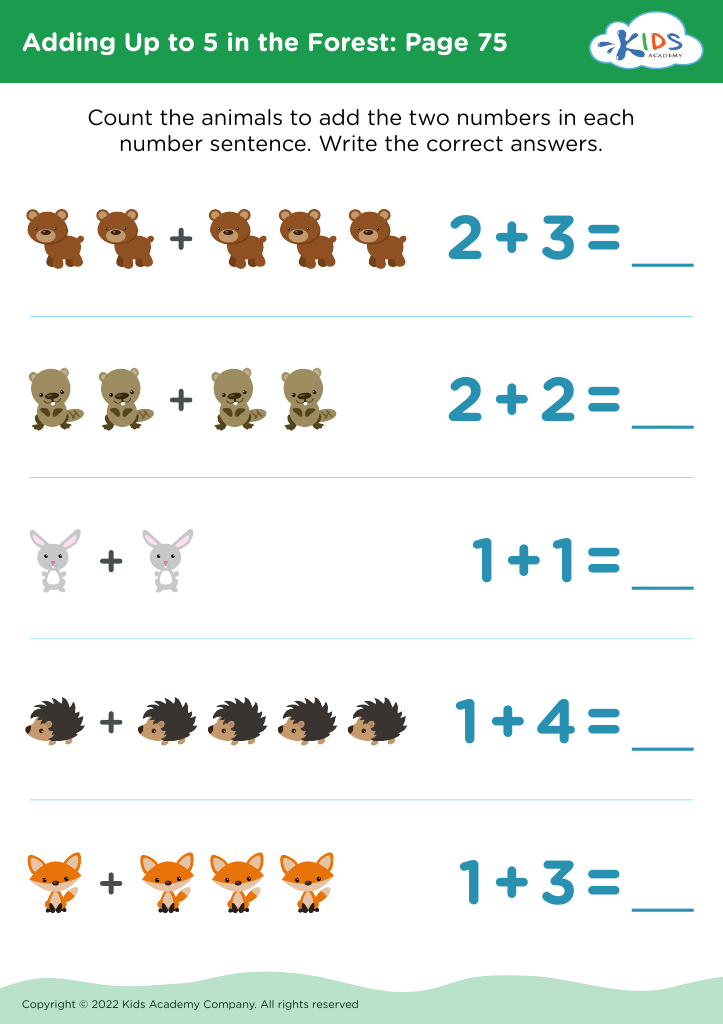
Adding Up to 5 in the Forest: Page 75
Worksheet
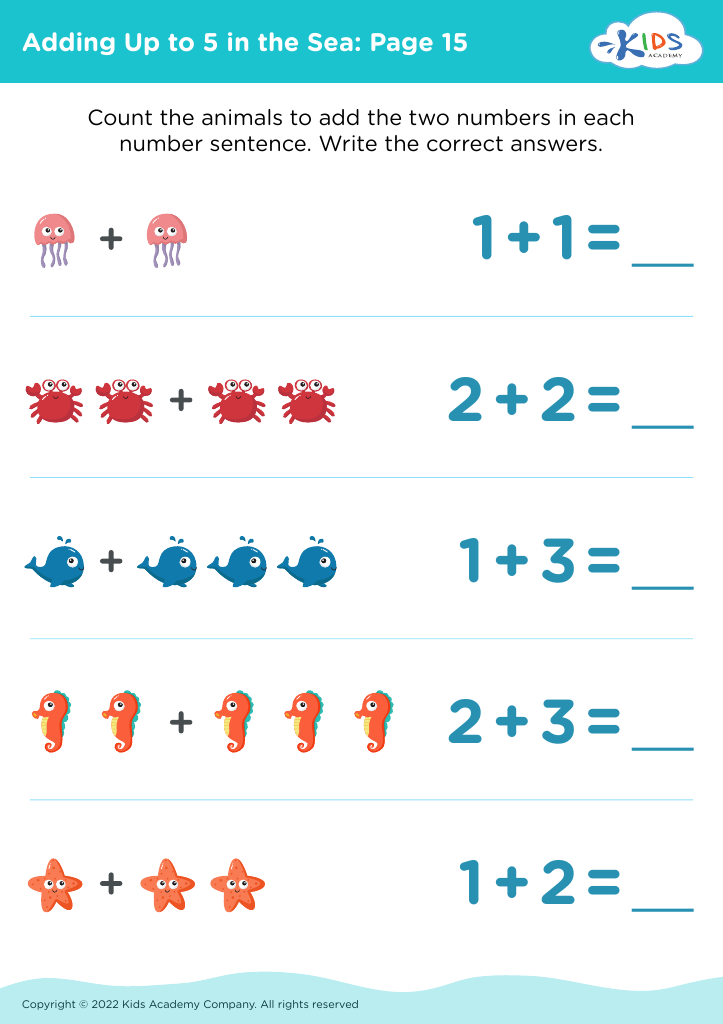
Adding Up to 5 in the Sea: Page 15
Worksheet
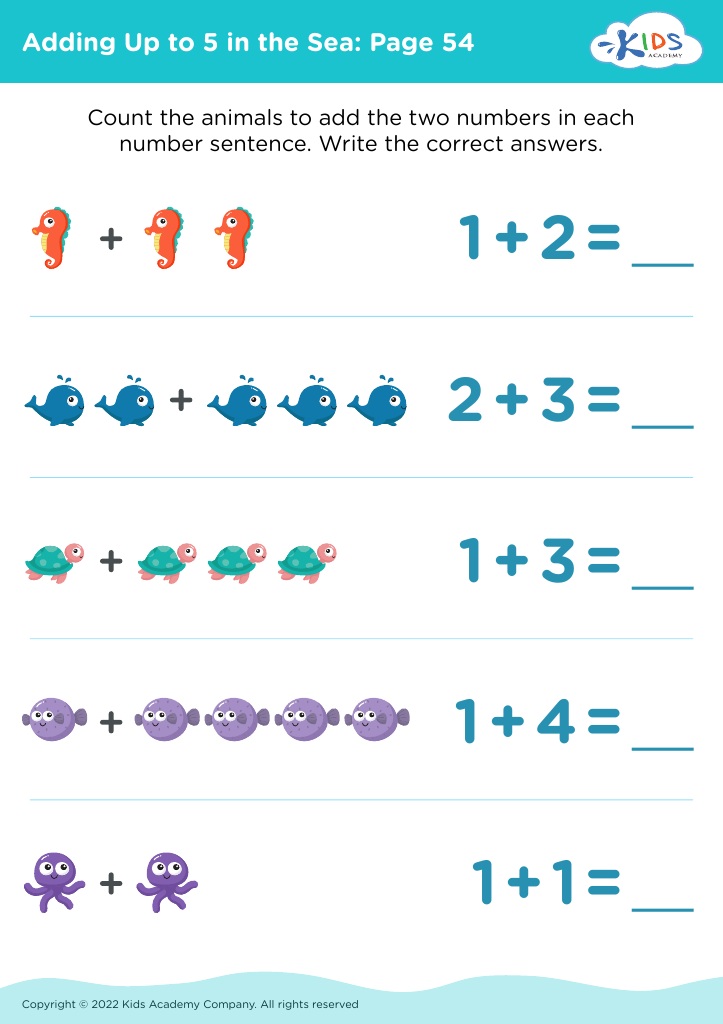
Adding Up to 5 in the Sea: Page 54
Worksheet
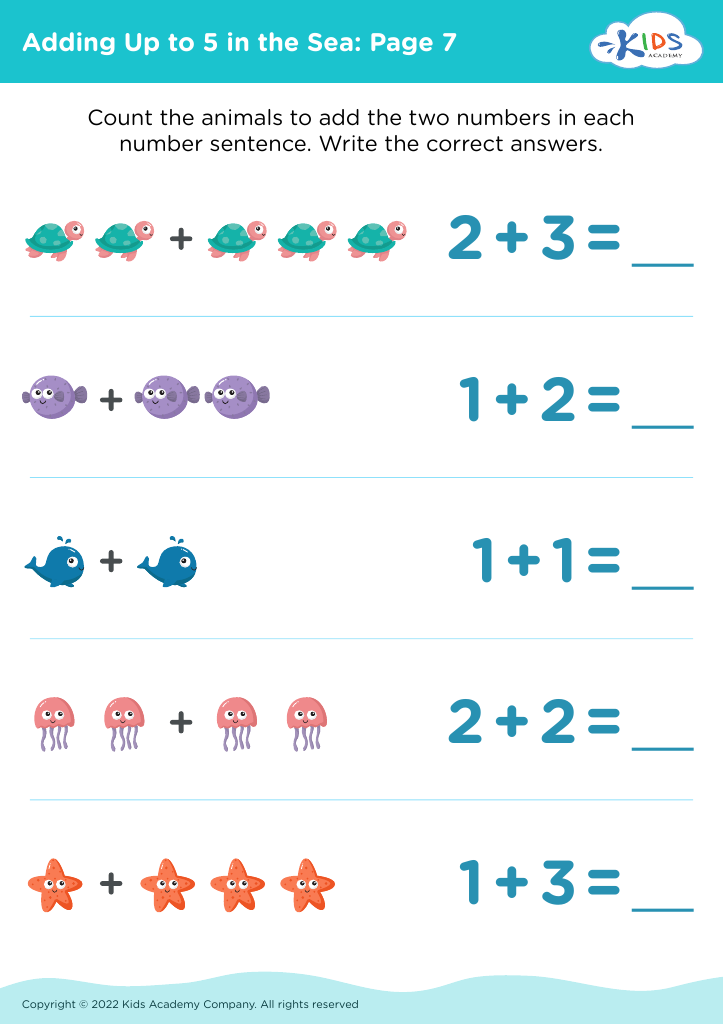
Adding Up to 5 in the Sea: Page 7

Adding Up to 5 in the Sea: Page 7

Adding Up to 5 in the Sea: Page 7
Worksheet
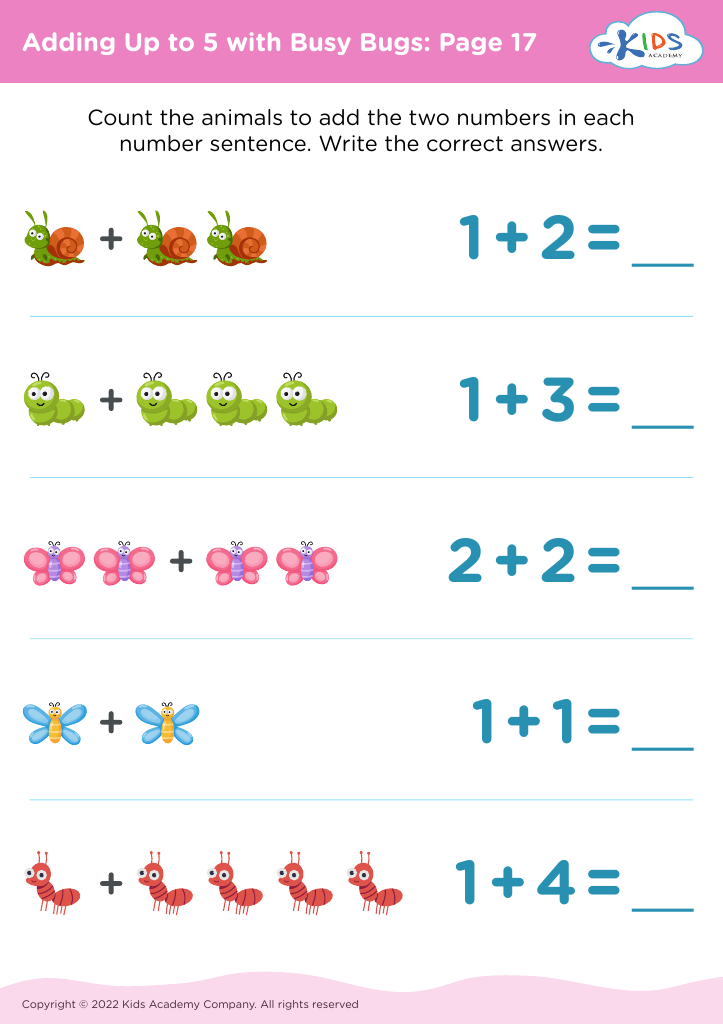
Adding Up to 5 with Busy Bugs: Page 17
Worksheet
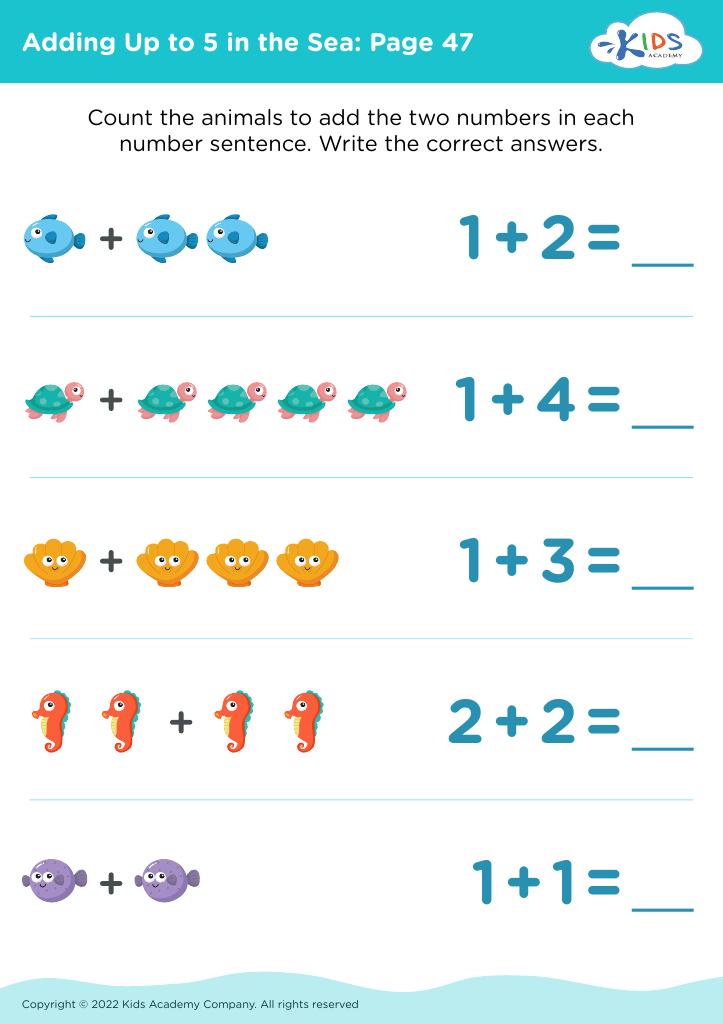
Adding Up to 5 in the Sea: Page 47
Worksheet
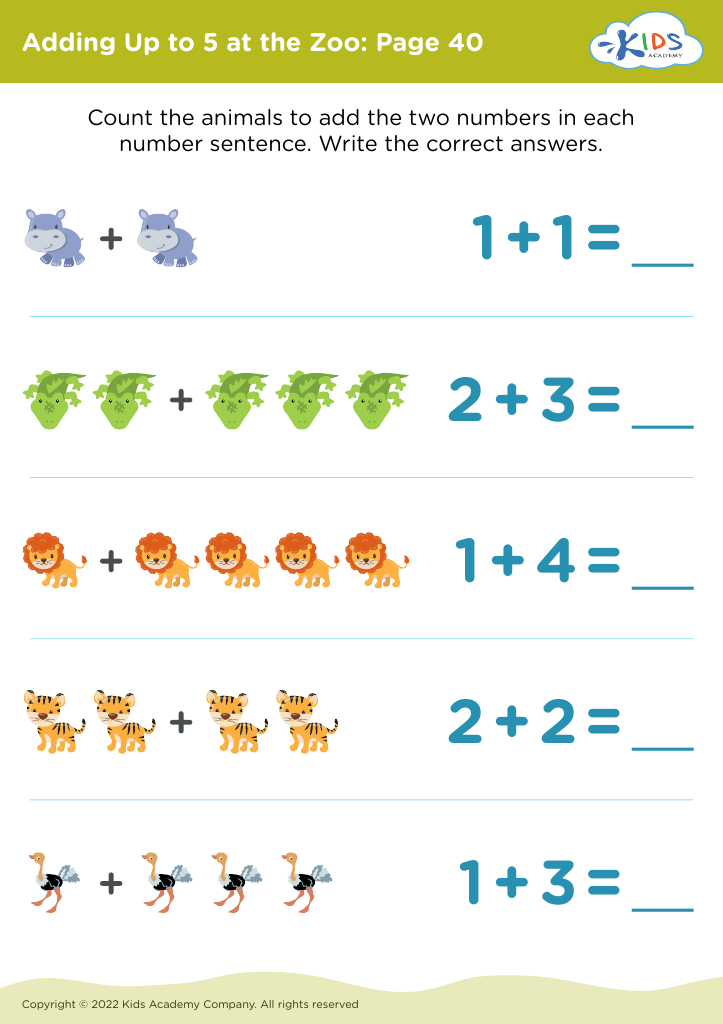
Adding Up to 5 at the Zoo: Page 40
Worksheet
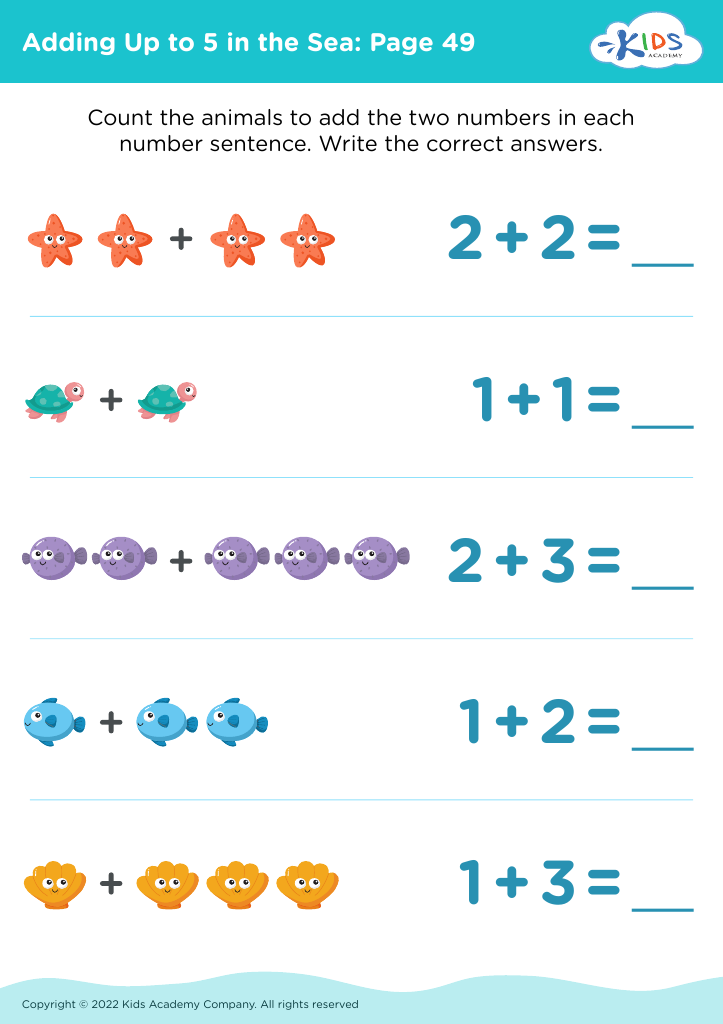
Adding Up to 5 in the Sea: Page 49
Worksheet
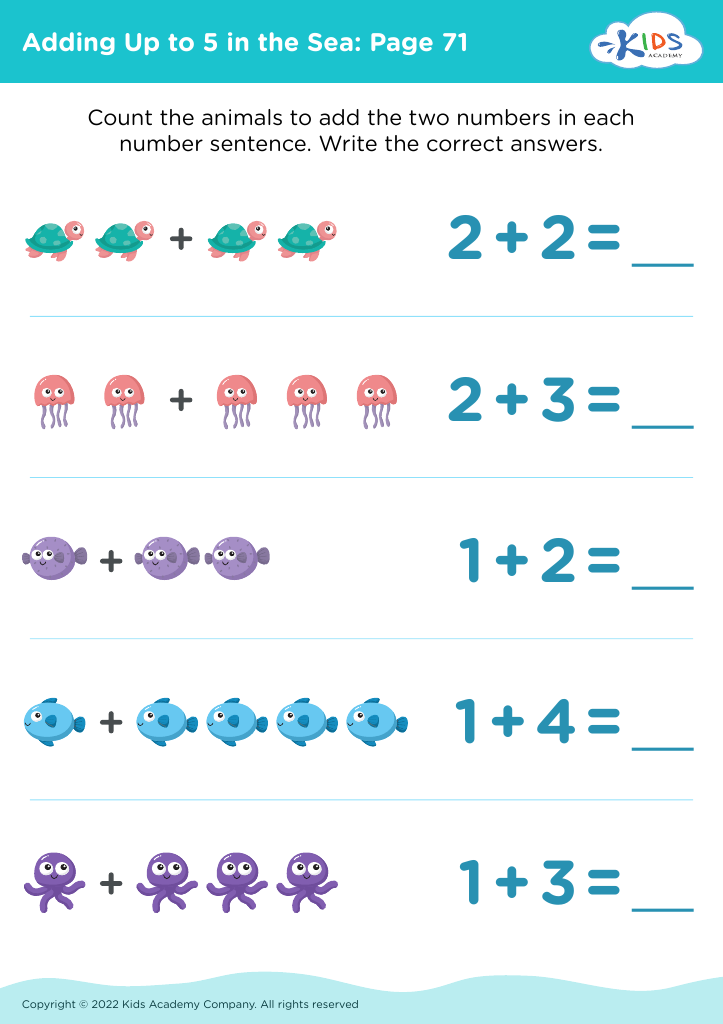
Adding Up to 5 in the Sea: Page 71
Worksheet
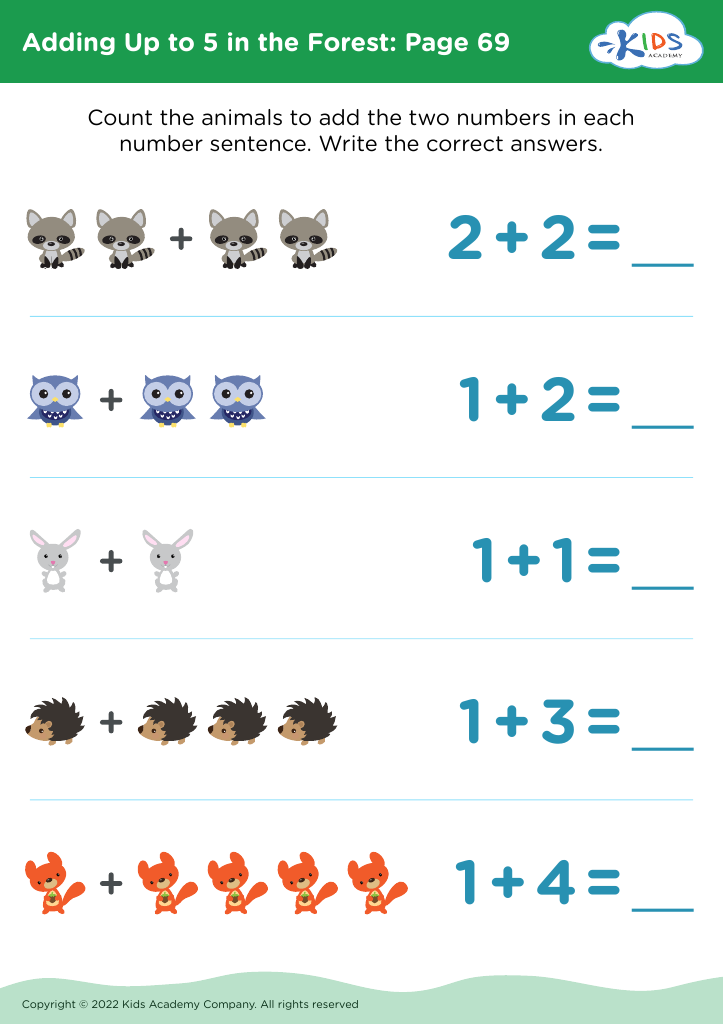
Adding Up to 5 in the Forest: Page 69
Worksheet
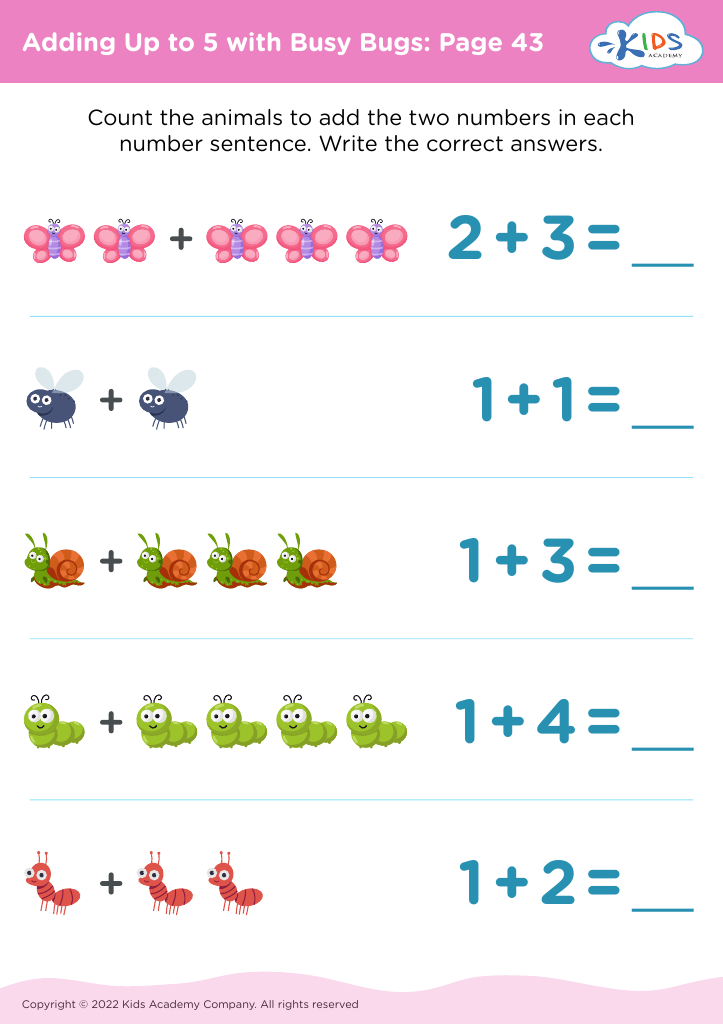
Adding Up to 5 with Busy Bugs: Page 43
Worksheet
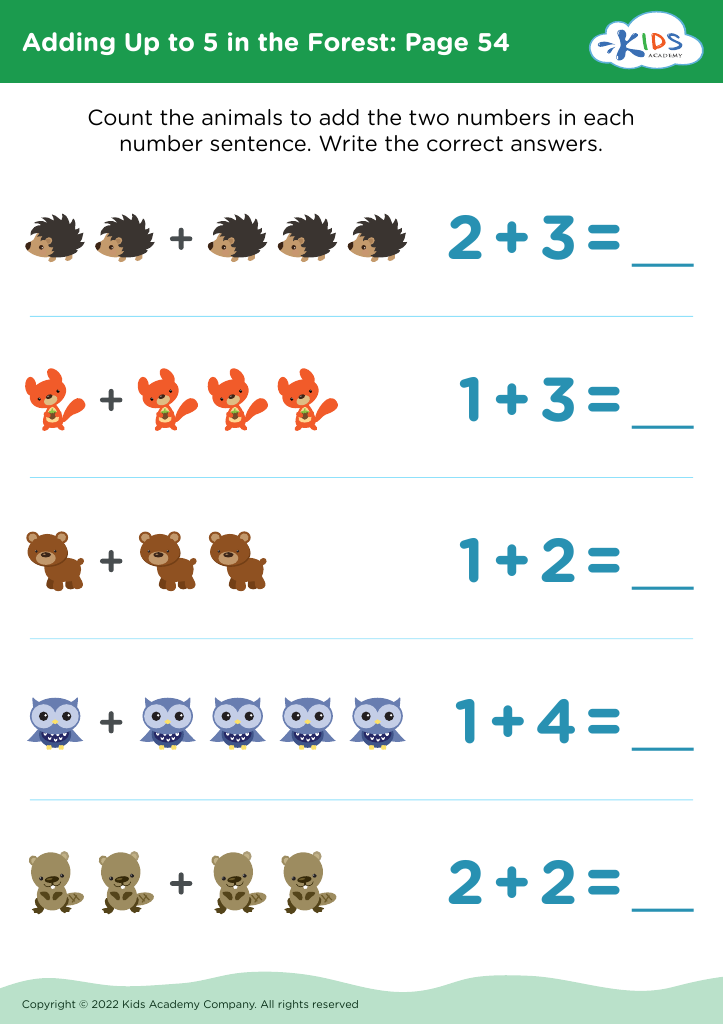
Adding Up to 5 in the Forest: Page 54
Worksheet
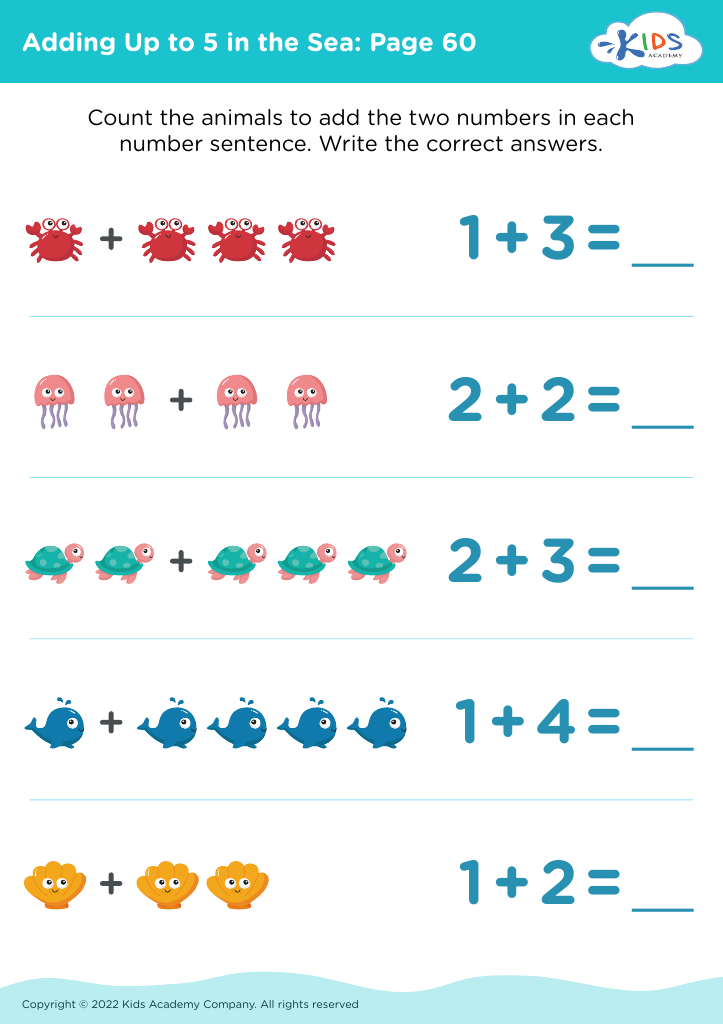
Adding Up to 5 in the Sea: Page 60
Worksheet
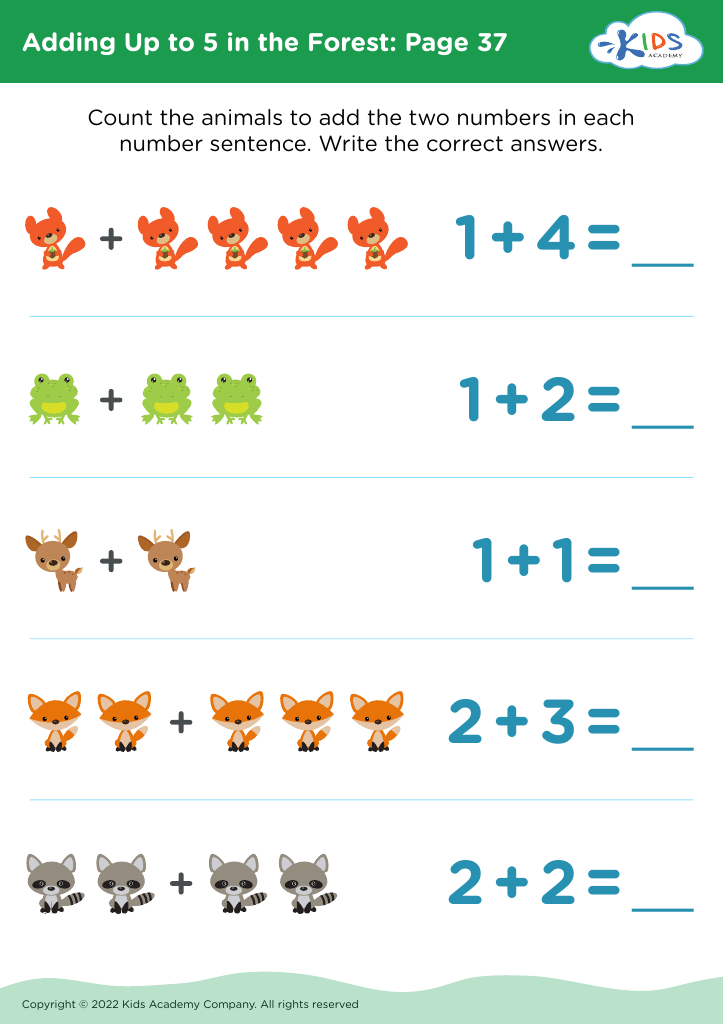
Adding Up to 5 in the Forest: Page 37
Worksheet
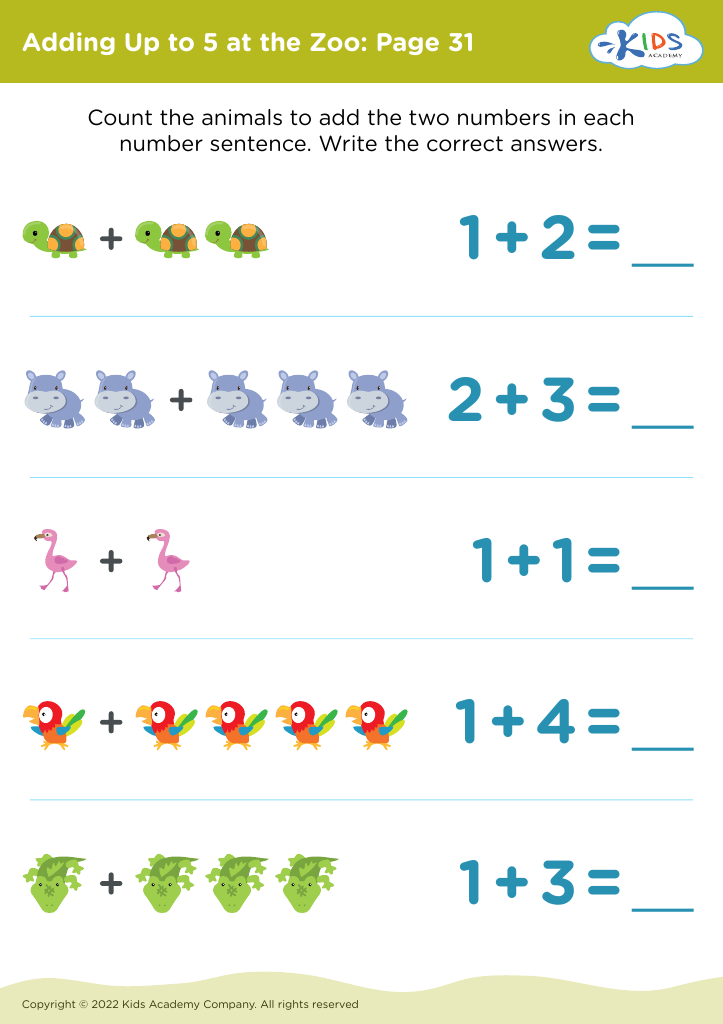
Adding Up to 5 at the Zoo: Page 31
Worksheet
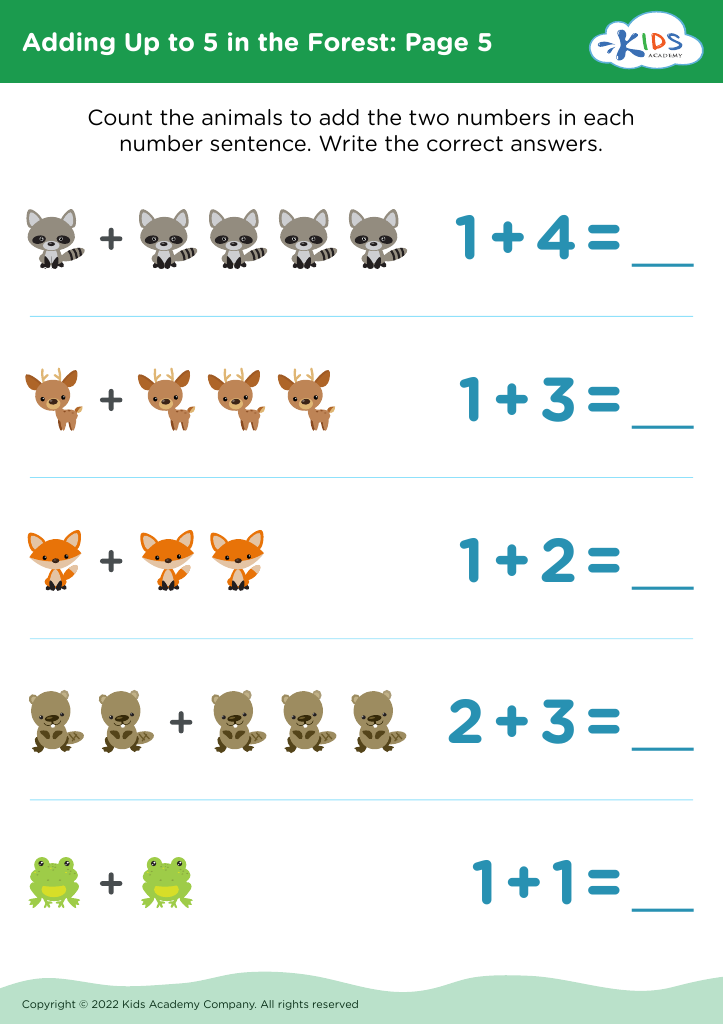
Adding Up to 5 in the Forest: Page 5
Worksheet
Adding Up to 5 with Busy Bugs: Page 52
Worksheet
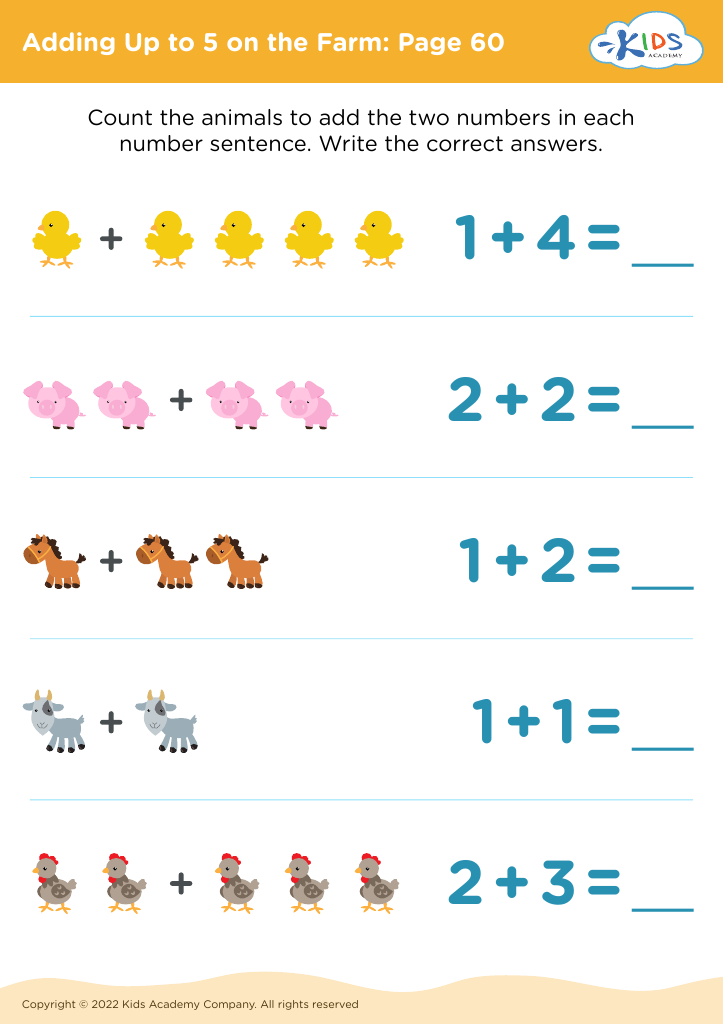
Adding Up to 5 on the Farm: Page 60
Worksheet
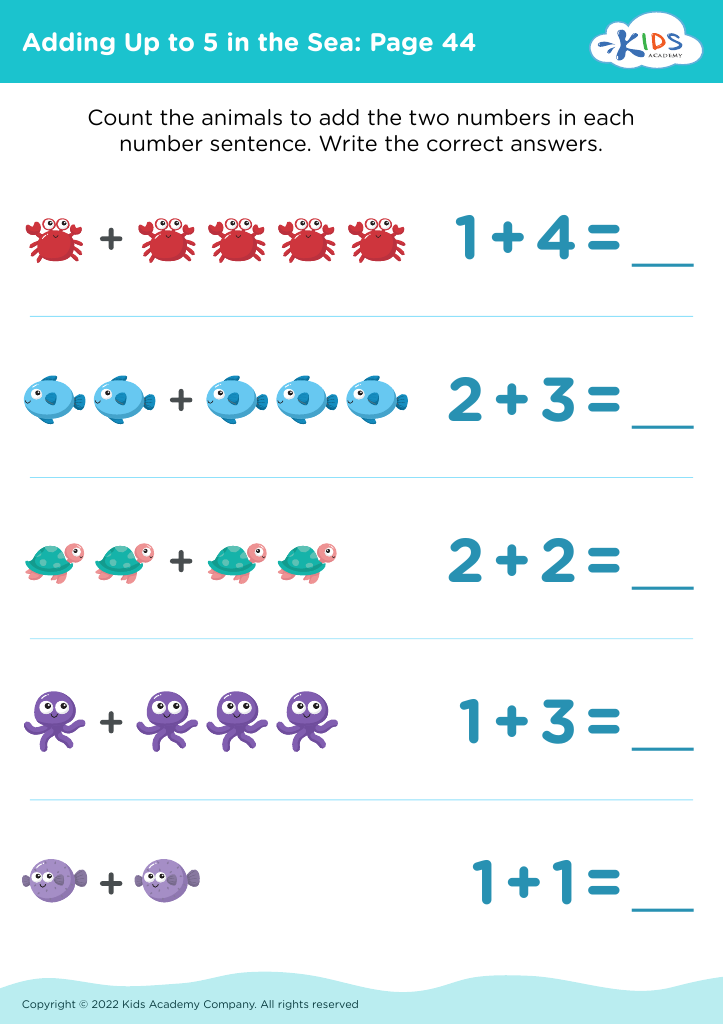
Adding Up to 5 in the Sea: Page 44
Worksheet


... 3 4

Cognitive development, especially in early childhood, plays a crucial role in a child’s overall growth and learning potential. For 4-year-olds, learning to add up to 5 is not just about arithmetic; it's foundational for critical thinking, problem-solving, and future math skills. During this stage, children are naturally curious and eager to explore concepts. By introducing simple addition, we engage their minds and foster a love for learning.

Understanding numbers and basic arithmetic helps children develop spatial awareness, logic, and the ability to categorize objects, which are essential skills across academic subjects. Mastering how to add small quantities promotes confidence and encourages a growth mindset, instilling a belief that they can tackle challenges.

Moreover, parents and teachers can utilize games and everyday activities to reinforce these concepts, making learning enjoyable and integrated into daily life. This hands-on approach also strengthens the parent-child and teacher-student bonds, creating a supportive learning environment.

Ultimately, focusing on cognitive development through skills like adding up to 5 equips children with the necessary tools to succeed in school and life while nurturing their social and emotional skills, making it a top priority for caregivers and educators alike.