Fine Motor Skills (coloring) Adding Up to 5 Worksheets for 4-Year-Olds
3 filtered results
-
From - To
Discover a fun and engaging way to develop fine motor skills for your little learners with our "Fine Motor Skills (Coloring) Adding Up to 5 Worksheets" specially designed for 4-year-olds. These colorful worksheets combine math concepts with creative expression, allowing children to practice addition up to five while honing their coloring and hand-eye coordination. Each worksheet features playful illustrations, making learning enjoyable and interactive. Perfect for parents and teachers, these resources help promote essential fine motor skills alongside early math knowledge. Download now and watch your child build confidence in their abilities while exploring the world of numbers through creativity!
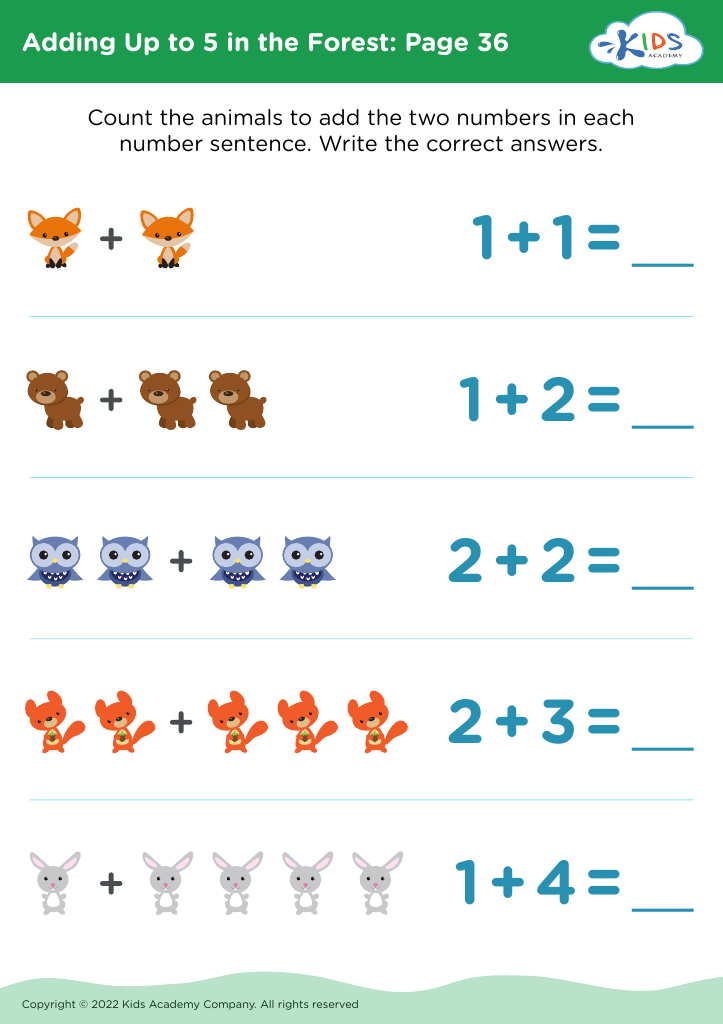
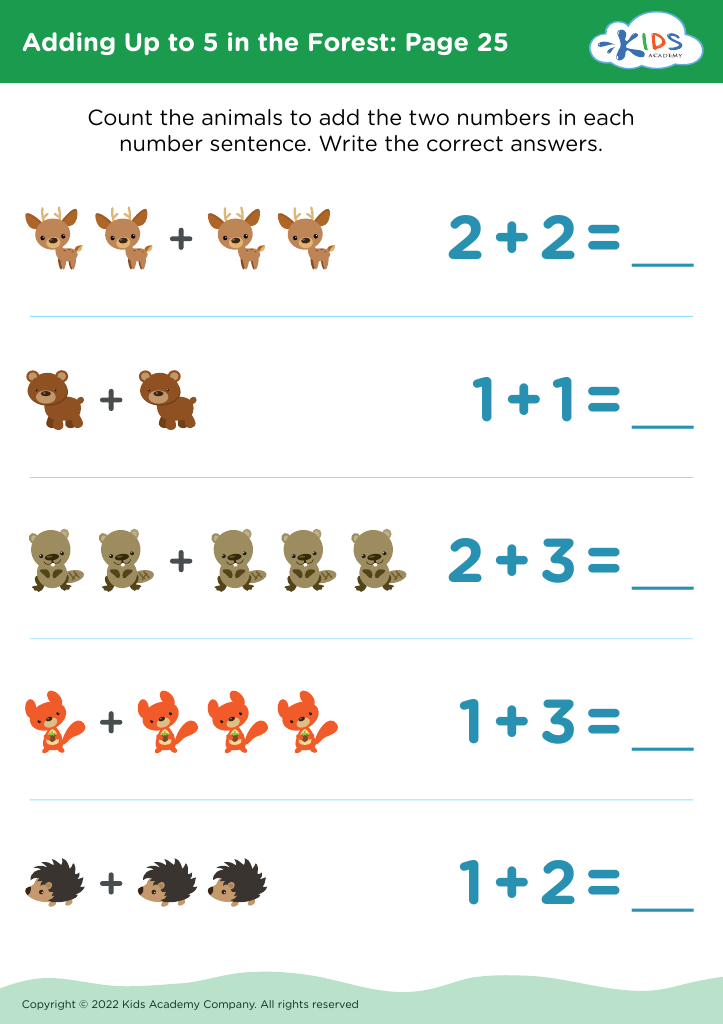
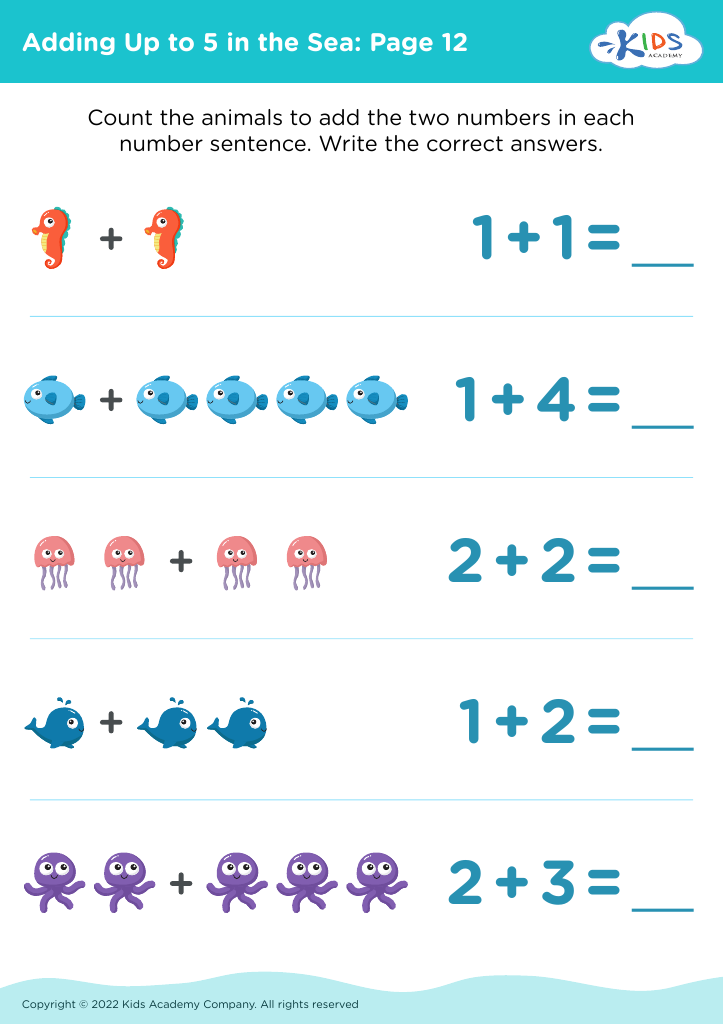








Fine motor skills are crucial for young children's development, particularly for 4-year-olds, as they form the foundation for many everyday tasks. Activities like coloring help strengthen the small muscles in a child’s hands and fingers, which are essential for writing, using scissors, and eventually mastering various self-care tasks. By engaging in coloring, children learn to control their hand movements and improve hand-eye coordination, both vital for academic success.
Moreover, learning to add up to 5 introduces basic math concepts in a fun and engaging way. Early exposure to math helps children develop problem-solving skills, numerical understanding, and logical reasoning. When parents or teachers integrate simple counting with coloring, like counting the number of colors or shapes used, it fosters a positive and interactive learning environment.
Caring about these skills allows educators and caregivers to support a child’s holistic development—cognitive, physical, and creative—ensuring they are well-prepared for future learning experiences. By nurturing fine motor skills and basic math through fun activities, parents and teachers can encourage confidence, cultivate a love for learning, and lay the groundwork for more complex skills in the future. This early investment positively influences a child's educational trajectory.








