Fine motor skills (writing) Adding Up to 5 Worksheets for 4-Year-Olds
32 filtered results
-
From - To
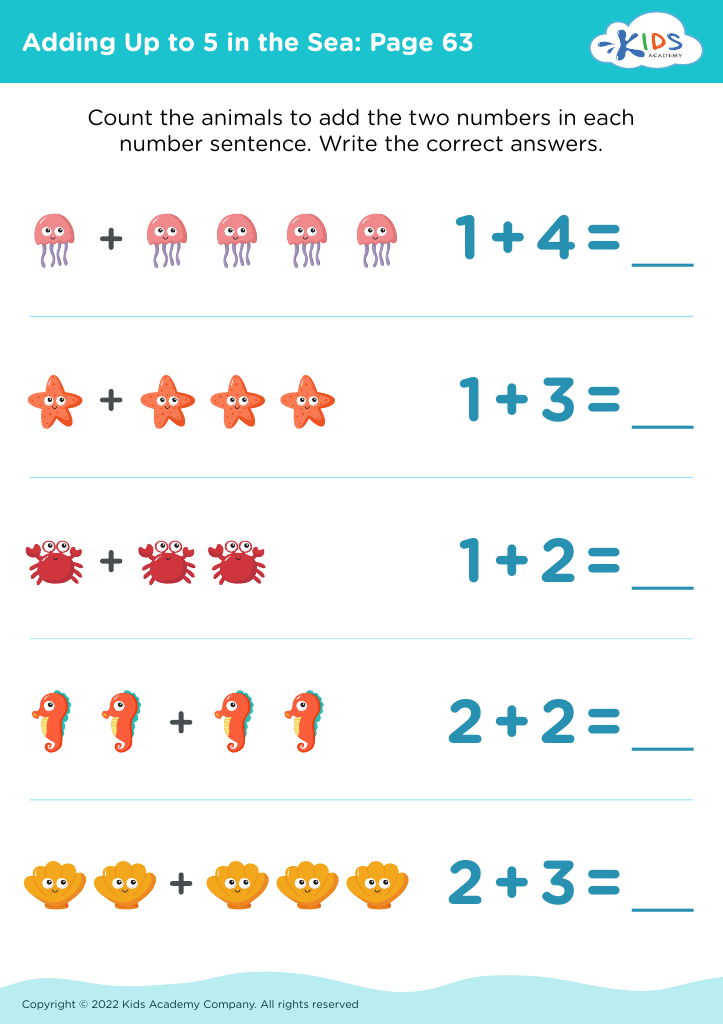
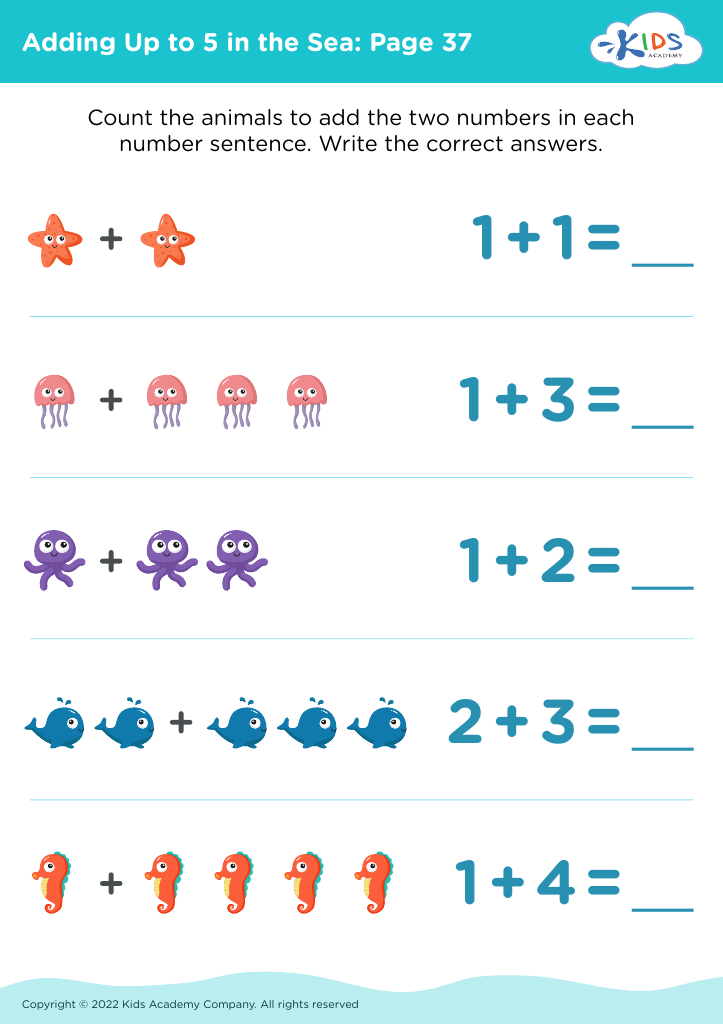
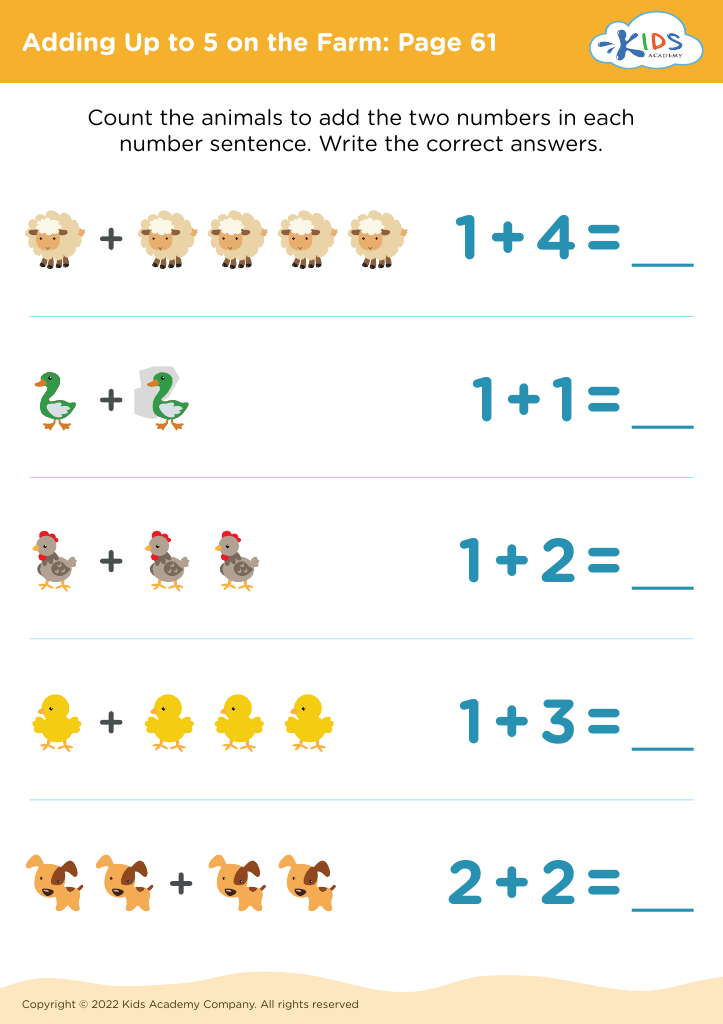
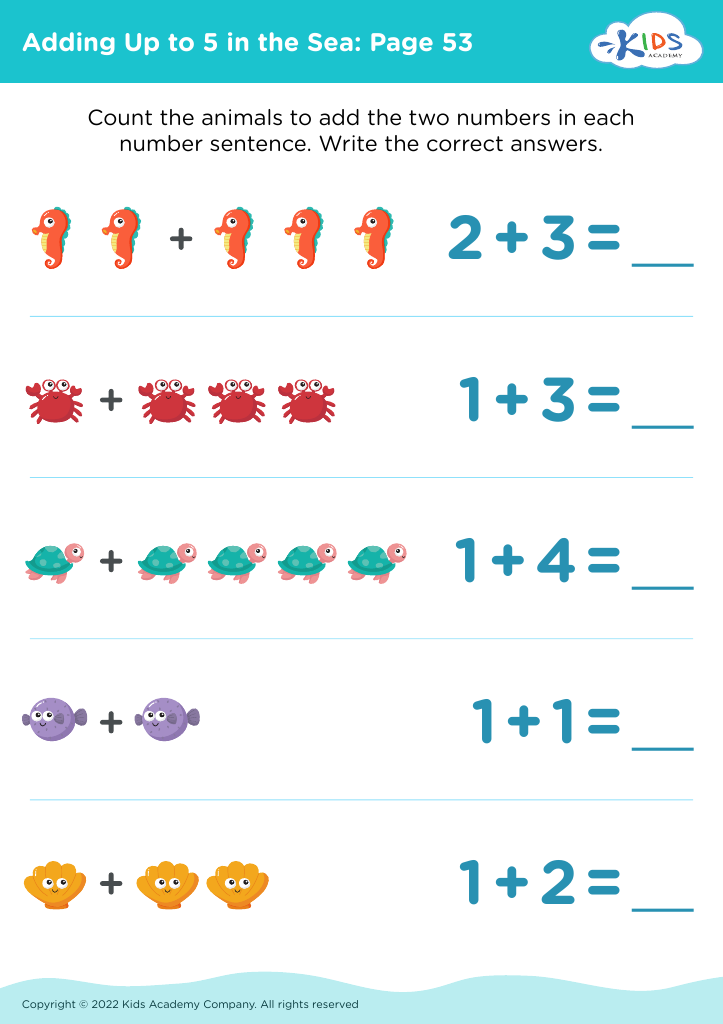
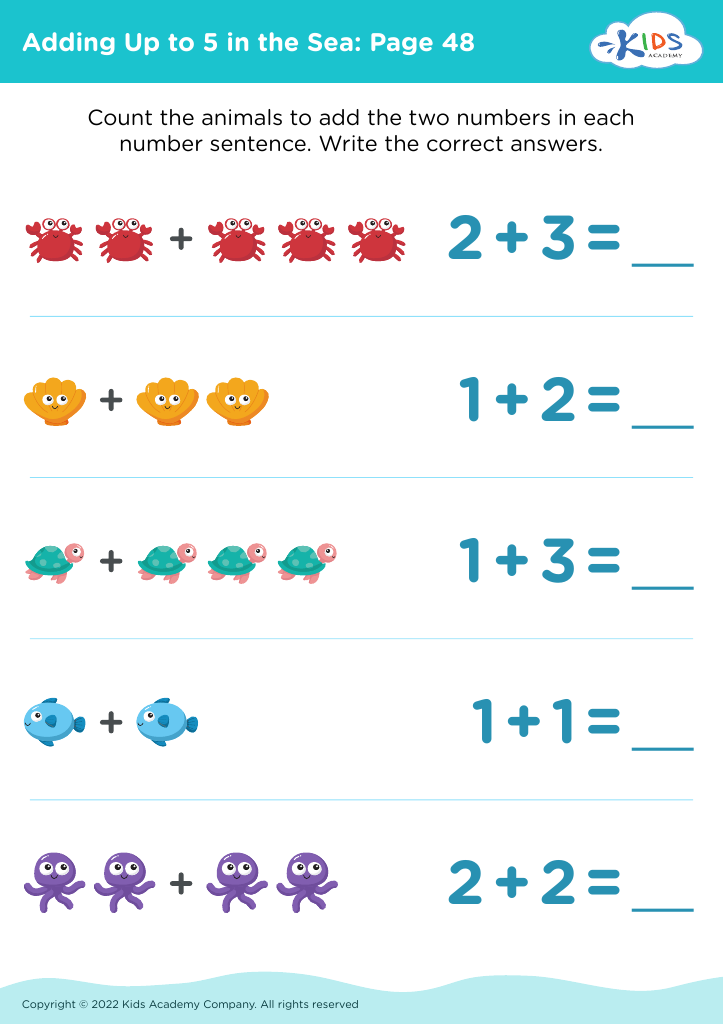
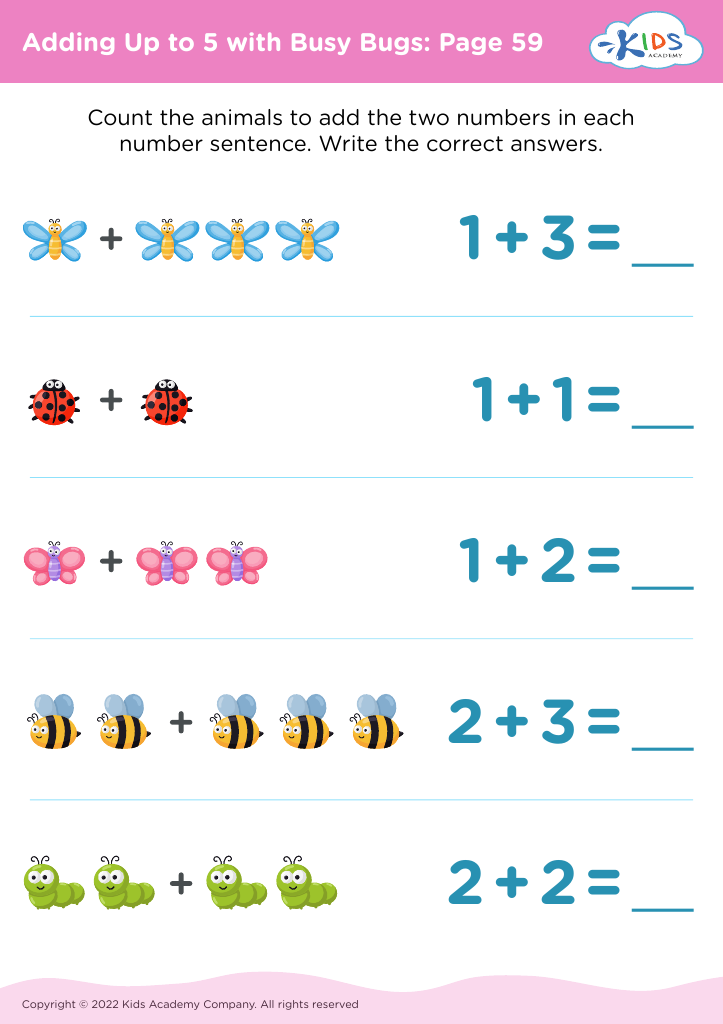
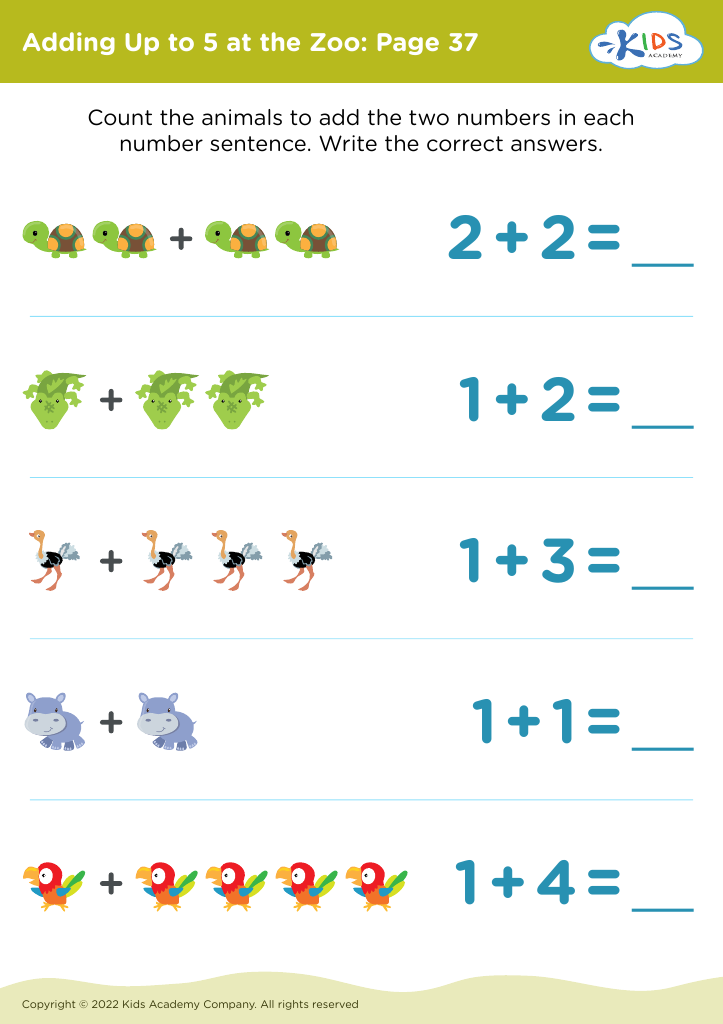
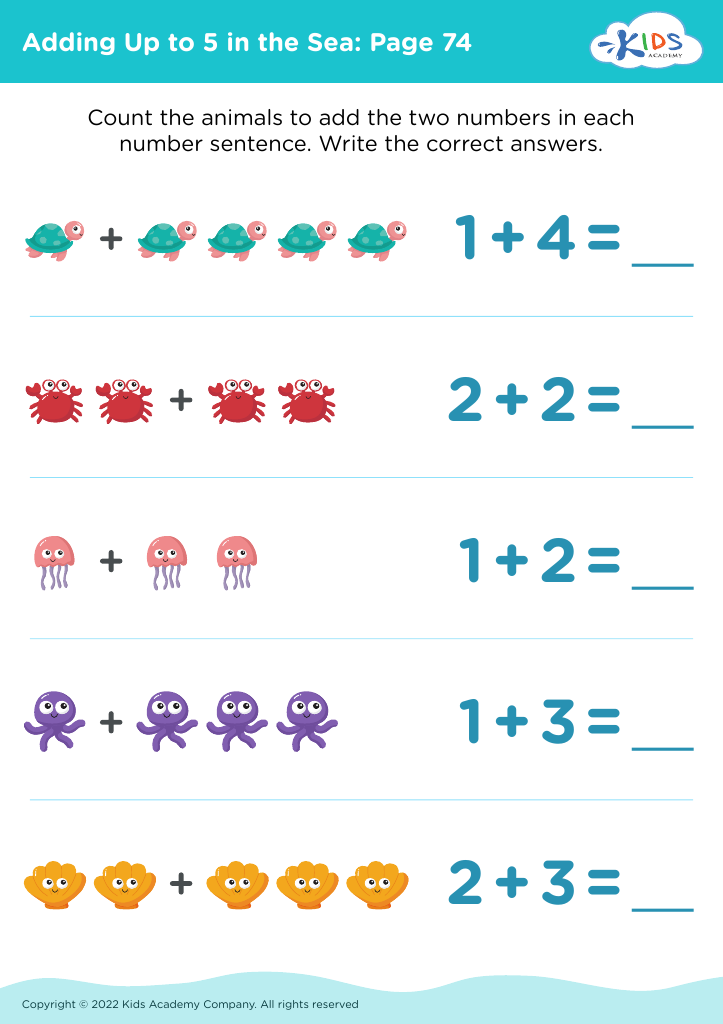
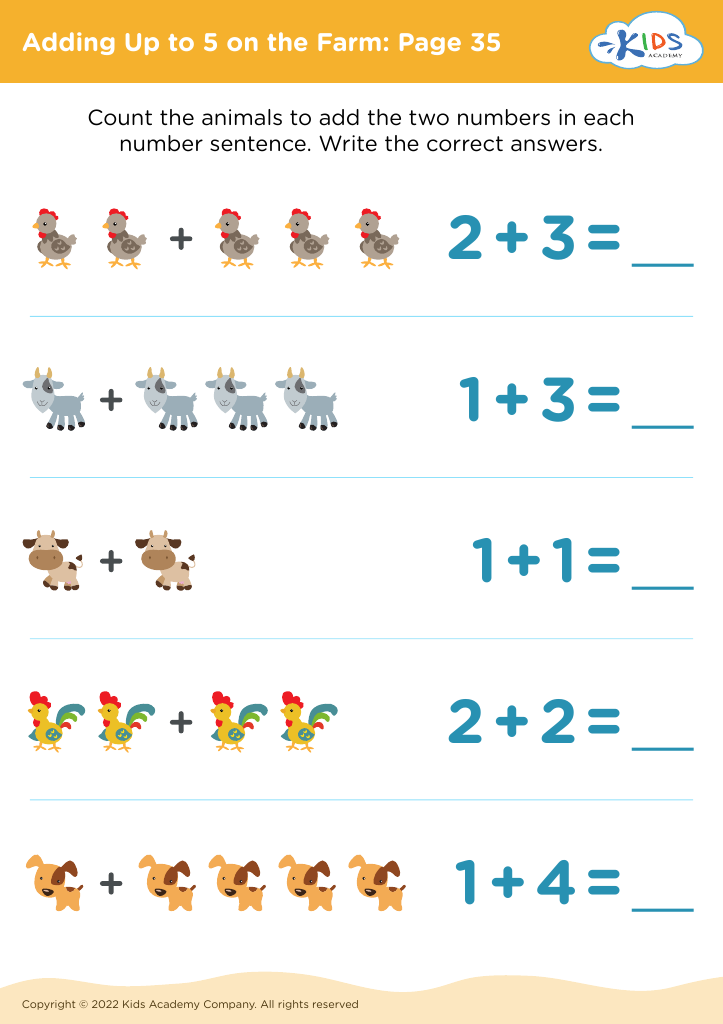
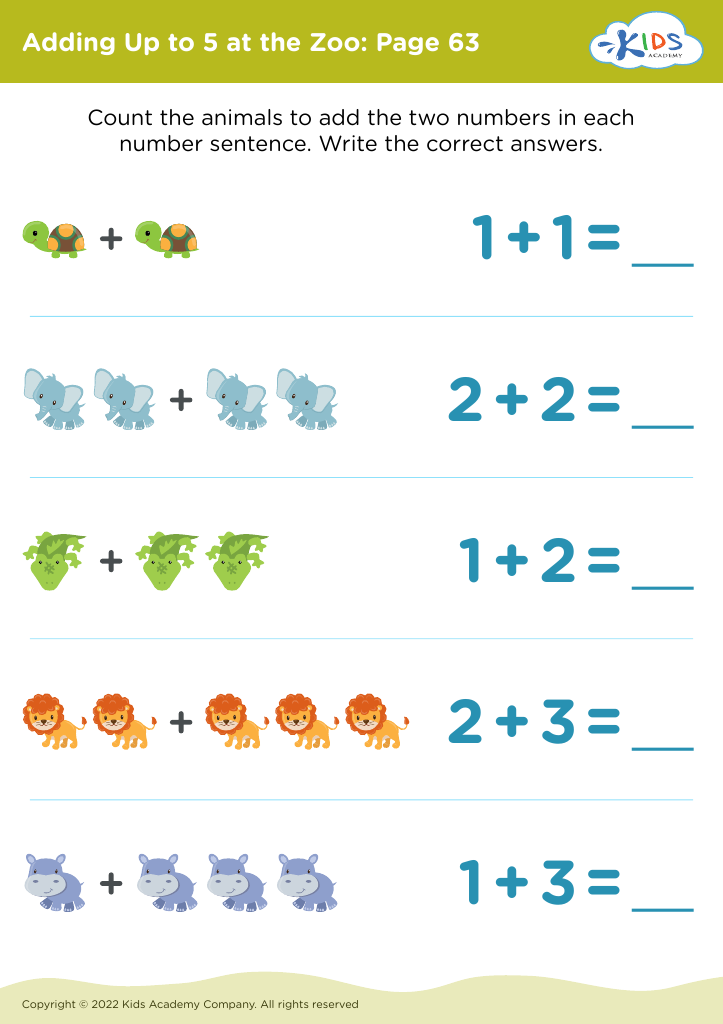
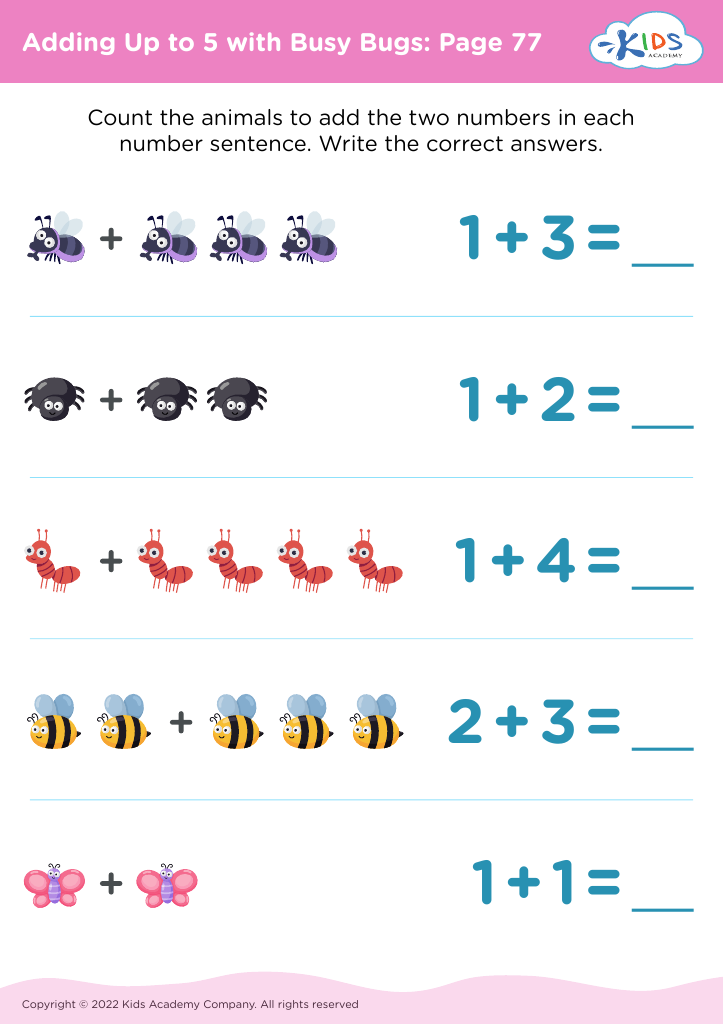
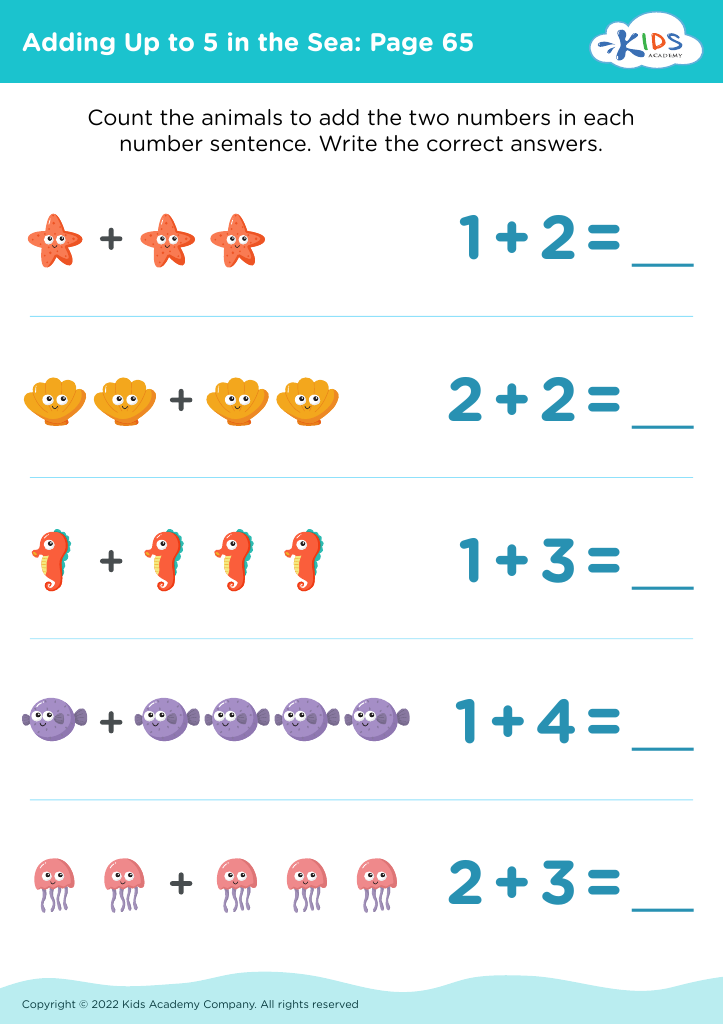
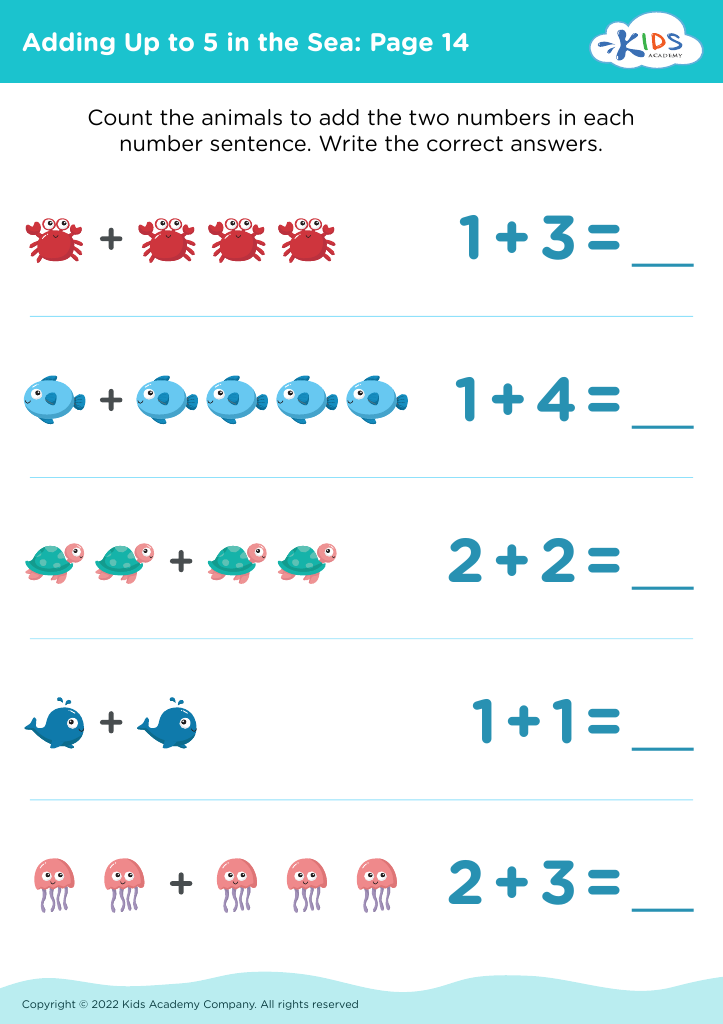
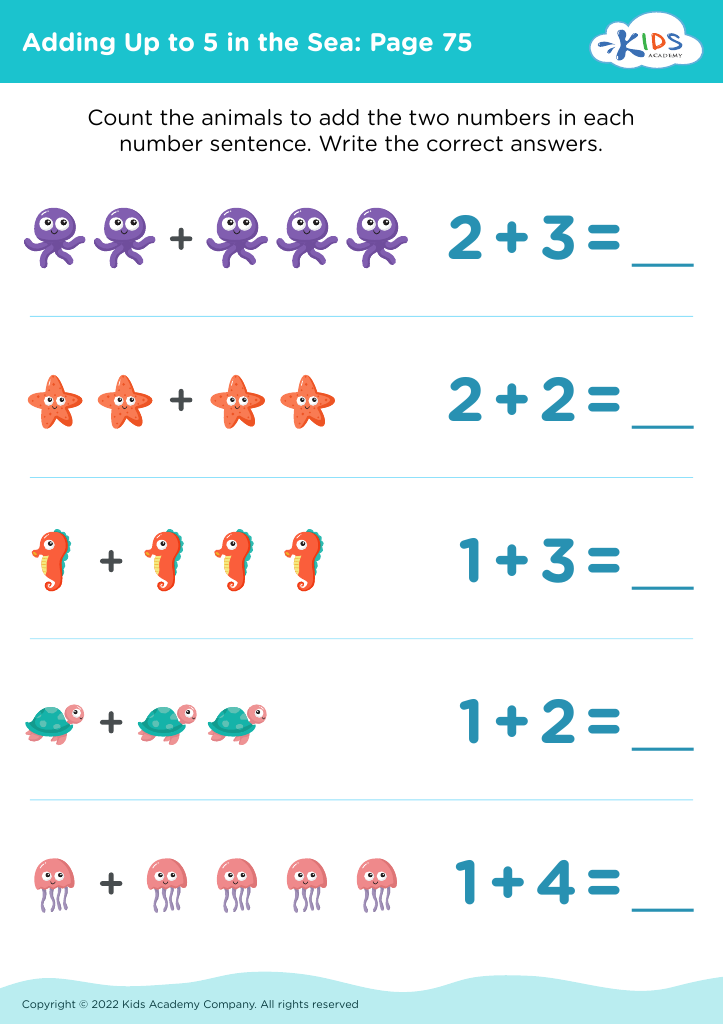
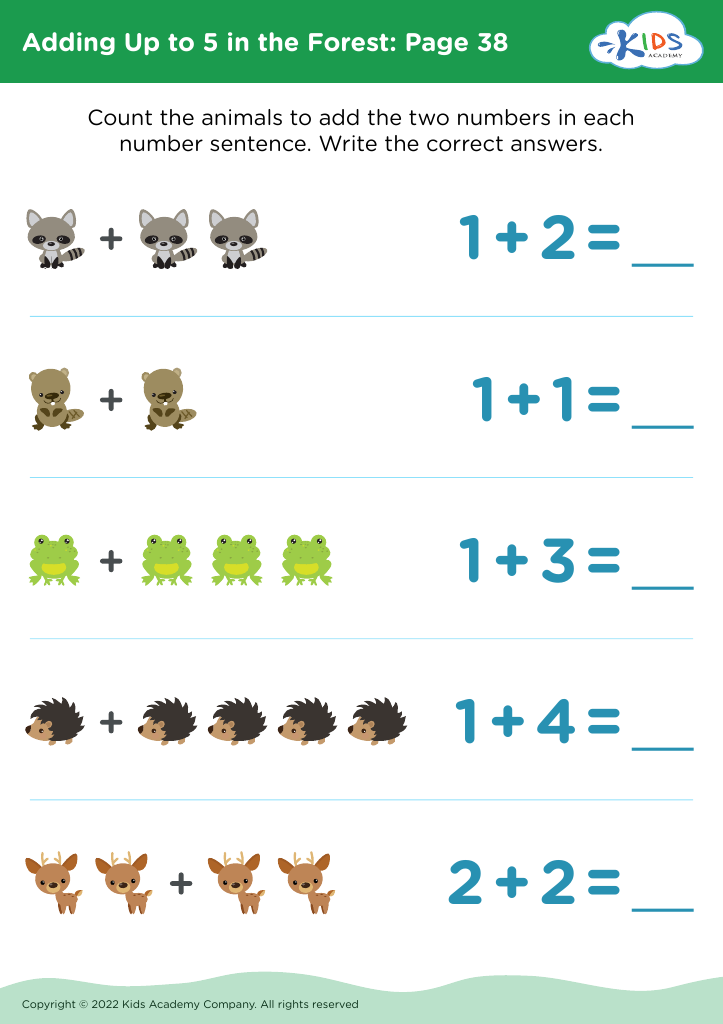
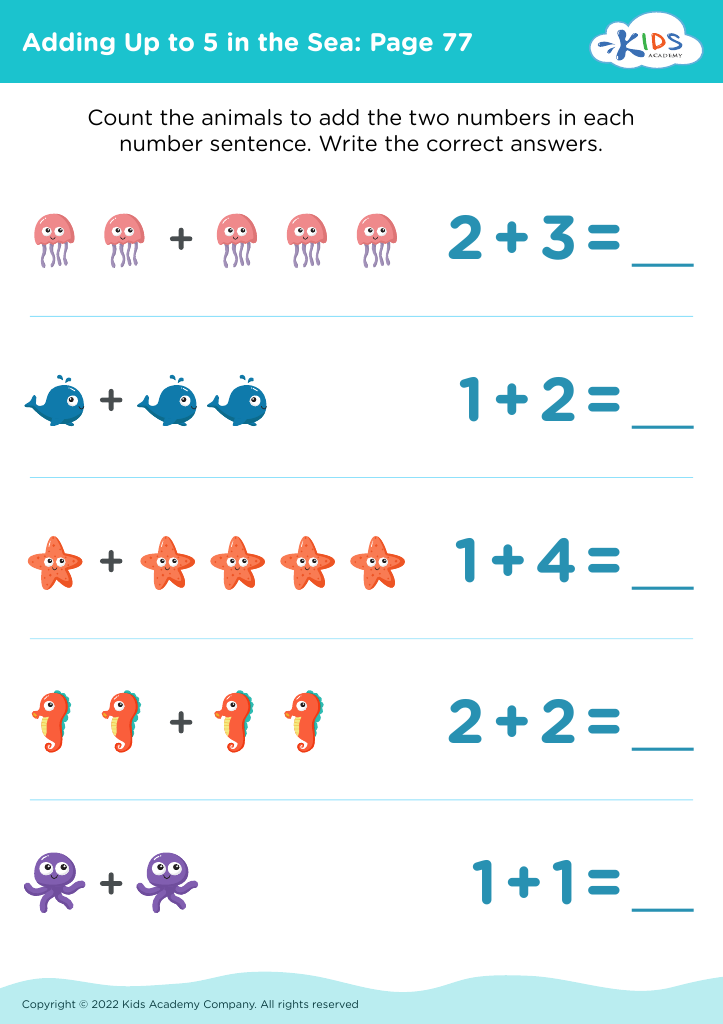
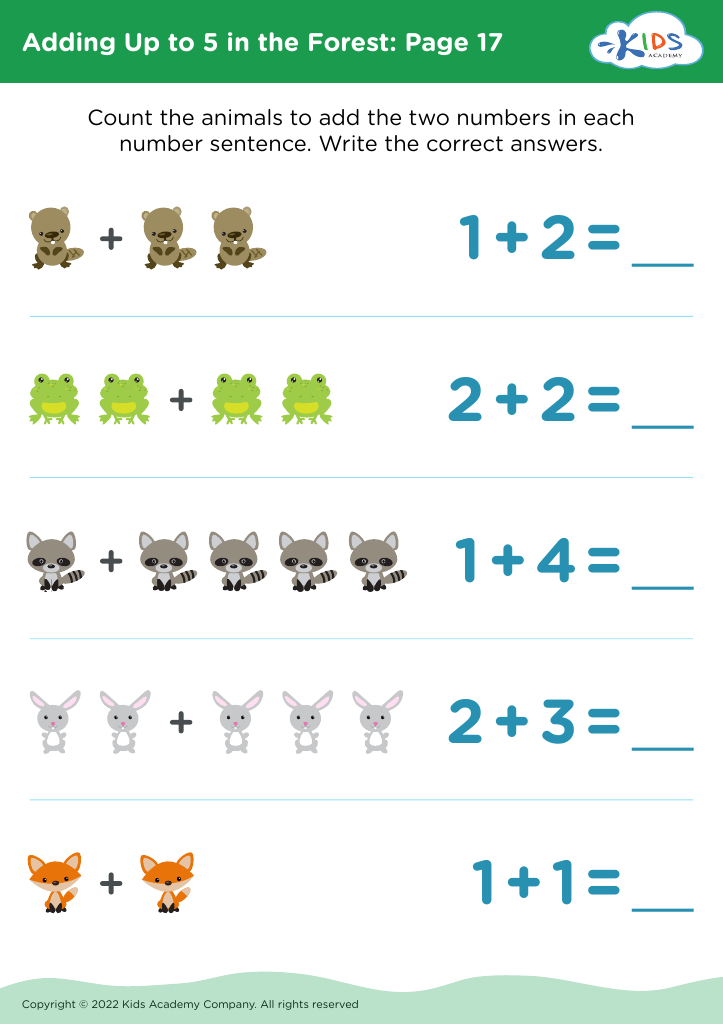
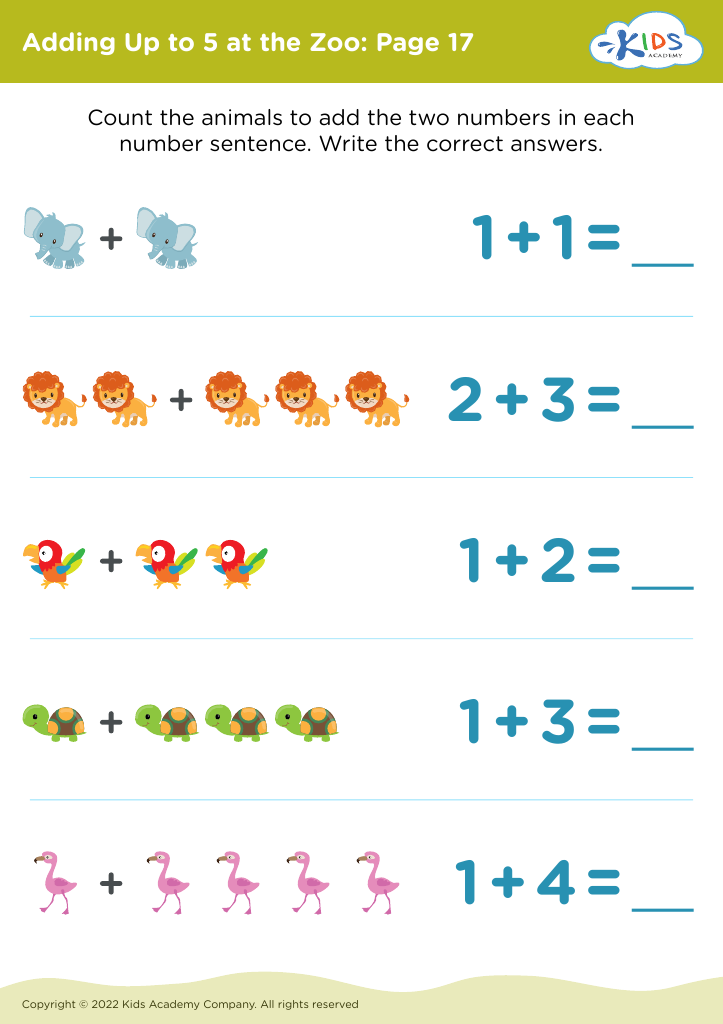
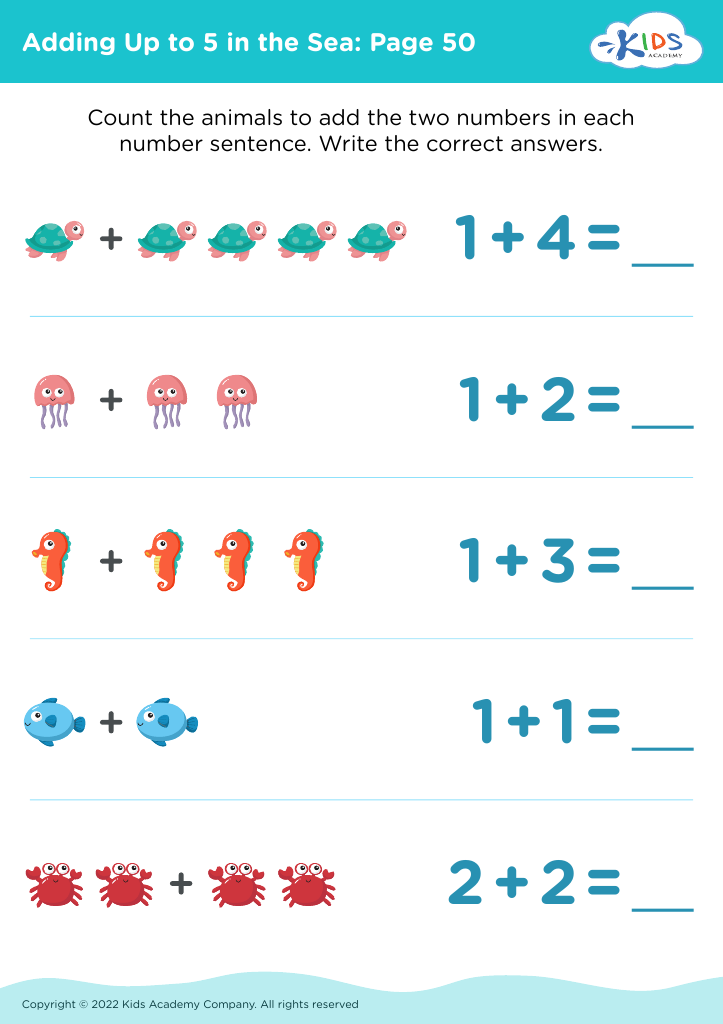
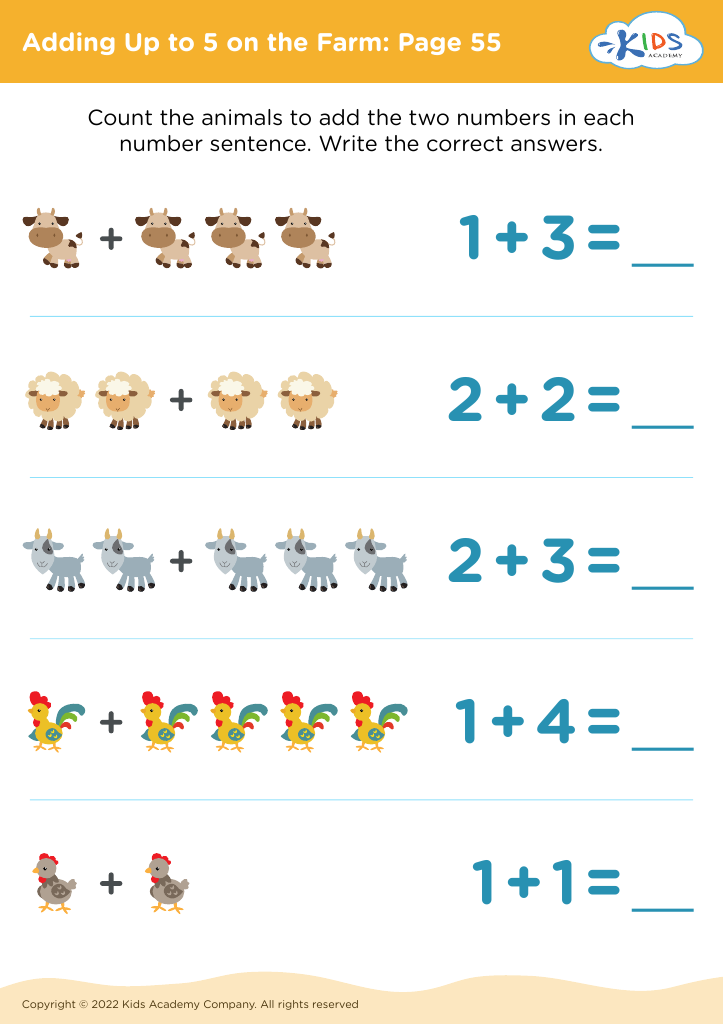
Enhance your child's fine motor skills and early math abilities with our "Adding Up to 5 Worksheets for 4-Year-Olds". Designed to improve handwriting, these delightful worksheets combine engaging addition exercises with tracing activities. Each page features fun illustrations and simple math problems that help youngsters practice gripping a pencil, controlling their movements, and developing coordination. As they trace numbers and solve basic sums up to 5, they'll build confidence and foundational skills essential for their academic journey. Tailored perfectly for preschoolers, these printable worksheets make learning both enjoyable and productive. Help your child excel with our expertly crafted resources!
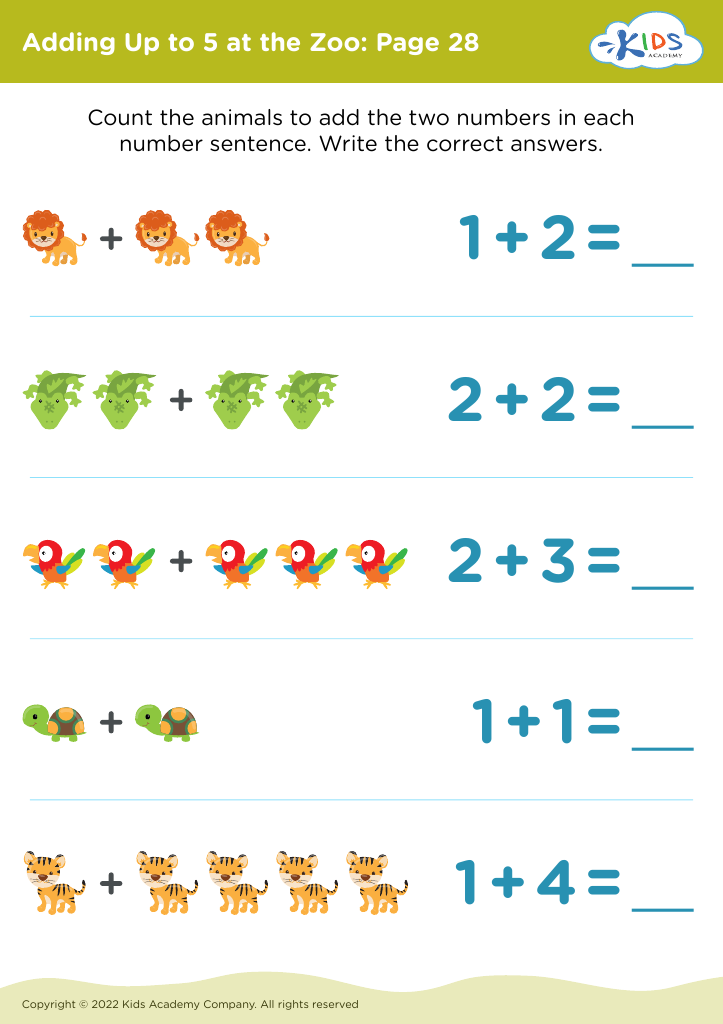
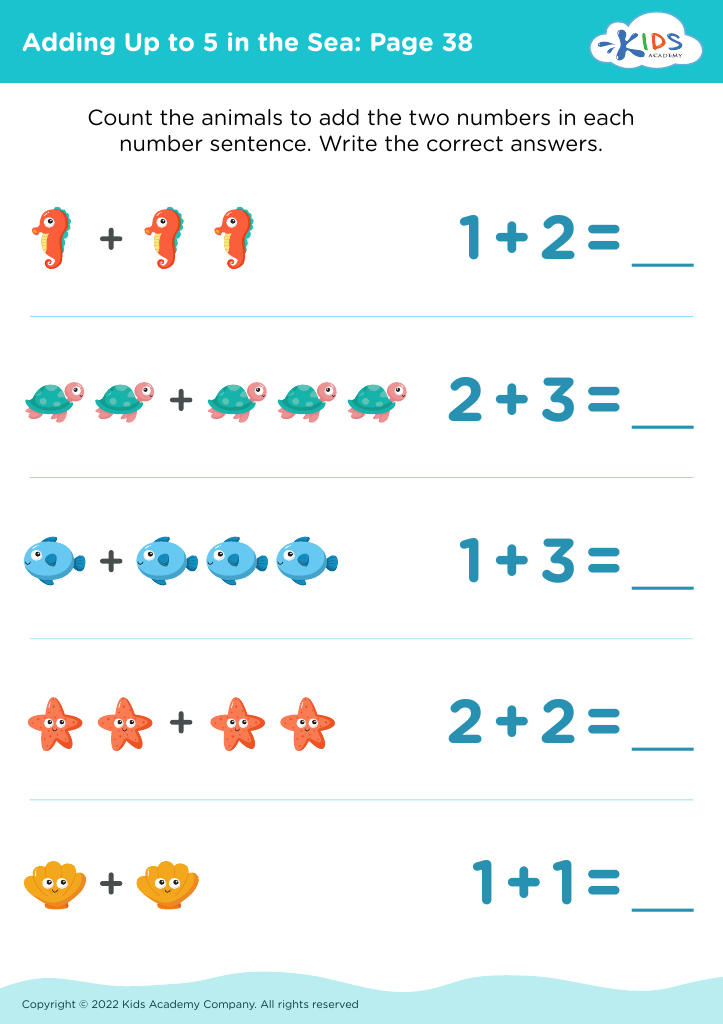
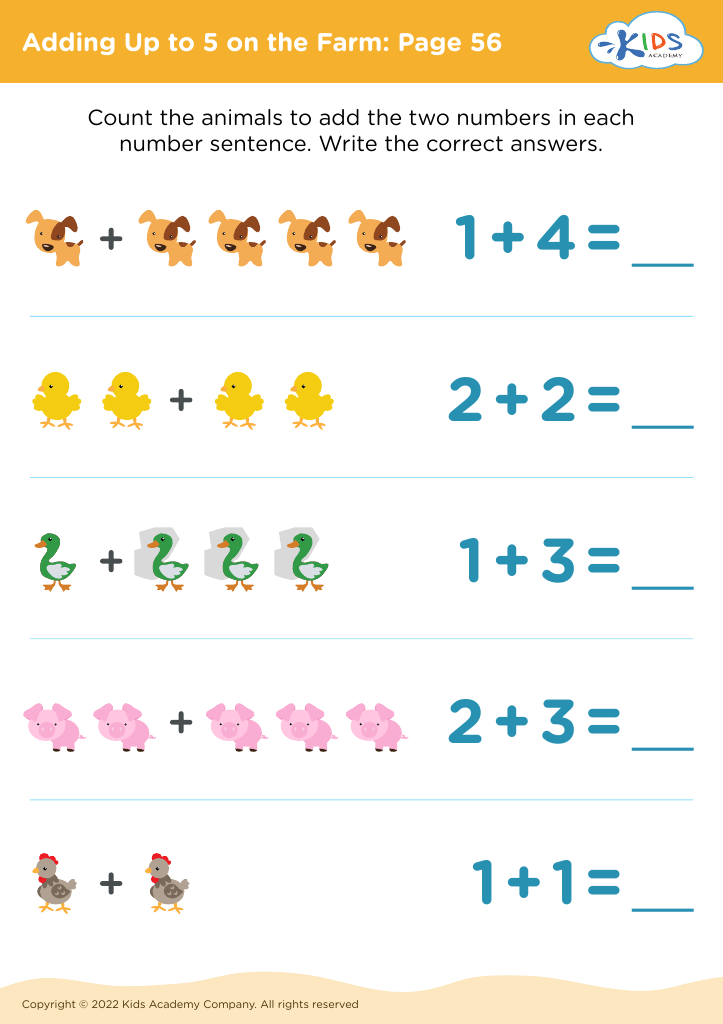
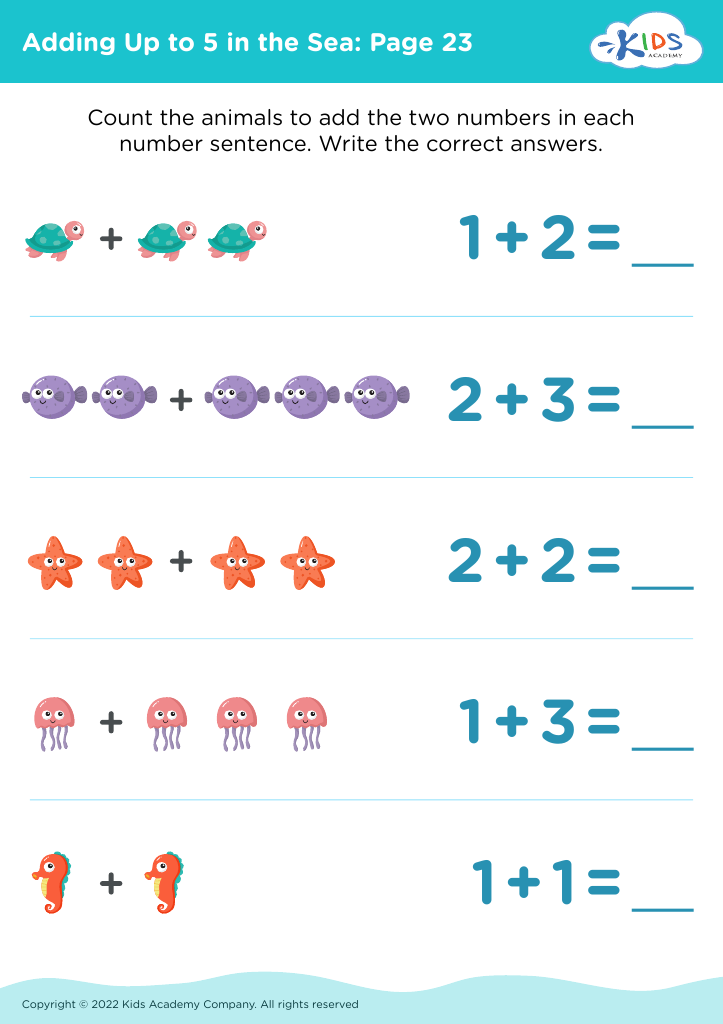








Fine motor skills and early mathematics are foundational elements in a child’s development, playing a pivotal role in their academic and everyday activities. Fine motor skills involve the coordination of small muscles in the hands and fingers, necessary for tasks such as writing, buttoning clothes, and using utensils. Working on these skills at a young age is crucial as they significantly influence a child's ability to perform more complex tasks in the future.
For 4-year-olds, practicing fine motor activities like writing helps in developing hand-eye coordination, precision, and control. These skills are not only important for academic purposes but also promote independence in daily routines. Engaging children in activities that enhance fine motor abilities, such as drawing shapes or tracing letters, prepares them for writing, a vital academic skill.
Furthermore, the ability to add up to 5 incorporates basic numeric understanding and problem-solving skills, establishing a mathematical foundation necessary for higher-level concepts. Early exposure to math engages young minds, fostering cognitive development and enhancing logical thinking.
In essence, focusing on fine motor skills and basic arithmetic for 4-year-olds creates a strong developmental base, aiding in both academic success and daily functional abilities. Parents and teachers play a crucial role in nurturing these skills, setting the stage for continuous learning and success.








