Underwater animal identification Adding Up to 5 Worksheets for 4-Year-Olds
3 filtered results
-
From - To
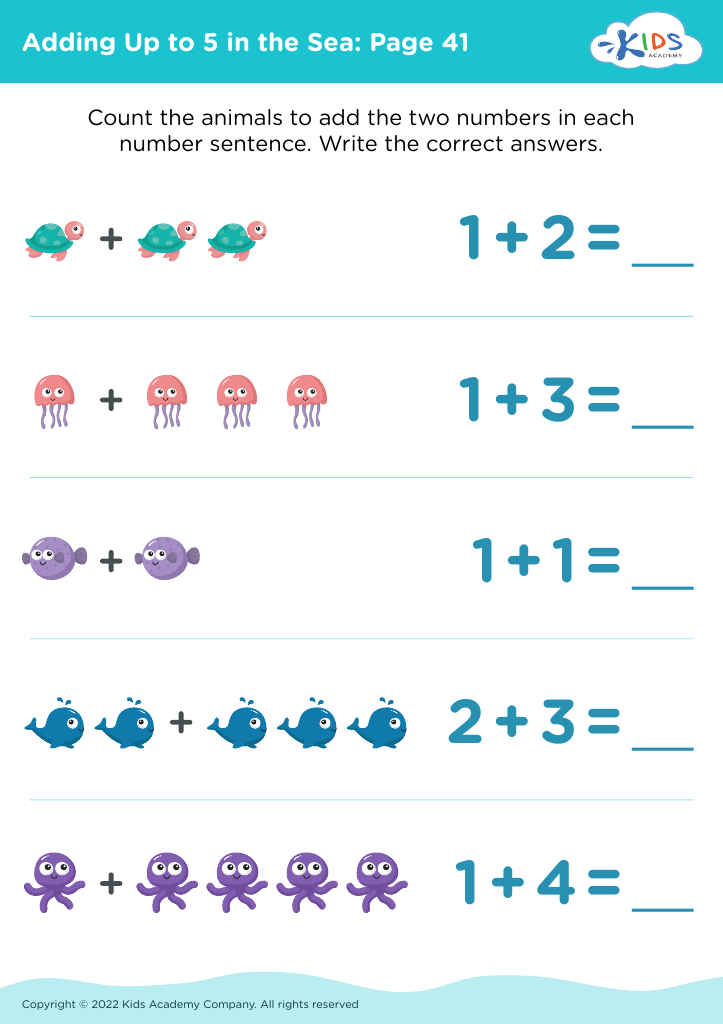
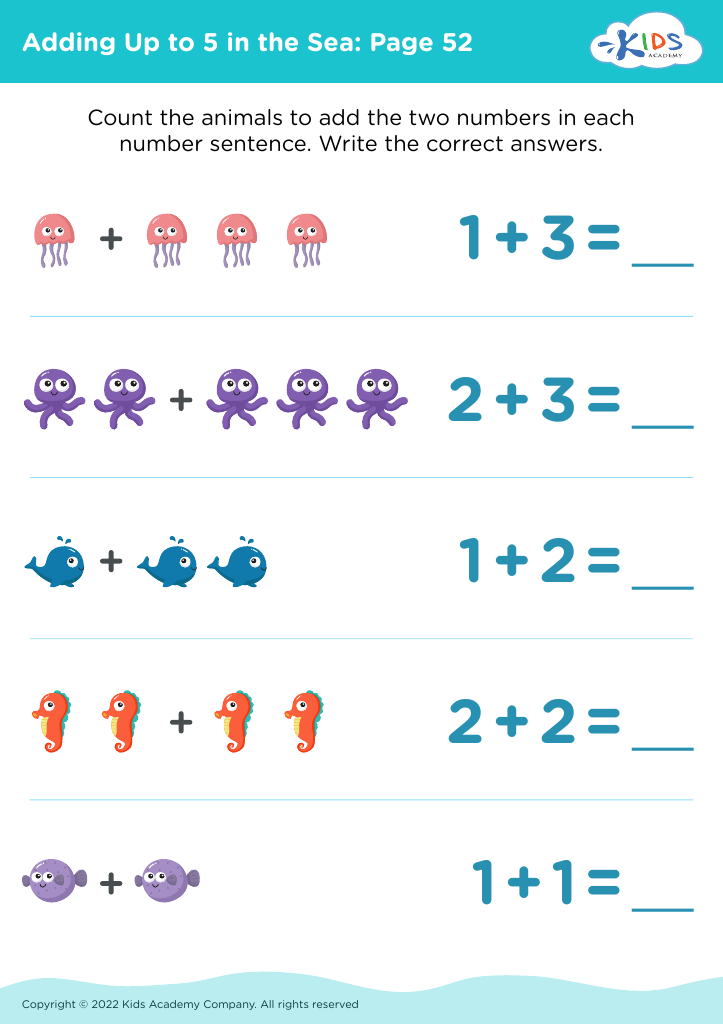
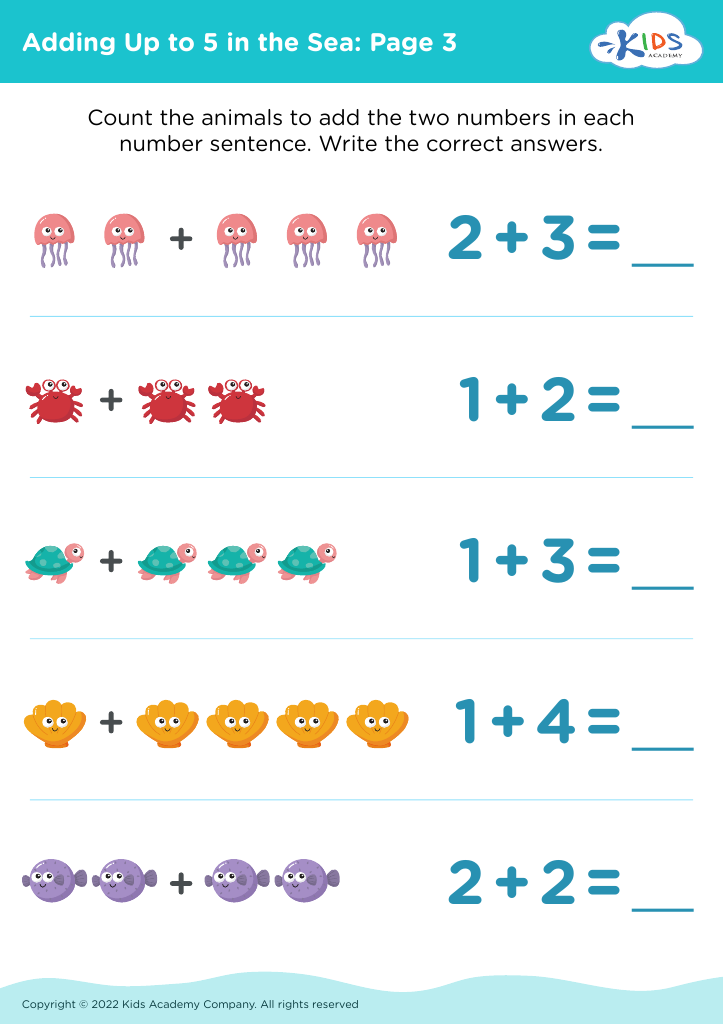
Welcome to our engaging "Underwater Animal Identification Adding Up to 5 Worksheets" designed specifically for 4-year-olds! These fun and interactive worksheets beautifully blend early math skills with the enchanting world of underwater creatures. Children will enhance their number recognition and addition skills by counting and identifying various colorful marine animals. Each worksheet encourages hands-on learning through delightful visuals and challenging yet age-appropriate problems, making math enjoyable and accessible. Dive into learning as your little ones explore the ocean while mastering addition up to 5. Perfect for home or classroom use, these worksheets foster both creativity and cognitive development in young learners!







%20(1).jpg)
Teaching 4-year-olds about underwater animal identification while incorporating basic math concepts, like adding up to 5, offers a multitude of benefits for both parents and teachers. First, it fosters curiosity about the natural world, encouraging children to explore and learn about diverse marine life. This knowledge nurtures empathy for animals and an understanding of ecosystems, which is vital for developing environmental consciousness at a young age.
Integrating identification with simple math promotes cognitive development in more than one area. Recognizing different underwater animals, such as fish, turtles, and octopuses, enhances vocabulary and critical thinking. Meanwhile, practicing addition reinforces early math skills essential for future educational success. Children can count legs on a crab or fins on a fish while adding them up, making learning interactive and fun.
Furthermore, this cross-curricular approach aligns with developmental milestones, as children enjoy engaging activities that make them eager learners. Parents and teachers play a pivotal role in guiding this exploration, creating a hands-on learning environment that stimulates imagination and discovery. By blending science and math, parents and teachers can instill a love for learning that transcends the classroom, preparing children for exciting growth ahead.








