Visual learning reinforcement Adding Up to 5 Worksheets for 4-Year-Olds
5 filtered results
-
From - To
Our "Visual Learning Reinforcement: Adding Up to 5 Worksheets for 4-Year-Olds" are perfect for nurturing early math skills in your child. These engaging, colorful worksheets use visual elements to teach fundamental addition concepts. Designed to captivate young learners, our exercises feature fun themes and illustrations that turn math practice into an enjoyable activity. As children count objects and solve simple problems, they enhance both their numerical skills and visual learning abilities. Ideal for home or classroom use, these worksheets ensure that learning addition up to 5 is a rewarding and interactive experience for young students.
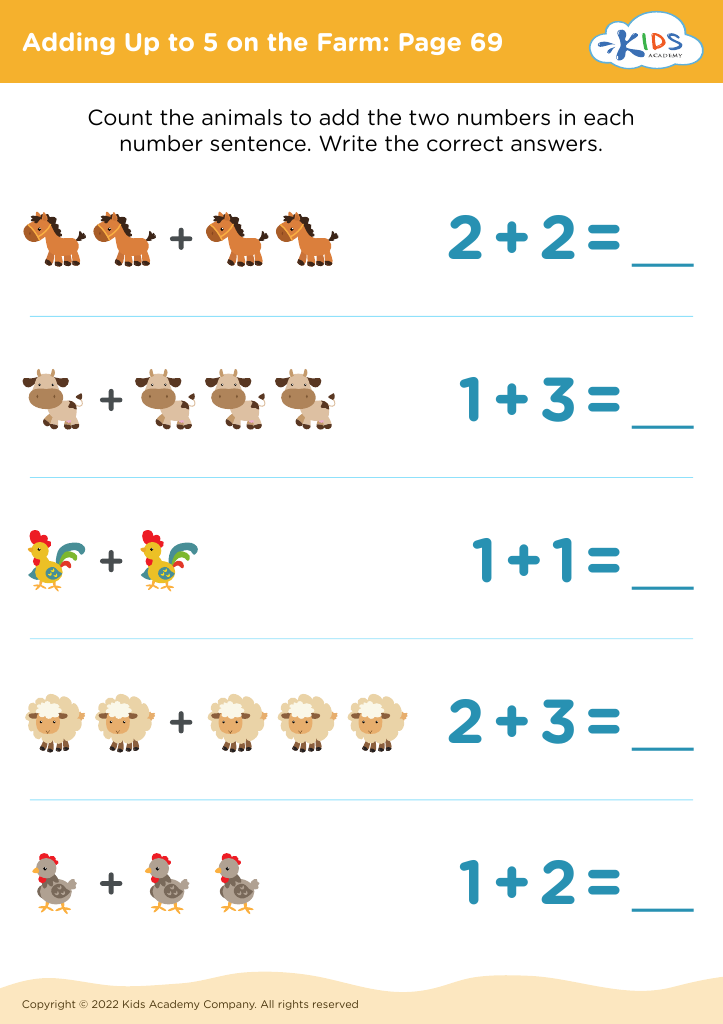
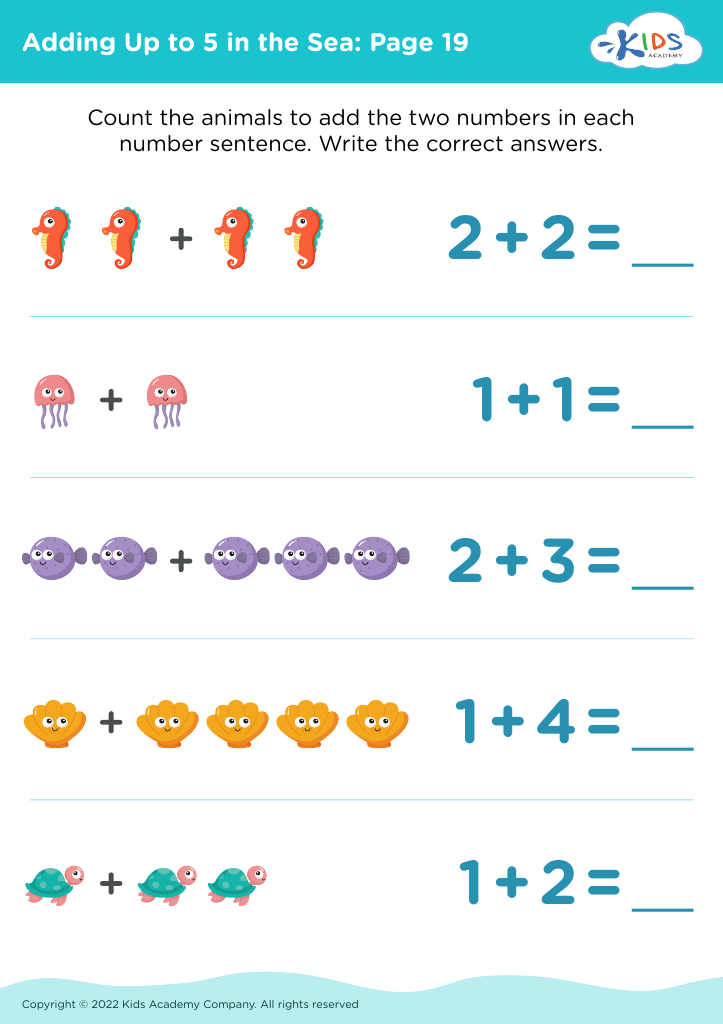
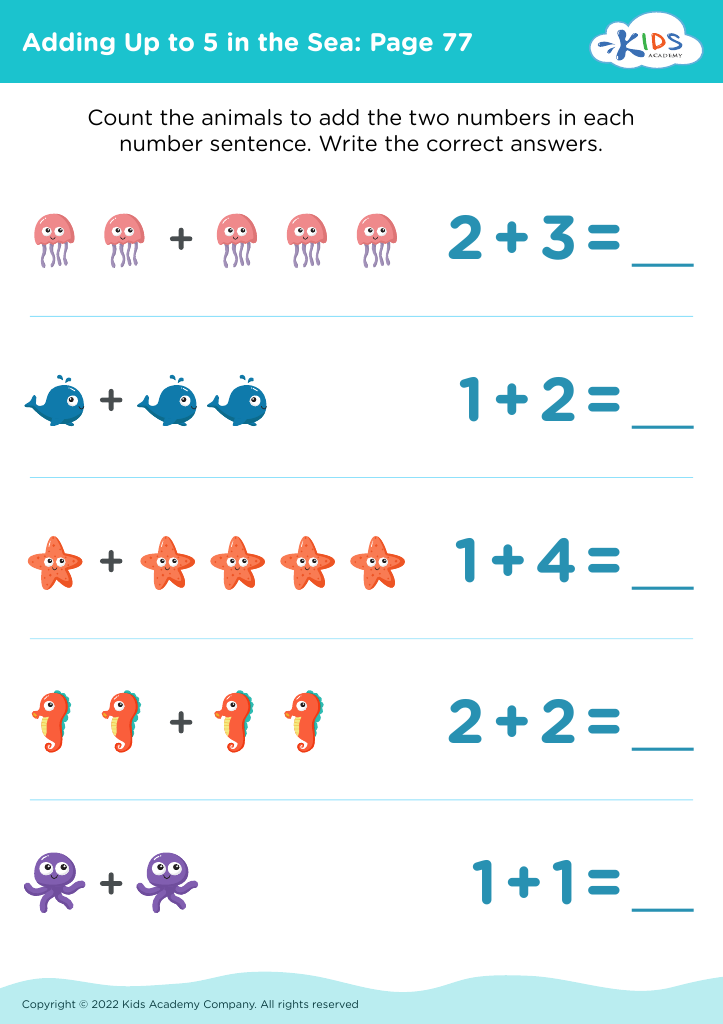
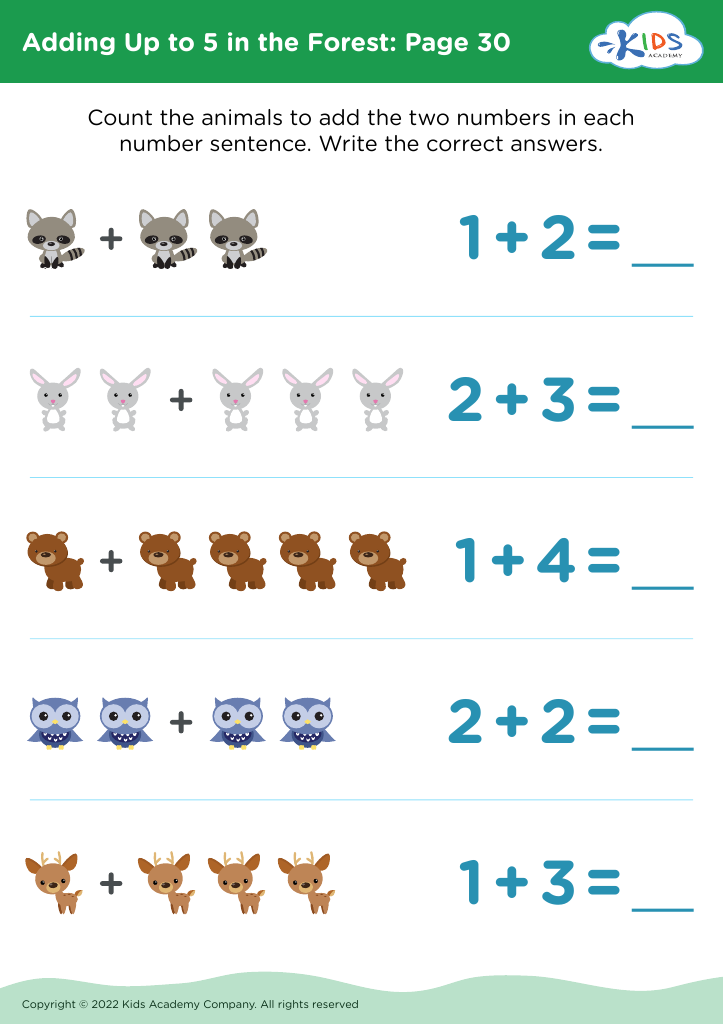
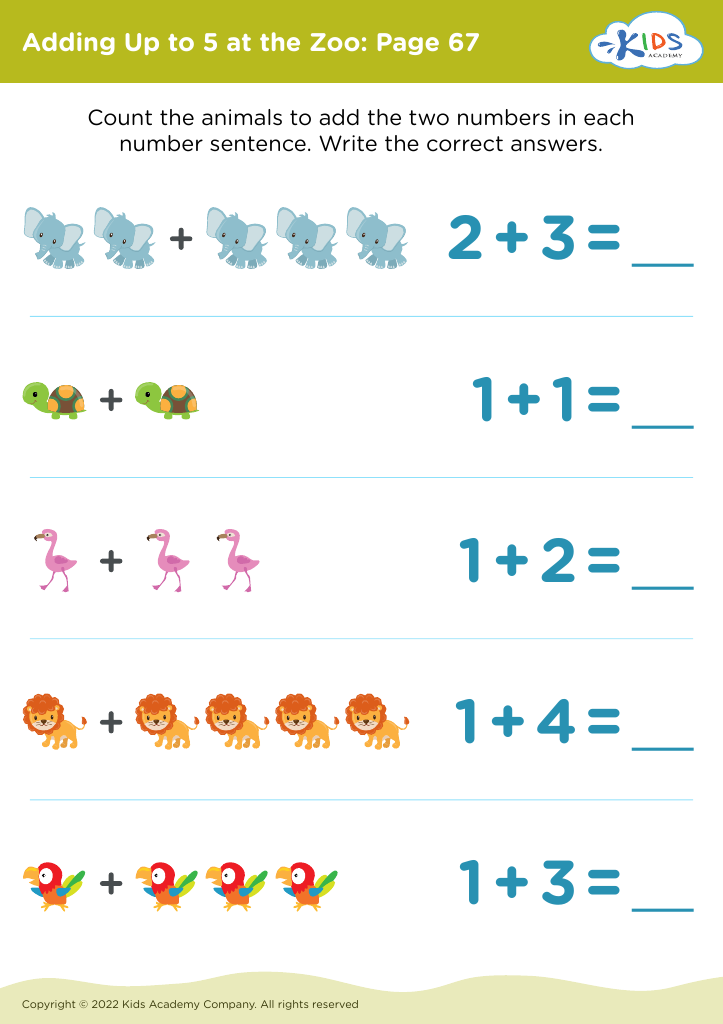








Visual learning reinforcement for adding up to 5 is crucial for 4-year-olds because it leverages their innate capacity to process information visually and supports foundational math skills. At this developmental stage, children are naturally drawn to bright colors, shapes, and images. By using visual aids like number lines, counters, and colorful graphics, we can make abstract numerical concepts more concrete and understandable.
Engaging visual aids keep young learners interested and excited about learning. They help to simplify complex ideas, allowing children to grasp the basics of addition by seeing it in action. For example, using pictures of apples to add numbers can make it easier for children to understand that 2 apples plus 3 apples equals 5 apples.
Furthermore, visual reinforcement caters to diverse learning styles, ensuring no child is left behind. It helps build memory retention through repetitive visual patterns, solidifying their understanding.
Additionally, early exposure to mathematical concepts boosts cognitive development, critical thinking, and prepares children for more advanced mathematical learning. By integrating visual learning reinforcement into everyday activities, parents and teachers can create a supportive and engaging learning environment that nurtures a child's natural curiosity and sets a strong foundation for their future education. Engaging children this way supports a holistic educational approach, making learning an enjoyable and regular experience.








