Visual Perception Skills Adding Up to 5 Worksheets for 4-Year-Olds
4 filtered results
-
From - To
Enhance your child's visual perception skills with our engaging "Adding Up to 5 Worksheets" designed specifically for 4-year-olds. These colorful, interactive worksheets foster critical early math concepts while helping children develop essential visual processing abilities. Your little learner will enjoy fun activities that encourage number recognition, counting, and simple addition—all while honing their ability to interpret visual information. Perfect for at-home practice or classroom settings, these engaging worksheets not only support math development but also promote cognitive skills essential for lifelong learning. Download now and watch your child's confidence and math skills flourish as they embark on this exciting learning journey!
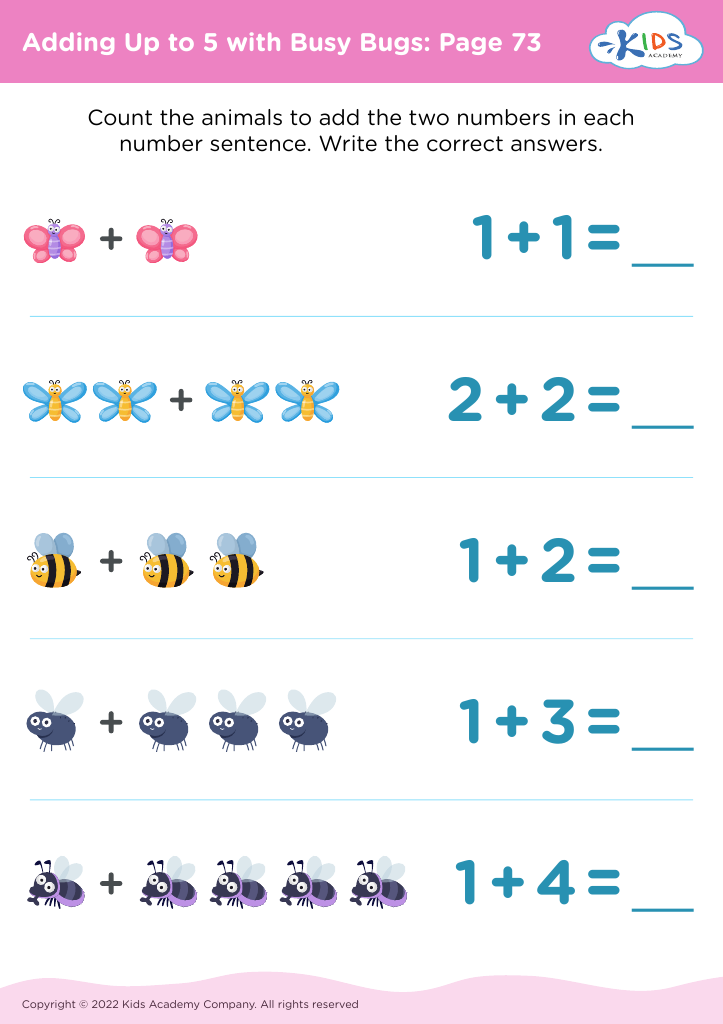
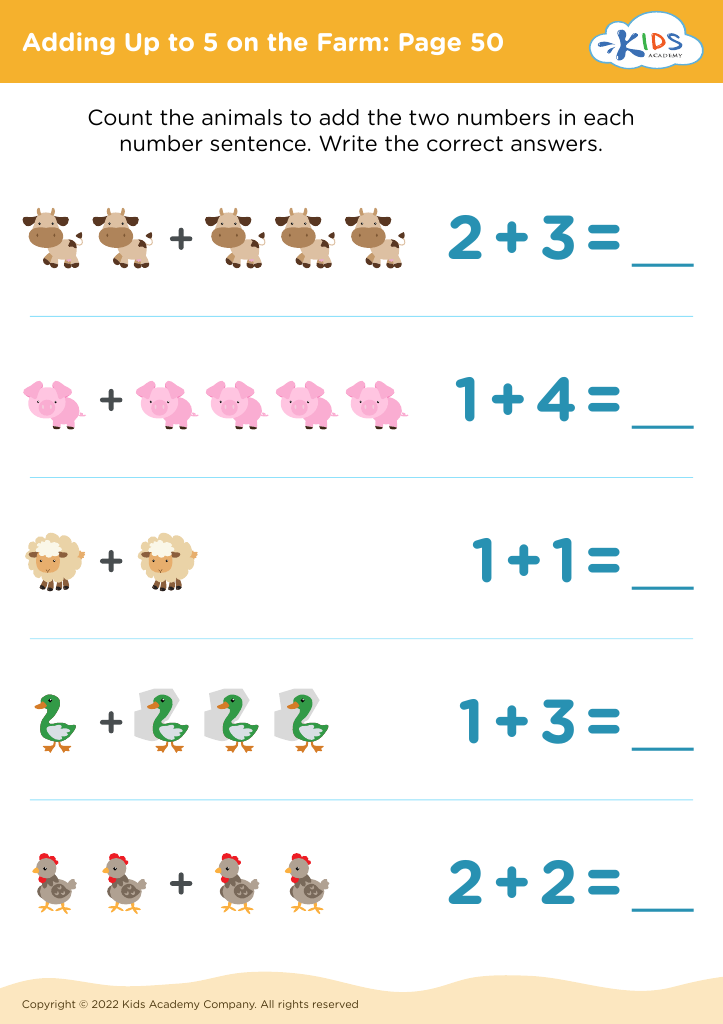
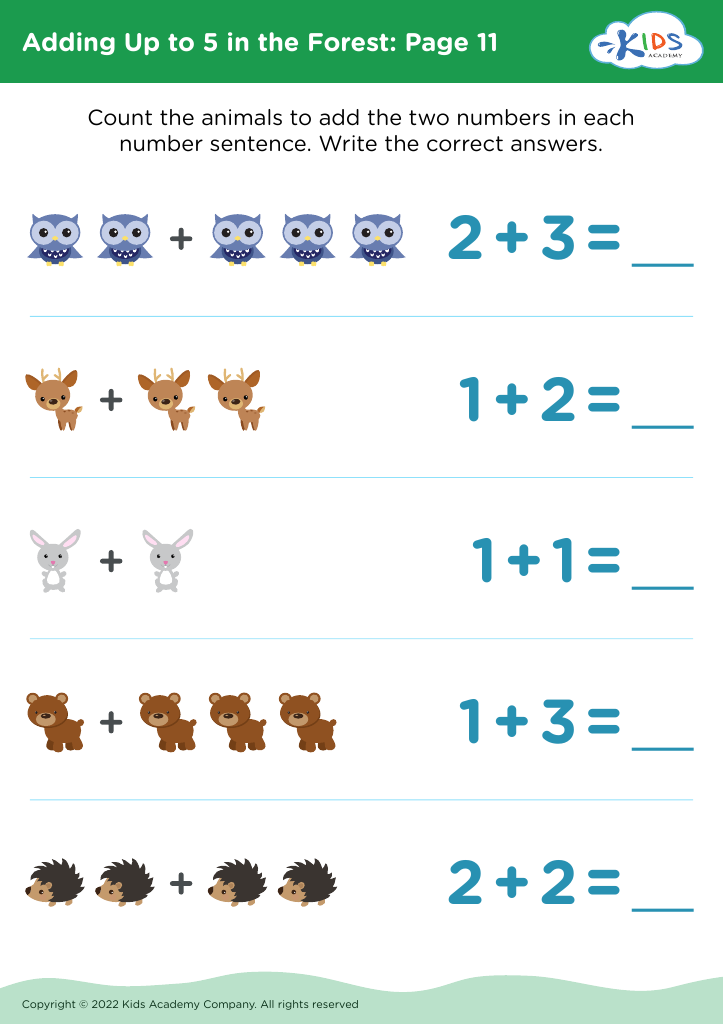
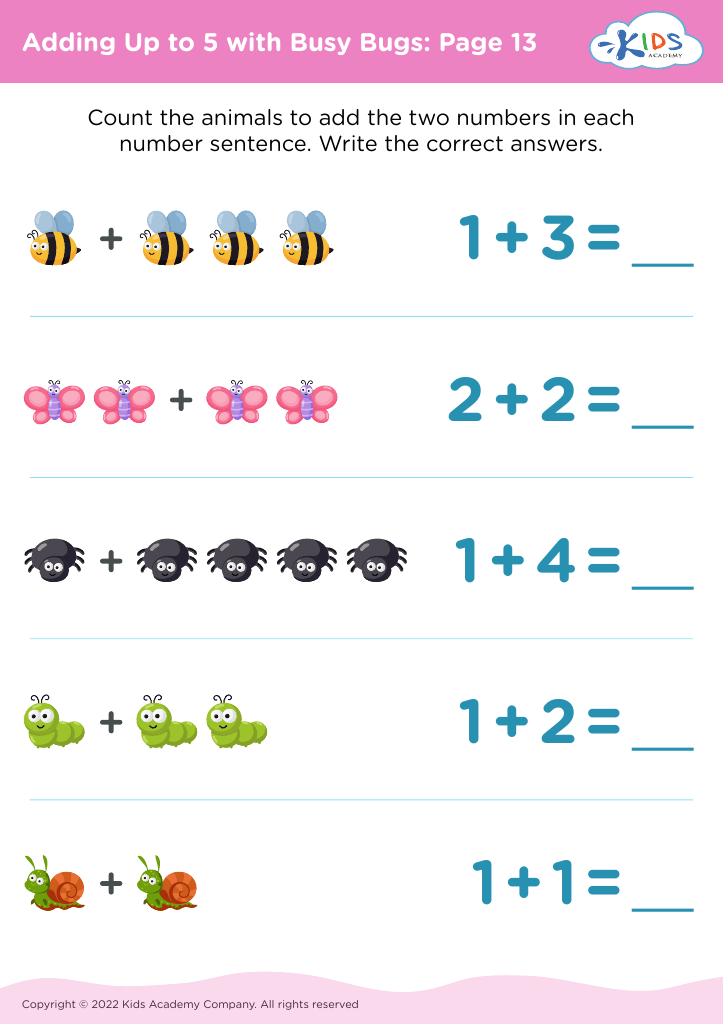








Visual perception skills are essential for 4-year-olds as they form the foundation for learning, particularly in mathematics. At this age, children begin to make sense of their world through visuals, such as recognizing shapes, colors, and patterns. Developing visual perception skills helps them understand the concept of numbers and can assist in performing basic arithmetic operations, including adding up to 5.
When children can visually process information, they become more adept at recognizing quantities and can better visualize the addition process. For instance, seeing groups of objects can help them learn that two apples combined with three apples make five apples in total. Additionally, these skills support their ability to follow instructions and draw connections between concepts, enhancing comprehension in both math and reading.
Educators and parents should pay attention to visual perception development as it directly impacts a child's confidence and competence in early learning. By encouraging activities that foster these skills—such as puzzles, matching games, or counting toys—adults can not only enhance mathematical understanding but also cultivate critical thinking and problem-solving abilities. Ultimately, nurturing visual perception skills equips children with the tools they need to succeed both academically and in everyday life challenges.








