Developing Concentration Adding with Busy Bugs Worksheets for 4-Year-Olds
3 filtered results
-
From - To
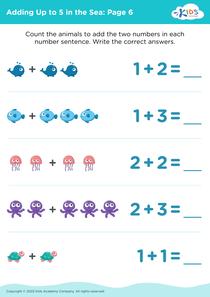
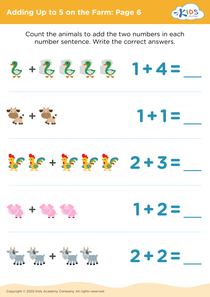
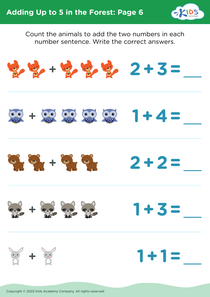
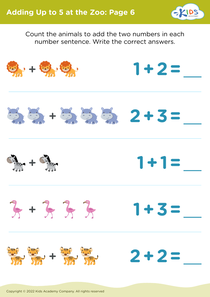
Engage your 4-year-old's mind with our captivating Busy Bugs Worksheets designed to enhance concentration while mastering addition! Our expertly crafted activities feature delightful insect images and simple math problems, making learning both fun and educational. These worksheets are perfect for developing focus, as young learners immerse themselves in colorful bug-themed math adventures. By consistently practicing with Busy Bugs, children can improve their basic addition skills critical during early education stages. Ideal for preschoolers, these engaging worksheets help build a strong foundation in math while fostering essential concentration abilities. Spark a love for learning with Busy Bugs and watch your child's concentration blossom!
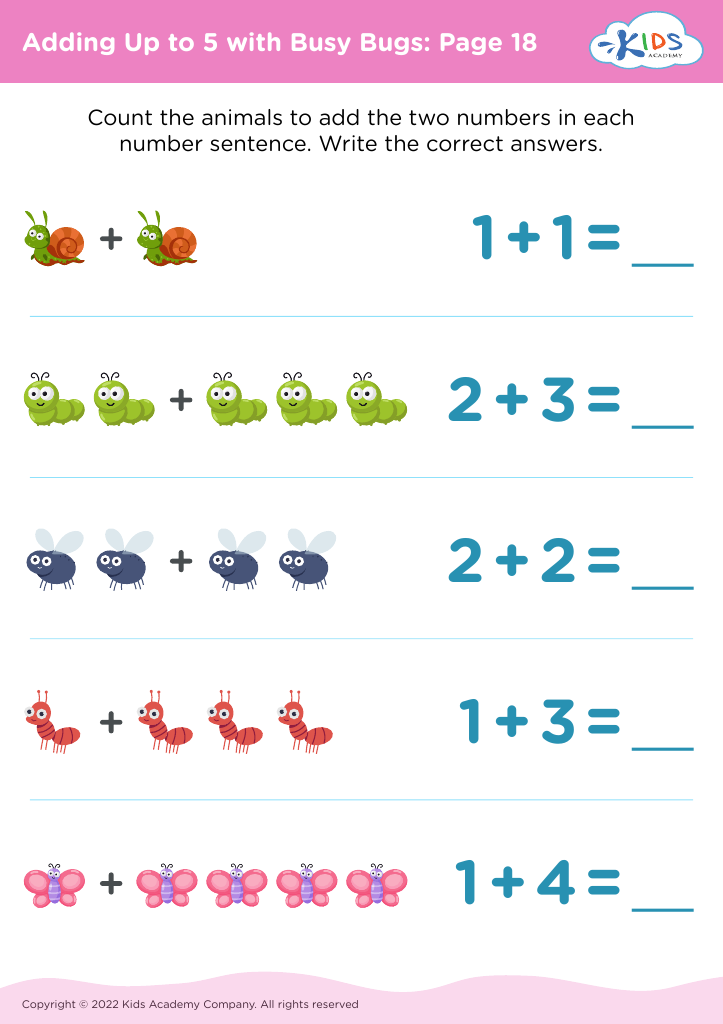
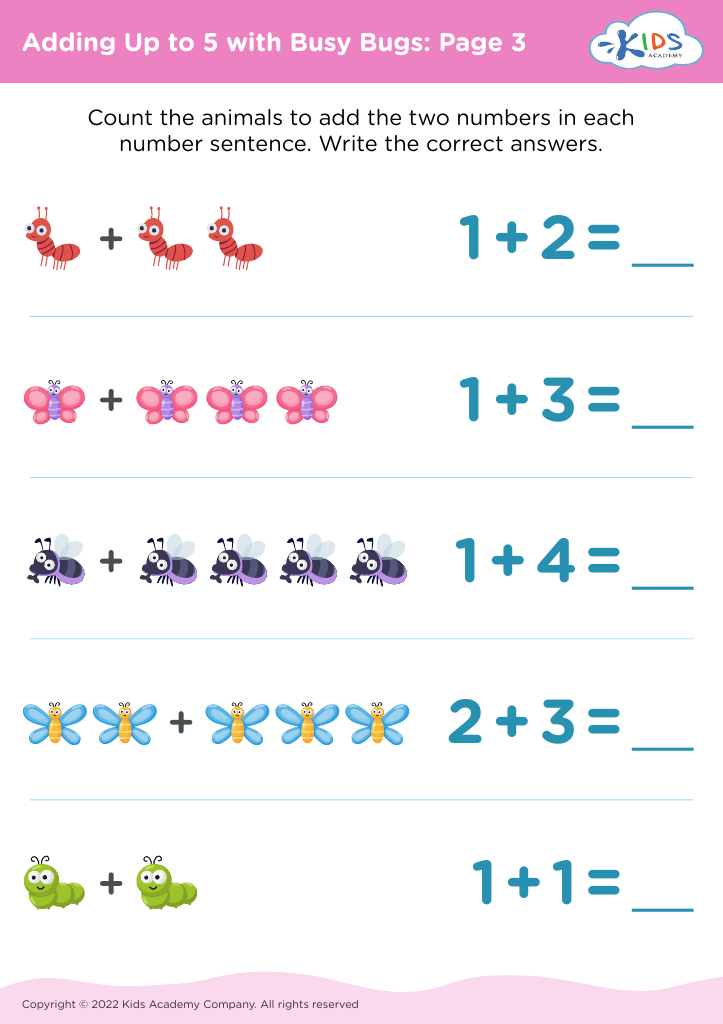
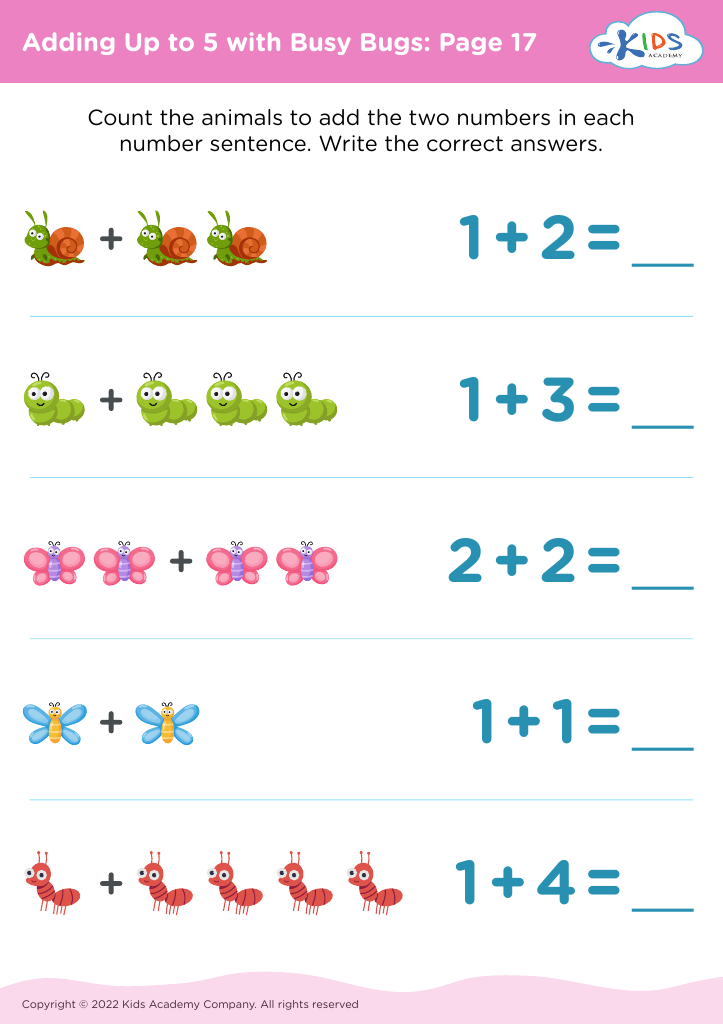



Developing concentration skills in 4-year-olds using tools like "Adding with Busy Bugs" is crucial for both parents and teachers because it lays the foundation for future academic success and personal development. At this age, children are in a critical period of brain development. Structured, engaging activities such as those found in "Adding with Busy Bugs" provide an excellent way to capture their attention and improve their ability to focus.
First, these activities introduce basic math concepts in a fun and interactive manner. Young children are naturally curious and learn best through play. By incorporating colorful bugs and playful scenarios, the tasks become more engaging, keeping children's attention longer than traditional methods. This engagement is a vital first step in developing concentration.
Second, fostering concentration at an early age has long-lasting benefits, including better performance in school and in daily tasks. Concentration is a skill that will help children listen better, follow instructions, and complete tasks efficiently.
Lastly, parental and teacher involvement in these activities reinforces a supportive learning environment. It shows children that learning is valuable and fun, strengthening the parent-child or teacher-student bond and making the educational experience more enjoyable and effective for everyone involved.