Visual Learning Addition and Subtraction Word Problems Worksheets for 4-Year-Olds
5 filtered results
-
From - To
Introduce your 4-year-old to mathematics using engaging Visual Learning Addition and Subtraction Word Problems Worksheets! Designed to captivate young minds, these worksheets provide interactive scenarios that make learning math fun and accessible. Each activity blends colorful visuals with relatable stories, helping children understand and solve basic addition and subtraction problems effortlessly. Enhance your child’s problem-solving skills and boost their confidence with our expertly crafted resources. Perfect for early learners, these worksheets offer an optimal blend of education and entertainment. Explore our collection and give your child a head start in math with Kids Academy’s visual learning approach!
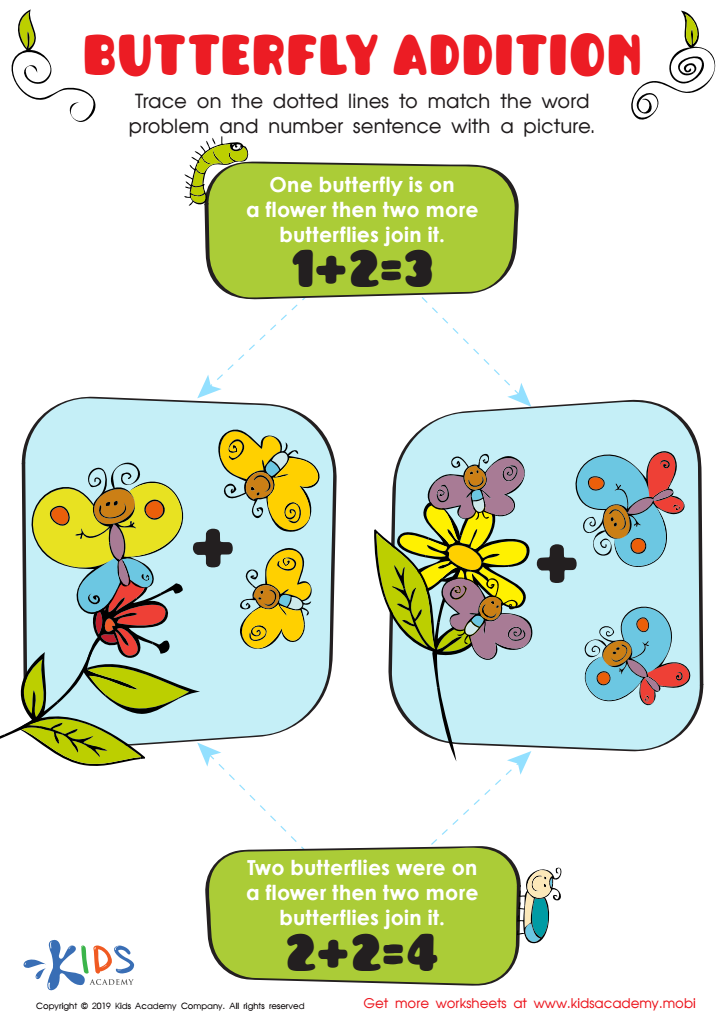
Butterfly Addition Worksheet
 Assign to My Students
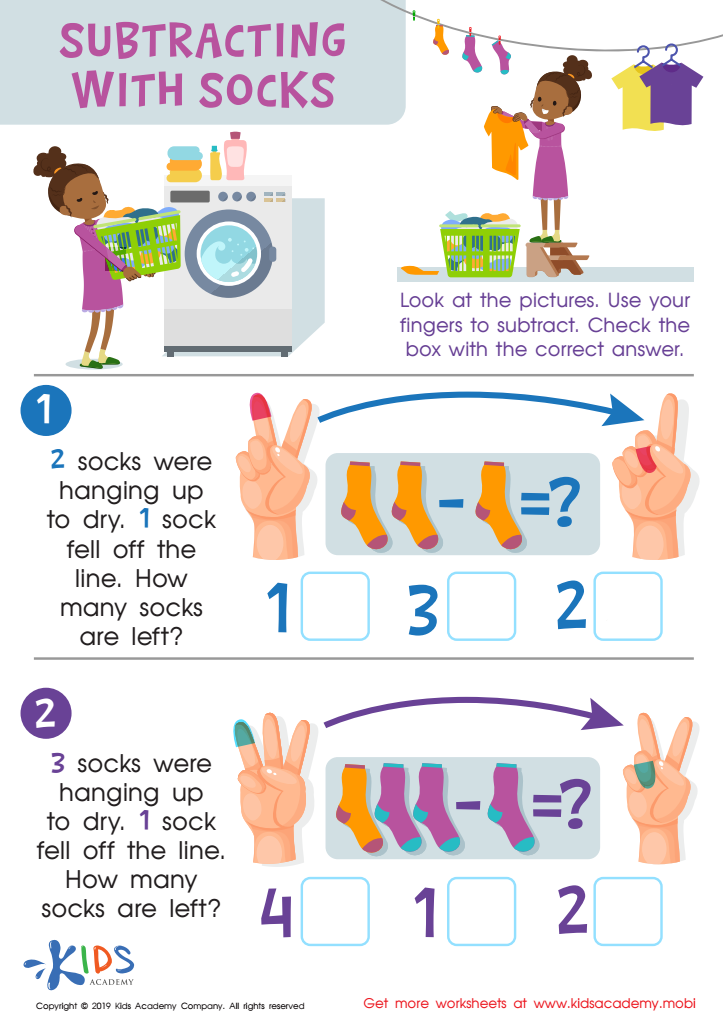
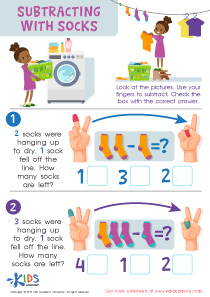
Subtracting Socks Worksheet
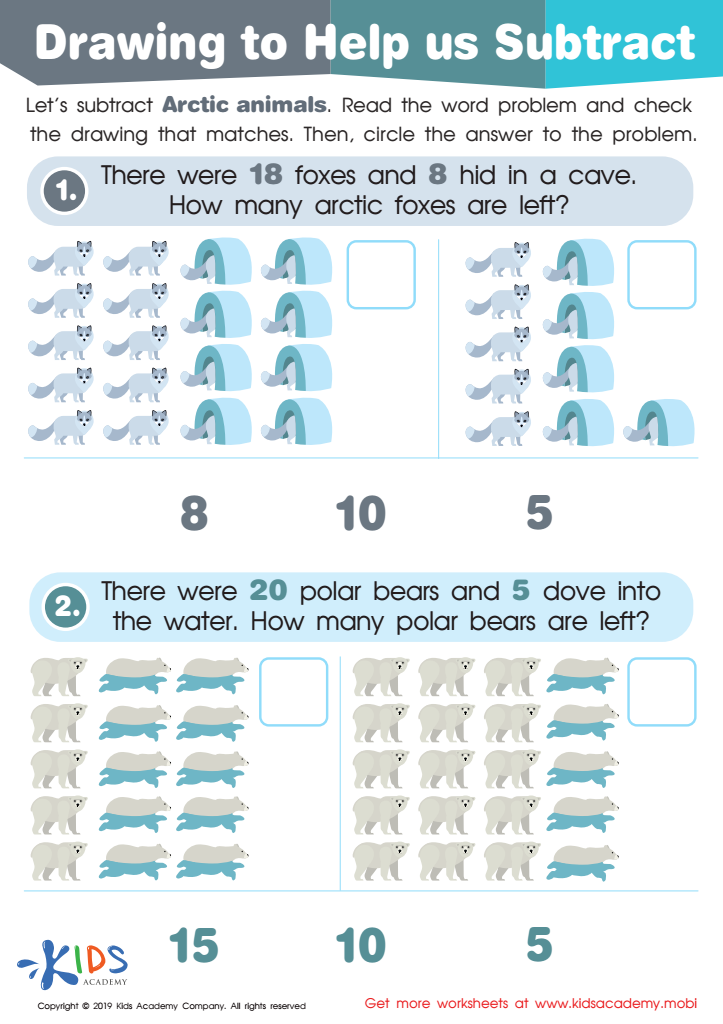
Drawing to Help Us Subtract Worksheet
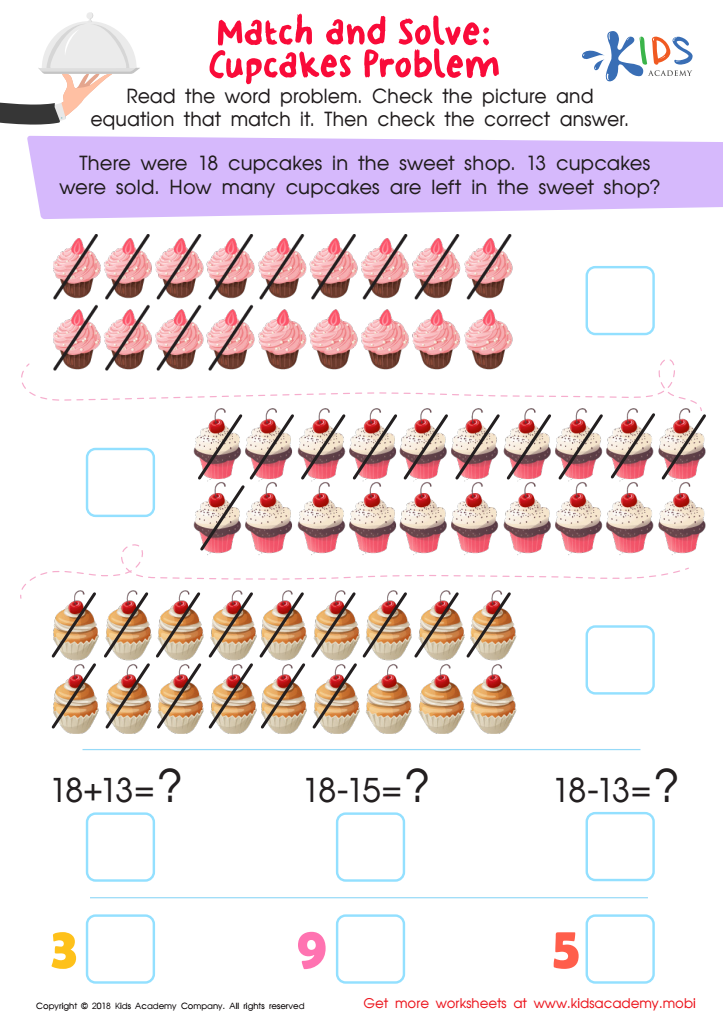
Match and Solve: Cupcakes Problem Worksheet
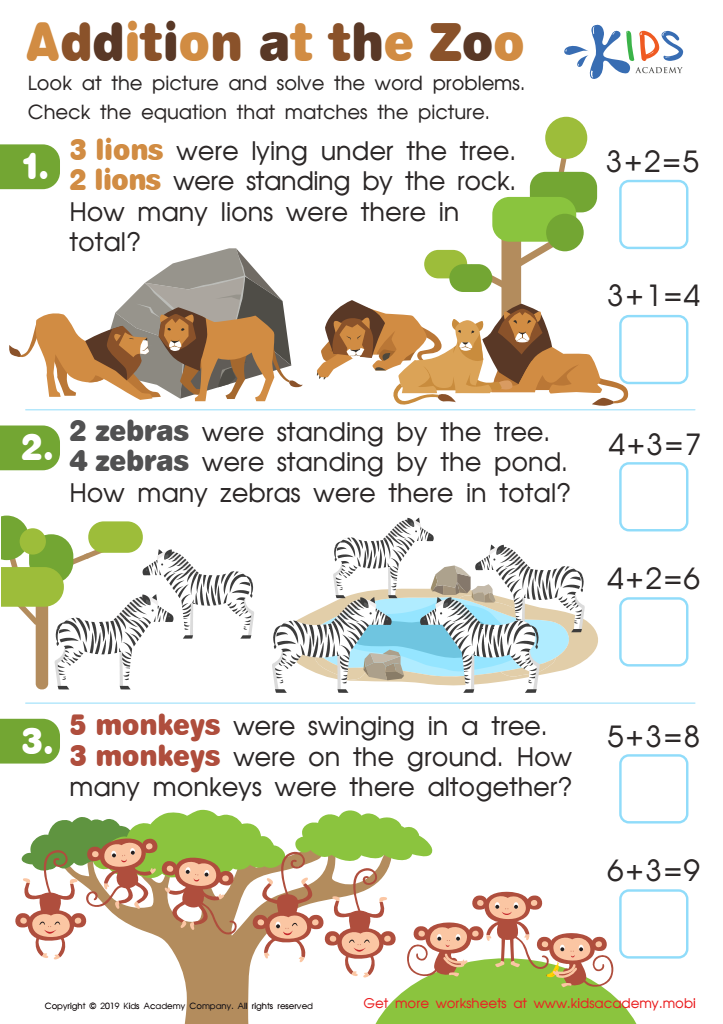
Addition at the Zoo Worksheet








Visual learning, especially with addition and subtraction word problems, is fundamental for the cognitive development of 4-year-olds. This approach aids young learners in grasping abstract mathematical concepts early on by making them more concrete and understandable.
When children see visual aids—like pictures, physical objects, or simple diagrams—they can link numerical concepts to real-world representations. This strengthens their comprehension and retention. For example, using counters or illustrated problems helps clarify how combining quantities increases totals (addition) or how separating quantities decreases them (subtraction).
Moreover, early exposure to such problems nurtures critical thinking and problem-solving skills. It encourages kids to reason logically, identify patterns, and ultimately builds their confidence in dealing with numbers. Engaged visual learning activities also hold their attention better, making learning both effective and fun.
For parents and teachers, encouraging visual learning at this age lays the groundwork for future academic success. Math is a cumulative subject - early skills form a foundation for more advanced concepts later on. Investing time in helping children understand addition and subtraction visually ensures they develop positive attitudes towards learning and are well-prepared for the more complex mathematics they'll encounter in later grades.