Critical Thinking Addition & Subtraction Worksheets for 4-Year-Olds
5 filtered results
-
From - To
Boost your 4-year-old's math skills with our engaging Critical Thinking Addition & Subtraction Worksheets! Designed to cultivate critical thinking alongside fundamental math concepts, these printable worksheets offer fun and varied activities that challenge young minds. Children will explore numbers through puzzles, games, and visual aids that spark curiosity and enhance problem-solving abilities. Our worksheets foster not only numerical skills but also logical reasoning and analytical thinking. Perfect for early education, these resources make learning enjoyable and interactive. Help your child develop a strong mathematical foundation while honing critical thinking skills, setting them up for success in future learning adventures!
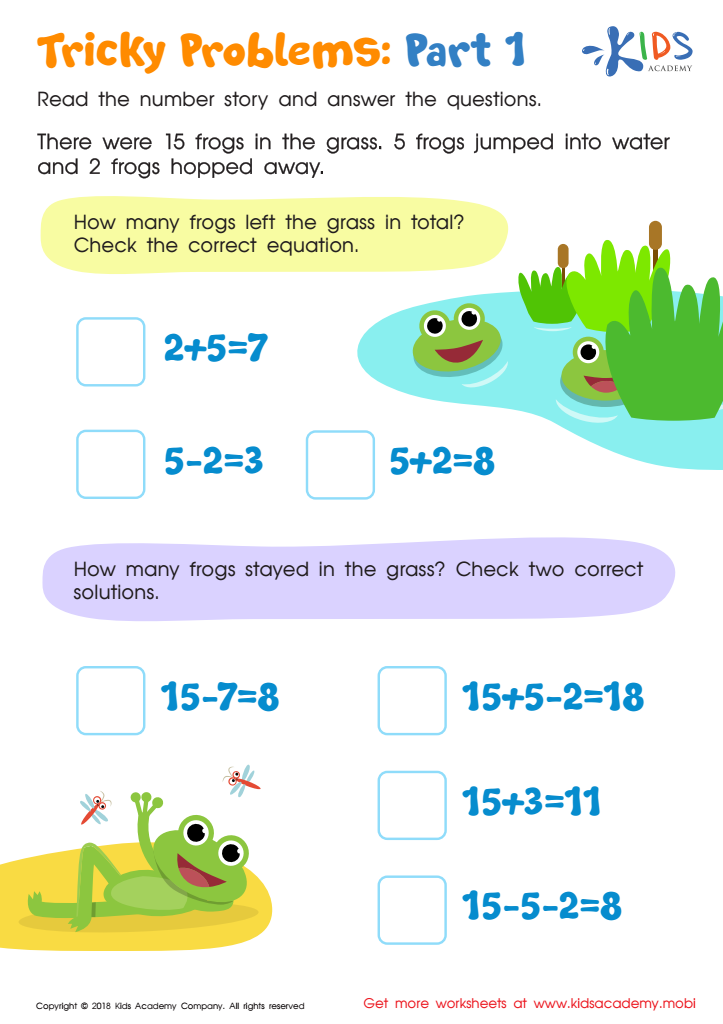
Tricky Problems Worksheet: Part 1
 Assign to My Students
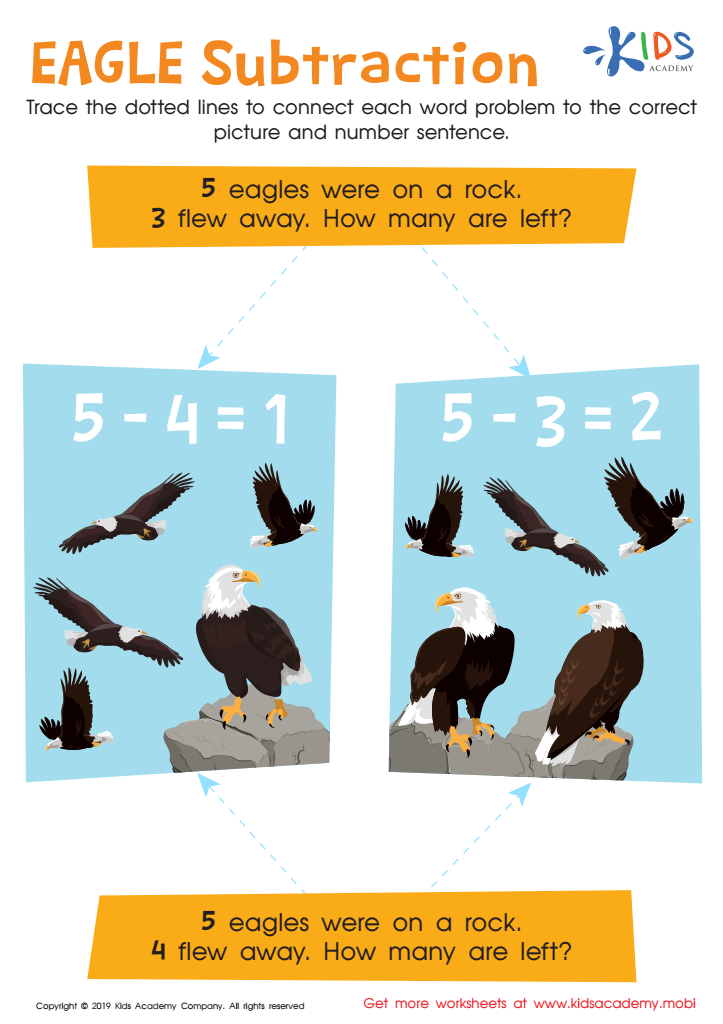
Eagle Subtraction Worksheet
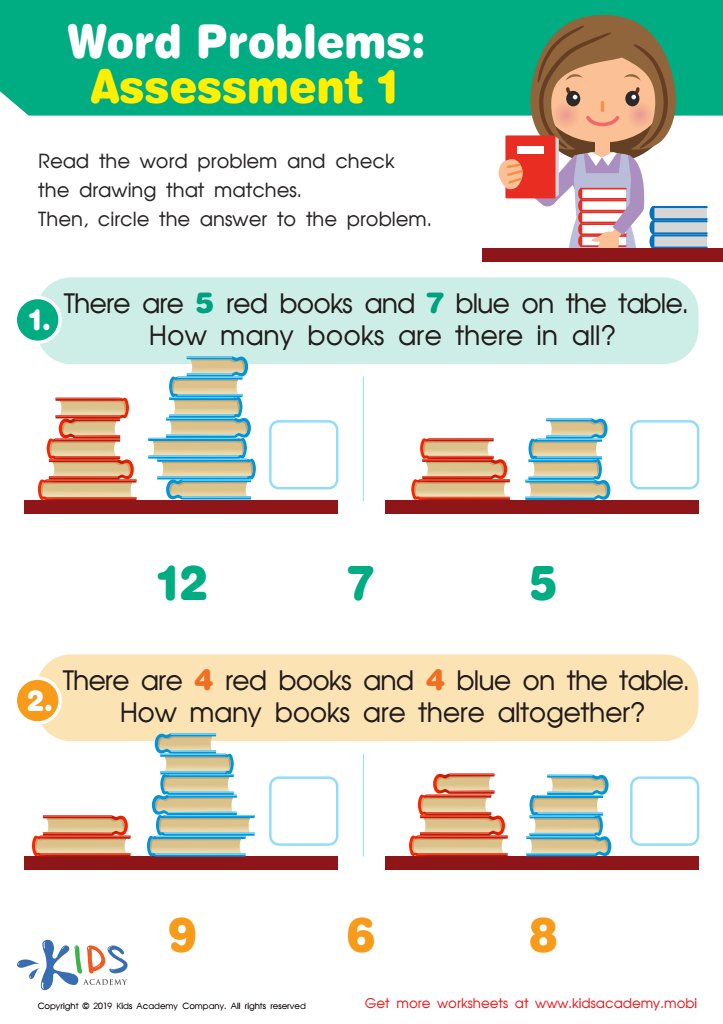
Word Problems: Assessment 1 Worksheet
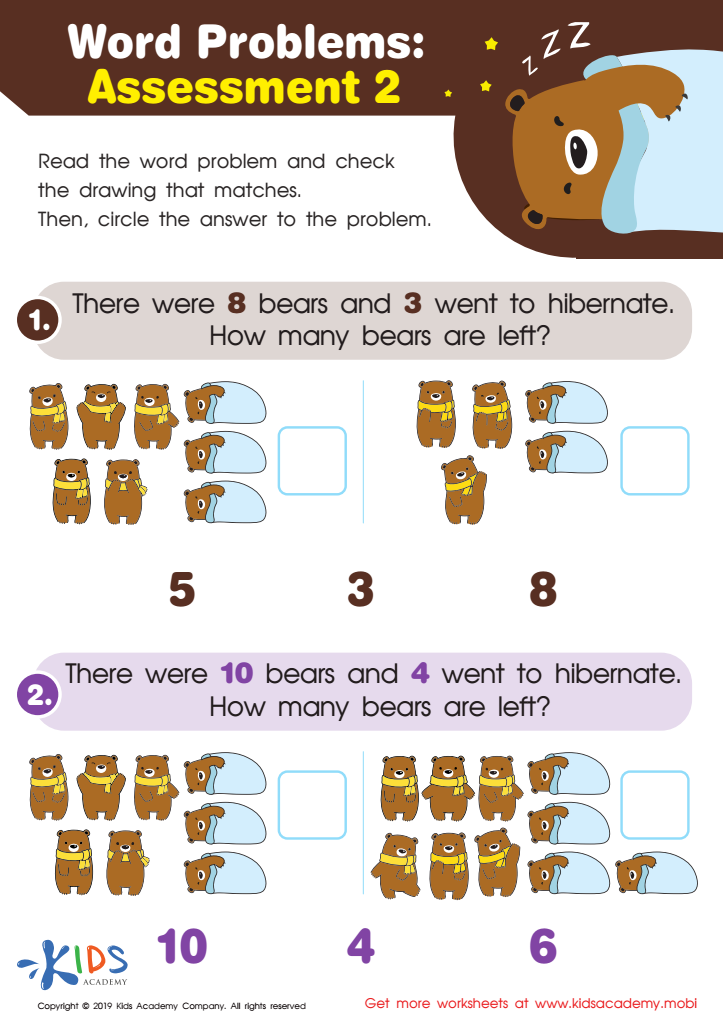
Word Problems: Assessment 2 Worksheet
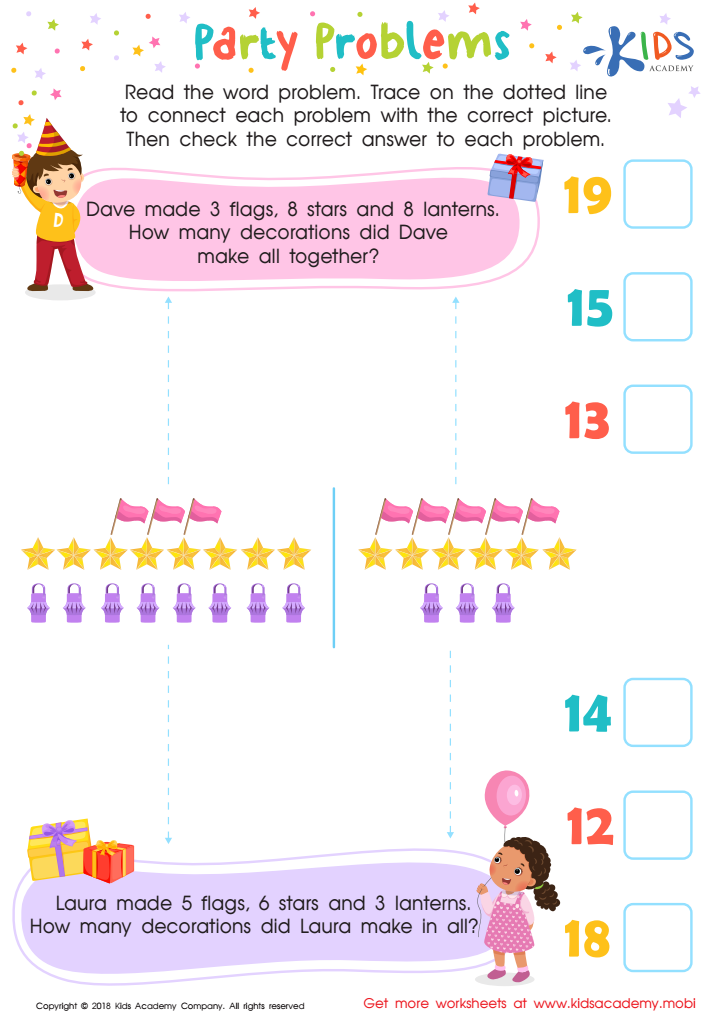
Party Problems Worksheet








Critical thinking in addition and subtraction for 4-year-olds is essential for fostering early cognitive skills that set the foundation for lifelong learning. At this age, children are naturally curious and eager to explore concepts of numbers and relationships, making it an ideal time to introduce mathematical reasoning.
Teaching critical thinking through addition and subtraction encourages children to not only memorize facts but also to understand relationships between numbers. It helps them predict outcomes, make connections, and solve problems creatively. For instance, when children learn that 2 + 1 equals 3, they are also introduced to the concepts of combining quantities and understanding "more" or "less". This nurtures their analytical skills and prepares them for more complex mathematical concepts in the future.
Furthermore, engaging young learners in math through games, storytelling, and hands-on activities can keep their interest alive, enhance their engagement, and promote a positive attitude toward math learning. As parents and teachers, emphasizing critical thinking in these early stages helps to cultivate independent thinkers, equipping them with the confidence to tackle challenges and process information critically, not just in math, but across various aspects of their education. This strong foundation can significantly influence their academic achievements down the line.








