
Fine motor development Addition & Subtraction Worksheets for 4-Year-Olds
3 filtered results
Difficulty Level
Grade
Age
-
From - To
Subject
Activity
Standards
Unlock your child's potential with our engaging Fine Motor Development Addition & Subtraction Worksheets for 4-Year-Olds! Designed to enhance fine motor skills while introducing basic math concepts, these worksheets blend learning with fun. Each activity encourages hand-eye coordination and dexterity through exciting coloring, tracing, and cutting tasks. Perfect for at-home or classroom use, our worksheets help little ones grasp fundamental addition and subtraction in a playful way. Watch your child's confidence grow as they celebrate every small achievement in math and motor skills. Get started today and make learning a delightful journey for your young mathematician!
Favorites
With answer key
Interactive
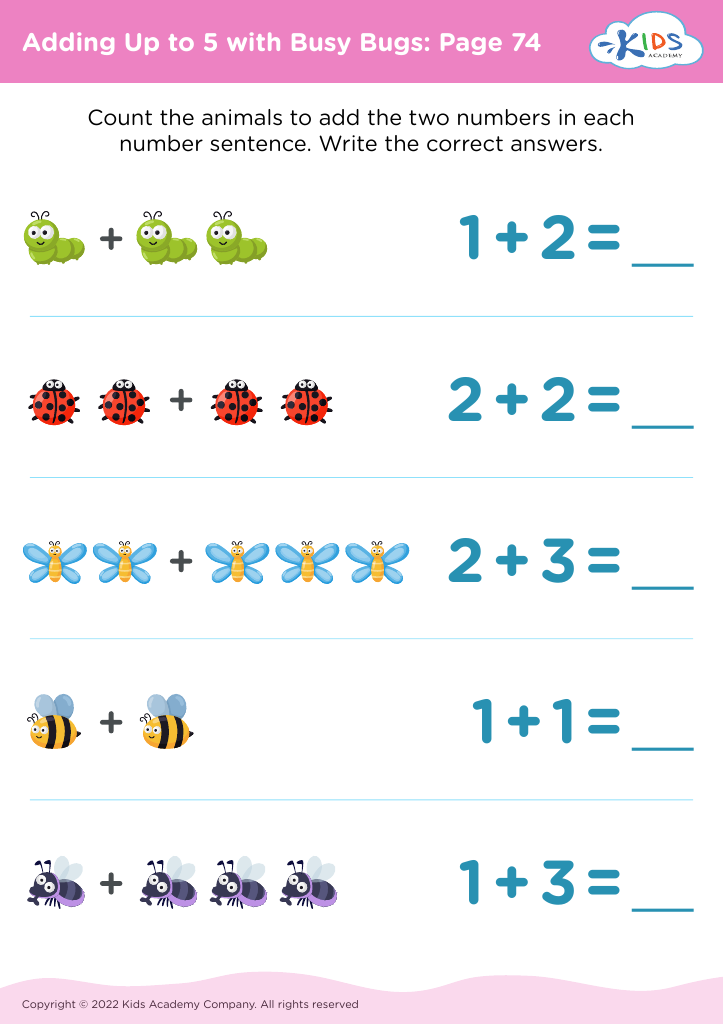
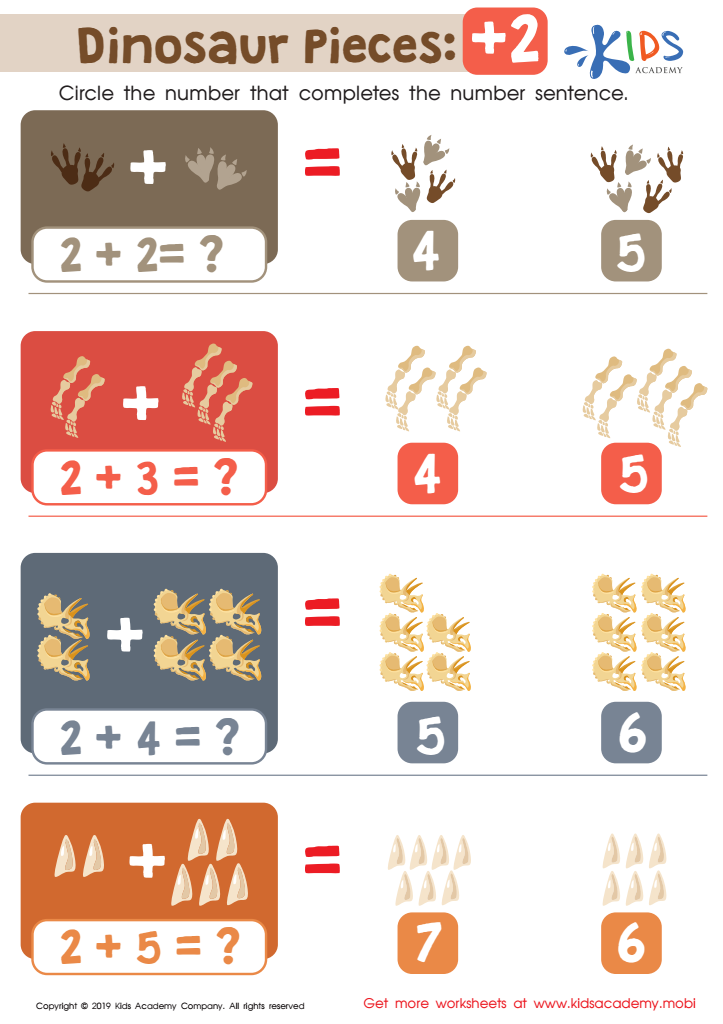
Dinosaur Pieces: +2 Worksheet
Kids love dinosaurs! See if your kids can solve these three equations featuring the mysterious creatures. Download the PDF and have them circle the number that completes each equation. Dinosaurs are extinct, not seen for thousands of years, but they can still help kids work on their math skills!
 Assign to My Students
Dinosaur Pieces: +2 Worksheet
Worksheet
Join Kids Academy for Free
Who is primarily going to use this learning content?








Parents and teachers should prioritize fine motor development in 4-year-olds, especially concerning mathematical concepts like addition and subtraction, for several reasons. First, fine motor skills involve the ability to use small muscles in the hands and fingers, which are crucial for tasks like writing, cutting, and manipulating objects. These skills lay the foundation for later academic success, as they contribute to a child's ability to hold and use a pencil, write numbers, and, eventually, perform calculation operations with confidence.
Practicing fine motor skills through hands-on activities can enhance a child's understanding of addition and subtraction. For instance, using manipulatives such as blocks or beads encourages counting and grouping, which are basic math concepts. Engaging in these activities thoughtfully allows children to visually grasp number relationships and basic operations while honing their dexterity.
Moreover, early exposure to math through fine motor activities fosters a positive attitude towards learning. When children associate math with fun, tactile experiences, they develop a sense of competence and confidence. Ultimately, investing in fine motor and mathematical development equips children with cognitive and physical tools essential for their future academic journeys, ensuring they are prepared for the challenges ahead.








