Filters

419 filtered results

Clear all filters
Favorites
With answer key
Interactive

419 filtered results

Difficulty Level

Grade


Check out this FREE Trial Lesson on Addition & Subtraction for age 4!

Subtracting with 5's

Favorites
With answer key
Interactive
  • 4
  • Number Recognition
  • Addition & Subtraction
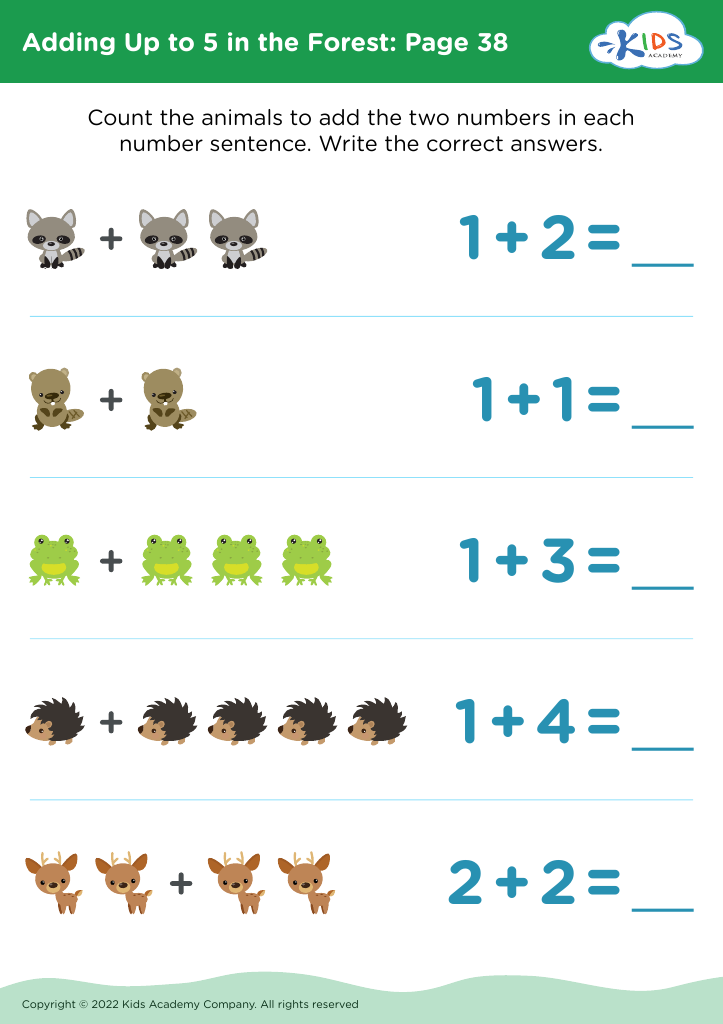
Adding Up to 5 in the Forest: Page 38
Worksheet
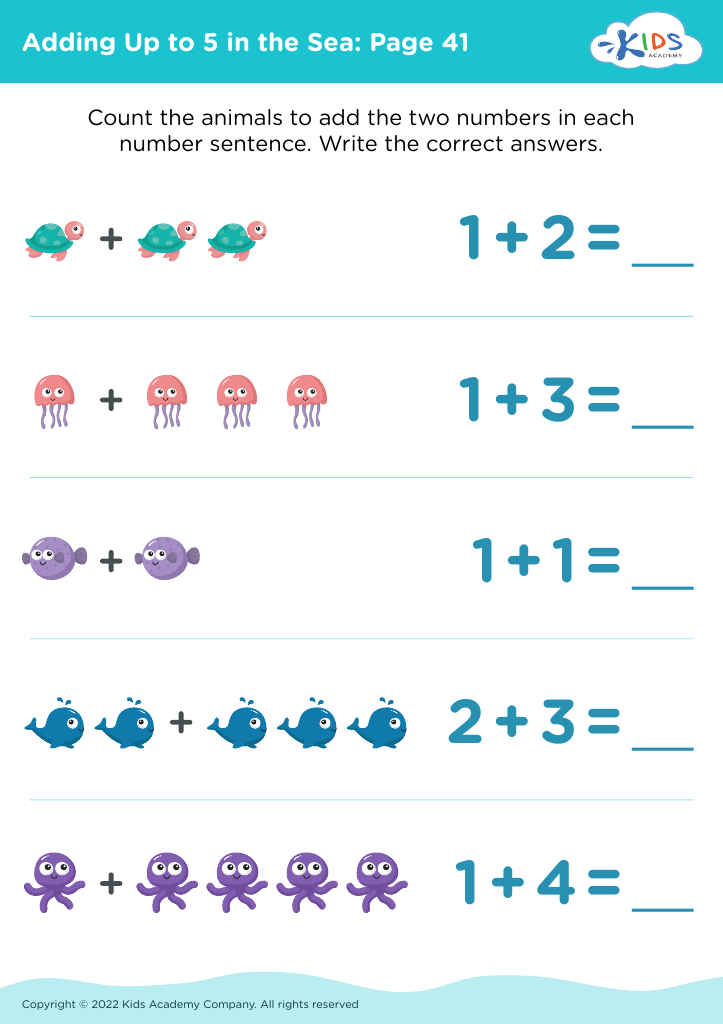
Adding Up to 5 in the Sea: Page 41
Worksheet
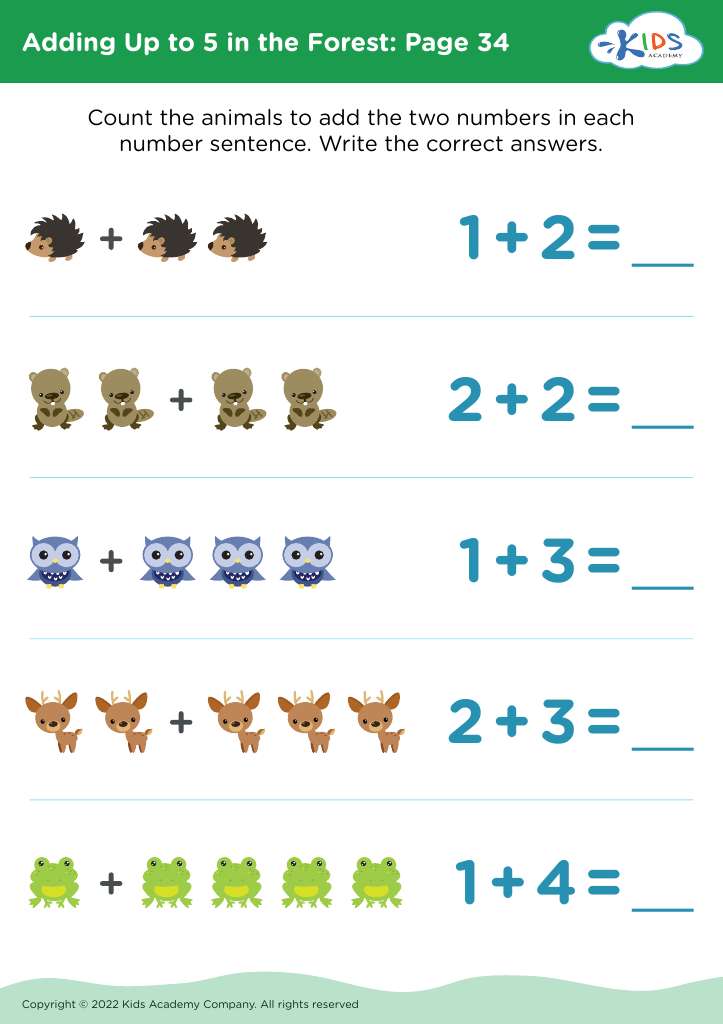
Adding Up to 5 in the Forest: Page 34
Worksheet
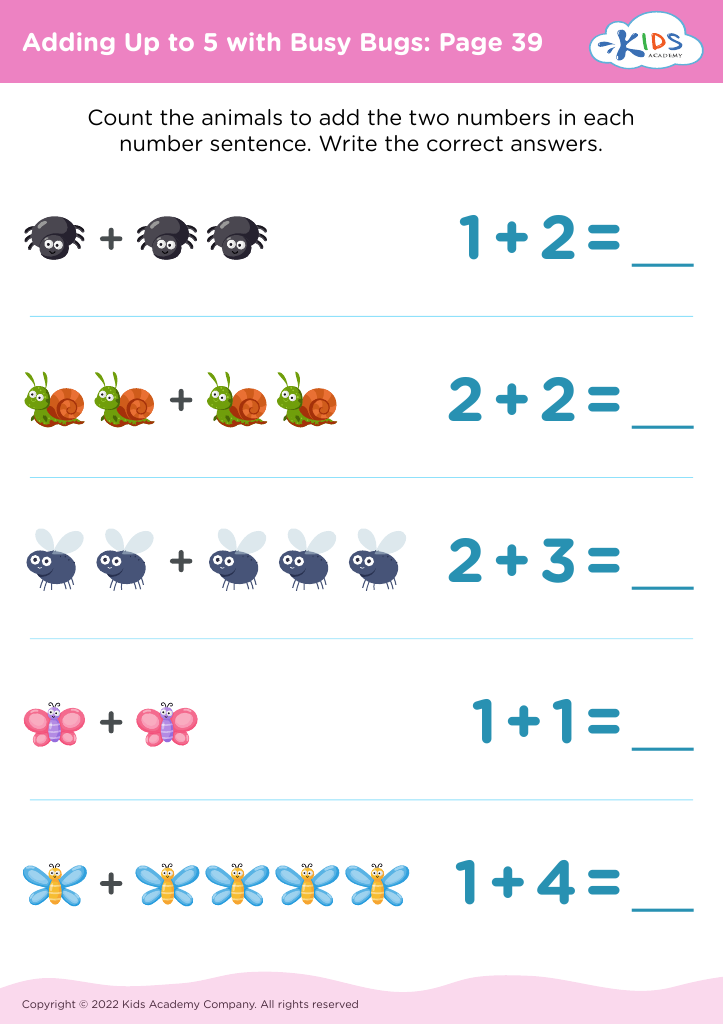
Adding Up to 5 with Busy Bugs: Page 39
Worksheet
Magic Fives Worksheet

Magic Fives Worksheet

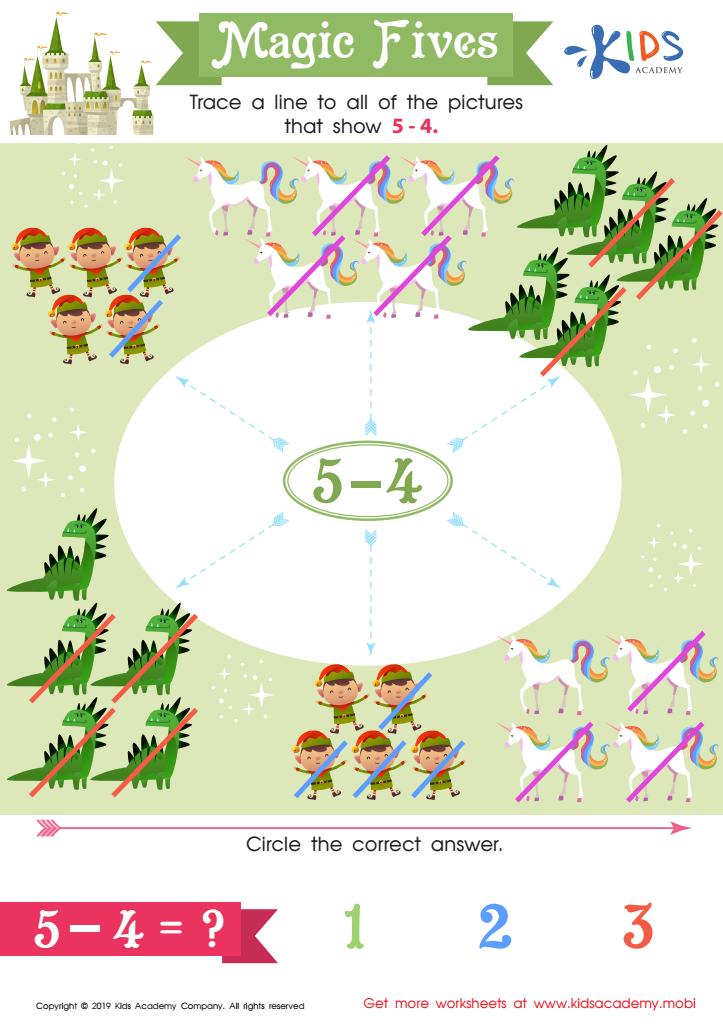
Help your students identify the objects & people in the worksheet. Point to the equation 5 -4 in the center, then get them to count the items and trace a line connecting those that add up to 5 - 4.
Magic Fives Worksheet
Worksheet
Adding Up to 5 with Busy Bugs: Page 73
Worksheet
Adding Up to 5 in the Forest: Page 17
Worksheet
Adding Up to 5 with Busy Bugs: Page 58
Worksheet
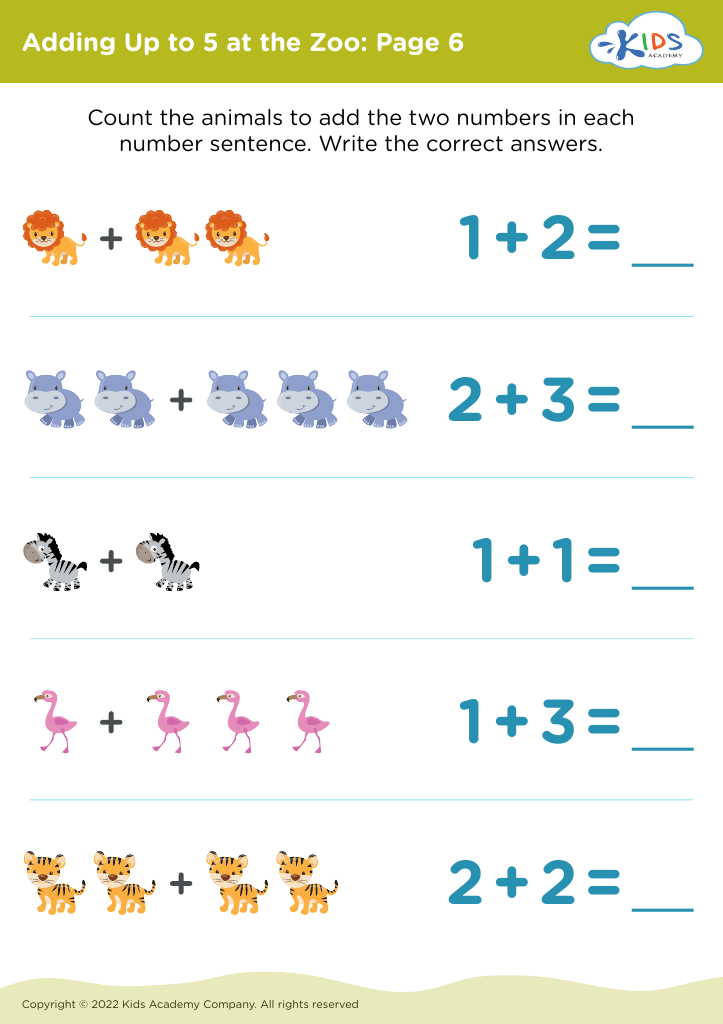
Adding Up to 5 at the Zoo: Page 6

Adding Up to 5 at the Zoo: Page 6

Adding Up to 5 at the Zoo: Page 6
Worksheet
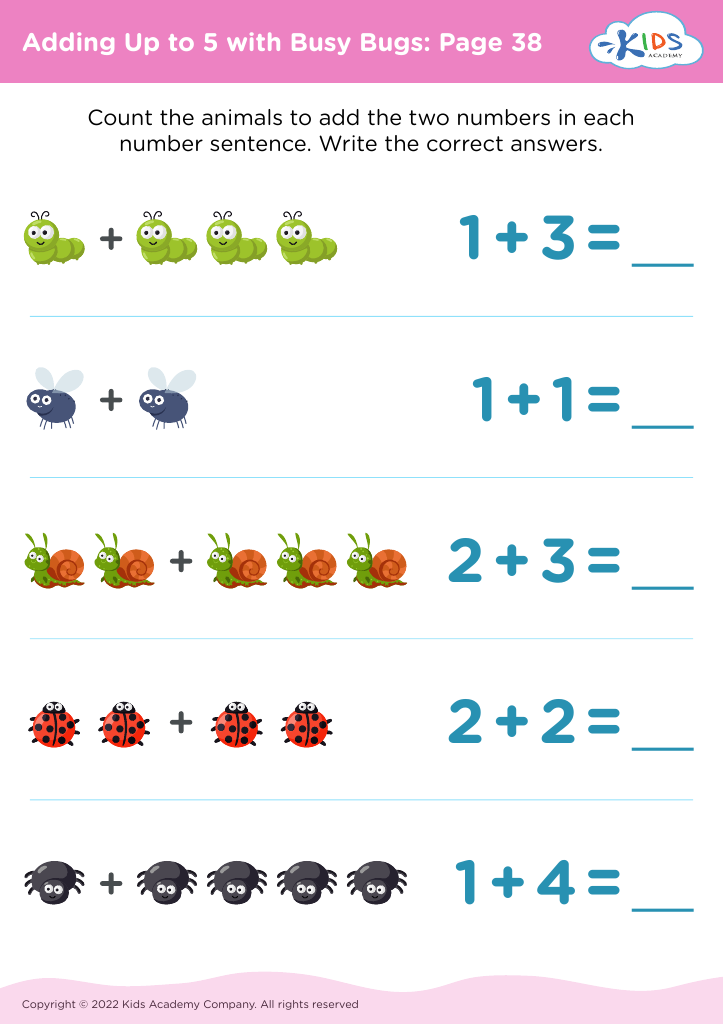
Adding Up to 5 with Busy Bugs: Page 38
Worksheet
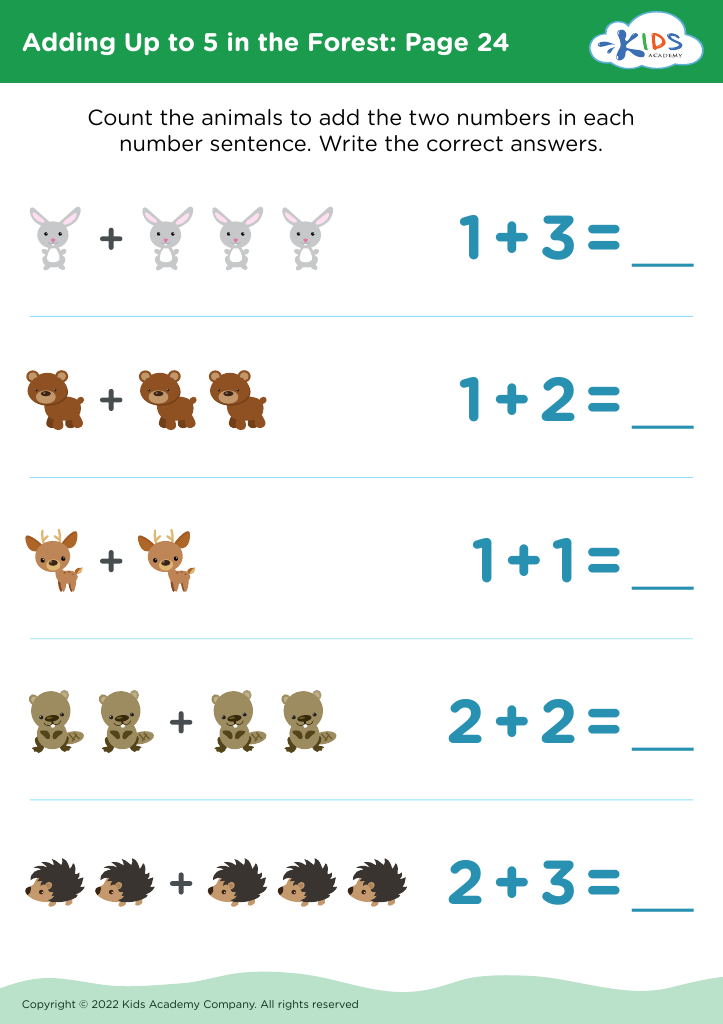
Adding Up to 5 in the Forest: Page 24
Worksheet
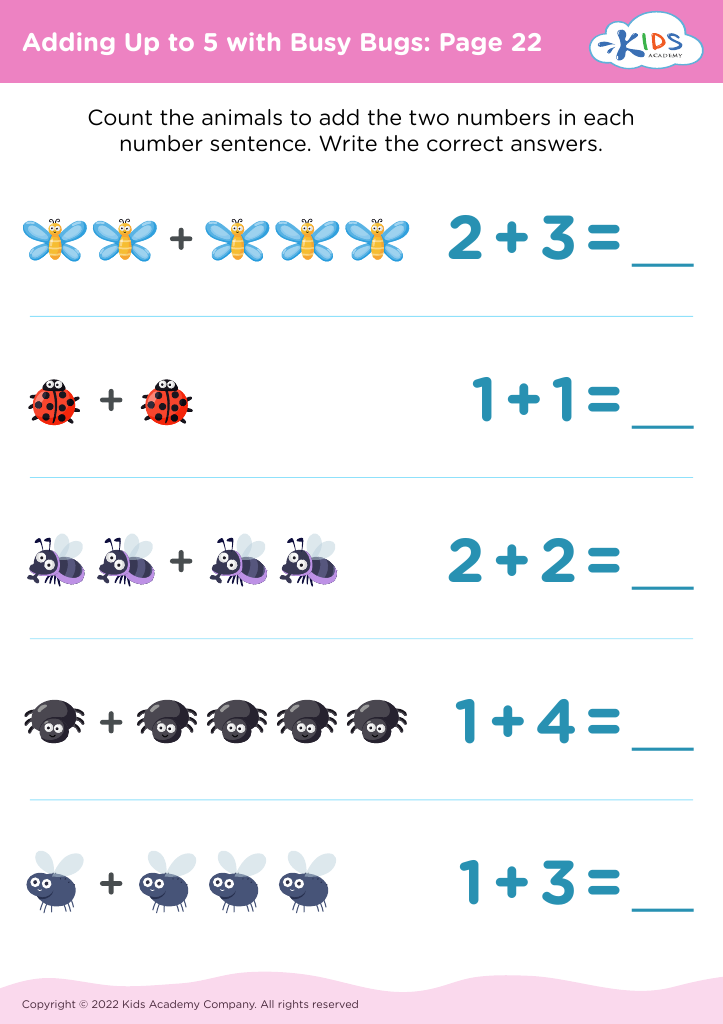
Adding Up to 5 with Busy Bugs: Page 22
Worksheet
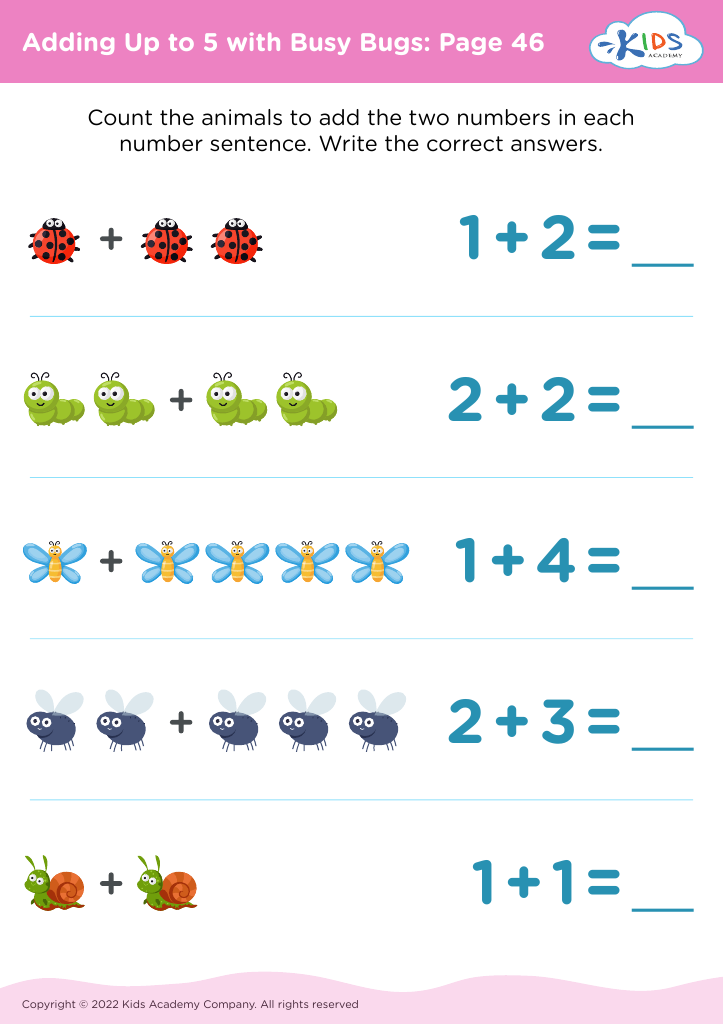
Adding Up to 5 with Busy Bugs: Page 46
Worksheet
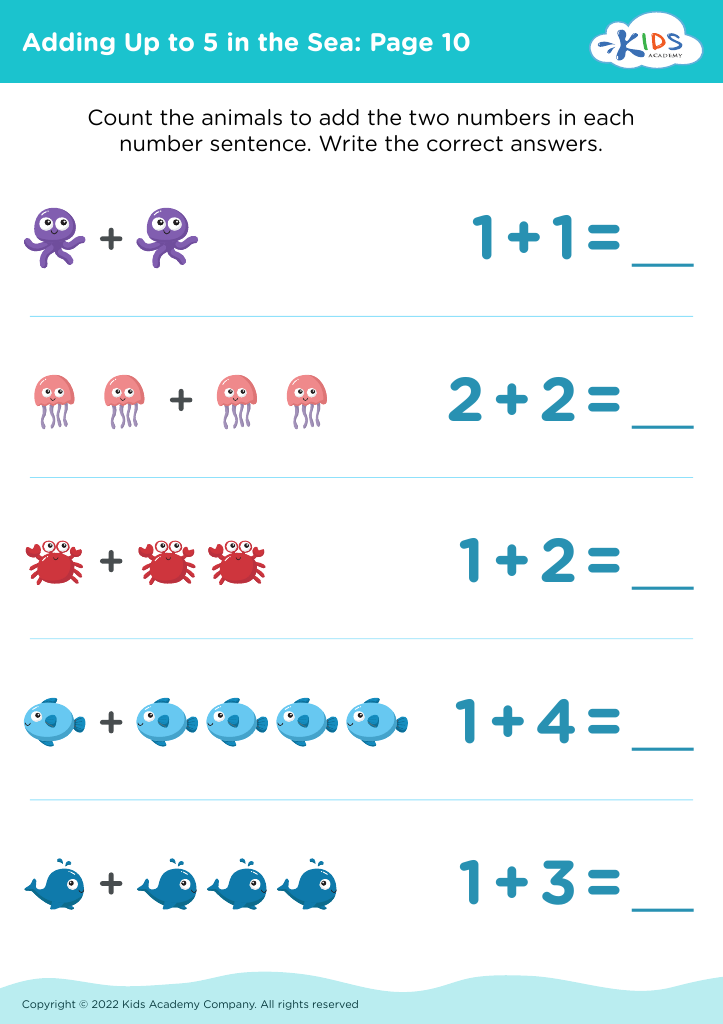
Adding Up to 5 in the Sea: Page 10
Worksheet
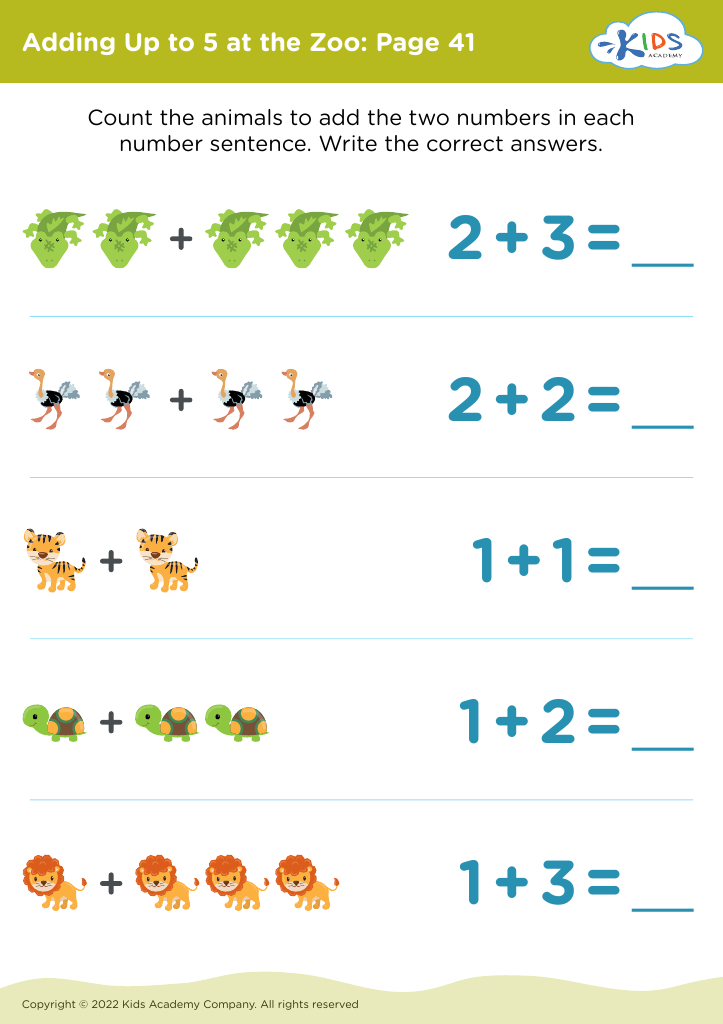
Adding Up to 5 at the Zoo: Page 41
Worksheet
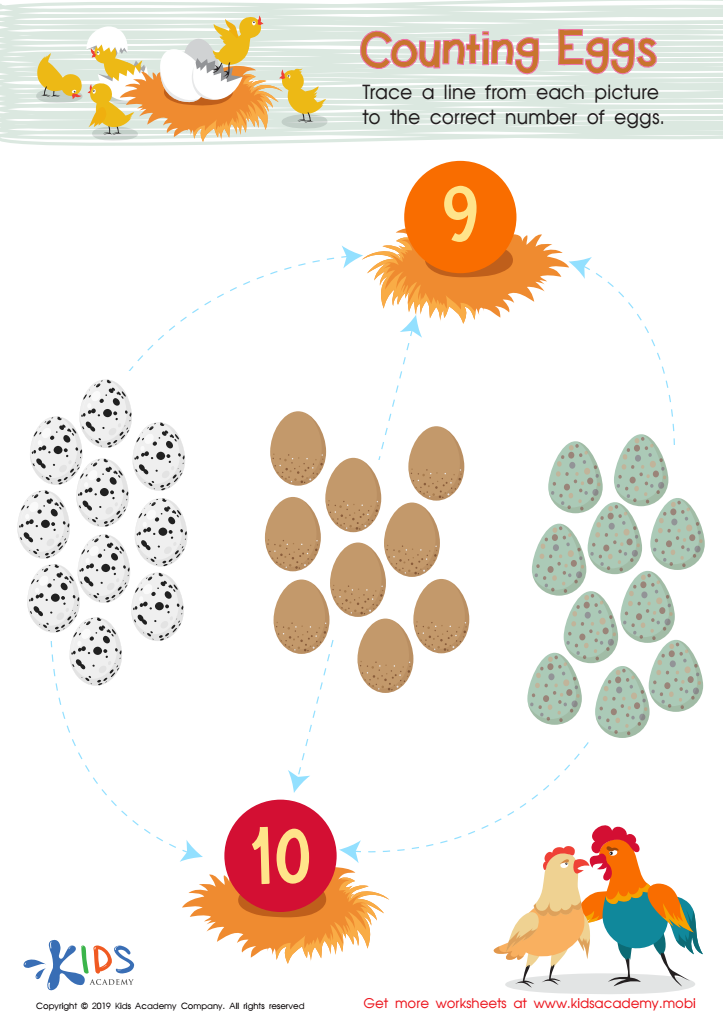
Counting Eggs Worksheet
Counting Eggs Worksheet
This worksheet is great for teaching kindergarteners to count and add numbers. It includes colorful pictures of eggs with numbers to trace. Help students count the eggs and draw a line to the right number. This will make learning fun and easy!
Counting Eggs Worksheet
Worksheet
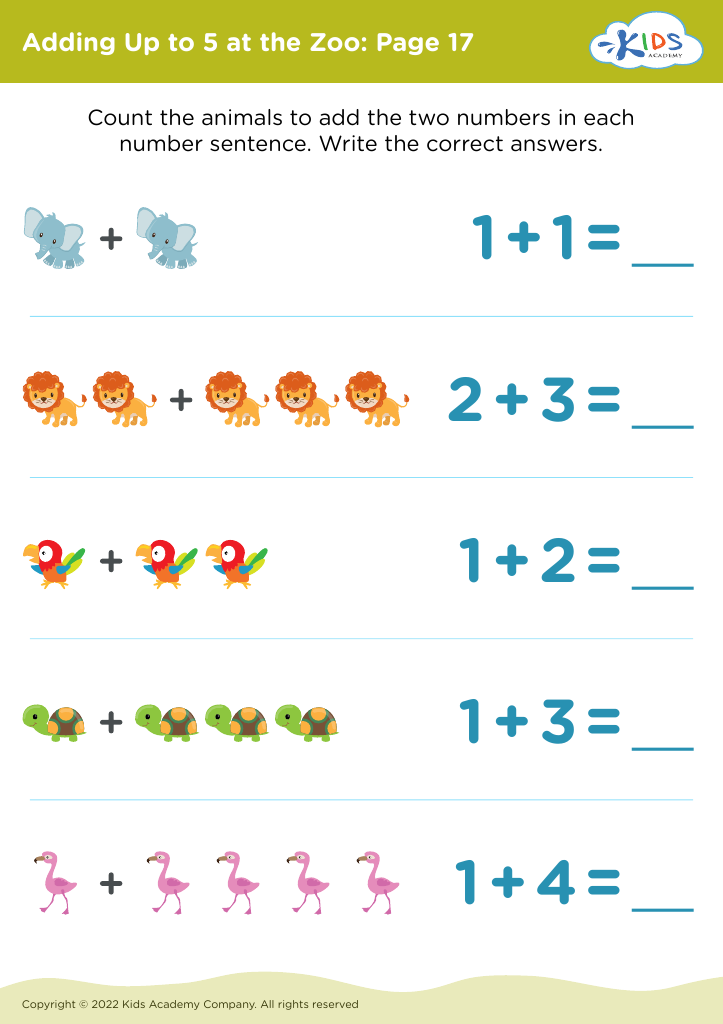
Adding Up to 5 at the Zoo: Page 17
Worksheet
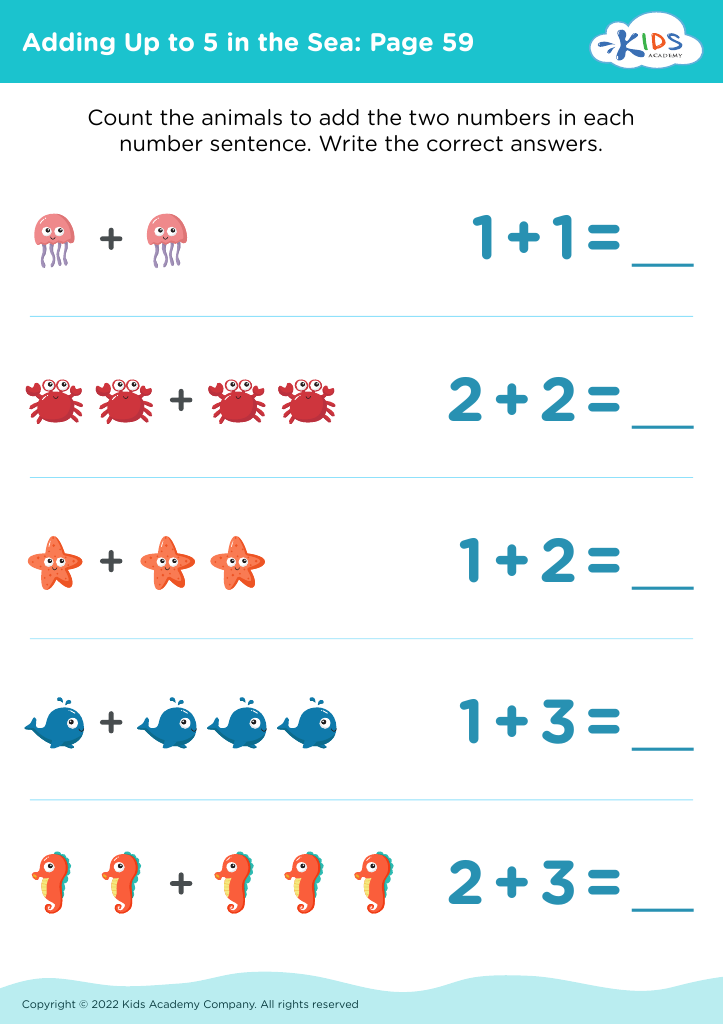
Adding Up to 5 in the Sea: Page 59
Worksheet
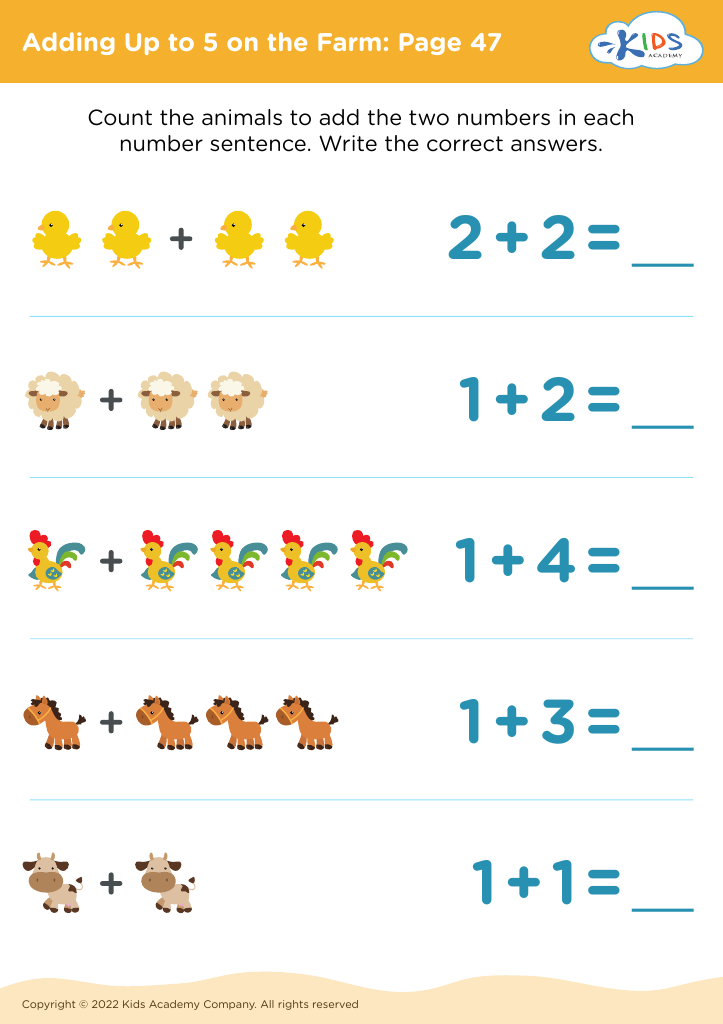
Adding Up to 5 on the Farm: Page 47
Worksheet
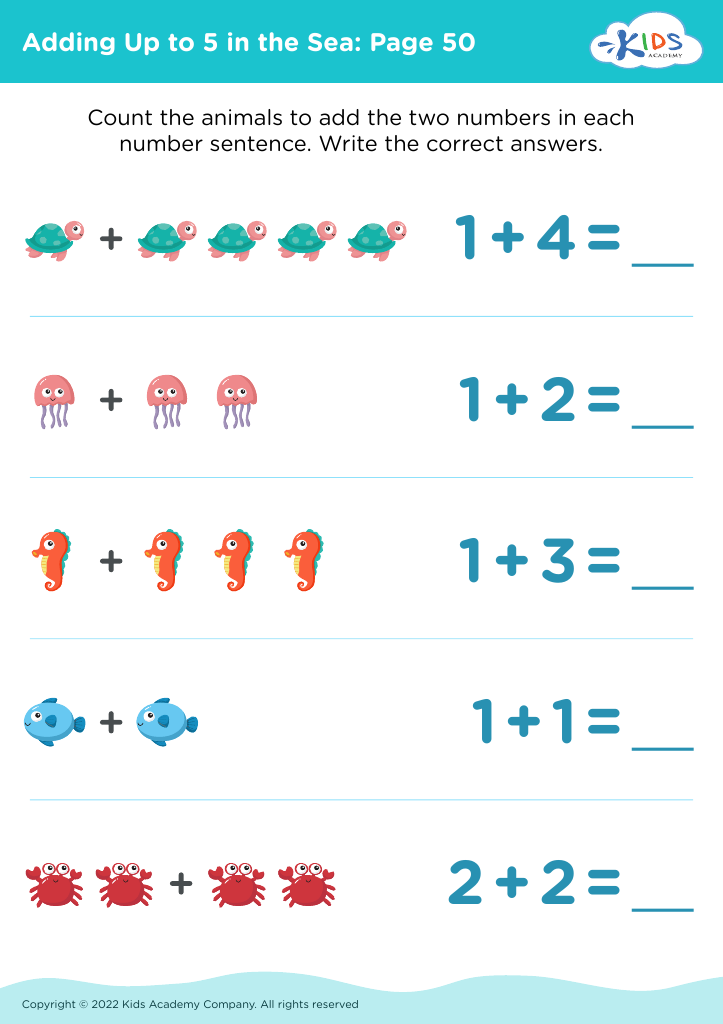
Adding Up to 5 in the Sea: Page 50
Worksheet
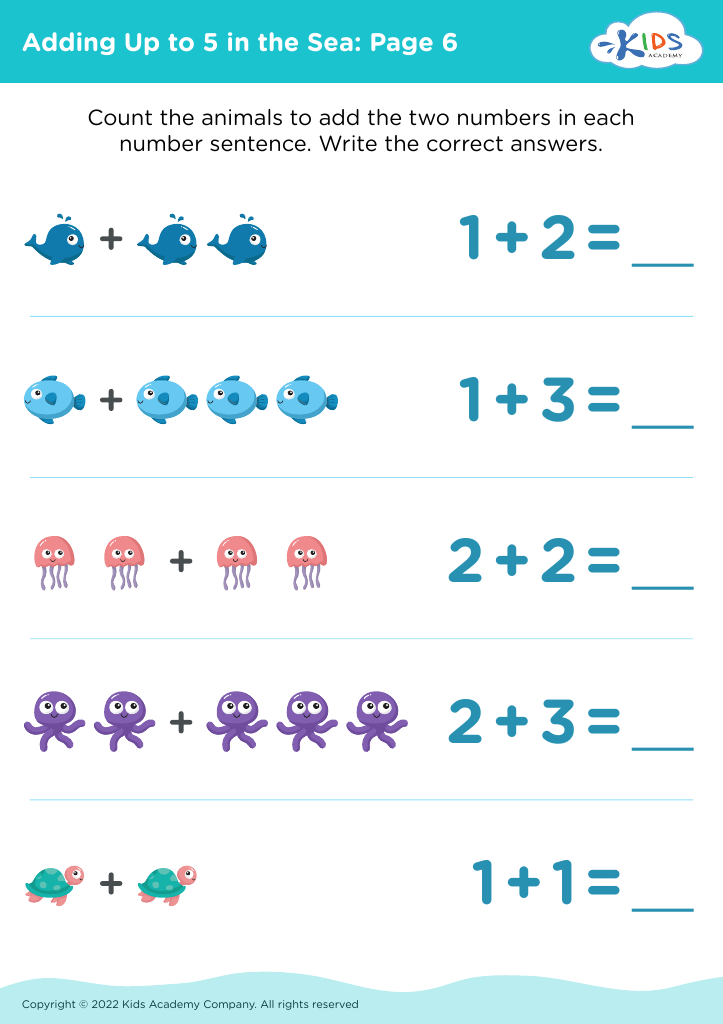
Adding Up to 5 in the Sea: Page 6

Adding Up to 5 in the Sea: Page 6

Adding Up to 5 in the Sea: Page 6
Worksheet
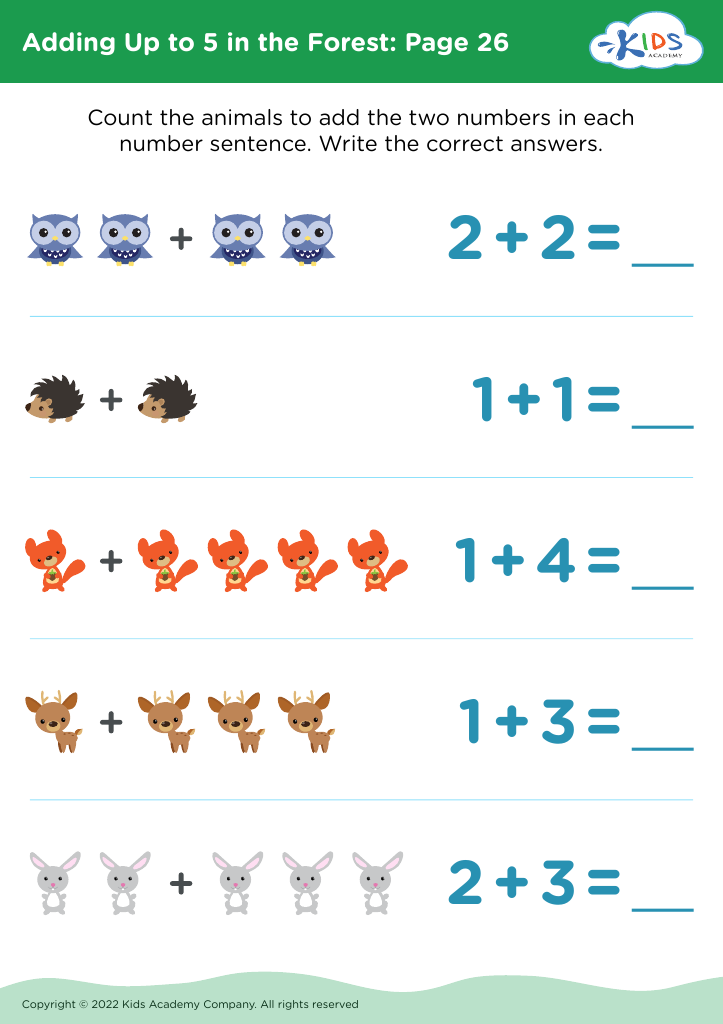
Adding Up to 5 in the Forest: Page 26
Worksheet
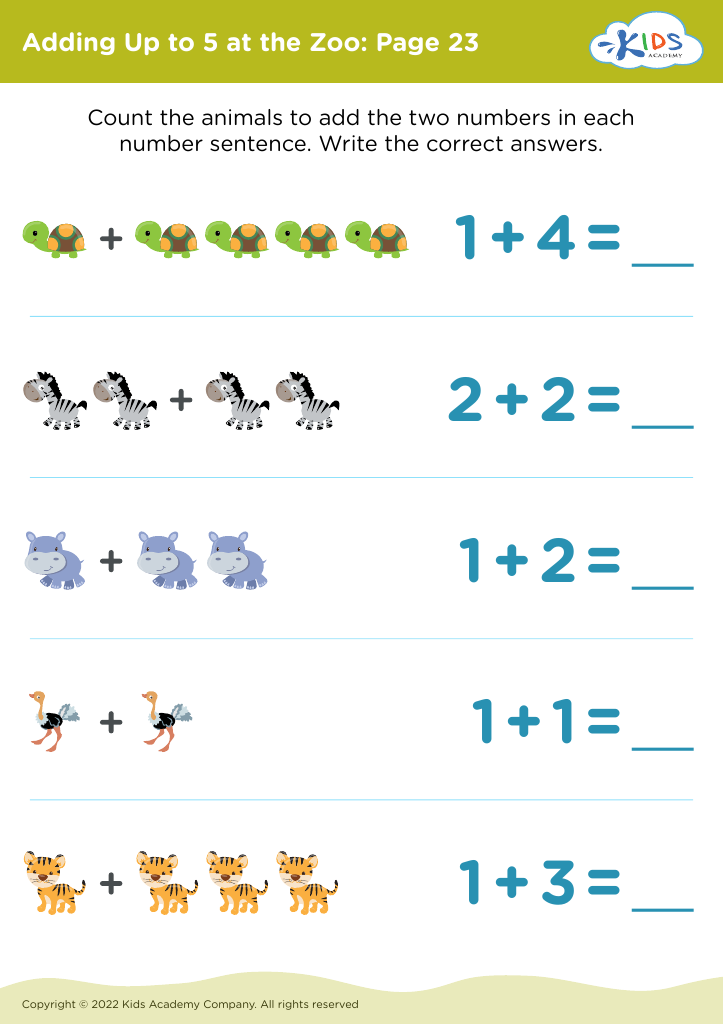
Adding Up to 5 at the Zoo: Page 23
Worksheet
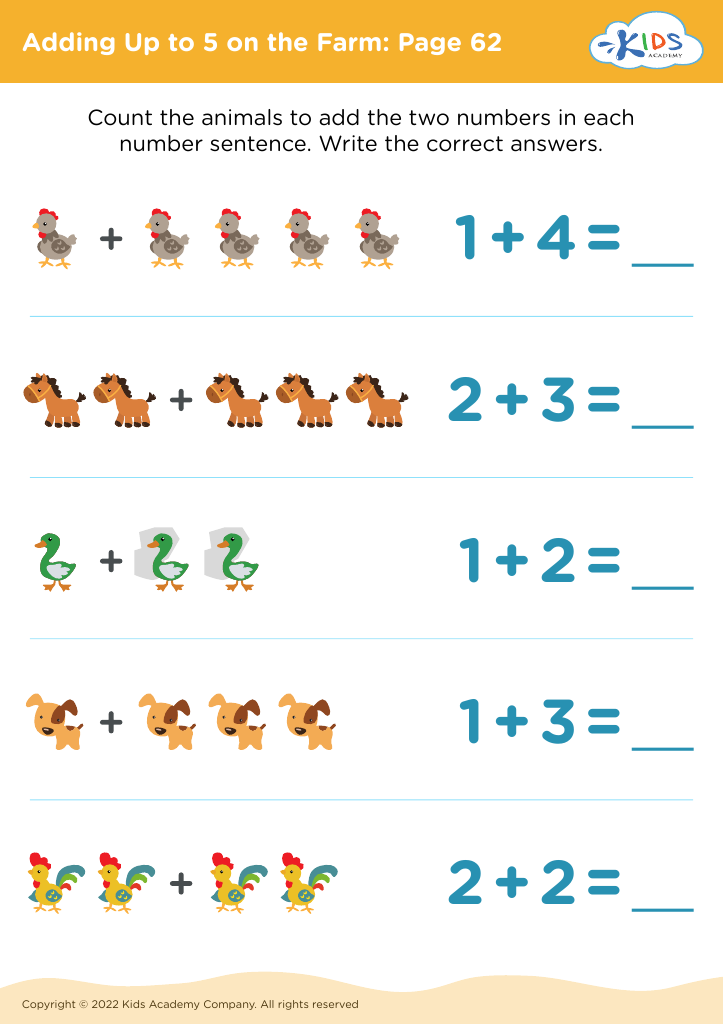
Adding Up to 5 on the Farm: Page 62
Worksheet


Number recognition, addition, and subtraction are foundational skills that play a crucial role in a child's early mathematical development. For 4-year-olds, this is a vital stage where they begin to understand and interact with numbers. Parents and teachers should care about these skills for several reasons.

Firstly, number recognition helps children identify and understand symbols, paving the way for future literacy and numeracy. This skill enhances their ability to count, compare quantities, and develop quantitative reasoning.

Secondly, introducing simple addition and subtraction fosters critical thinking and problem-solving skills. It encourages logical reasoning as children learn to manipulate numbers and recognize patterns. Engaging in these operations provides a practical context for kids to apply mathematical concepts in everyday situations, making learning more relatable and enjoyable.

Furthermore, early exposure to math concepts builds confidence. Children who grasp these skills early are more likely to view mathematics positively and be willing to tackle more complex problems later on. Ultimately, nurturing these abilities at a young age contributes to a strong foundation for lifelong learning, ensuring that children are well-equipped to succeed in school and beyond. Engaging parents and teachers in this process can set children on a path to academic achievement and a positive attitude towards mathematics.