Underwater animal identification Addition & Subtraction Worksheets for 4-Year-Olds
3 filtered results
-
From - To
Dive into the vibrant world of "Underwater Animal Identification Addition & Subtraction Worksheets for 4-Year-Olds"! These educational activities blend math practice with colorful ocean life illustrations to capture children's imagination. Each worksheet encourages critical thinking by combining basic addition and subtraction with the fun of identifying ocean creatures. Perfect for early learners, these resources help develop math skills in a playful context. A true adventure in every page, parents and teachers will love how these worksheets turn learning into an exciting quest beneath the waves, making math fun and engaging for young explorers.
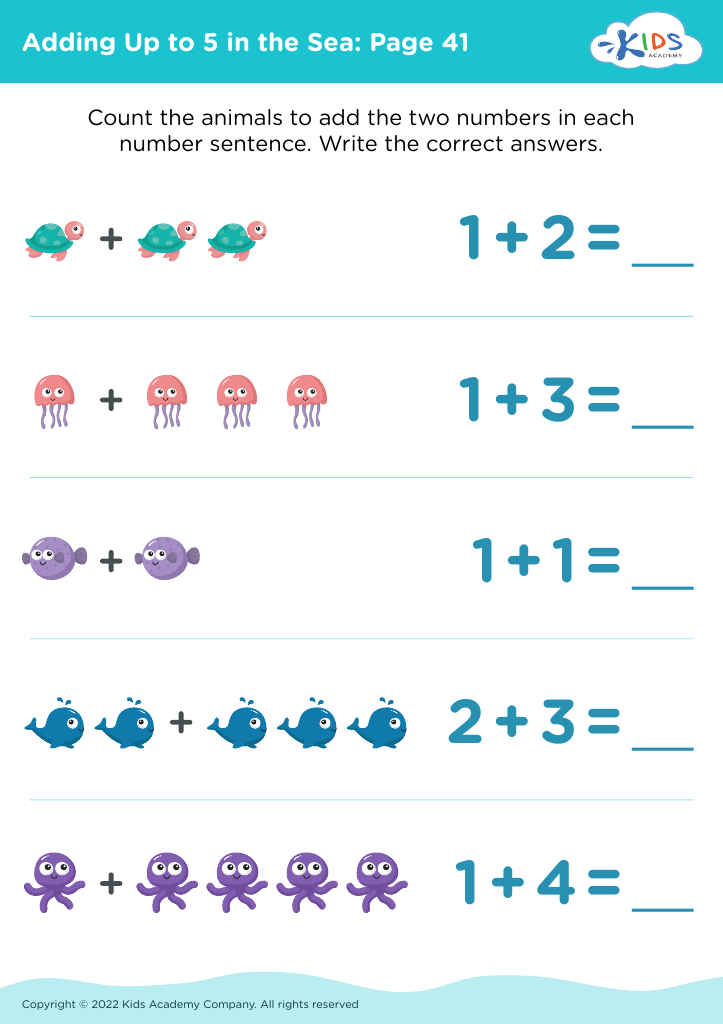
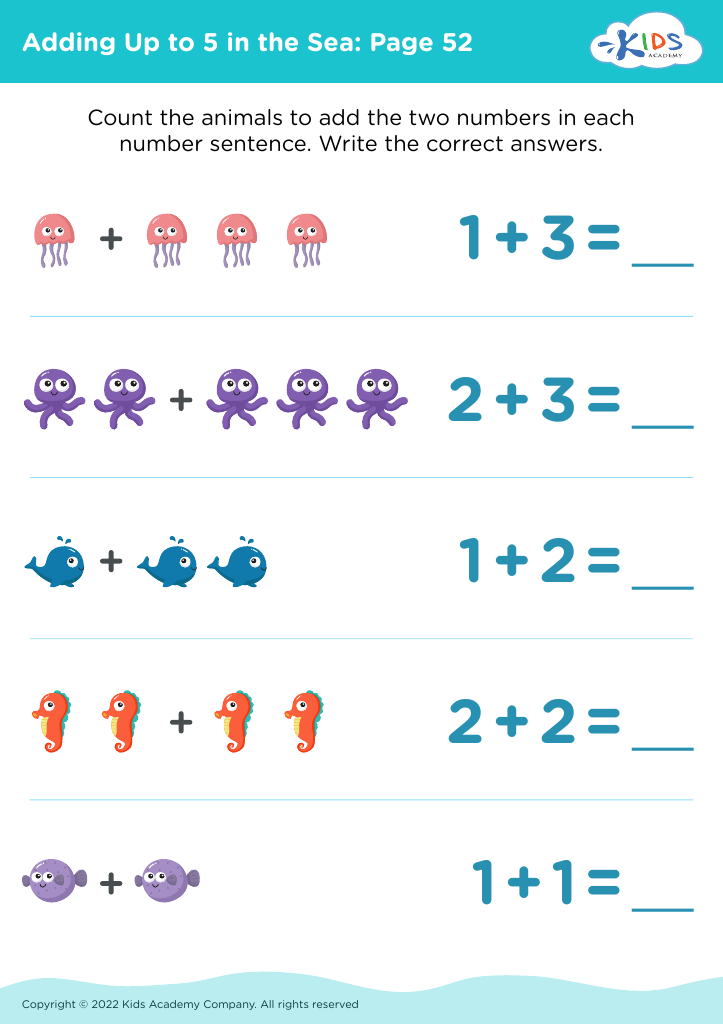
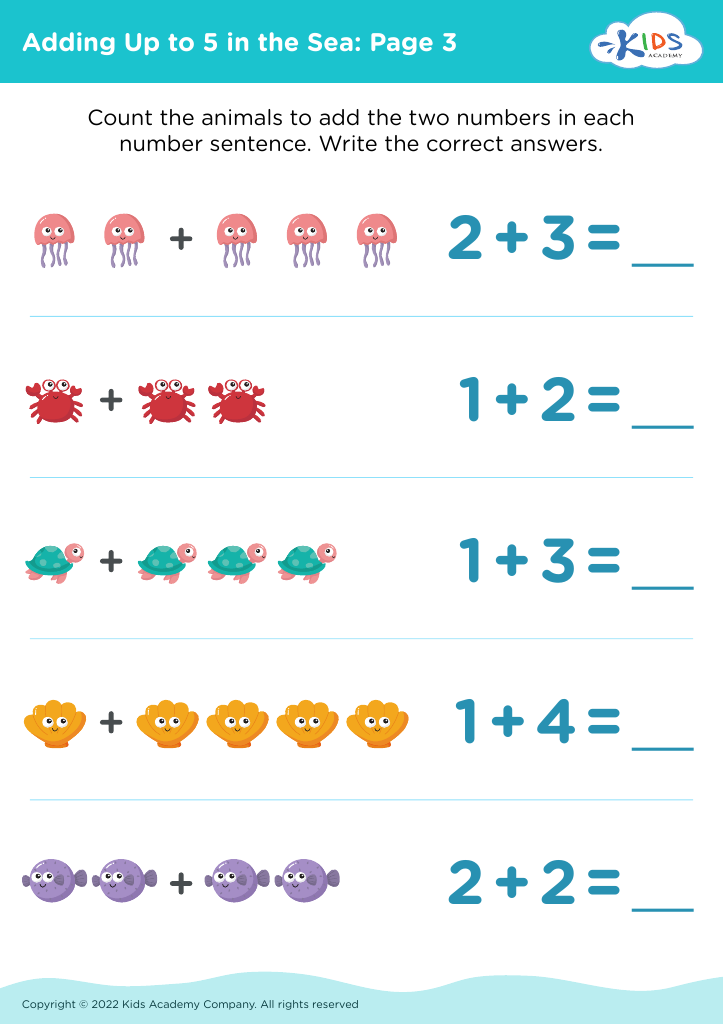








Introducing underwater animal identification along with addition and subtraction to 4-year-olds is a multifaceted educational approach that benefits cognitive, emotional, and social development. First, the captivating world of underwater creatures ignites children's curiosity and fosters a love for learning. Identifying different sea animals not only broadens their knowledge of marine biology but also enhances vocabulary and comprehension skills, setting a strong foundation for literacy.
Concurrent integration of basic arithmetic, such as addition and subtraction, dovetails naturally with animal identification through interactive activities. For instance, counting fish or comparing the number of octopus tentacles versus starfish arms turns abstract math concepts into tangible, engaging experiences. This contextual learning helps solidify early mathematical skills in a fun, memorable way.
Engaging in these activities nurtures problem-solving abilities and sharpens critical thinking. Young children learn to make connections between different pieces of information, which is essential for later academic success. Participating in group tasks involving underwater themes fosters teamwork and communication, vital social skills for future interactions.
Moreover, these activities support fine motor skill development through hands-on crafting and drawing exercises. Cultivating these diverse cognitive, social, and motor skills in an interconnected, entertaining manner can pave the way for a well-rounded educational journey, making both parents and teachers invested in this unique learning approach.








