Visualization skills Addition & Subtraction Worksheets for 4-Year-Olds
3 filtered results
-
From - To
Enhance your child’s learning with our Visualization Skills Addition and Subtraction Worksheets designed specifically for 4-year-olds! These engaging worksheets focus on developing essential visualization skills through fun and interactive math activities. Children will practice addition and subtraction concepts while using visual aids, making mathematical thinking more accessible. Our resources encourage creativity and critical thinking, allowing young learners to grasp numbers and relationships visually. With colorful illustrations and relatable scenarios, your little one will enjoy exploring math in a playful way. Perfect for parents and teachers alike, our worksheets will build confidence in early problem-solving skills while introducing basic math concepts!
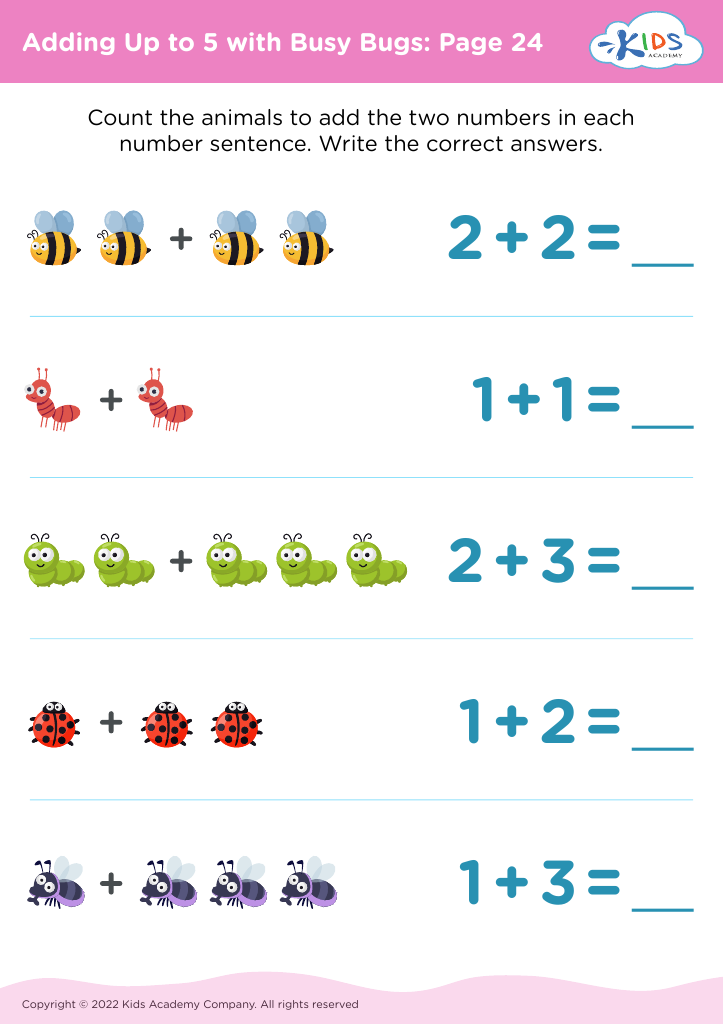
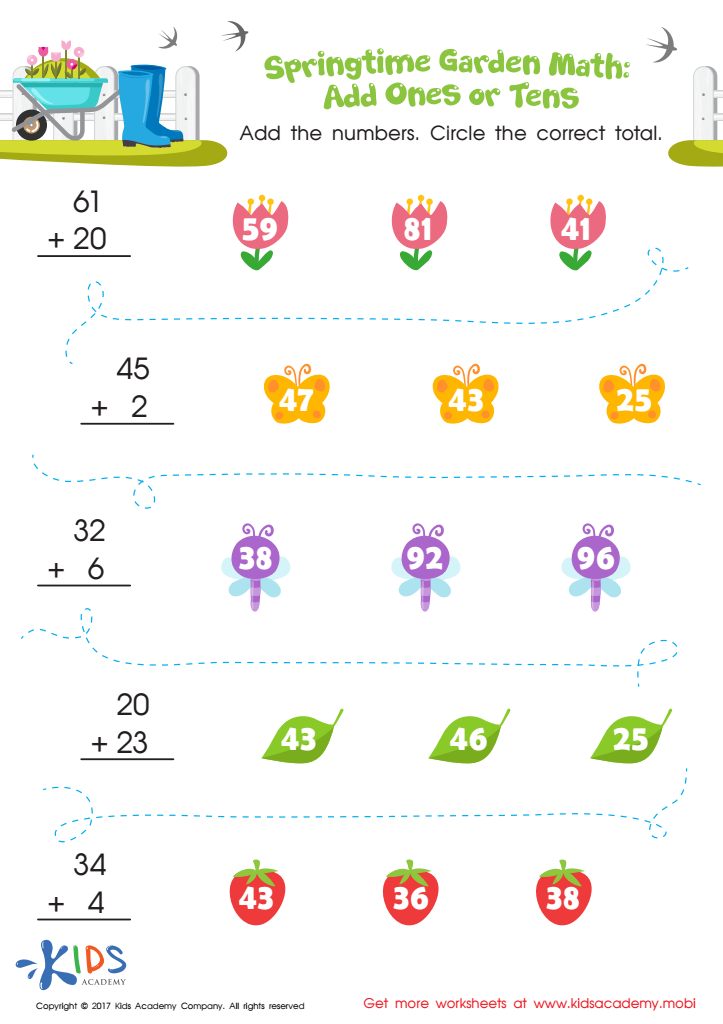
Springtime Garden Math Worksheet
 Assign to My Students
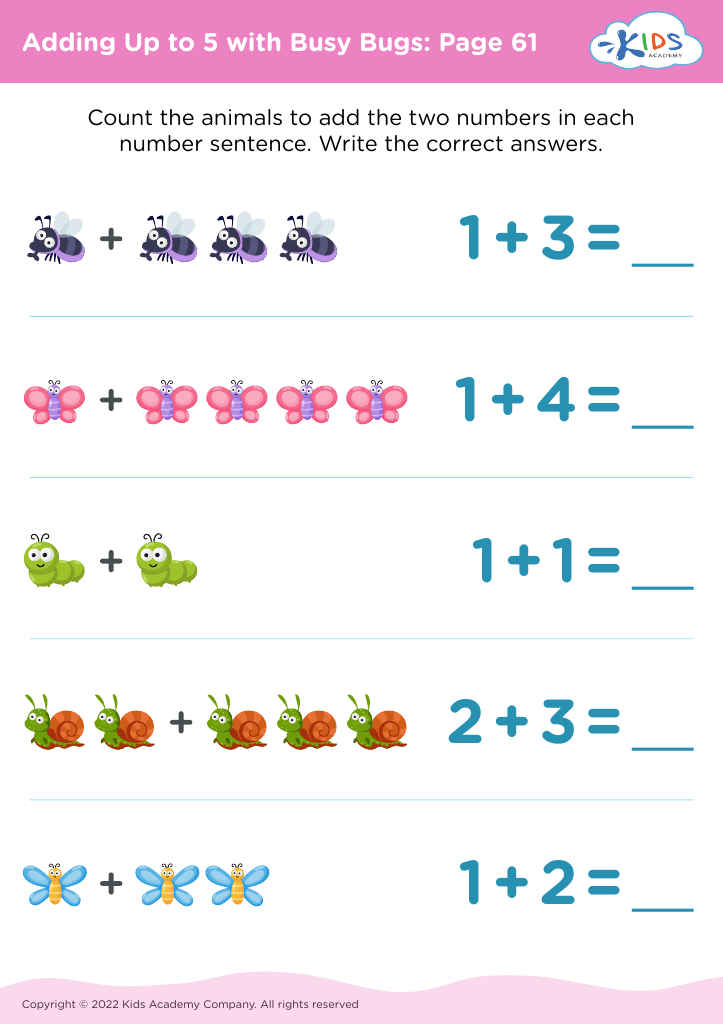








Visualization skills in addition and subtraction are essential for 4-year-olds as they lay the groundwork for future mathematical understanding. At this age, children are developing cognitive and spatial skills that enable them to imagine numbers and operations, which aids in problem-solving. By fostering visualization, parents and teachers can help children understand concepts, such as quantity and relationships between numbers, making math more intuitive.
Effective visualization strategies, such as using objects or drawings, allow young learners to see numbers in a tangible way, bridging concrete experiences with abstract concepts. For example, using blocks to represent numbers helps children grasp the idea of adding or taking away effectively.
Moreover, strong visualization skills can enhance a child's confidence and interest in mathematics, reducing anxiety associated with math tasks as they grow. Engaging children in playful activities that promote visualization of addition and subtraction can be both fun and educational, fostering a positive attitude towards learning.
By prioritizing these skills, parents and teachers not only ensure that children have a solid foundation in math but also support overall cognitive development, promoting critical thinking, and reasoning abilities essential for their academic journey ahead.








