Addition up to 5 Addition Worksheets for 4-Year-Olds
4 filtered results
-
From - To
Discover our engaging "Addition up to 5 Worksheets" designed specifically for 4-year-olds! These delightful, colorful worksheets will help young learners develop their foundational addition skills in a fun and interactive way. Each worksheet features simple addition problems, allowing children to practice counting and enhancing their number sense while fostering a love for math. Designed with early childhood education in mind, our worksheets are perfect for classroom activities or at-home learning. Help your child gain confidence in their math abilities as they explore the exciting world of numbers. Download these printable worksheets today and watch your little one learn through play!
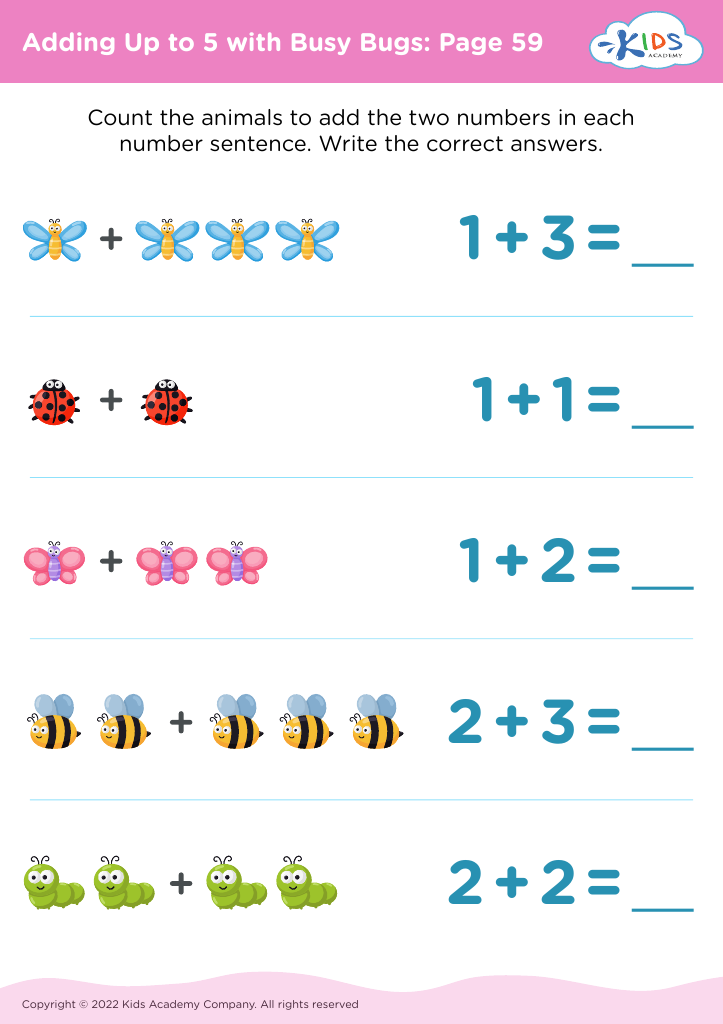
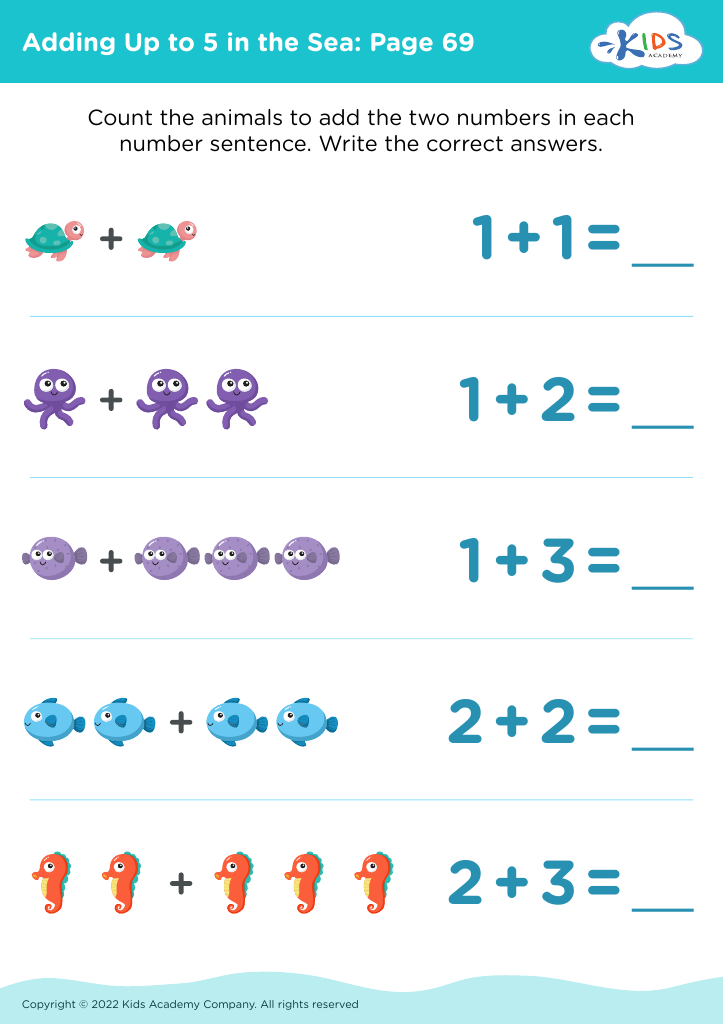
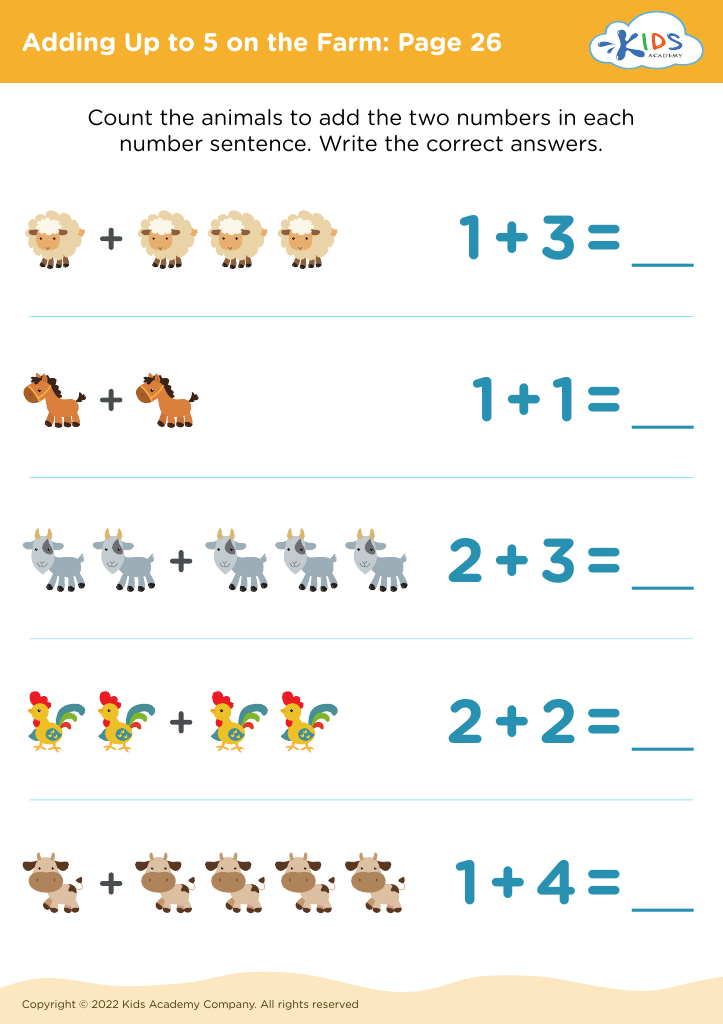
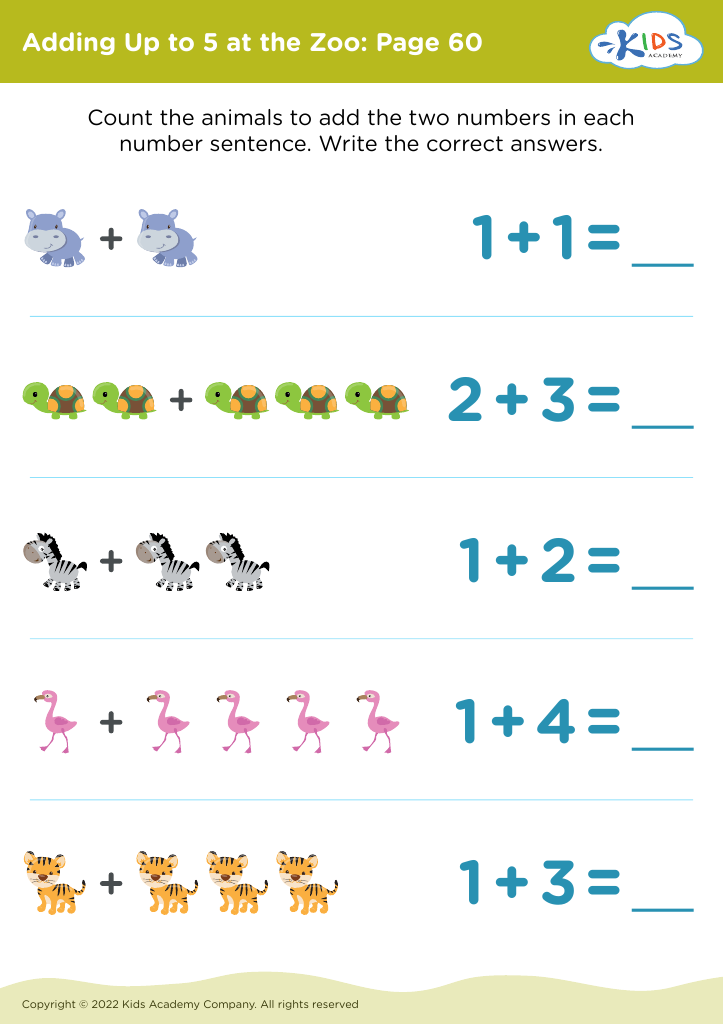








Addition up to 5 is a foundational skill for 4-year-olds, making it crucial for parents and teachers to focus on this concept. At this age, children are naturally curious and absorb information quickly. Learning addition helps them develop critical thinking and problem-solving abilities. Mastering these early math skills supports cognitive development, as it strengthens their brain's neural connections related to logical reasoning.
Fostering an understanding of addition at such a young age empowers children in various aspects of life. It enhances their confidence in handling numbers and lays the groundwork for more complex mathematical concepts they will encounter later. Furthermore, early math skills have been linked to better academic performance in later years, giving children a head start in their education.
In addition, teaching addition through fun activities—like counting objects or playing games—helps blend learning with play, making the process enjoyable. It also builds essential skills like cooperation and communication when working with peers or adults. Overall, parents and teachers play a vital role in nurturing these initial math concepts, which are essential not only for academic success but also for everyday life skills in the future.








