Basic Math Skills Addition Worksheets for 4-Year-Olds - Page 2
27 filtered results
-
From - To
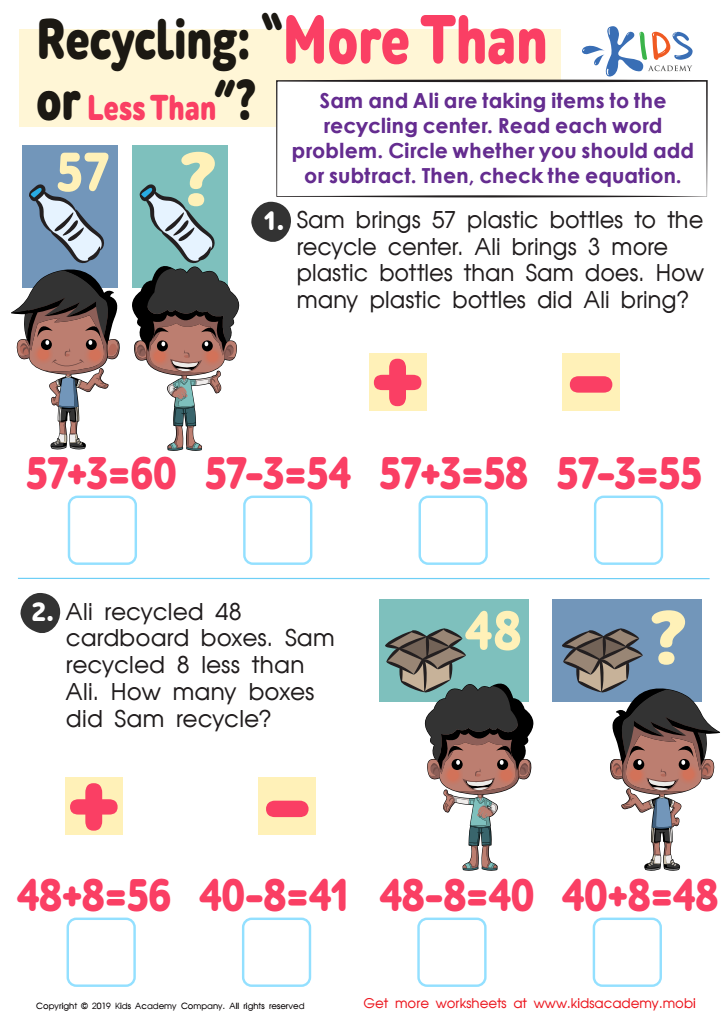
Recycling - More or Less Worksheet
 Assign to My Students
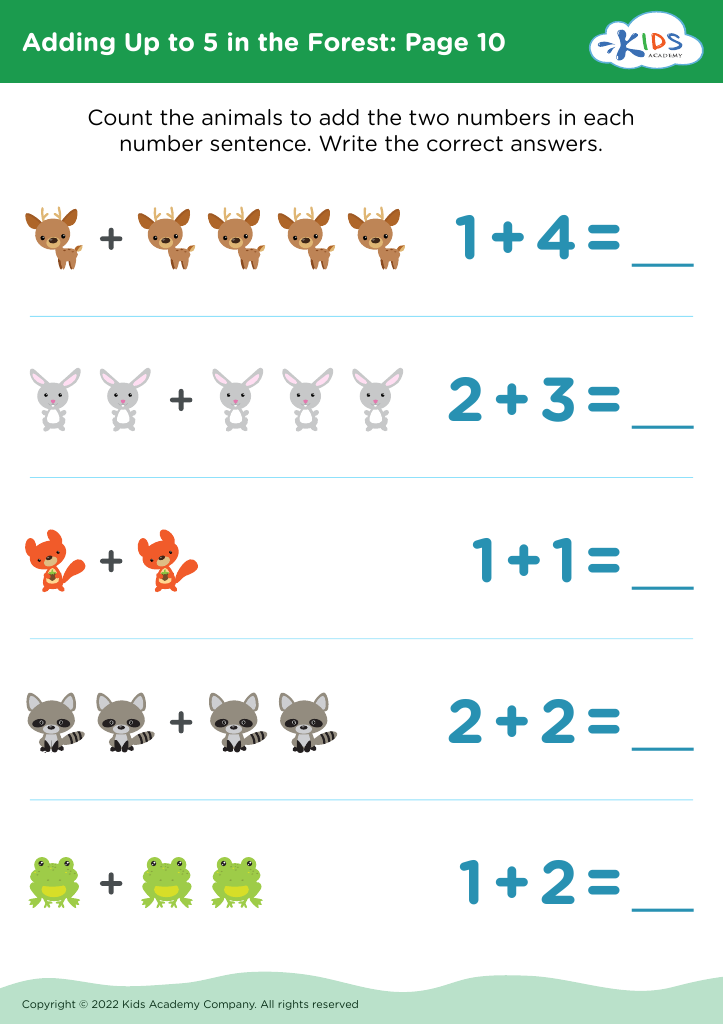
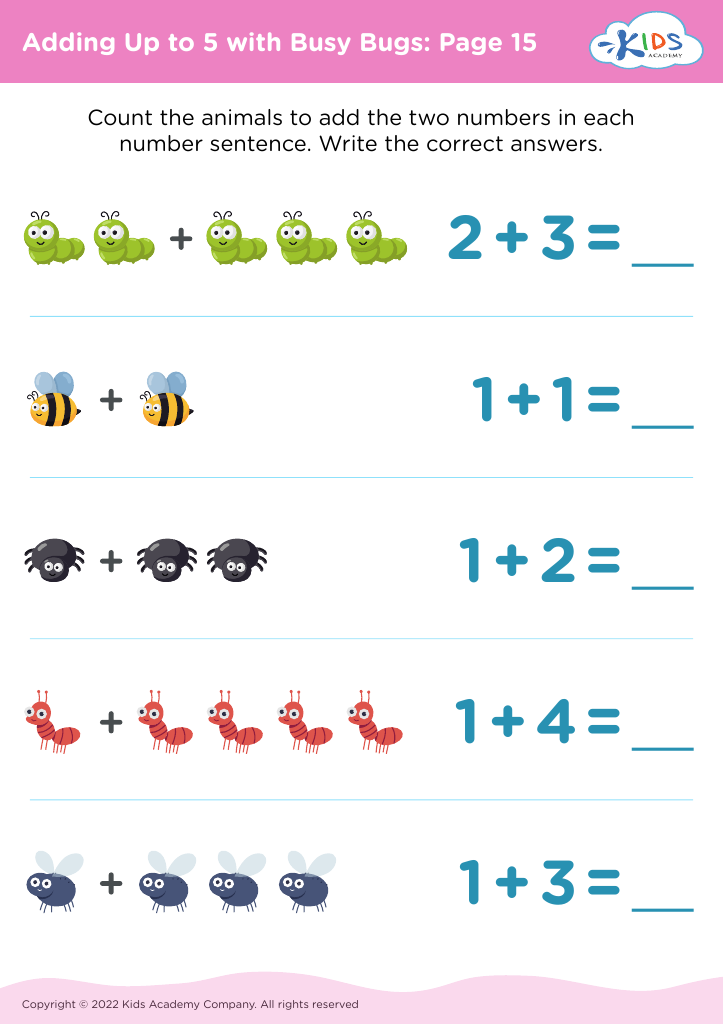








Understanding basic math skills, such as addition, is crucial for 4-year-olds as it lays the foundation for their future academic success and cognitive development. At this age, children's brains are particularly receptive to learning new concepts, and incorporating addition into their daily activities can stimulate their mental growth. Mastering basic math skills promotes problem-solving abilities, critical thinking, and logical reasoning.
For parents and teachers, nurturing these skills at an early age contributes significantly to a child's confidence and competence in mathematics as they progress through their education. Introducing addition sets the groundwork for more complex math concepts they'll encounter later. Moreover, learning to add can enhance a child's life skills, including decision-making and managing money, which are essential for everyday living.
Engaging 4-year-olds with fun, hands-on math activities helps retain their interest and fosters a positive attitude toward math. Tools such as counting objects, playing math-related games, and incorporating addition into storytelling make learning interactive and enjoyable. Ultimately, by prioritizing basic math skills, parents and teachers can support a child's holistic development, ensuring they not only achieve academic success but also possess essential skills for life’s challenges.








