Filters

101 filtered results

Clear all filters
Favorites
With answer key
Interactive

101 filtered results

Difficulty Level

Grade


Check out this FREE Trial Lesson on Addition for age 4!

D

Favorites
With answer key
Interactive
  • 4
  • Cognitive Development
  • Addition
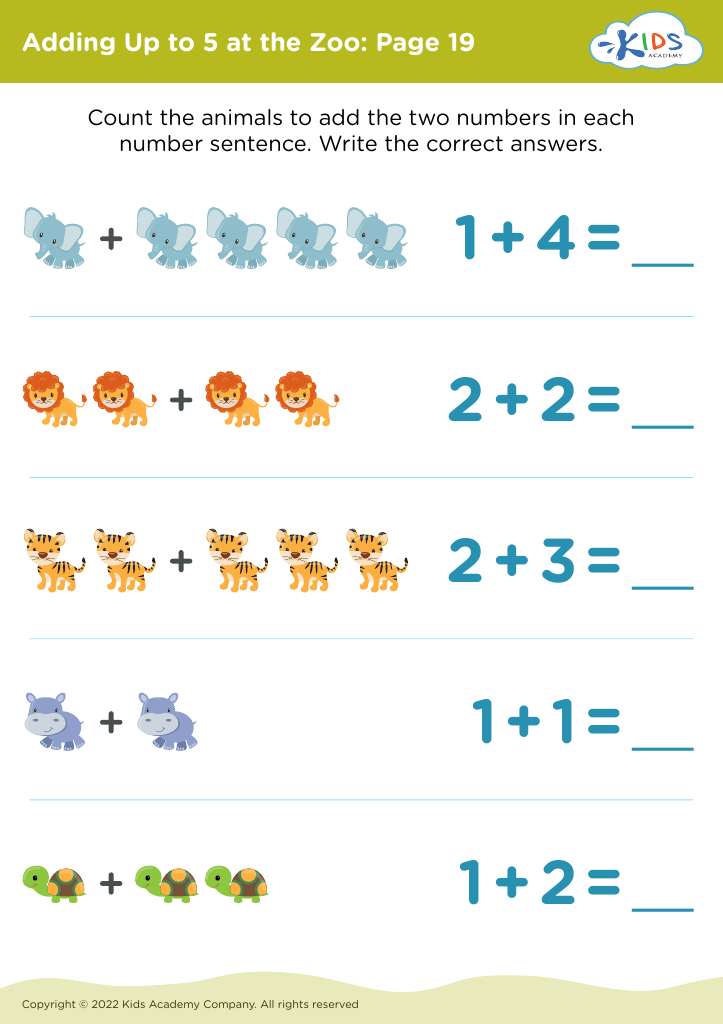
Adding Up to 5 at the Zoo: Page 19
Worksheet
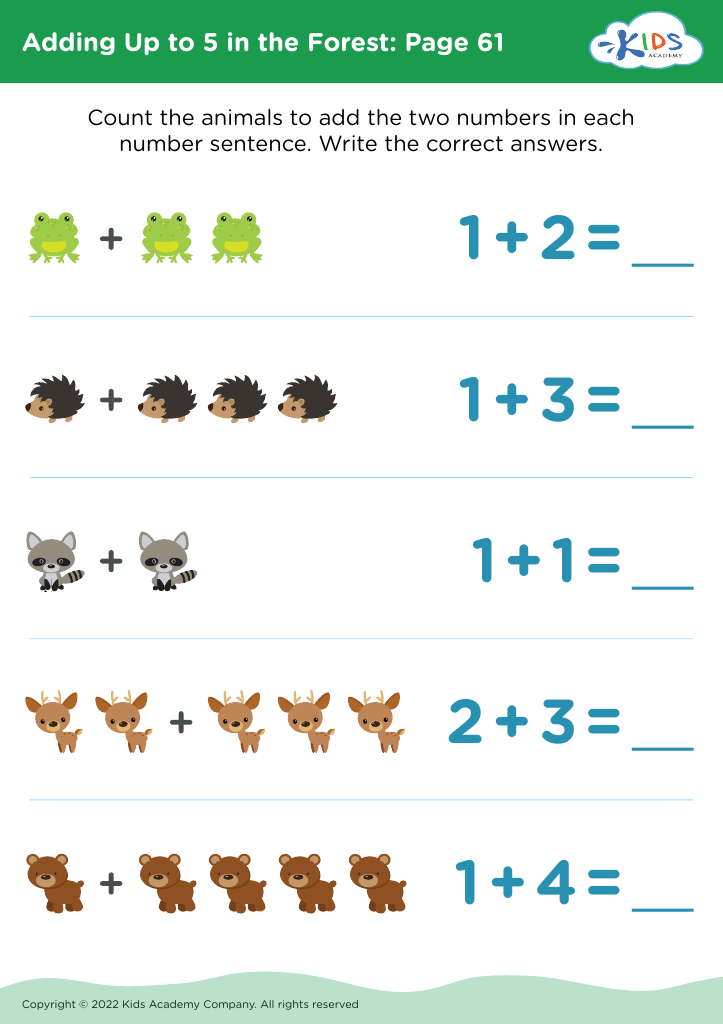
Adding Up to 5 in the Forest: Page 61
Worksheet
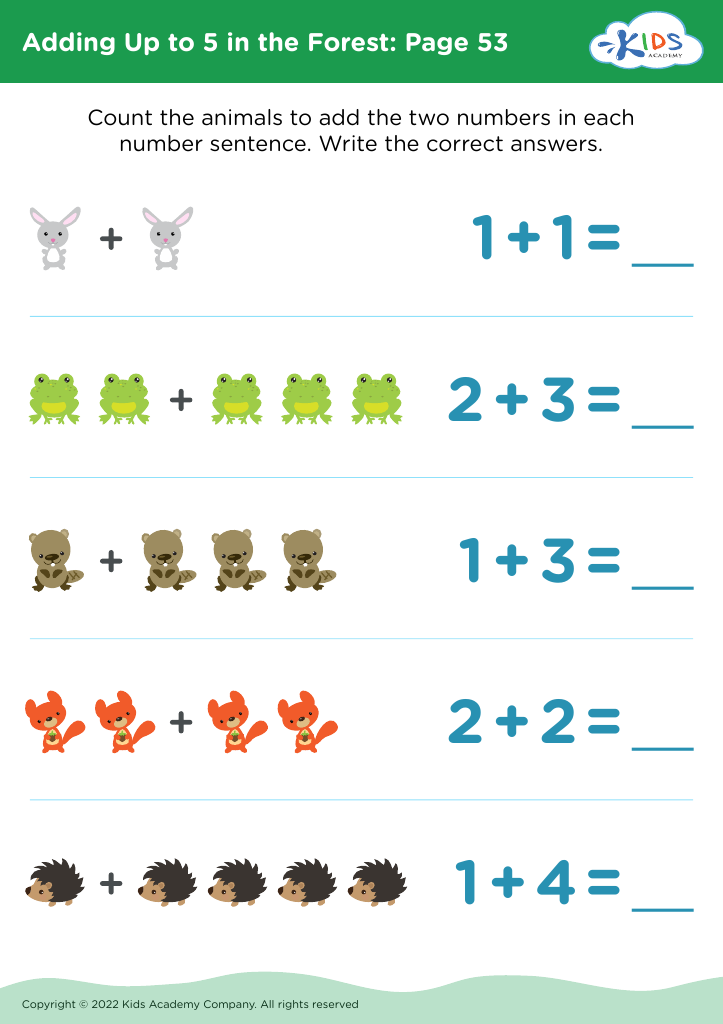
Adding Up to 5 in the Forest: Page 53
Worksheet
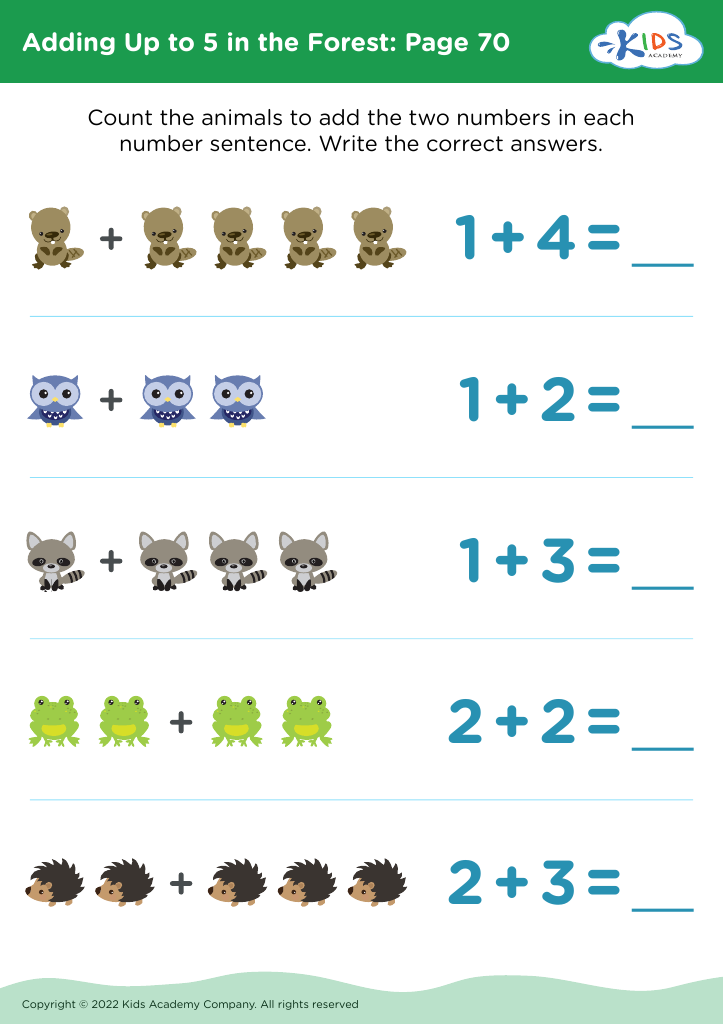
Adding Up to 5 in the Forest: Page 70
Worksheet
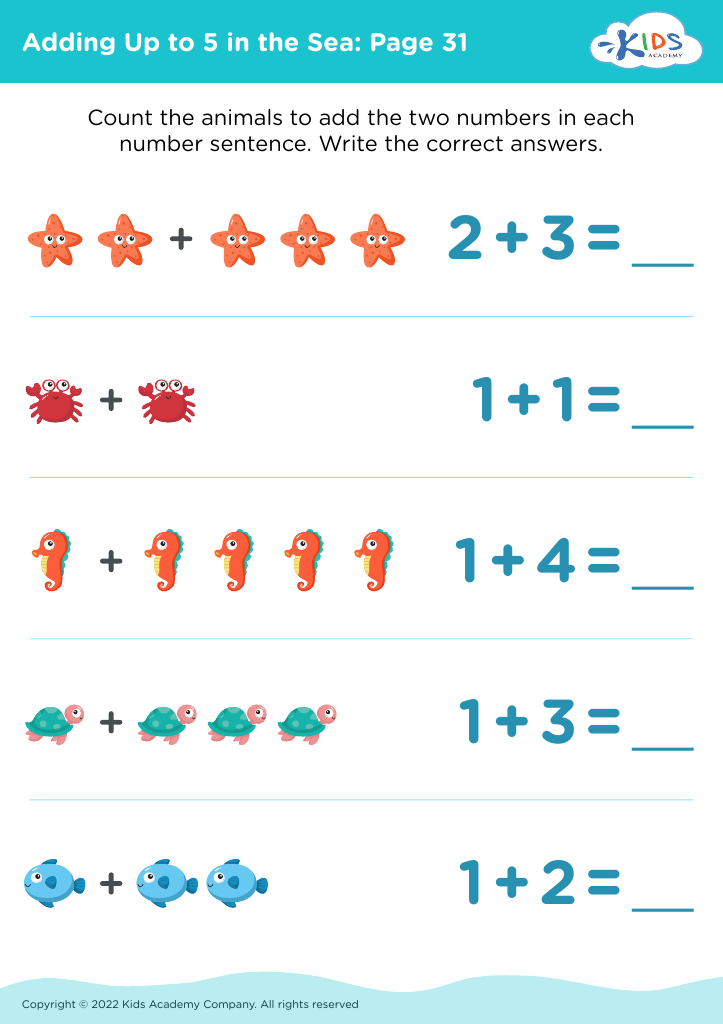
Adding Up to 5 in the Sea: Page 31
Worksheet
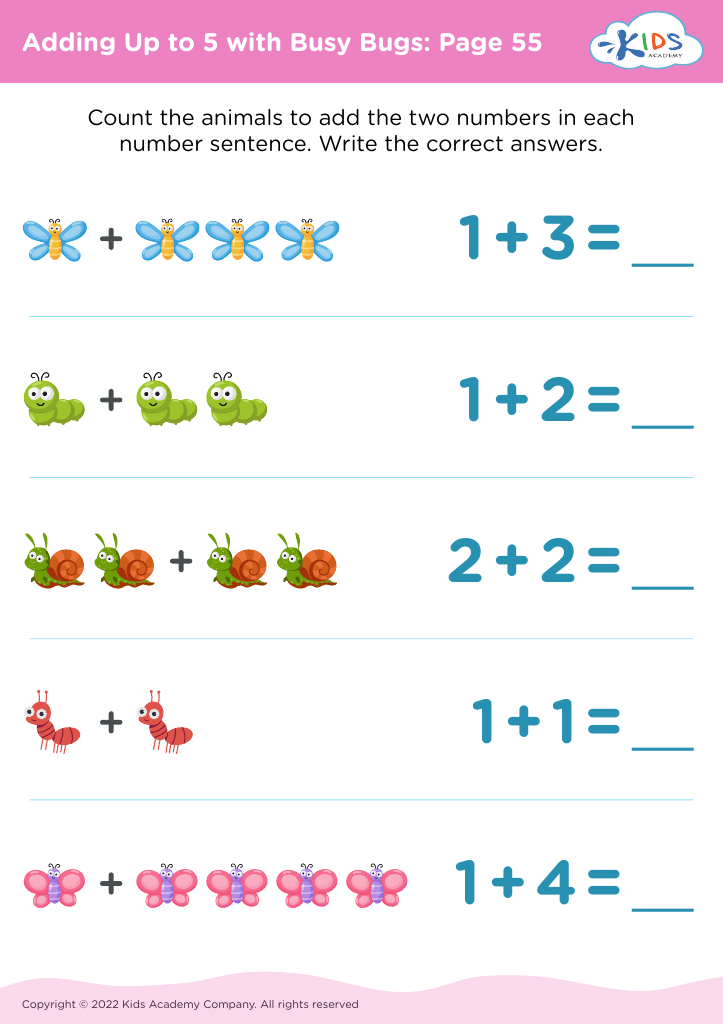
Adding Up to 5 with Busy Bugs: Page 55
Worksheet
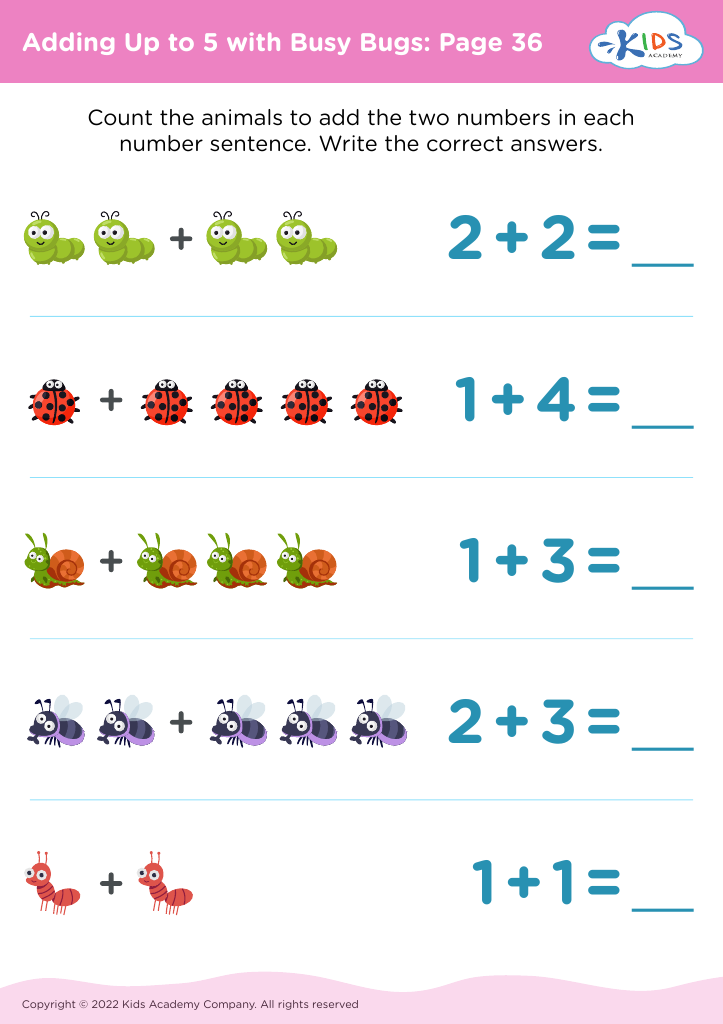
Adding Up to 5 with Busy Bugs: Page 36
Worksheet
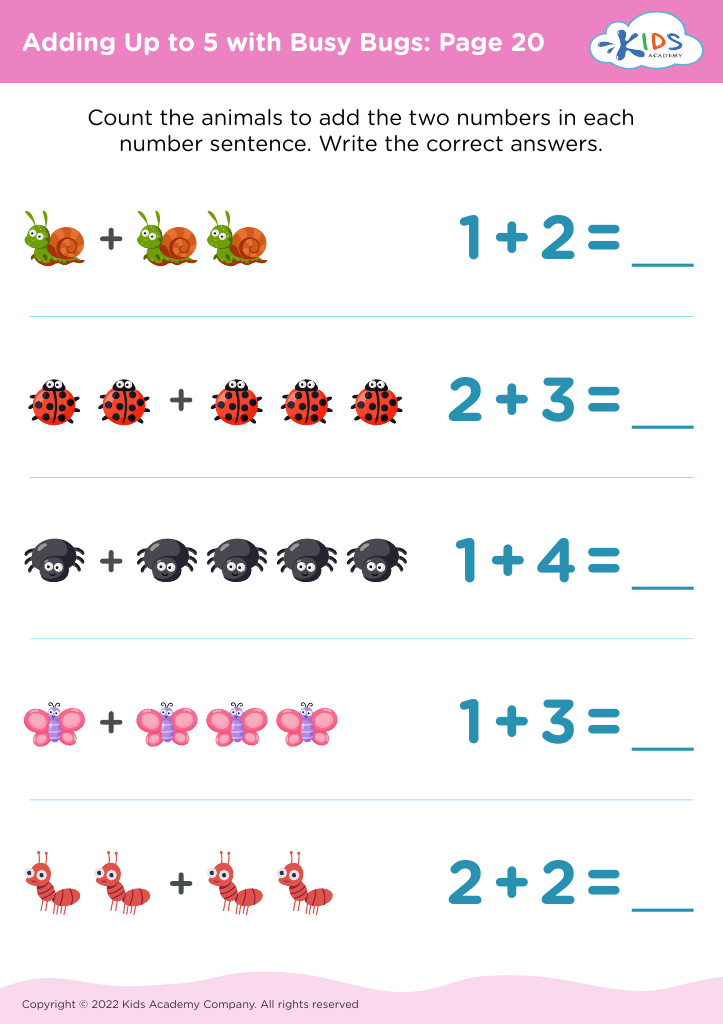
Adding Up to 5 with Busy Bugs: Page 20
Worksheet
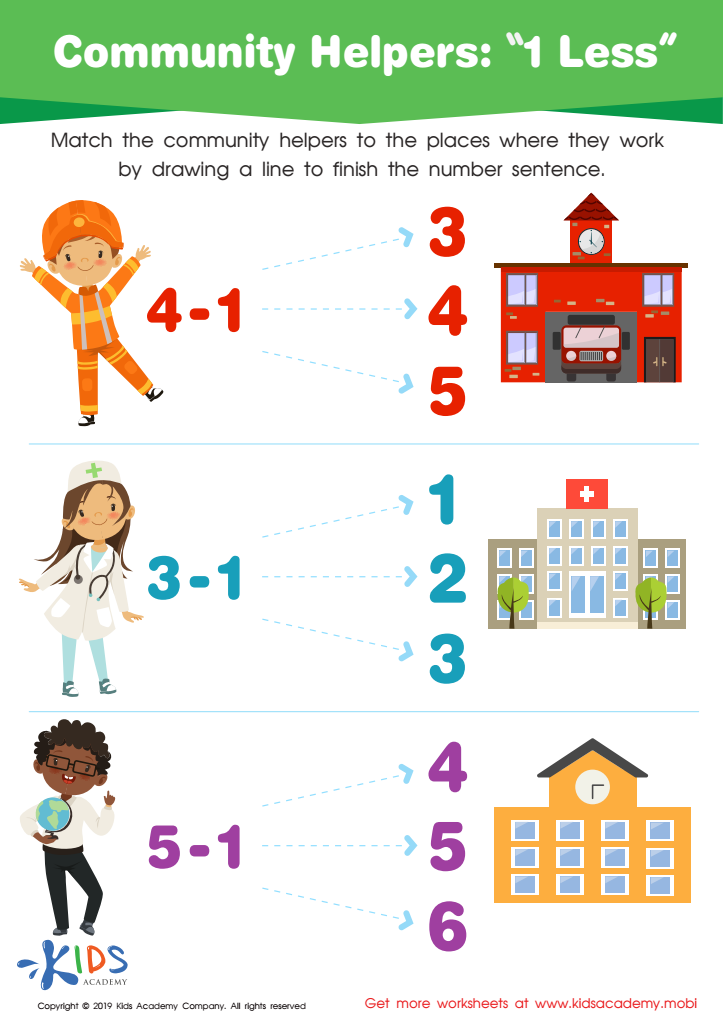
Community Helpers: 1 less Worksheet

Community Helpers: 1 less Worksheet

Look at this worksheet with your child and ask them to identify the different community helpers. Match them to the places where they work by drawing a line to finish the number sentence. This helps them identify the people that help keep the community organized and running smoothly. Examples of community helpers include doctors, police officers, firefighters, teachers, etc.
Community Helpers: 1 less Worksheet
Worksheet
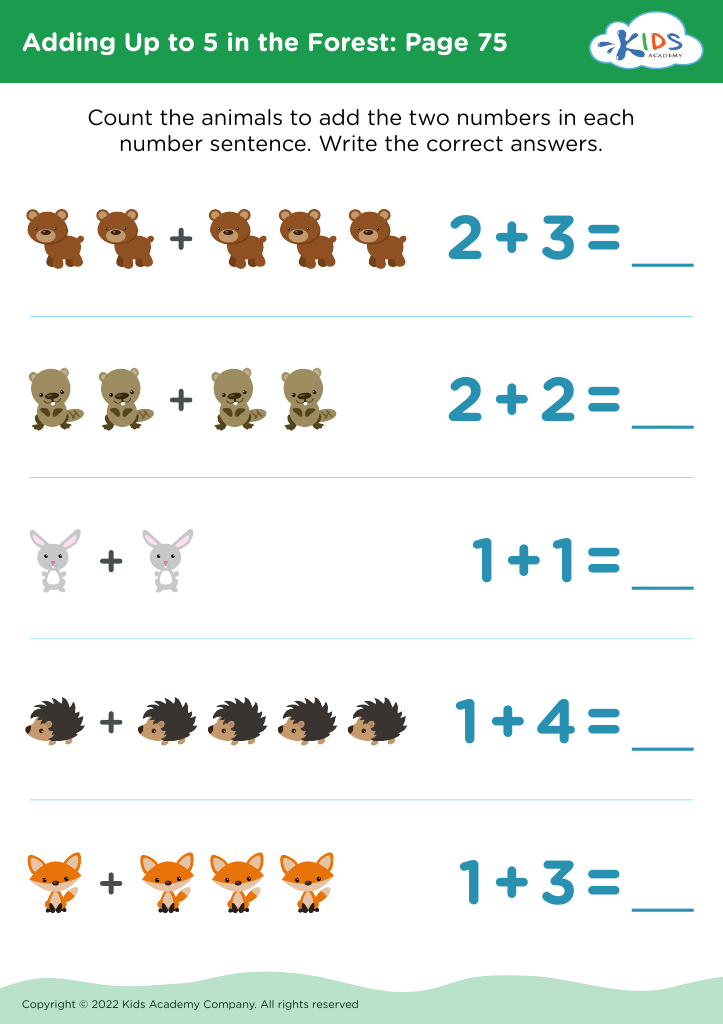
Adding Up to 5 in the Forest: Page 75
Worksheet
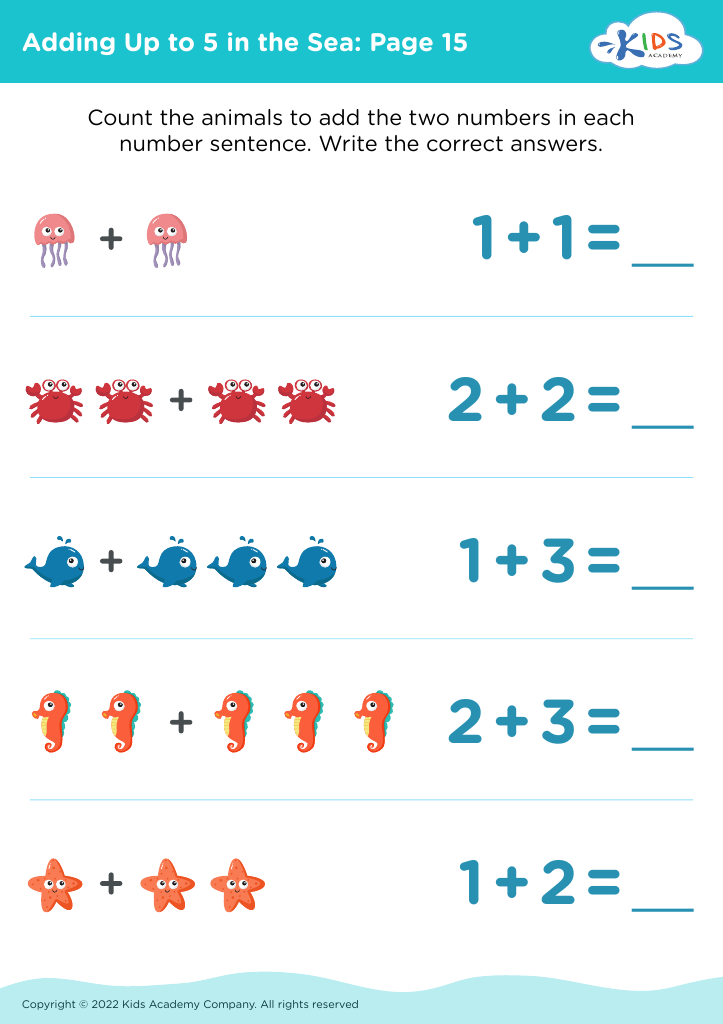
Adding Up to 5 in the Sea: Page 15
Worksheet
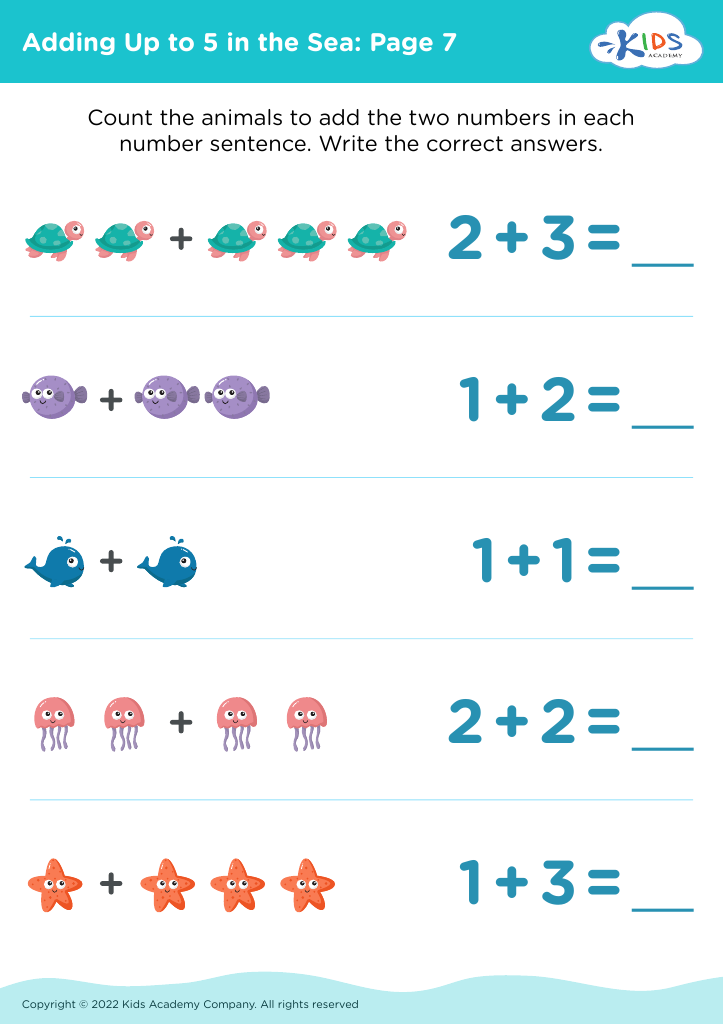
Adding Up to 5 in the Sea: Page 7

Adding Up to 5 in the Sea: Page 7

Adding Up to 5 in the Sea: Page 7
Worksheet
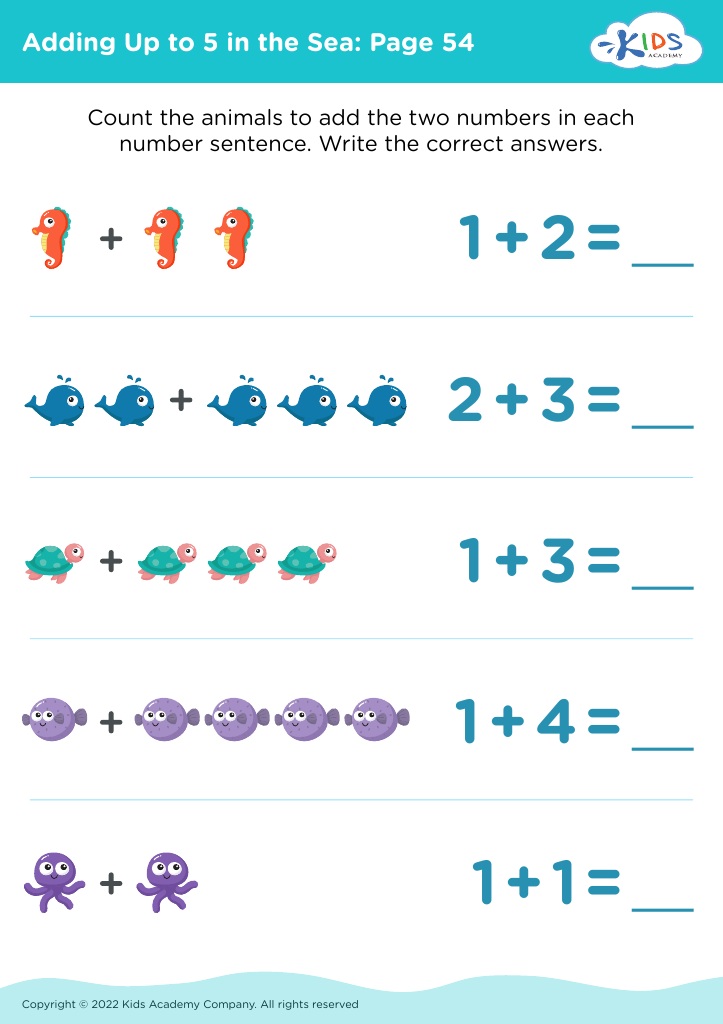
Adding Up to 5 in the Sea: Page 54
Worksheet
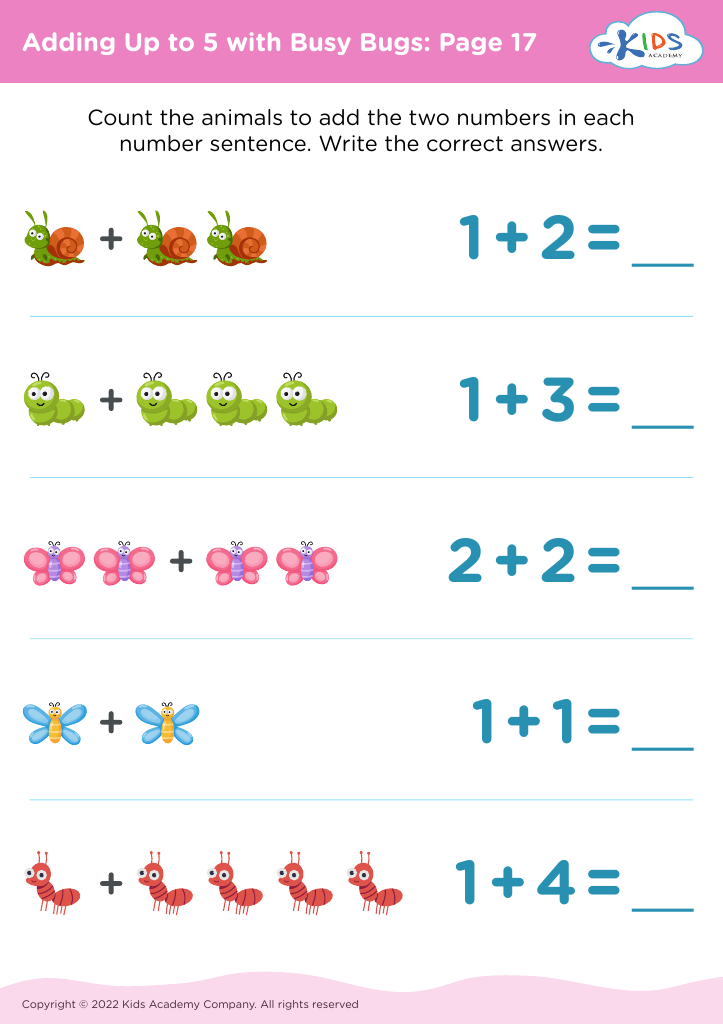
Adding Up to 5 with Busy Bugs: Page 17
Worksheet
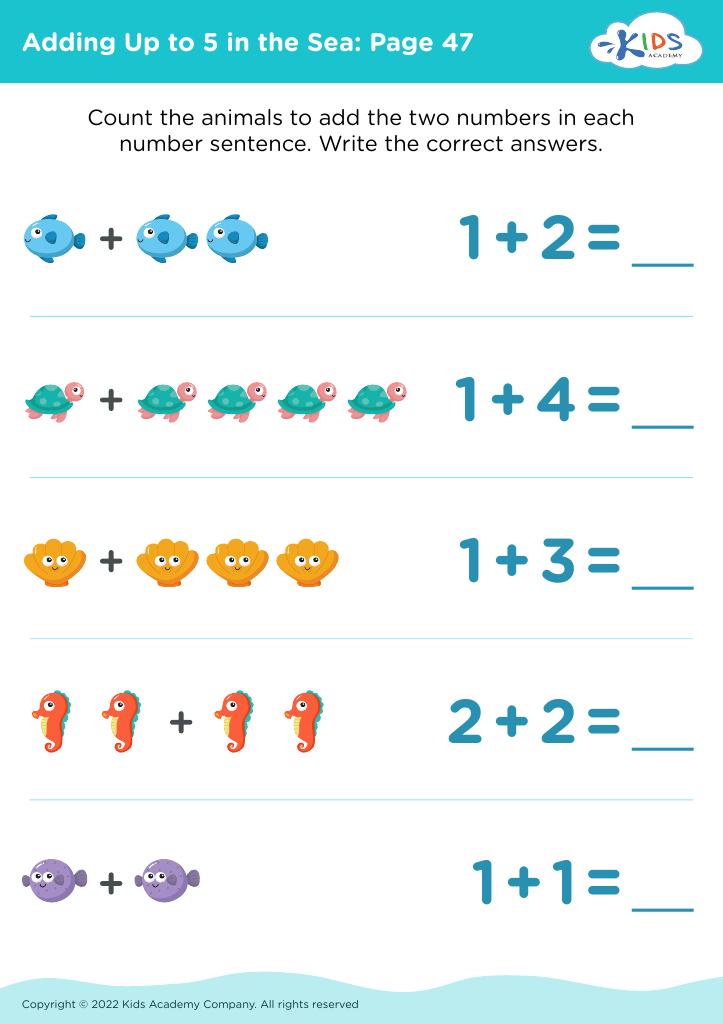
Adding Up to 5 in the Sea: Page 47
Worksheet
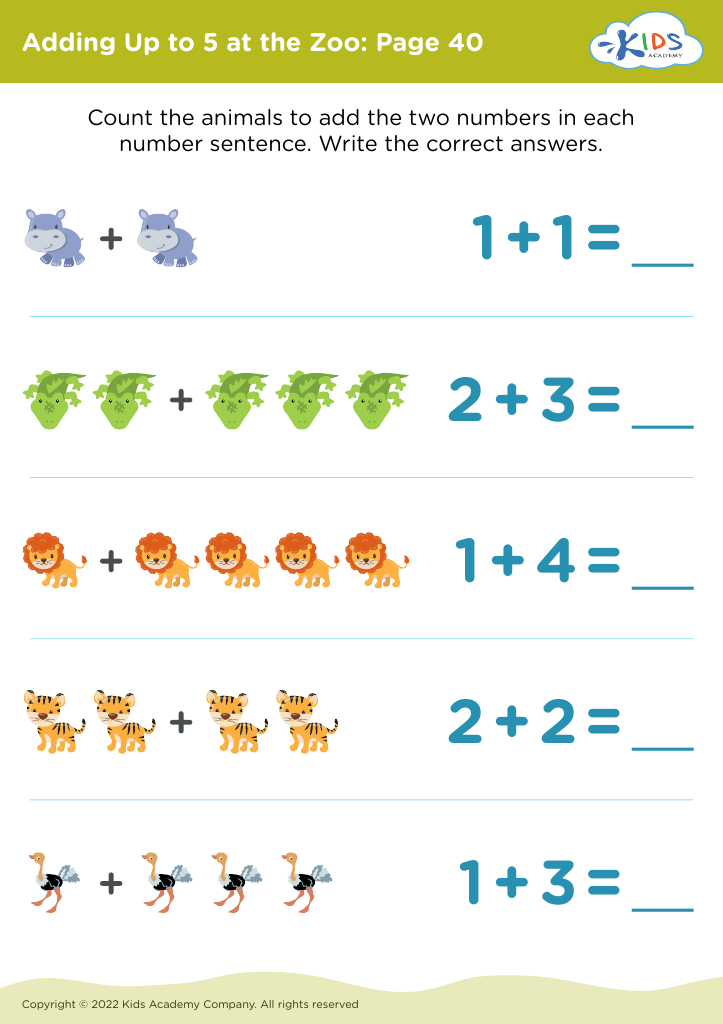
Adding Up to 5 at the Zoo: Page 40
Worksheet
Community Places: 1 Less Worksheet
Community Places: 1 Less Worksheet
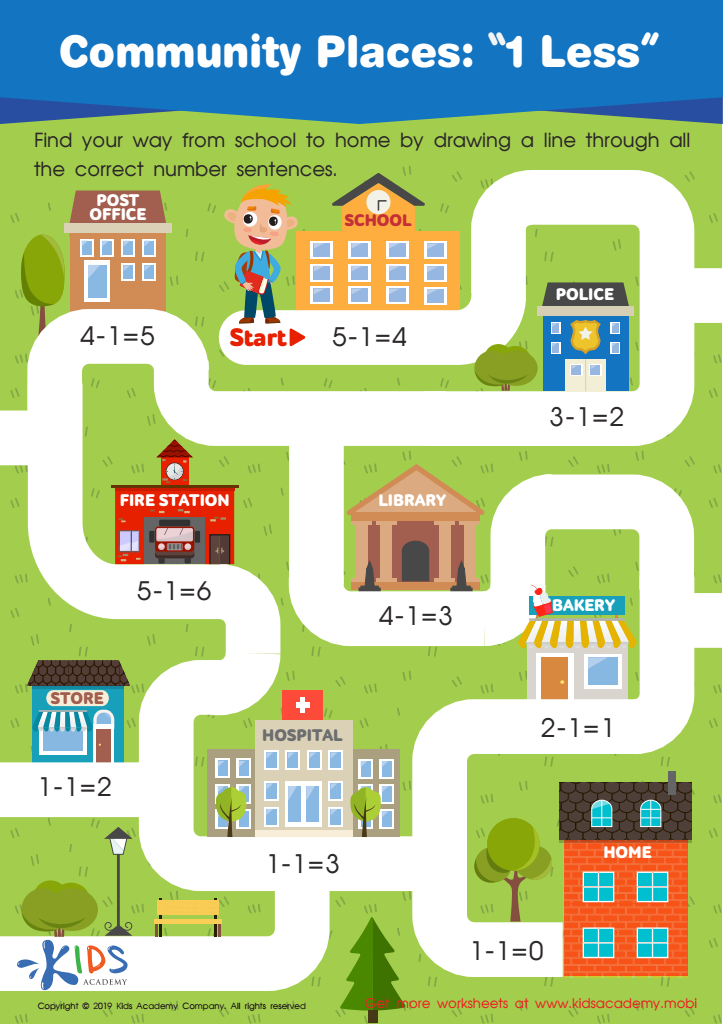
Have your kindergarteners draw a line through the correct number sentences as they find their way home from school. Ask them to identify the people, places, and buildings in their community and the jobs they do.
Community Places: 1 Less Worksheet
Worksheet
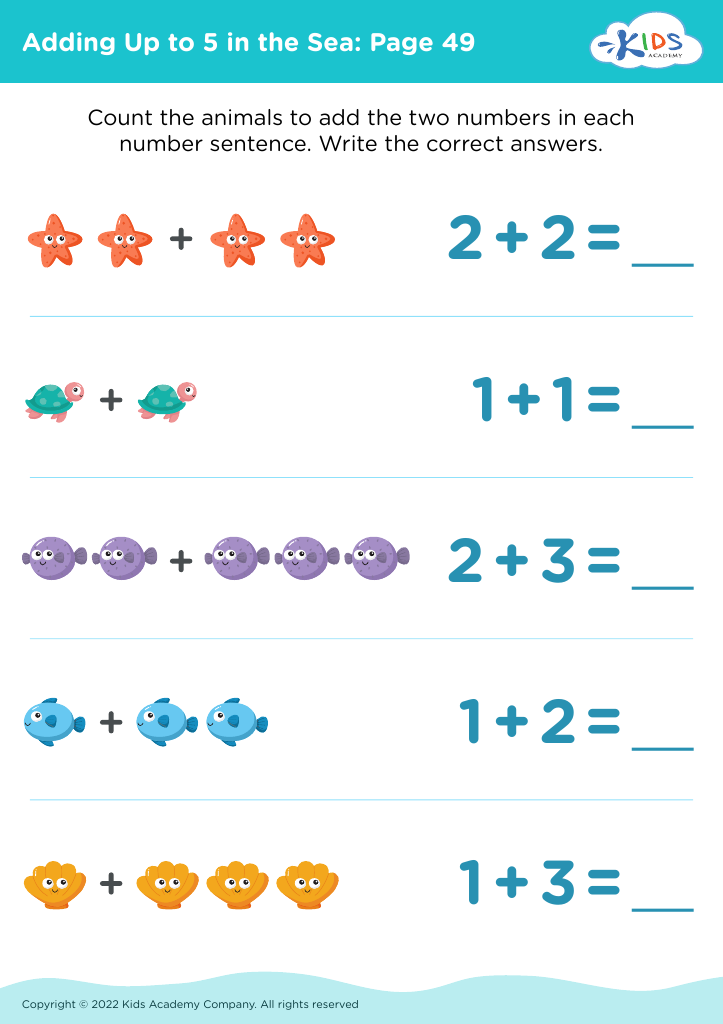
Adding Up to 5 in the Sea: Page 49
Worksheet
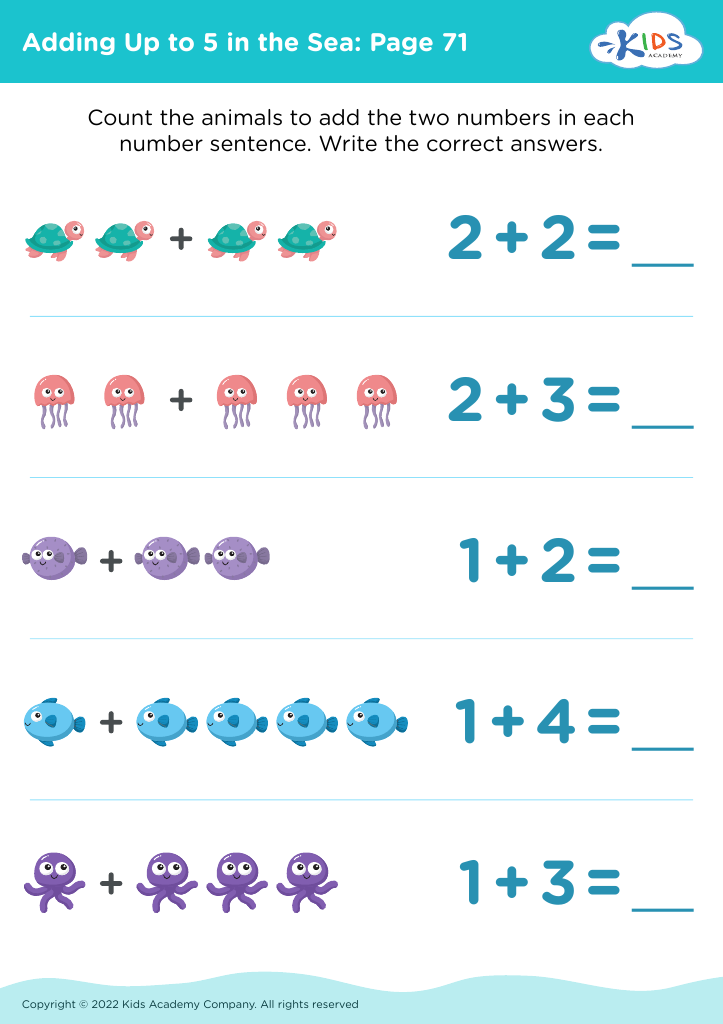
Adding Up to 5 in the Sea: Page 71
Worksheet
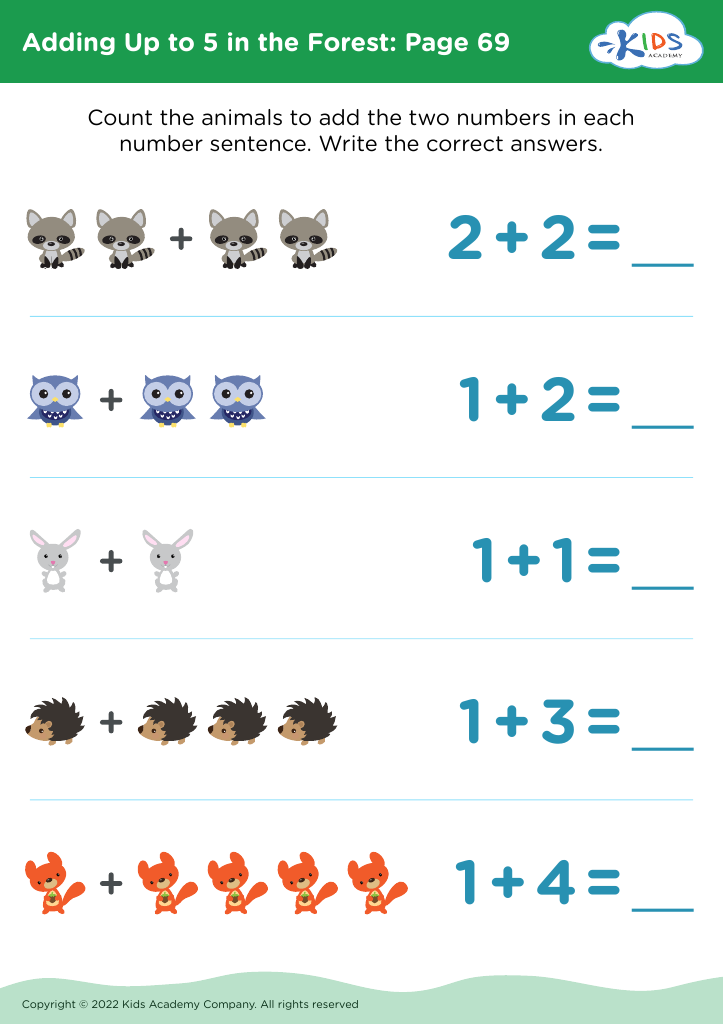
Adding Up to 5 in the Forest: Page 69
Worksheet
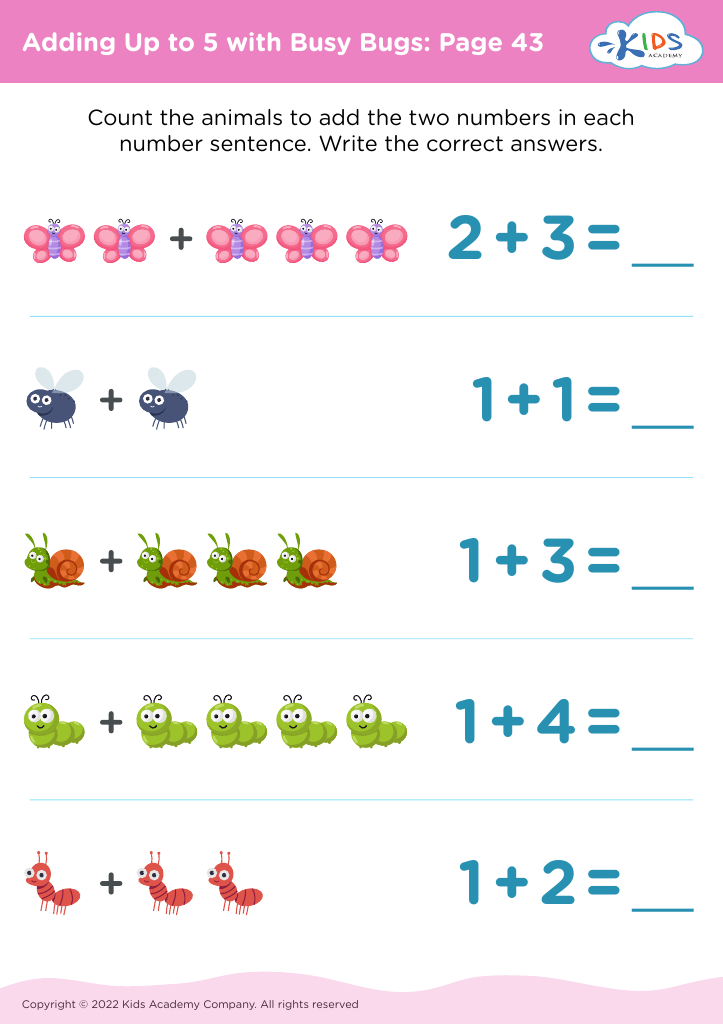
Adding Up to 5 with Busy Bugs: Page 43
Worksheet
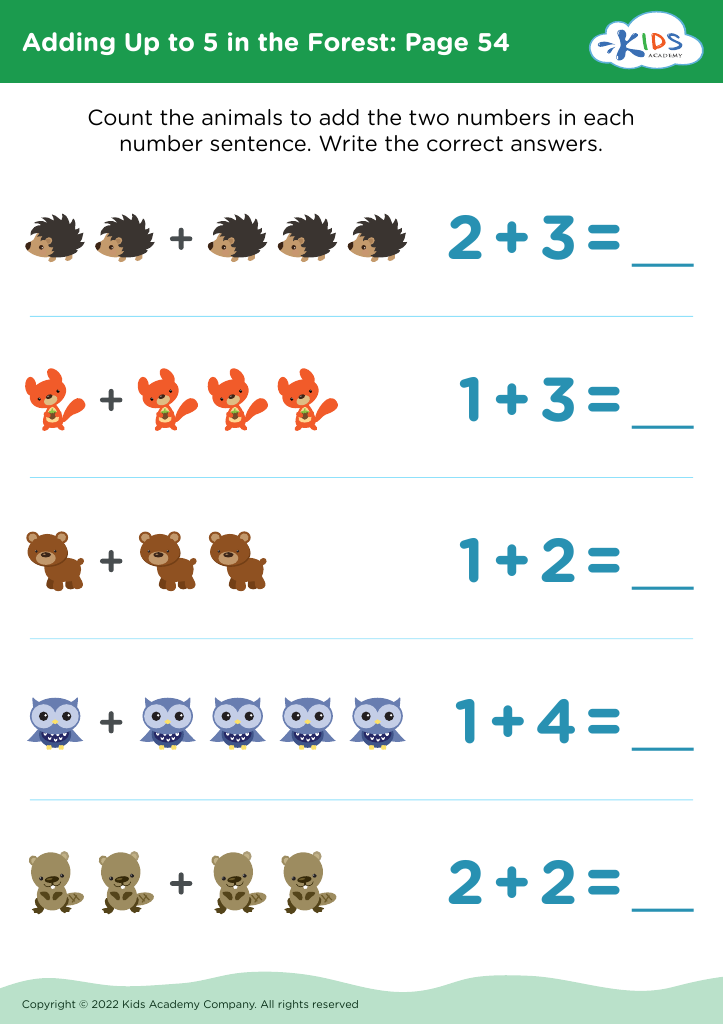
Adding Up to 5 in the Forest: Page 54
Worksheet
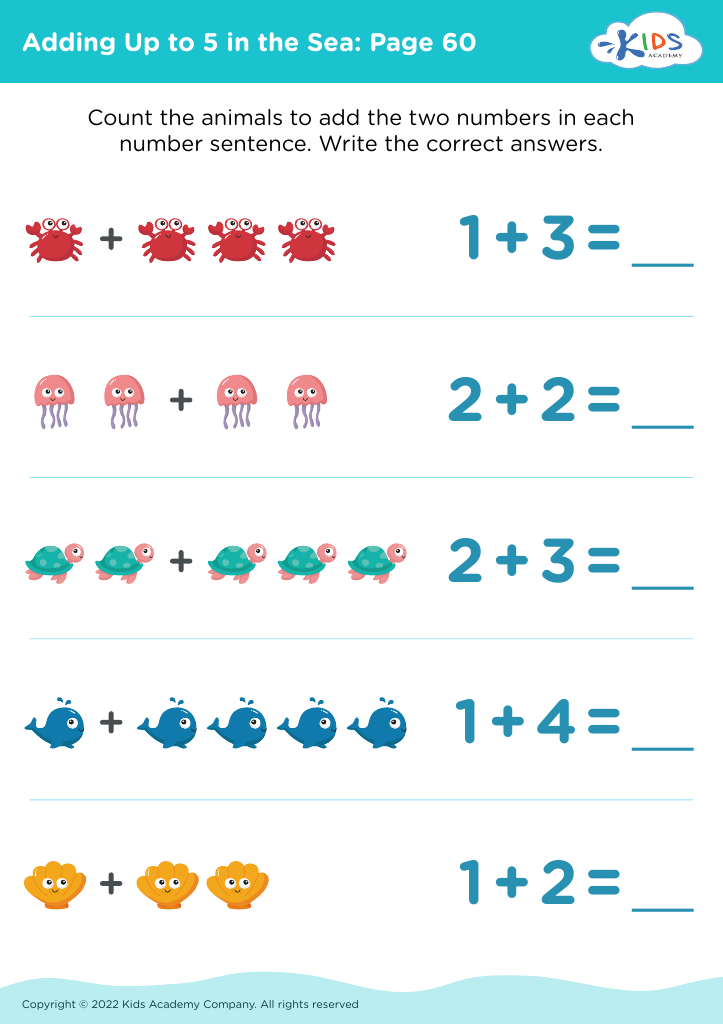
Adding Up to 5 in the Sea: Page 60
Worksheet
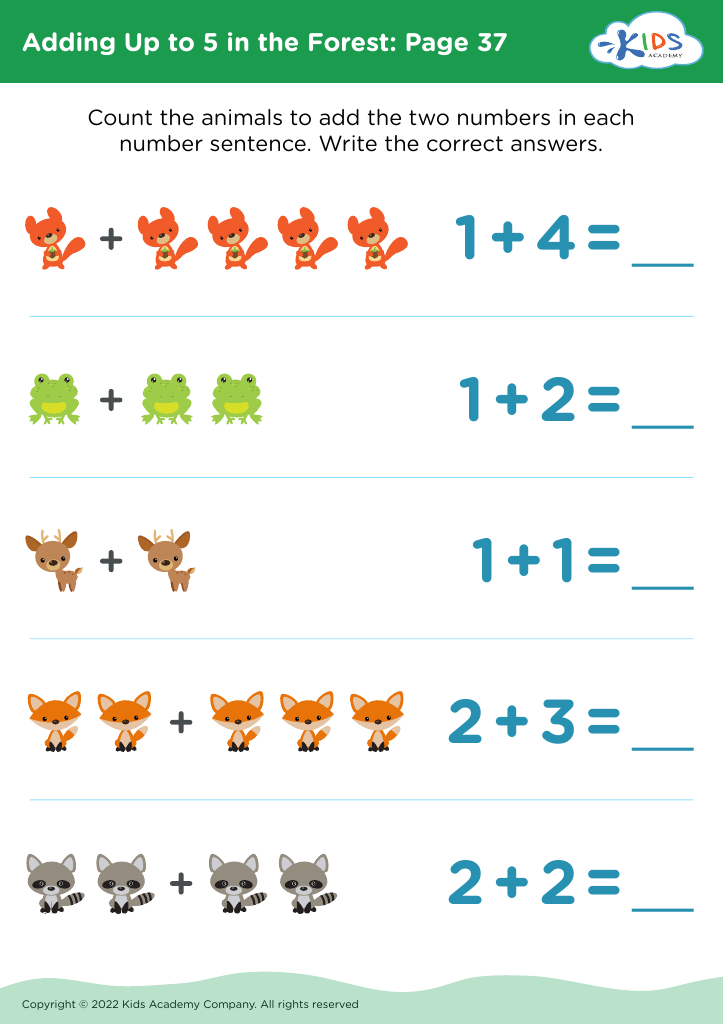
Adding Up to 5 in the Forest: Page 37
Worksheet


Cognitive development in 4-year-olds is a critical phase that lays the foundation for lifelong learning, problem-solving, and social interaction. During this period, children's brains are incredibly receptive and capable of absorbing new information quickly. Parents and teachers play a pivotal role in nurturing this growth, particularly in areas like addition, fundamental for later mathematical skills.

Addition is not just about numbers; it's a cognitive exercise that enhances memory, concentration, and logical thinking. By introducing addition activities early on, children develop a strong number sense, which is crucial for understanding more complex math concepts in the future. For instance, learning to combine groups or count objects not only hones their math skills but also bolsters their ability to make connections and recognize patterns.

Moreover, fostering cognitive development through addition promotes confidence and a growth mindset. As children master new challenges, they build self-esteem and resilience, essential traits for academic success and personal growth. Activities involving addition also encourage social interaction when done in group settings, teaching children about cooperation, turn-taking, and effective communication.

In essence, focusing on cognitive development through early addition enriches a child's intellectual toolkit, providing a robust basis for future academic and social success. Parents and teachers who invest time and resources into this aspect of development are setting children on a path toward lifelong achievement and fulfillment.