Nature appreciation Addition Worksheets for 4-Year-Olds
5 filtered results
-
From - To
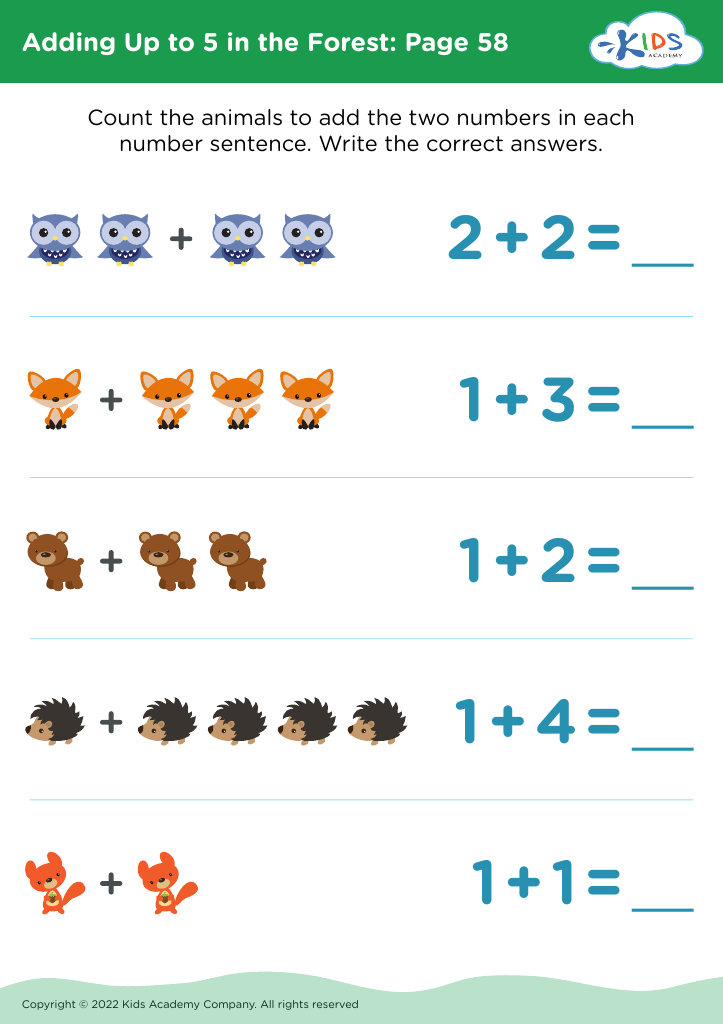
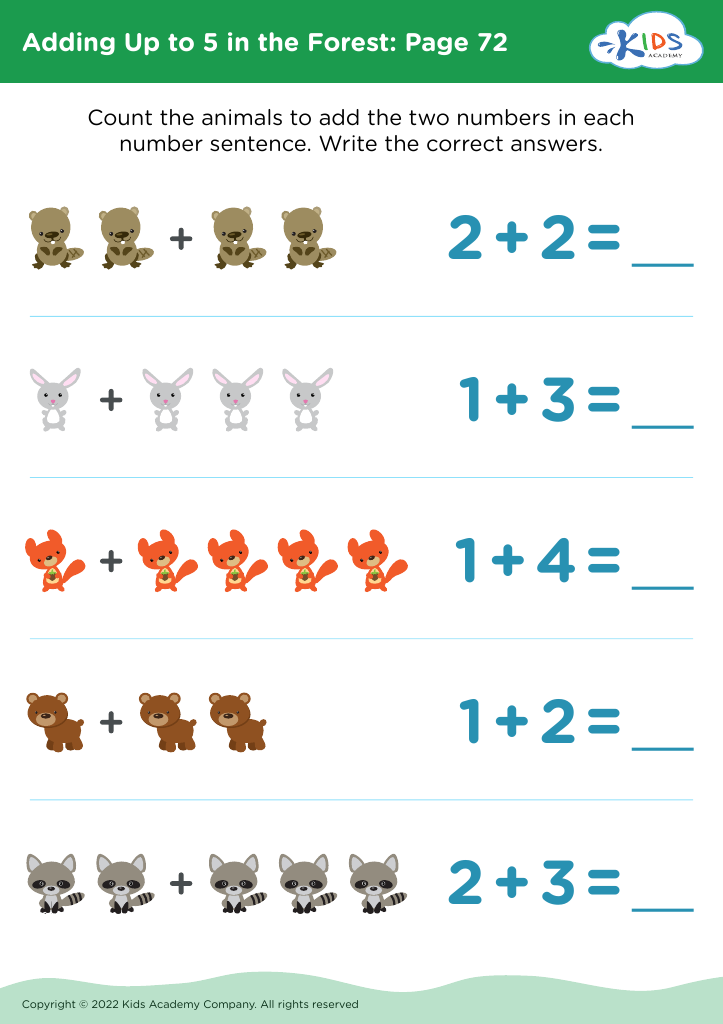
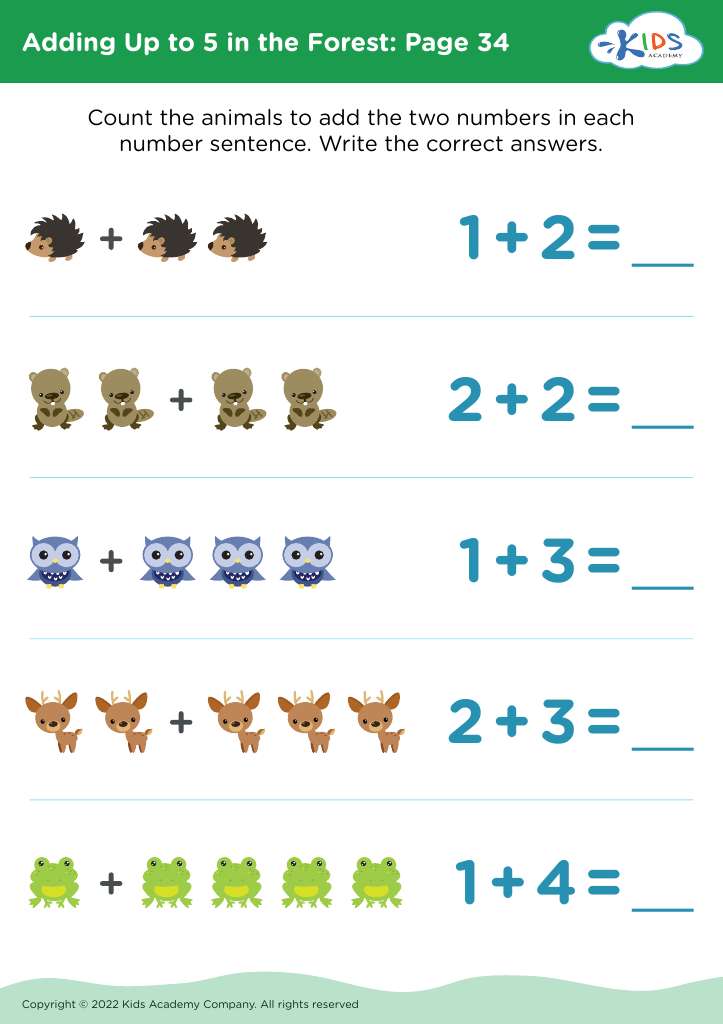
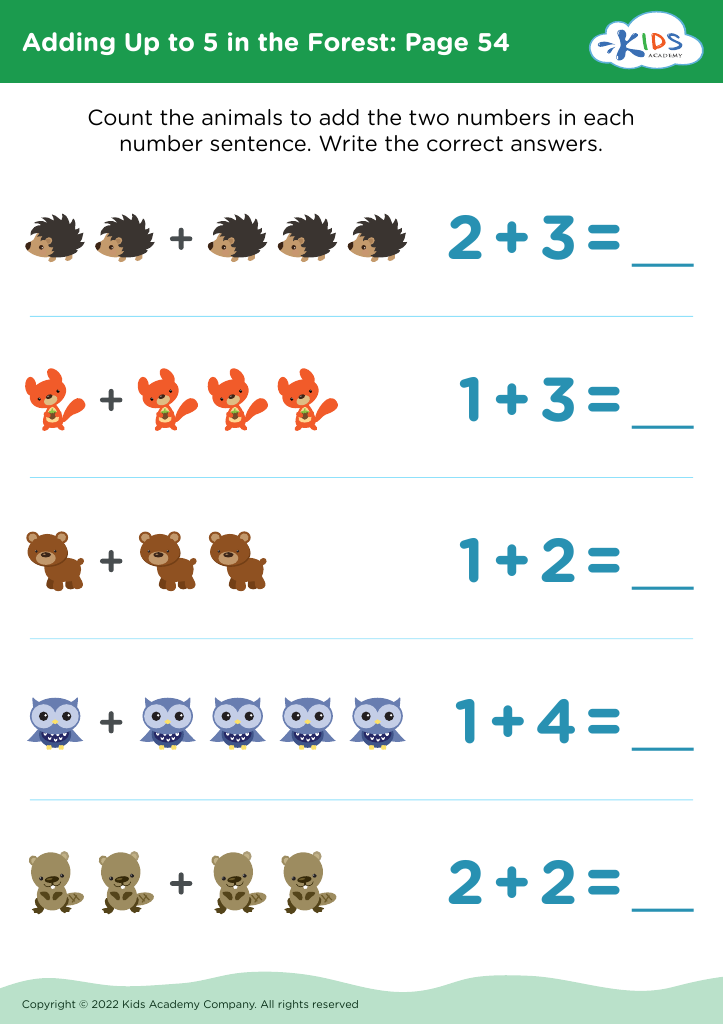
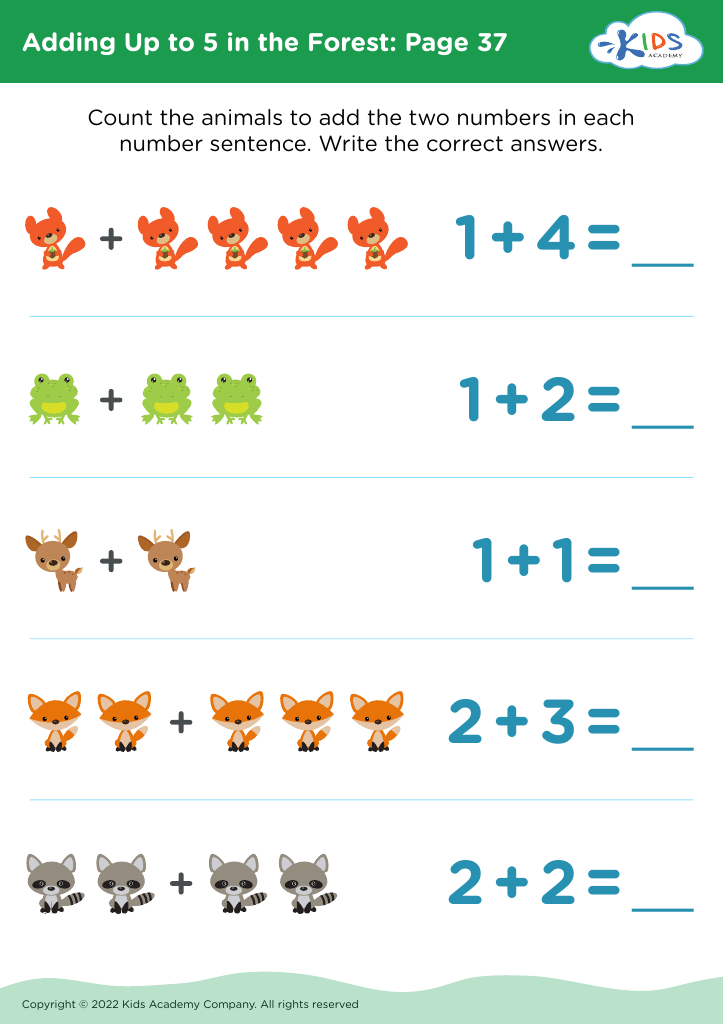
Discover our engaging Nature Appreciation Addition Worksheets for 4-year-olds, designed to make learning math exciting and immersive! Combining fun nature themes with basic addition concepts, these worksheets captivate young learners while fostering a love for the outdoors. Children will enhance their counting skills as they solve captivating exercises featuring vibrant illustrations of animals, plants, and natural scenes. Perfect for homeschool or classroom settings, these worksheets offer a creative way to introduce fundamental math skills. Encourage your child’s curiosity about nature while building their confidence in addition. Start their mathematical journey today with our delightful and educational resources!







Nature appreciation is vital for the holistic development of 4-year-olds, serving both educational and emotional needs. At this age, children are naturally curious and eager to explore their surroundings. By fostering an appreciation for nature—through outdoor activities, garden visits, or nature-themed stories—parents and teachers can stimulate this curiosity and nurture a love for the environment.
Engagement with nature can enhance observational skills, critical thinking, and creativity. When children experience the beauty of trees, flowers, and wildlife, they develop awareness and appreciation for the complexity of ecosystems, promoting a sense of stewardship. Moreover, outdoor activities encourage physical movement, improving motor skills and overall health.
Nature also provides a myriad of opportunities to cultivate emotional intelligence. It has been shown that spending time outdoors can reduce stress and promote happiness. In a natural setting, children learn to cooperate, communicate, and build relationships with their peers, thereby improving social skills.
Encouraging nature appreciation not only builds foundational knowledge and skills but also contributes to well-being and instills values of sustainability. By prioritizing this aspect of learning, parents and teachers equip young children with essential tools for a thriving future and a healthier planet.








