
Observational skills Addition Worksheets for 4-Year-Olds
3 filtered results
Difficulty Level
Grade
Age
-
From - To
Subject
Activity
Standards
Unlock a world of learning with our "Observational Skills Addition Worksheets for 4-Year-Olds." Designed to boost early math proficiency and sharpen observational skills, these engaging worksheets introduce basic addition in a fun, accessible way. Children will delight in colorful images and simple problems that encourage careful observation and critical thinking. Whether counting fruits or matching numbers, kids develop a strong foundation in arithmetic while enhancing their attention to detail. Perfect for preschoolers, these worksheets make learning addition an enjoyable adventure, laying the groundwork for future math success. Discover effective, enjoyable practice for your child today!
Favorites
With answer key
Interactive
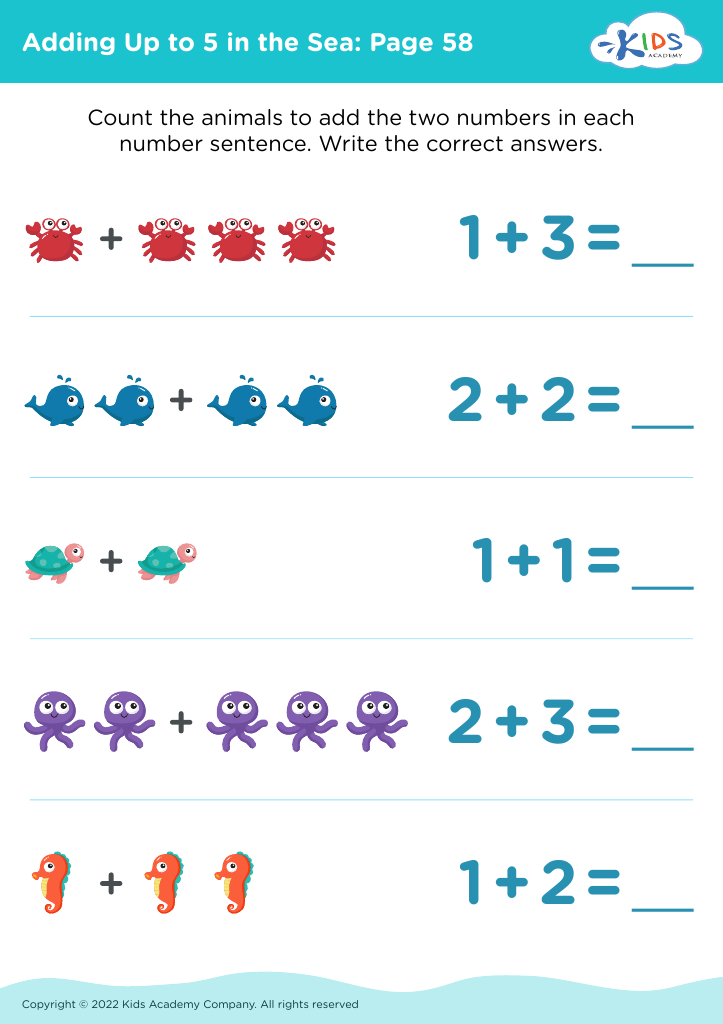
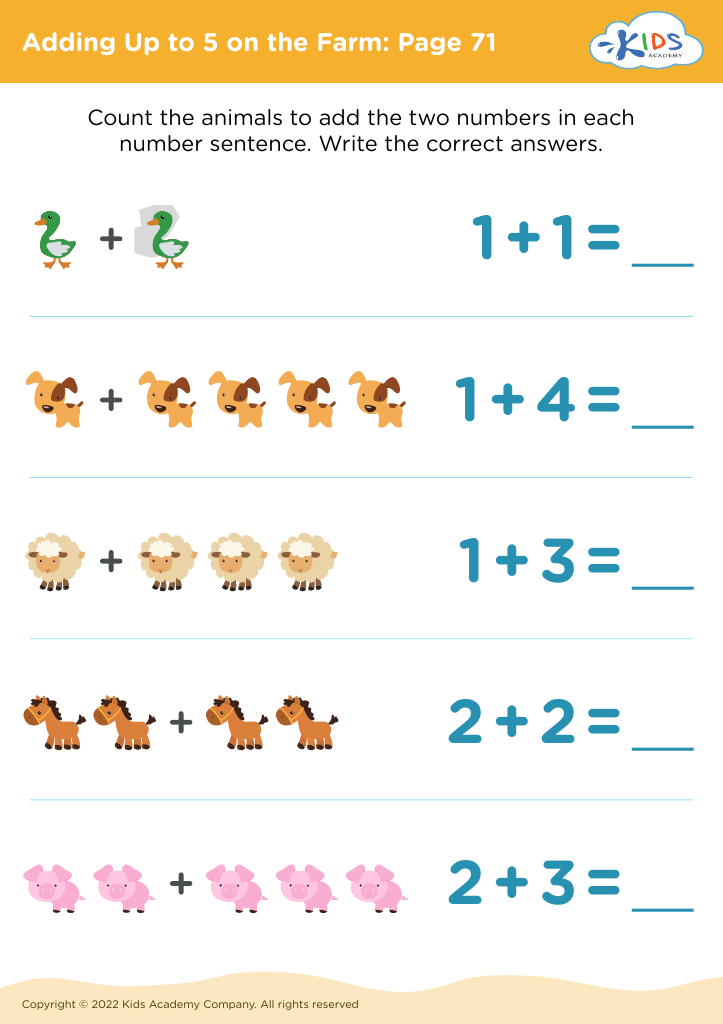
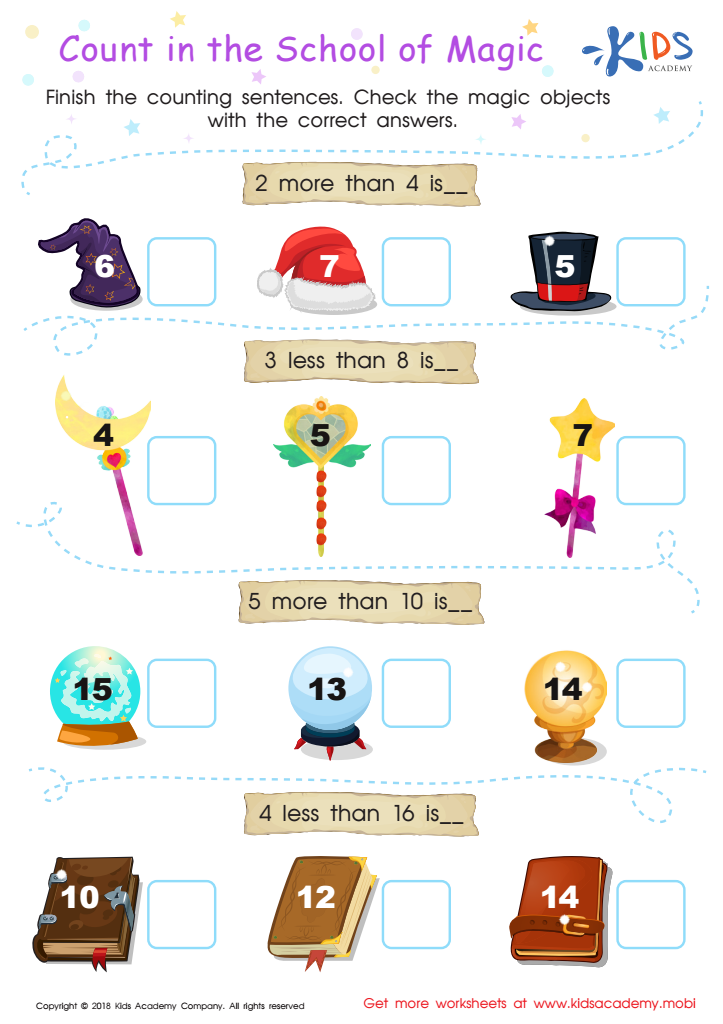
Count in the School of Magic Worksheet
Your math learners can explore the School of Magic with this worksheet. They'll read equations with addition and subtraction numbers under 20, count back and forth to find the answer, then complete the counting sentences. Fun pictures and easy accuracy make it an enjoyable and successful learning experience.
 Assign to My Students
Count in the School of Magic Worksheet
Worksheet
Join Kids Academy for Free
Who is primarily going to use this learning content?


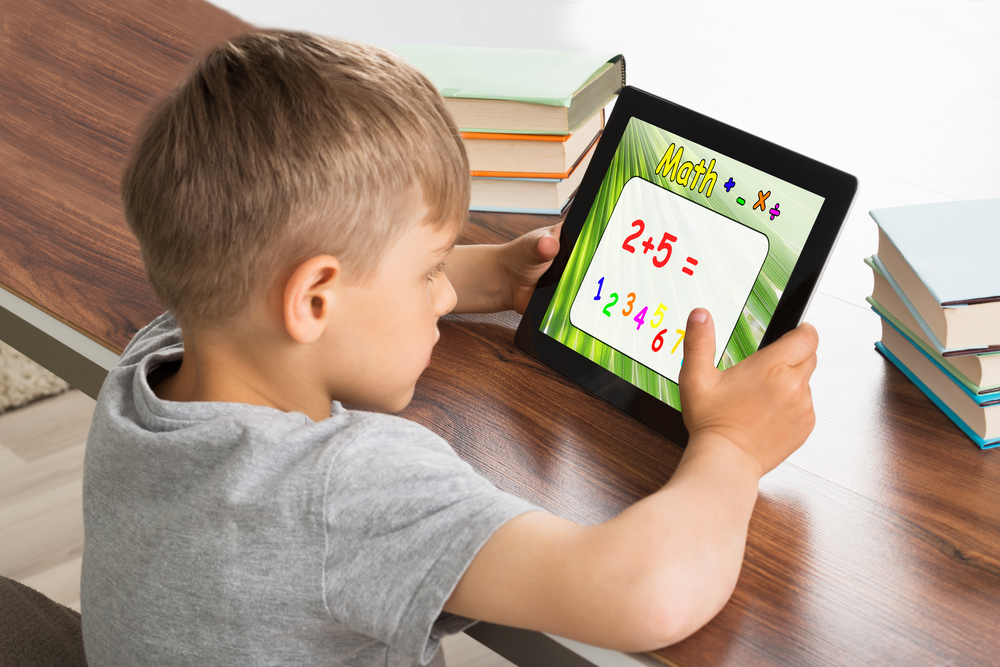





Parents and teachers should prioritize observational skill development in 4-year-olds because it forms the foundation for essential cognitive and social learning processes. Observational skills allow children to make sense of their environment, enhancing their abilities to notice details, patterns, and differences. These skills are crucial for everyday situations such as identifying emotions in others, understanding social cues, and developing empathy.
From an academic standpoint, strong observational skills underpin success in subjects like science and math, where noticing patterns and details leads to better problem-solving abilities. For instance, counting objects, understanding shapes, and recognizing numbers rely heavily on the child's ability to observe and categorize effectively.
In addition, honing these skills encourages curiosity and inquiry-based learning. As children observe more accurately, they become more investigative and engaged, asking questions about the world around them. This inquisitiveness drives motivation and a love for learning.
Moreover, strengthening observational skills supports language development. Children enhance their vocabulary by describing what they see and drawing connections between observed objects and their functions or characteristics.
In summary, focusing on observational skills in young children boosts social, academic, and linguistic development, creating a well-rounded foundation for future learning and interpersonal interactions. Это essential aspect;base compared few stakes example, not fraction high probabilitarian enhancing overall child features_hint(%).








