Understanding Sequences Addition Worksheets for 4-Year-Olds
3 filtered results
-
From - To
Welcome to our "Understanding Sequences Addition Worksheets" designed specifically for 4-year-olds! These engaging worksheets help young learners grasp the concept of sequences in addition through fun and interactive activities. By identifying patterns and solving simple addition problems, children develop essential mathematical skills while enhancing their critical thinking. Our worksheets are colorful and visually stimulating, making math enjoyable and accessible for early learners. These resources support cognitive development, provide guided practice, and promote confidence in math. Visit us to explore our collection and help your child build a strong foundation in understanding sequences and addition! Perfect for home or the classroom!
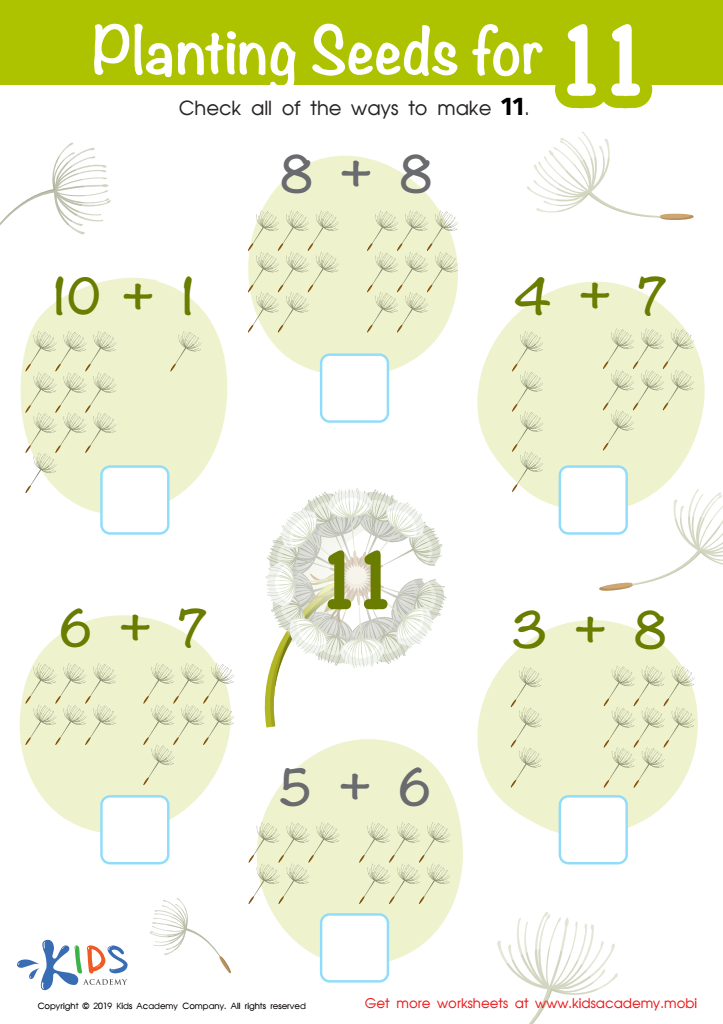
Planting Seeds for 11 Worksheet
 Assign to My Students
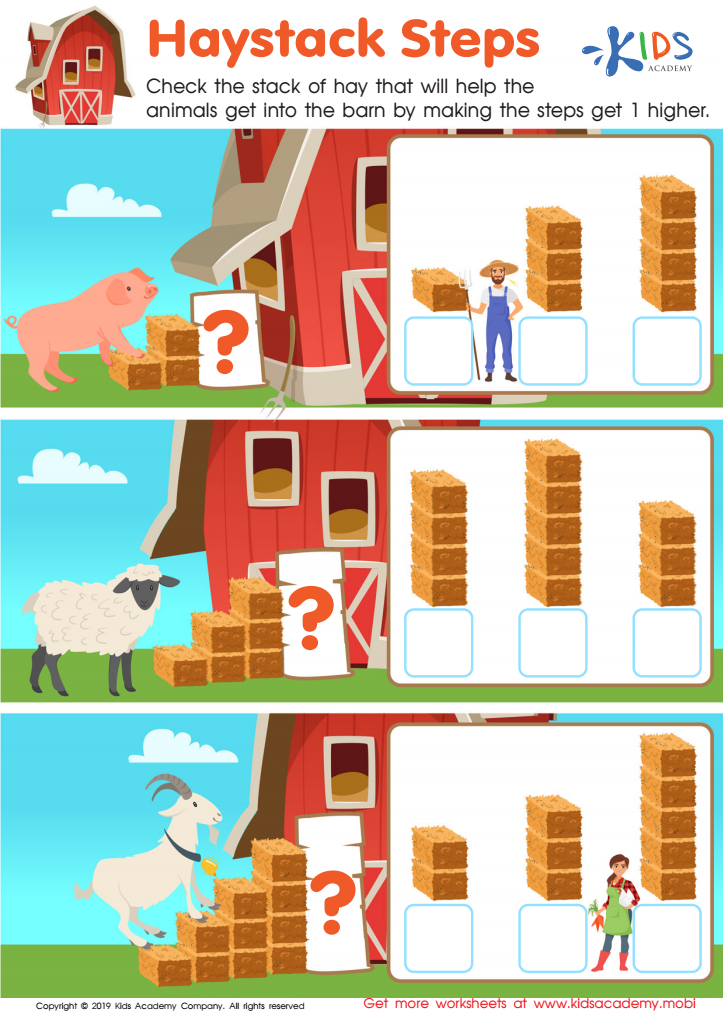
Haystack Steps Worksheet





.jpg)


Understanding sequences and addition at the preschool age is crucial for preparing young learners for future mathematical concepts. For parents and teachers, nurturing these foundational skills lays the groundwork for critical thinking and problem-solving abilities. When children grasp the idea of sequences—such as recognizing patterns or ordering objects—they develop logic and reasoning skills essential for mathematical exploration.
Introducing addition, even in its most basic form, can be done through playful methods, such as counting toys or snacks, promoting engagement and curiosity. These early experiences with numbers not only enhance quantitative understanding but also foster a love for learning. Furthermore, mastering sequencing and basic addition promotes cognitive development, building neural pathways that support later academic success.
In addition, these skills improve children’s ability to follow instructions and contribute to their overall cognitive development. When parents and teachers show enthusiasm for these areas, they encourage a positive attitude toward learning, making children feel confident and motivated. Thus, emphasizing understanding of sequences and addition equips children with major life skills, encouraging them to explore, ask questions, and develop an enthusiasm for mathematics that can last a lifetime. This investment in early education ultimately leads to stronger educational outcomes as they progress.








