
Color recognition Geometry Worksheets for 4-Year-Olds
3 filtered results
Difficulty Level
Grade
Age
-
From - To
Subject
Activity
Standards
Introduce your 4-year-old to the vibrant world of shapes with our Color Recognition Geometry Worksheets! Carefully designed for young learners, these engaging printables blend color identification with basic geometric skills. Children will explore a variety of shapes, mastering color matching, and developing early math abilities. Our fun, educational activities make learning an exciting adventure, nurturing curiosity and confidence in math. With each worksheet, your child will enhance fine motor skills, hand-eye coordination, and cognitive development. Perfect for preschools, homeschooling, or extra practice, Kids Academy’s innovative worksheets offer a solid foundation for future mathematical growth. Download now and watch your little one shine!
Favorites
With answer key
Interactive
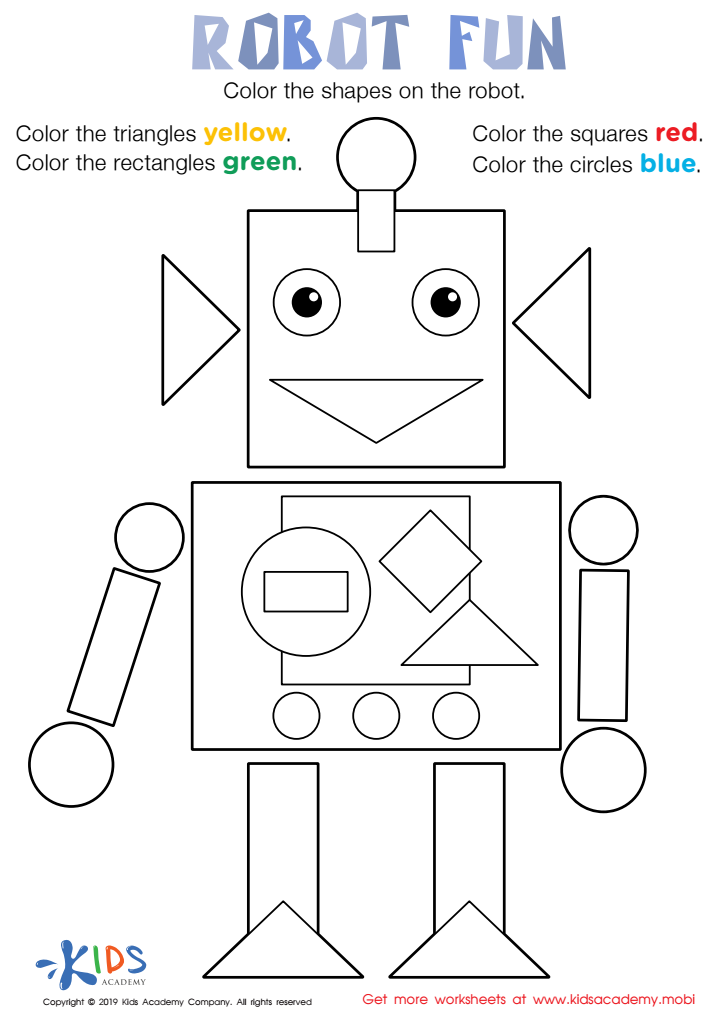
Robot Fun Worksheet
Help your child learn about basic shapes with this fun robot worksheet! Kids practice identifying circles, squares, rectangles and triangles, then color each shape according to directions. Make math practice enjoyable with this coloring page that teaches all four basic shapes - it's an important math skill!
Download (PDF)
 Assign to My Students
Assign to My Students
Robot Fun Worksheet
Worksheet











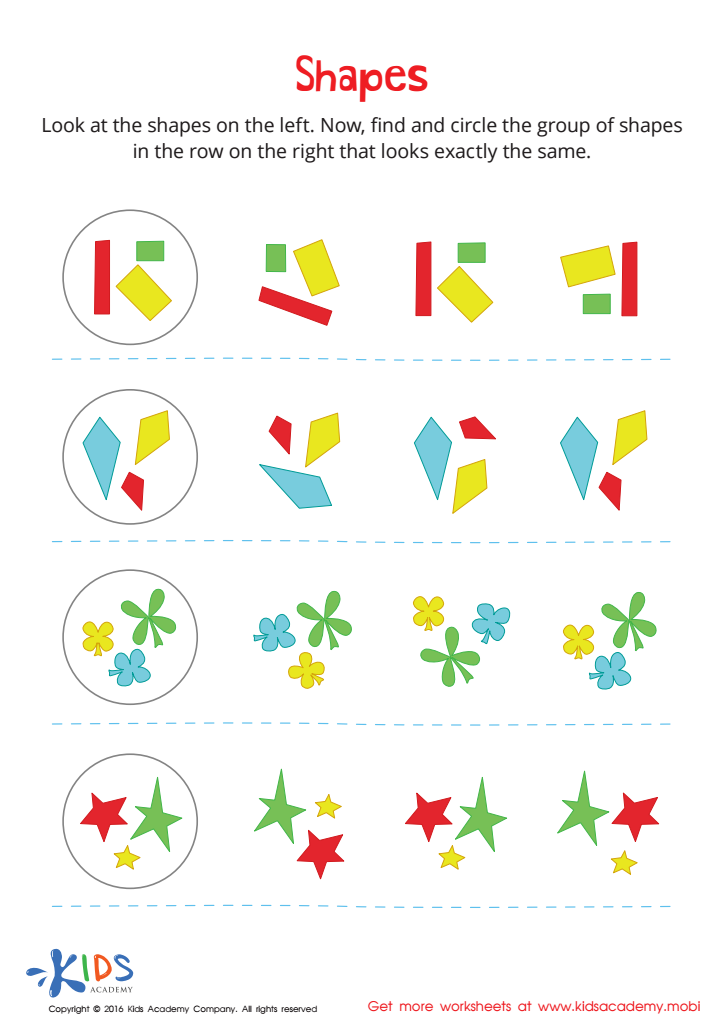
Shapes Worksheet
This fun worksheet will challenge your child to recognize tricky patterns, sort through similar ones, and create strategies to get the right answer. It'll also help them to strengthen problem-solving skills and build confidence. With more challenging tasks, your child will be ready to tackle higher level math and sequencing skills.
Shapes Worksheet
Worksheet
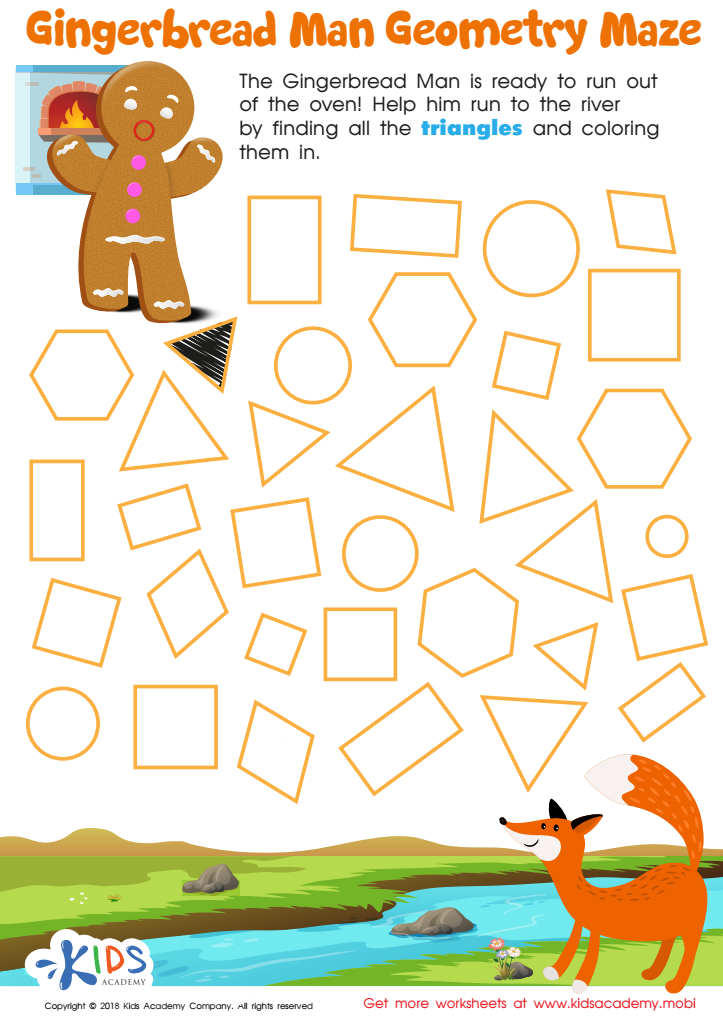
Gingerbread Man Geometry Maze Worksheet
Help a beloved character escape the oven! Kids race through a sea of geometrical shapes, searching for triangles of various sizes. With this free worksheet, they can have fun while learning about similarity of geometrical shapes concepts. Run, run, run as fast as they can!
Gingerbread Man Geometry Maze Worksheet
Worksheet
Join Kids Academy for Free
Who is primarily going to use this learning content?








Color recognition and geometry are fundamental skills that provide a foundation for a child’s overall cognitive development. For 4-year-olds, mastering these skills is more than just being able to name colors and identify shapes—it's about understanding the world around them and building critical thinking skills.
Color recognition enhances visual discrimination, allowing children to notice similarities and differences between objects. This can improve their observational skills and attention to detail, which aids in reading readiness and recognizing patterns. Furthermore, knowing colors can help in other daily tasks such as getting dressed or following traffic signals, making them more independent.
Geometry, on the other hand, introduces concepts of space and structure. When children learn about shapes and their properties, they begin to develop spatial awareness, which is crucial for tasks such as fitting blocks together or navigating their environment. Geometry paves the way for later understanding of more complex math and science concepts. It also builds problem-solving abilities as children experiment with how shapes fit together and form larger pictures.
Thus, parents and educators should care about color recognition and geometry for young children as it fosters key skills that support intellectual growth, critical thinking, and practical everyday activities. Early engagement in these areas sets a robust foundation for future academic and life success.








