
Addition up to 5 Math Worksheets for 4-Year-Olds
4 filtered results
Difficulty Level
Grade
Age
-
From - To
Subject
Activity
Standards
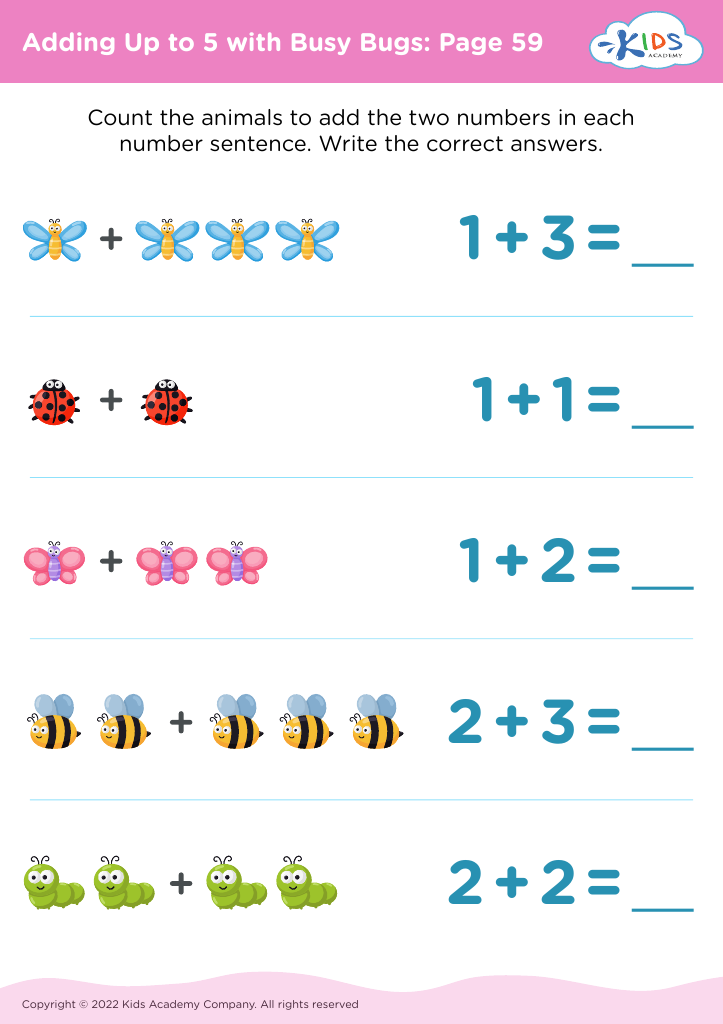
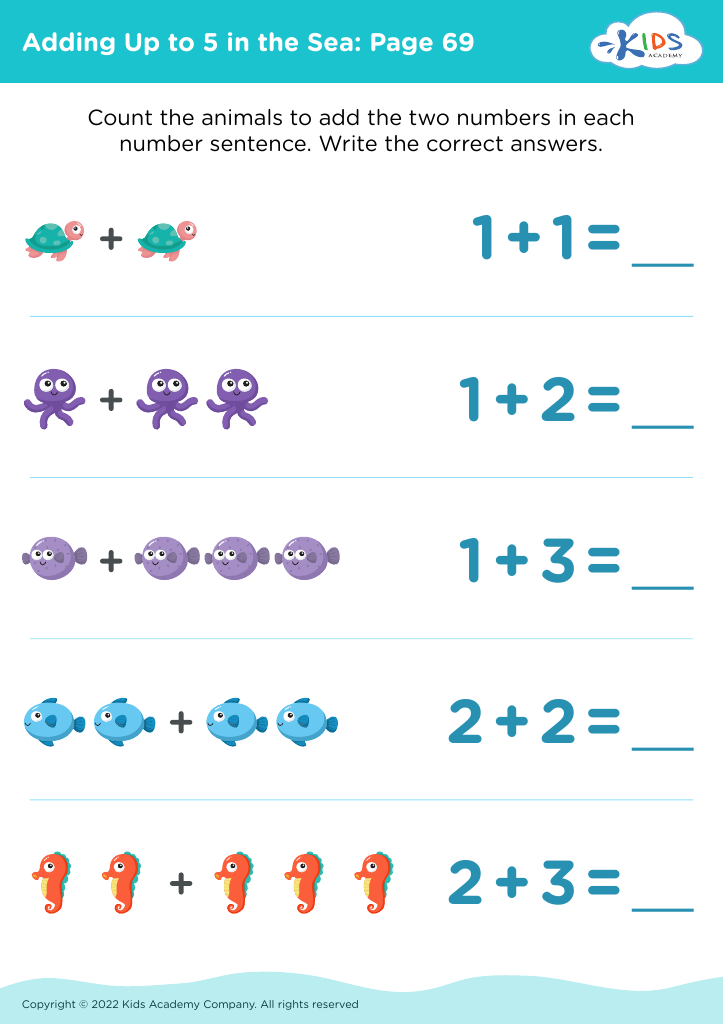
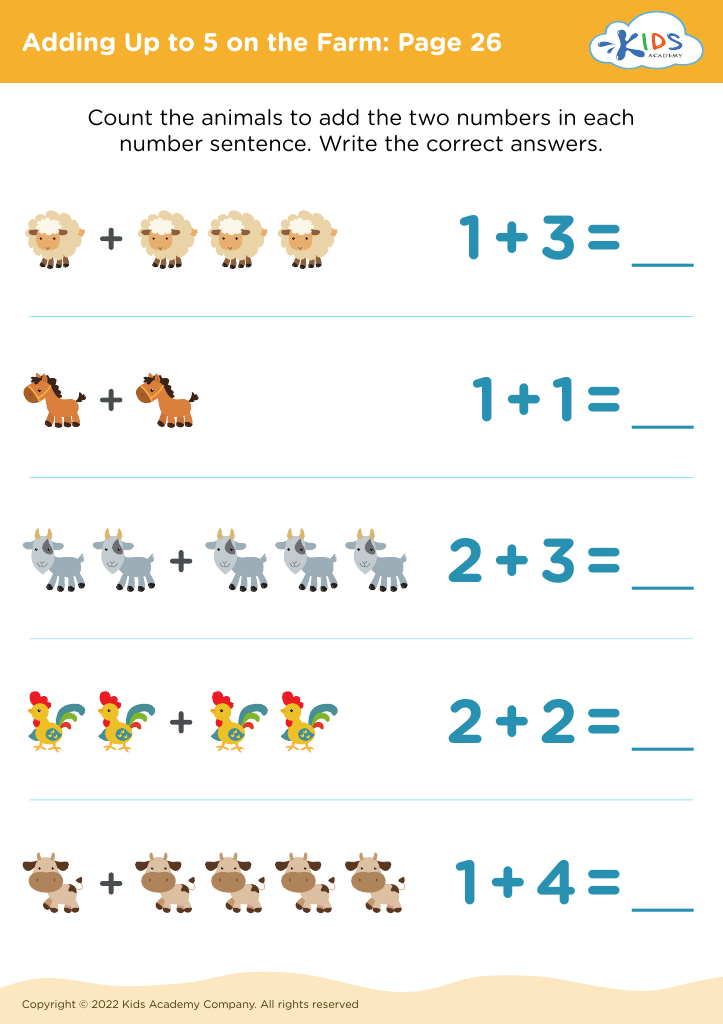
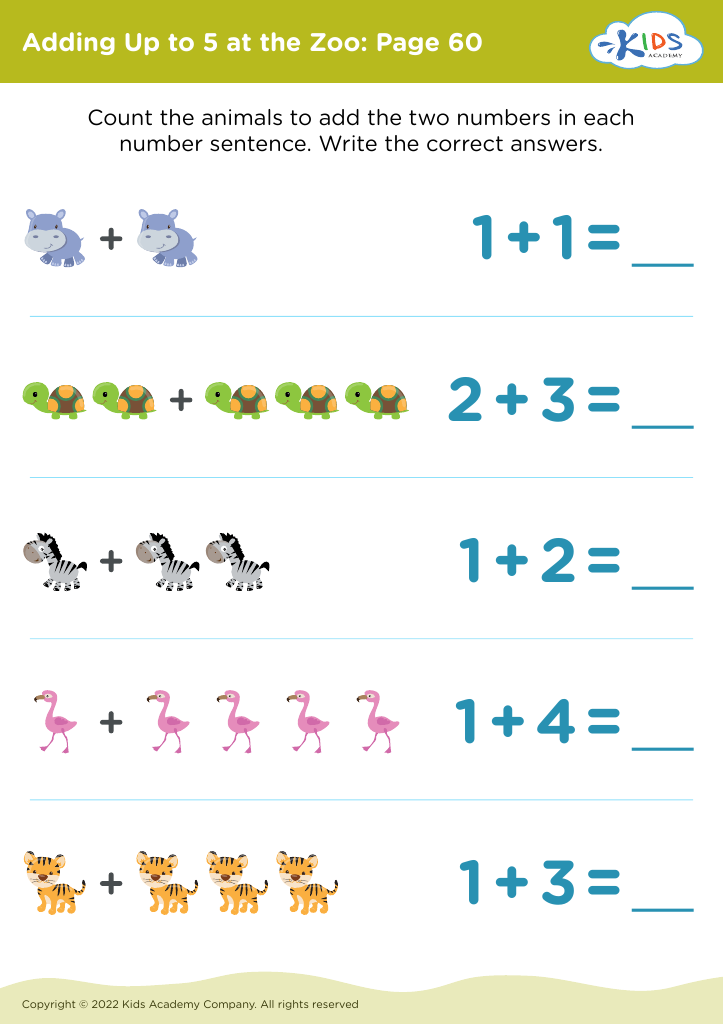
Welcome to our Addition up to 5 Math Worksheets collection for 4-year-olds! Designed to introduce young learners to the concept of addition, these engaging worksheets feature fun illustrations and interactive activities that make math enjoyable. With a focus on grasping the fundamentals of adding numbers up to 5, children will develop critical thinking and problem-solving skills. These printable resources are perfect for home or classroom use, providing opportunities for hands-on learning. Watch as your little one builds confidence in math while enhancing their early numeracy skills. Explore our collection today and make learning addition an exciting adventure!
Favorites
With answer key
Interactive
Join Kids Academy for Free
Who is primarily going to use this learning content?








Teaching addition up to 5 for 4-year-olds is crucial for several reasons. Firstly, it lays a strong foundation for early math skills. Understanding basic addition helps children develop their number sense, which is essential for later mathematical concepts such as subtraction, multiplication, and even basic algebra.
Moreover, engaging children in addition through playful activities fosters cognitive development. It allows them to manipulate physical items—like counting fruits or toys—which enhances their understanding of quantities and relationships. This hands-on learning bolsters problem-solving skills and critical thinking, encouraging children to explore and discover solutions on their own.
Additionally, math at this early stage supports language development. Conversations around numbers and operations enrich vocabulary and comprehension. As they learn to articulate their thought processes, their confidence grows, helping to build a positive attitude toward learning.
Promoting addition skills can also be a delightful bonding experience between parents and children. Through games and everyday activities, children can explore math in a fun, relaxed environment. Teachers and parents play pivotal roles in creating this enriching experience, ultimately setting the stage for a lifelong appreciation of learning and academic success.








