Developing problem-solving skills Math Worksheets for 4-Year-Olds
3 filtered results
-
From - To
Our "Developing Problem-Solving Skills Math Worksheets for 4-Year-Olds" are designed to ignite young minds and foster a love for math through engaging activities. Each worksheet is meticulously crafted to offer age-appropriate challenges that boost critical thinking and computational abilities. By focusing on patterns, basic arithmetic, and logical reasoning, these worksheets make learning math a fun and interactive experience. Whether at home or in the classroom, these printables provide a solid foundation for future math success. Equip your little learner with the tools they need to confidently tackle math problems with creativity and ease. Explore our collection today!
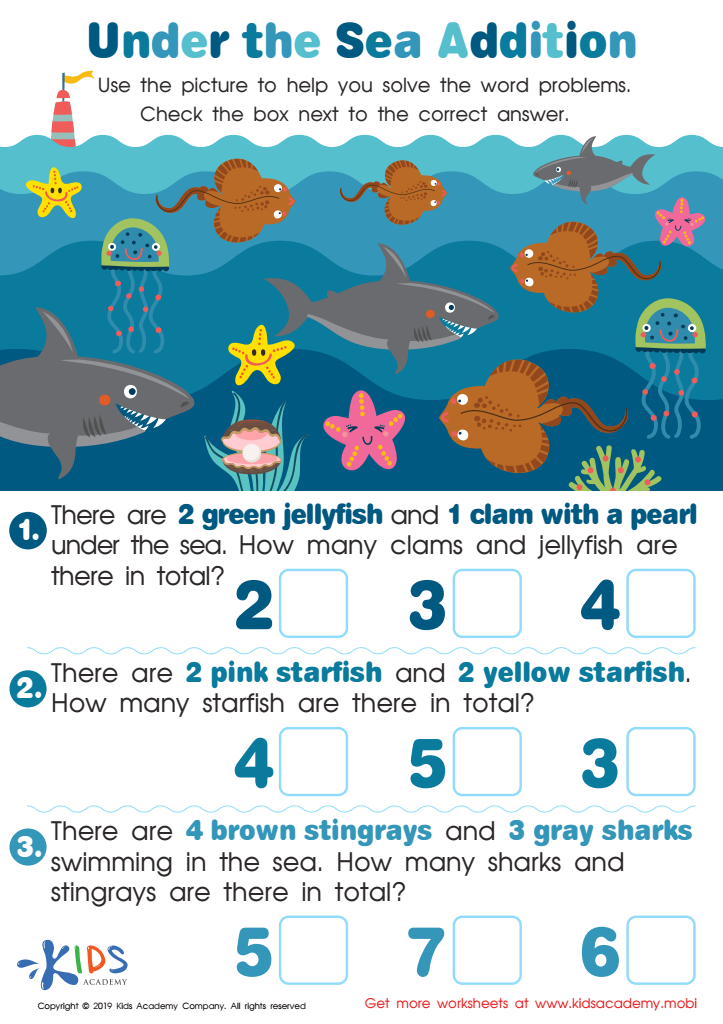
Under the Sea Addition Worksheet
 Assign to My Students
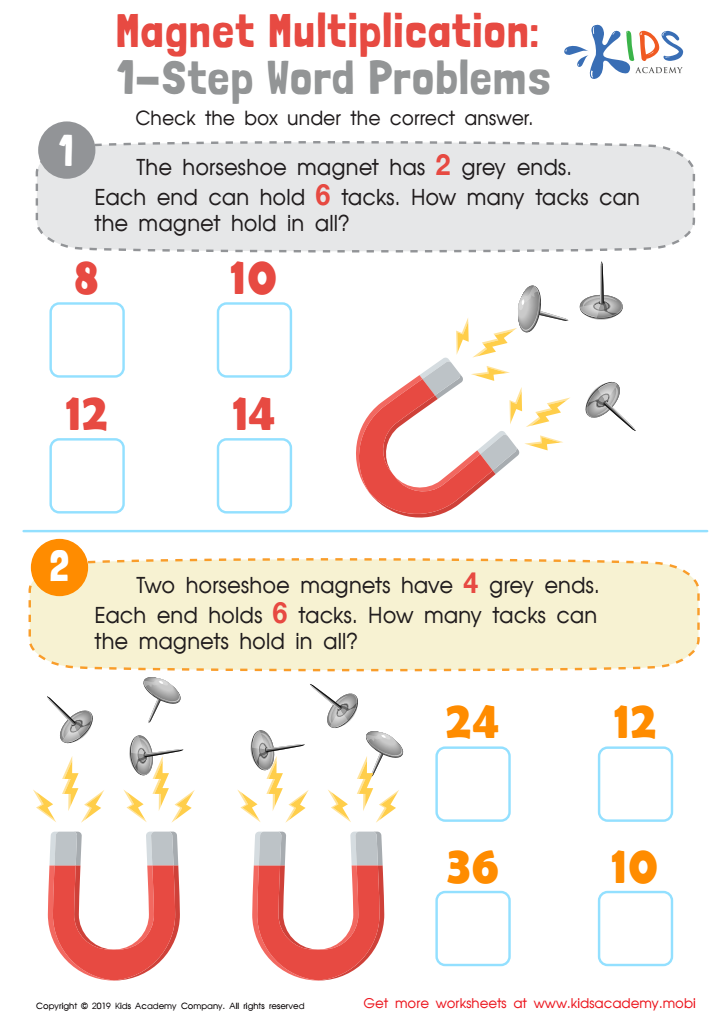
Magnet Multiplication: 1-Step Word Problems Worksheet








Developing problem-solving skills in math for 4-year-olds is crucial for several reasons. At this young age, children's brains are incredibly adaptable and capable of forming new connections, making it an ideal time to introduce foundational math concepts. Problem-solving activities enhance critical thinking, encouraging children to explore, question, and understand the world around them. These skills go beyond numbers; they promote logical reasoning and creativity, helping kids navigate everyday challenges effectively.
For parents and teachers, fostering these skills early on sets the stage for future academic success. Children who develop strong problem-solving abilities are more likely to excel in math and other subjects throughout their educational journey. They learn to approach problems with a positive mindset, fostering resilience and perseverance—traits essential for lifelong learning.
Moreover, math problem-solving activities often involve collaboration and communication. When children work together on puzzles or games, they learn to articulate their thoughts, listen to others, and work as a team. This enhances social skills and emotional intelligence, which are equally vital for personal and academic growth.
In summary, developing problem-solving skills in math for young children builds a strong academic foundation, encourages a growth mindset, and enhances social and emotional development, preparing them for future success in various aspects of life.








