Financial literacy Math Worksheets for 4-Year-Olds
4 filtered results
-
From - To
Enhance your child's early education with our Financial Literacy Math Worksheets for 4-Year-Olds at Kids Academy. These engaging worksheets are designed to introduce young learners to basic financial concepts in a fun, age-appropriate way. From counting coins to understanding simple transactions, our printable activities make learning about money both enjoyable and educational. By building foundational skills in financial literacy early, your child will gain confidence and a better understanding of everyday math. Empower your preschooler with the tools they need for future success. Explore our diverse collection of worksheets and start your financial literacy journey today!
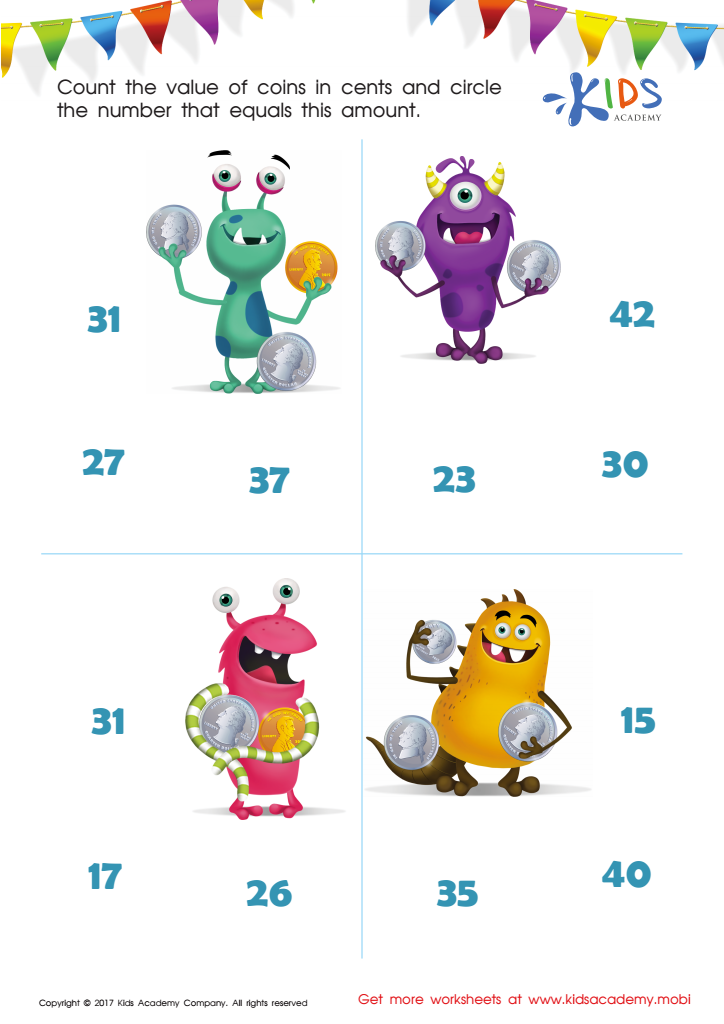
How Many Coins Money Worksheet
 Assign to My Students
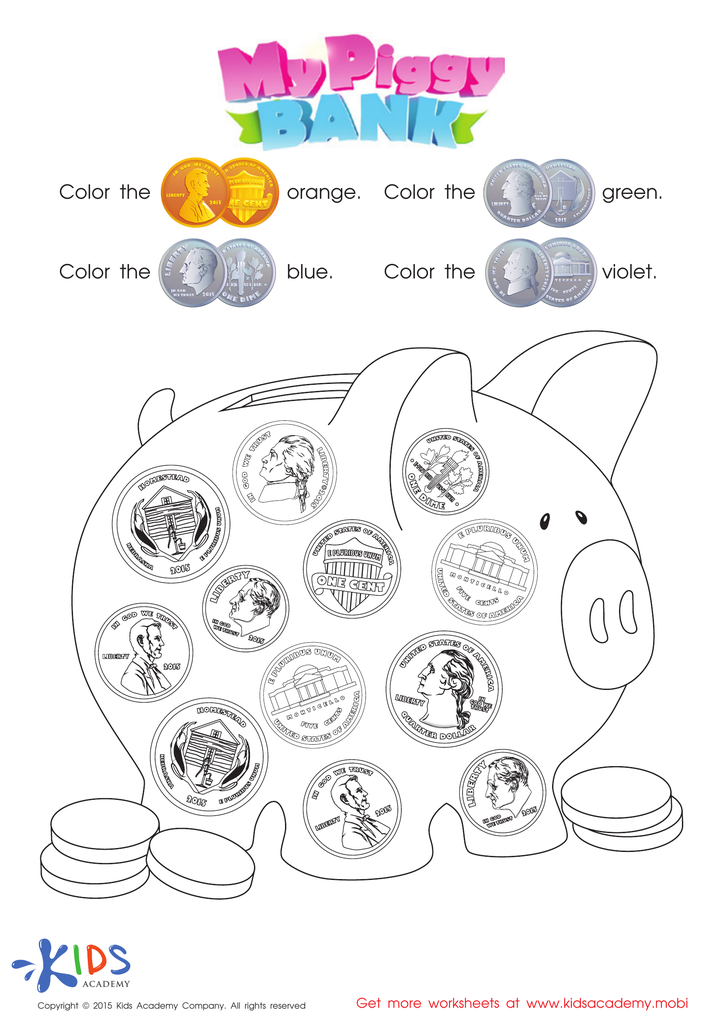
Recognizing Money Money Worksheet
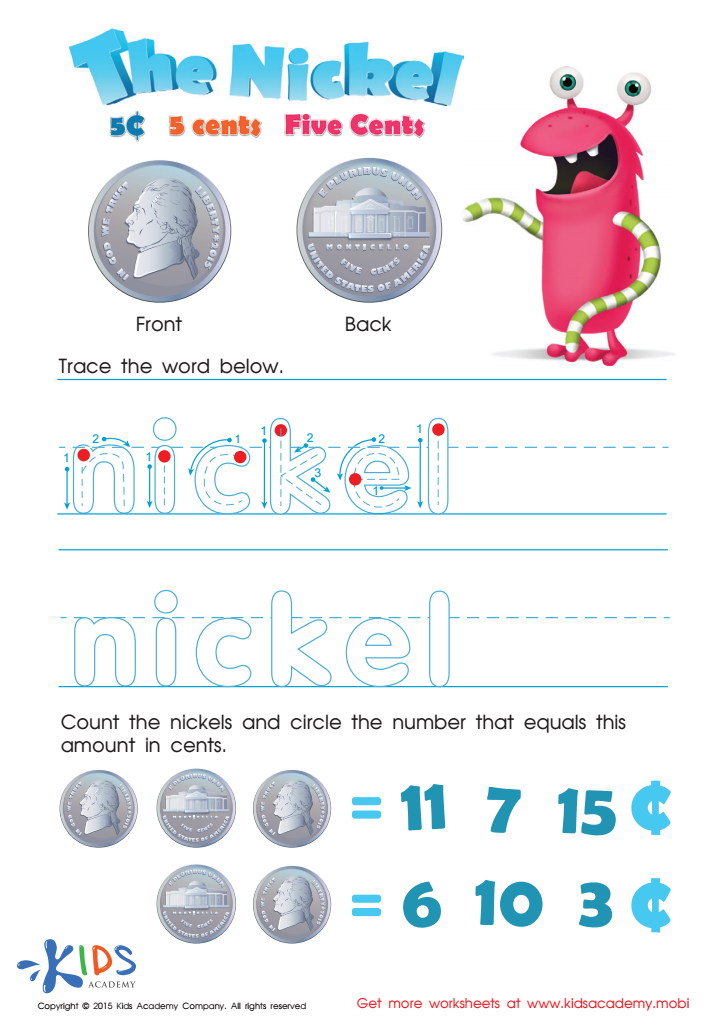
Five Cents or the Nickel Money Worksheet
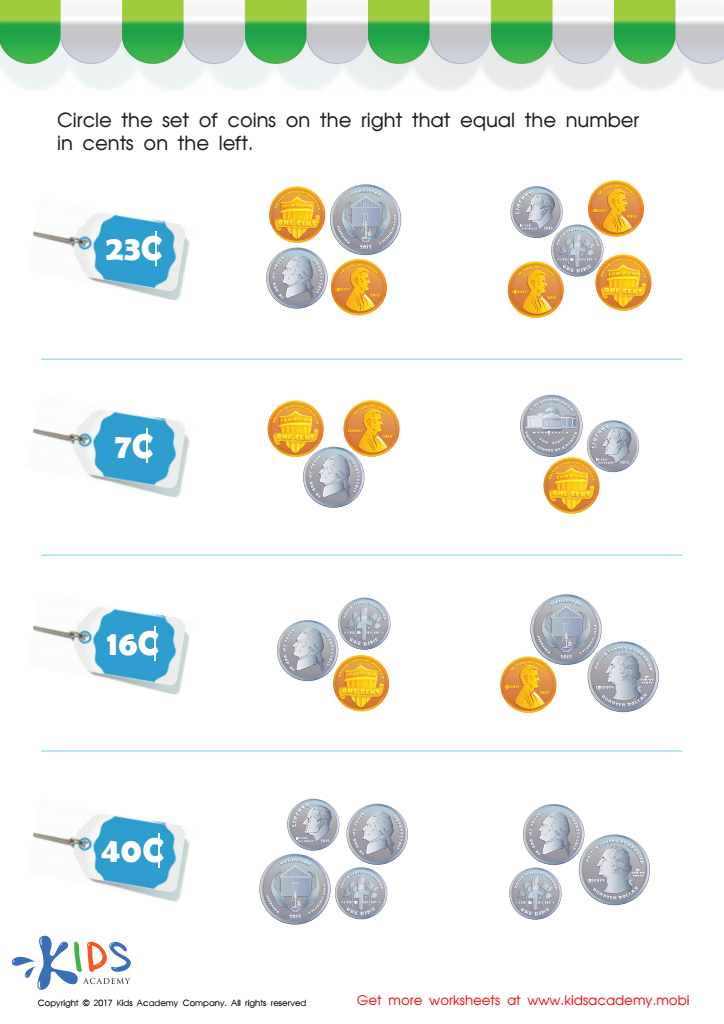
Picking the Coins You Need Money Worksheet








Introducing financial literacy to 4-year-olds might sound premature, but it lays a crucial foundation for their future financial well-being. Early exposure to basic financial concepts equips children with essential skills like counting, recognizing numbers, understanding values, and making smart choices, which are all integral parts of financial literacy math. Engaging them in age-appropriate activities, such as playing store games or counting coins, helps foster these skills in a fun and relatable manner.
Parents and teachers play a pivotal role in this early education. By incorporating simple financial concepts into daily routines, like explaining the purpose of saving or differentiating between wants and needs, adults can help children develop a healthy attitude towards money. This early understanding can prevent financial missteps in the future and encourage responsible money habits, such as saving and budgeting.
Moreover, financial literacy at a young age strengthens other academic skills. For instance, engaging with money-related problems enhances mathematical abilities and critical thinking, reinforcing what they learn in school. Social skills also improve as children negotiate, take turns, and communicate about financial decisions with peers and adults.
In essence, teaching financial literacy math to young children sets the stage for a lifetime of informed and responsible financial behavior, benefiting their academic, social, and personal development.








