Mental math practice Math Worksheets for 4-Year-Olds
7 filtered results
-
From - To
Boost your child's numerical confidence with our vibrant Mental Math Practice Worksheets, specially crafted for 4-year-olds! Our expertly designed sheets make learning fun through engaging activities that build foundational mathematical skills. Young learners will enjoy solving colorful problems that enhance their addition, subtraction, and number recognition abilities. Each worksheet is tailored to fit early learning stages, offering an enjoyable way to develop essential mental math skills. With our thoughtfully curated exercises, your preschooler will develop counting proficiency and a love for numbers. Give your child a head start on their mathematical journey with our delightful and effective practice worksheets!
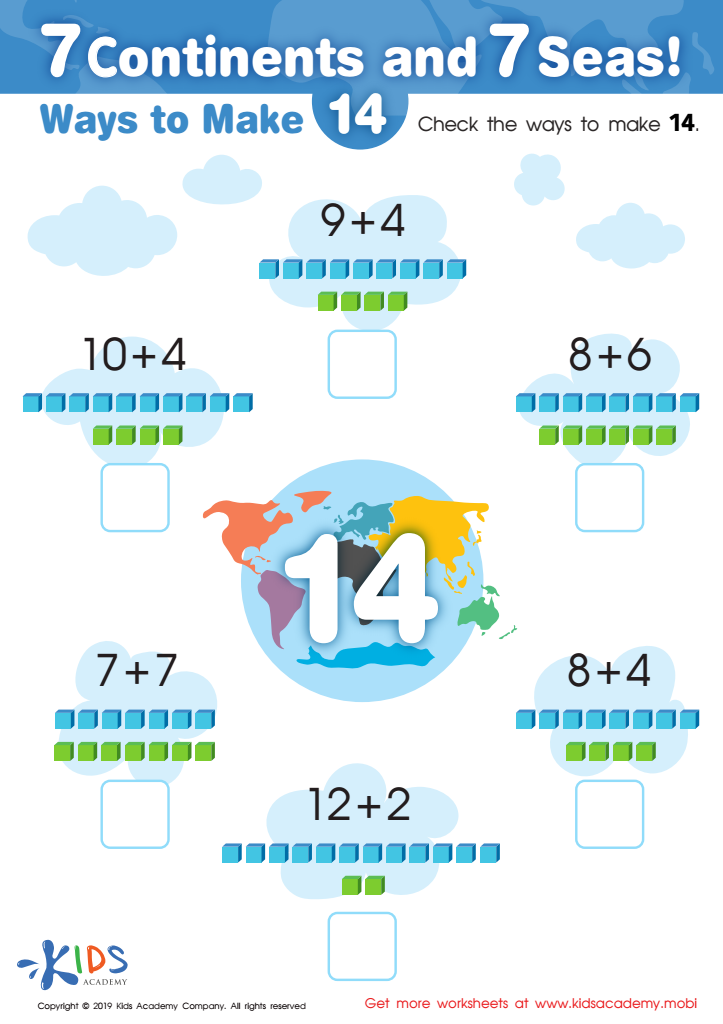
7 Continents and 7 Seas Worksheet
 Assign to My Students
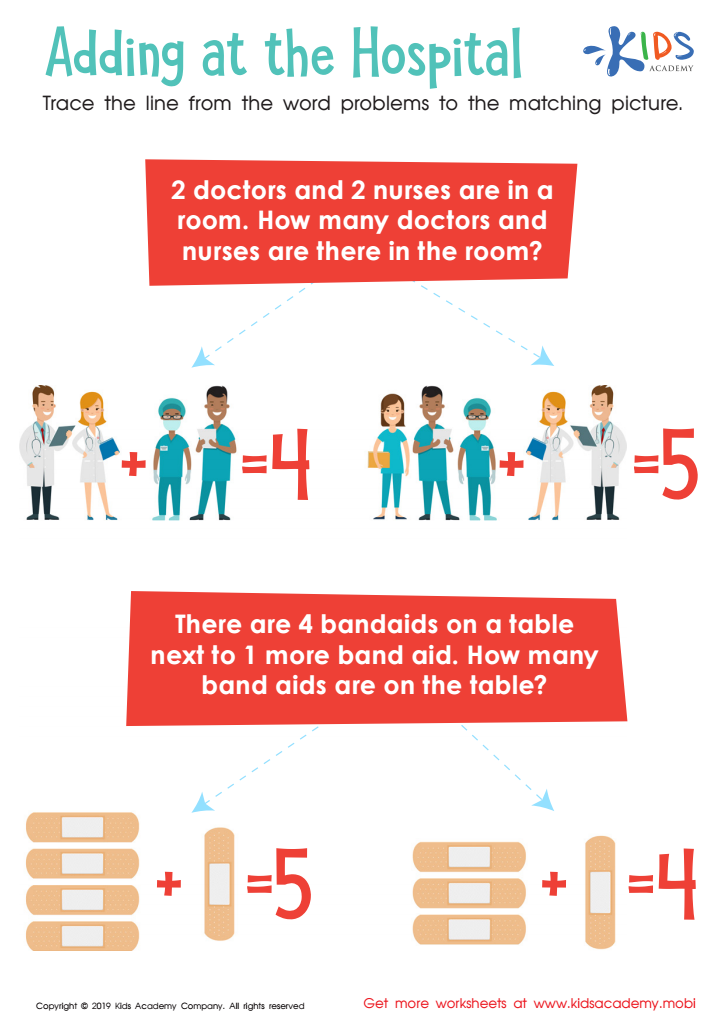
Adding at the Hospital Worksheet
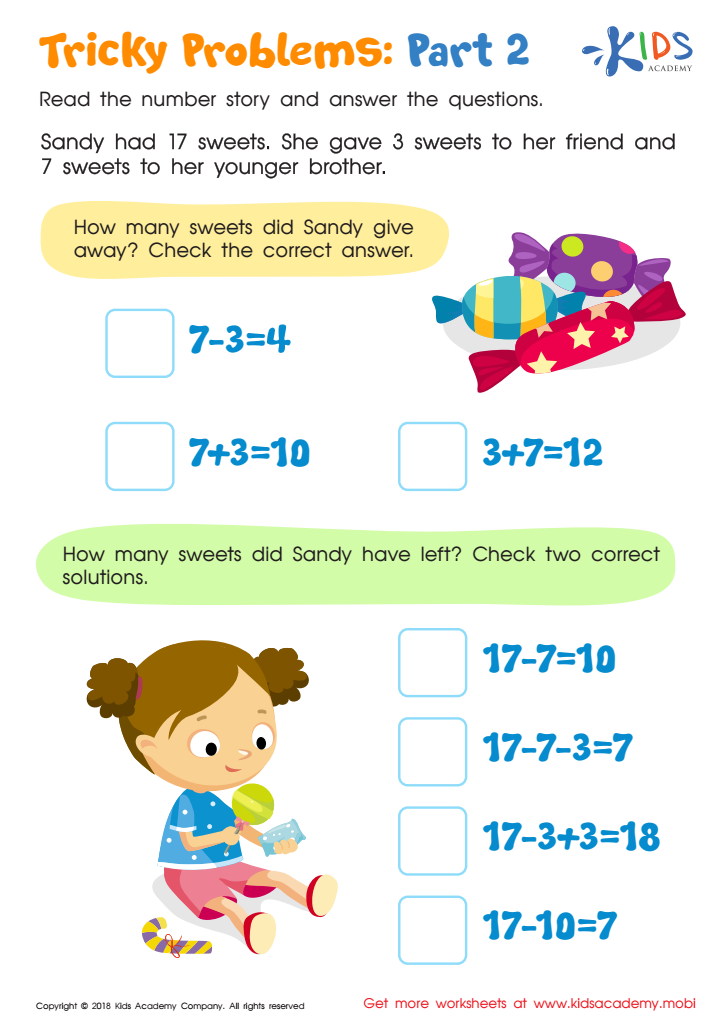
Tricky Problems Worksheet: Part 2
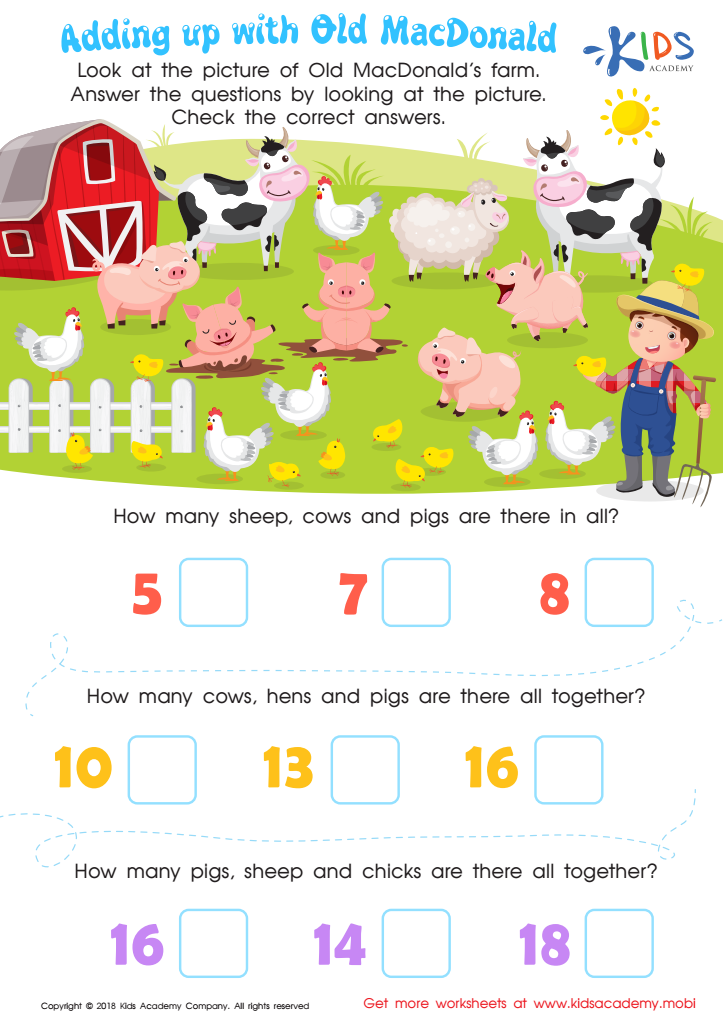
Adding Up with Old MacDonald Worksheet
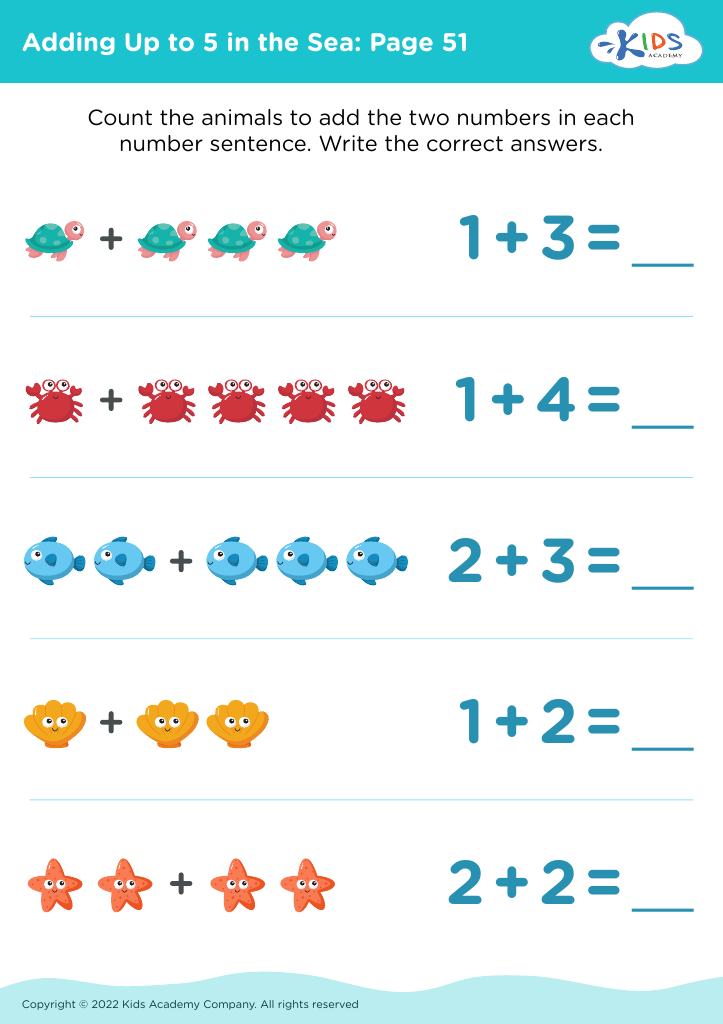
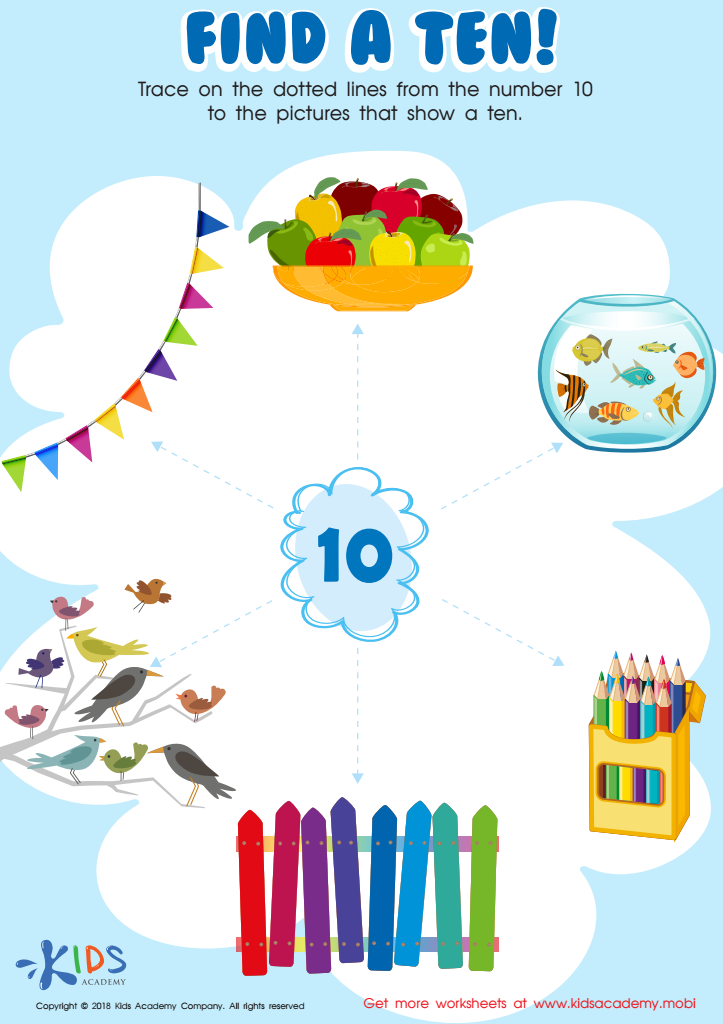
Kindergarten Math Worksheet: Find a Ten
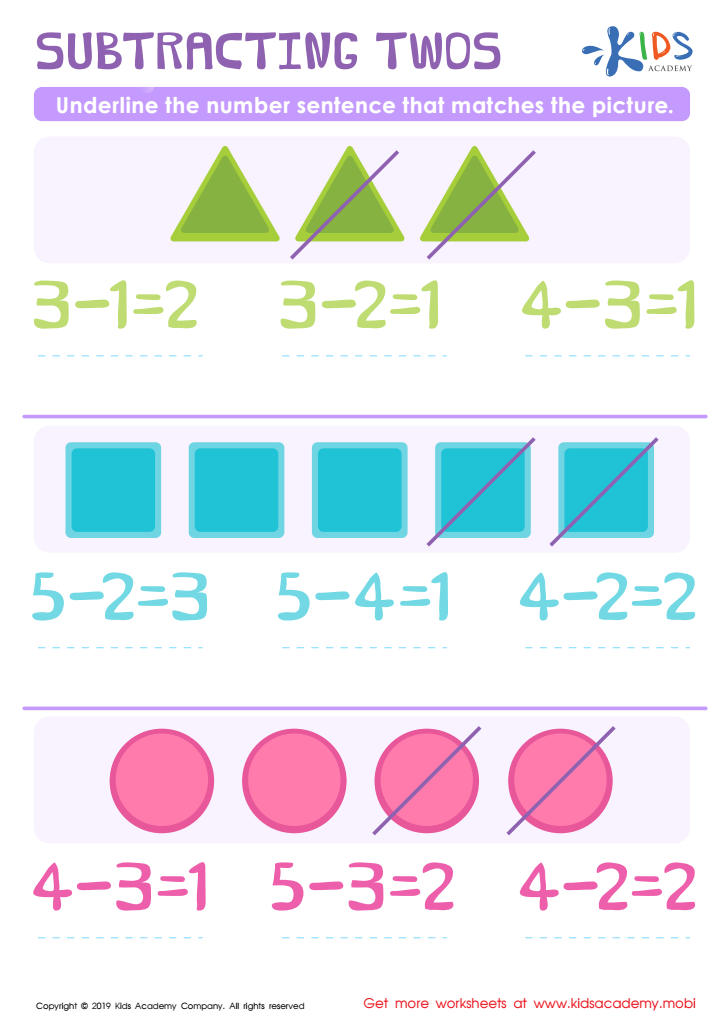
Subtracting Twos Worksheet






.jpg)
Mental math practice for 4-year-olds plays a crucial role in their cognitive and academic development, and parents and teachers should place significant emphasis on it. At this impressionable age, children's brains are highly adaptable and capable of rapid learning. Introducing mental math helps develop critical thinking skills, problem-solving abilities, and enhances their numerical fluency.
Young children engaging in mental math activities are more likely to develop a strong mathematical foundation, making future learning more accessible and enjoyable. These skills promote confidence and a positive attitude toward math, which can be invaluable throughout their educational journey. Moreover, practice in mental calculations enhances memory, concentration, and cognitive flexibility.
Mental math exercises also support other aspects of development, such as language and social skills. For instance, discussing math problems encourages the use of specific vocabulary and improves instructional listening capabilities. Engaging in group math activities in the classroom fosters cooperation and improves communication among peers.
In an increasingly data-driven world, early introduction to mental math equips children with essential life skills. Whether shopping, budgeting, or understanding statistical information, a solid grasp of mental arithmetic is indispensable. By investing time in mental math practice, parents and teachers are essentially laying down the groundwork for the future academic and practical success of their children.








