
Number counting Math Worksheets for 4-Year-Olds
3 filtered results
Difficulty Level
Grade
Age
-
From - To
Subject
Activity
Standards
Discover engaging Number Counting Math Worksheets designed specifically for 4-year-olds! Our collection features vibrant, age-appropriate activities that make learning numbers fun and interactive. Your little ones will practice counting objects, matching numbers to groups, and developing their number recognition skills. Each worksheet encourages hands-on learning while enhancing fine motor skills through tracing and coloring exercises. With easy-to-follow instructions and entertaining themes, these worksheets are perfect for parents and educators looking to foster a love for math from an early age. Explore our resources and watch your child's confidence in numbers grow as they embark on this exciting educational journey!
Favorites
With answer key
Interactive
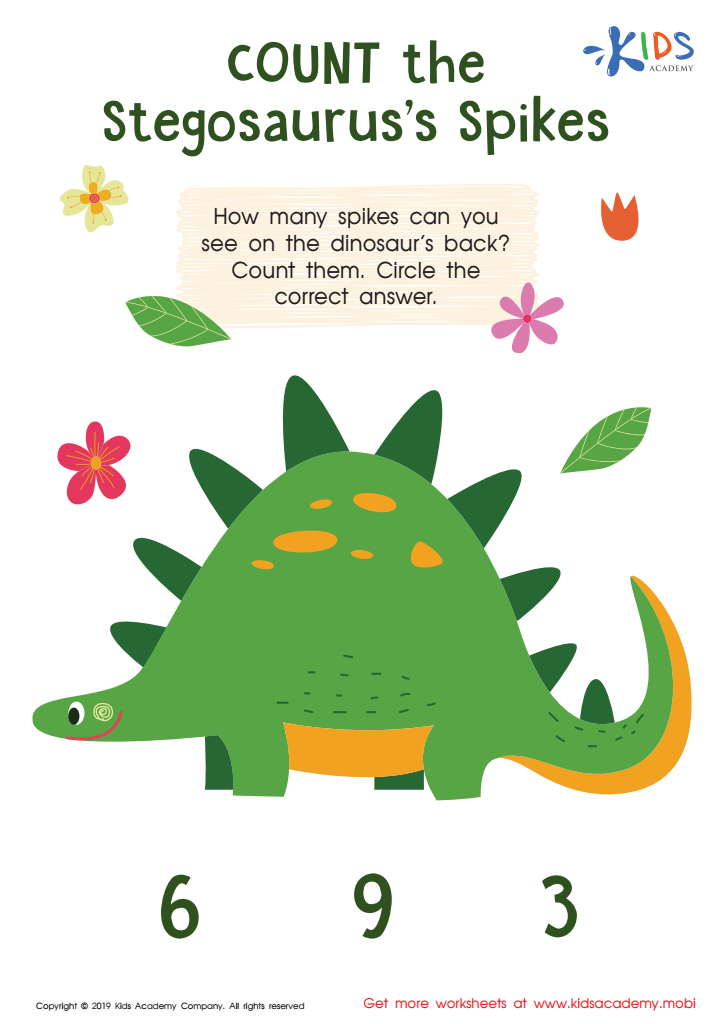
Count the Stegosaurus's Spikes Worksheet
Dinosaurs walked the earth long before humans, meaning no contact was made before they became extinct. Scientists have used research and diggings to find out about these animals, even giving them names. In this worksheet, help your students count the spikes on the stegosaurus and circle the correct answer.
 Assign to My Students
Count the Stegosaurus's Spikes Worksheet
Worksheet
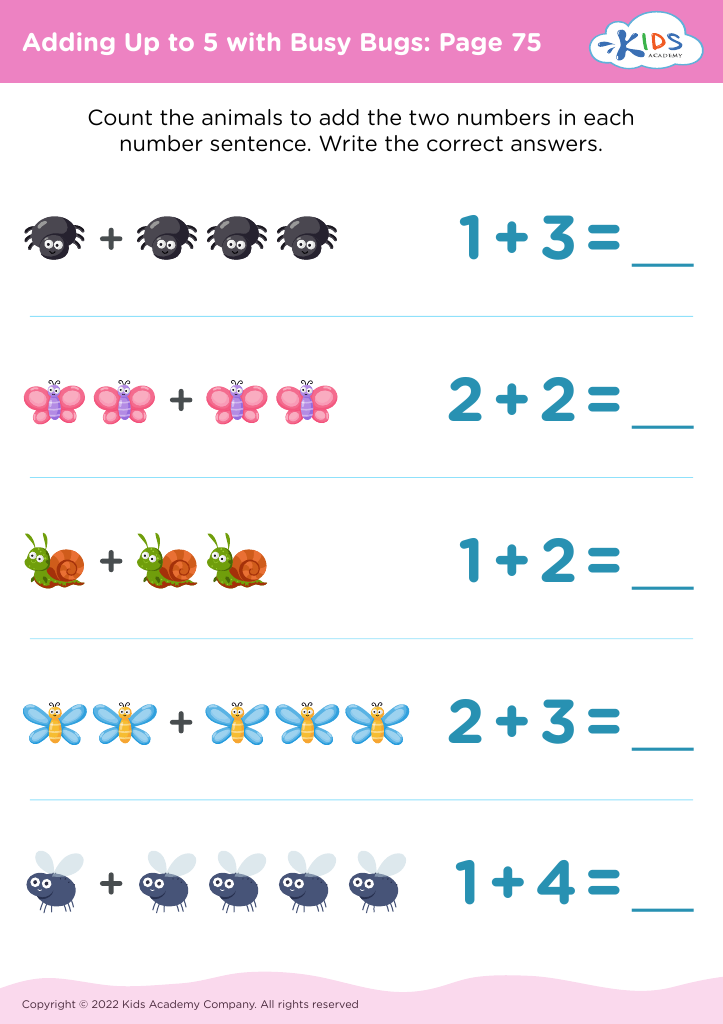
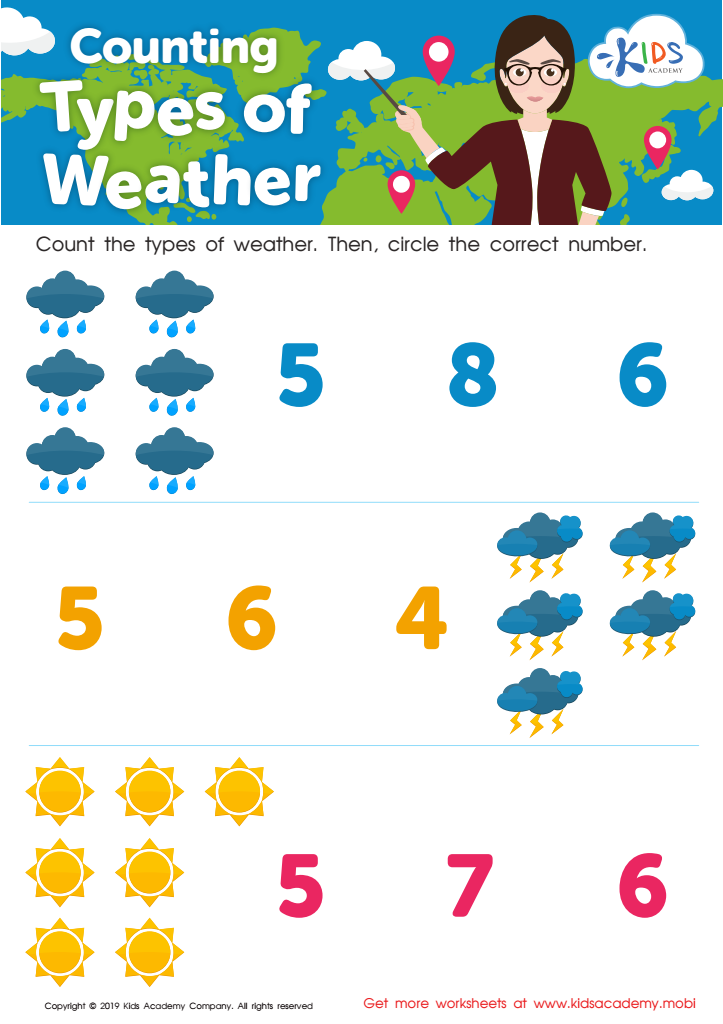
Counting Types of Weather Worksheet
Have your students look outside and tell you the weather today. Get kindergartners thinking by asking them to name different types of weather. Point to each one in the picture and get them to tell you what it is. Then, have them count the types and circle the number.
Counting Types of Weather Worksheet
Worksheet
Join Kids Academy for Free
Who is primarily going to use this learning content?








Counting and number recognition are foundational skills for young children that significantly impact their mathematical understanding and overall cognitive development. For 4-year-olds, engaging with number counting is crucial as it helps to build numeracy skills, essential for future math learning. Early exposure to counting fosters curiosity and a sense of mathematical reasoning, enabling children to notice patterns, make connections, and develop problem-solving abilities.
Moreover, counting activities enhance fine motor skills as children often use physical objects, like blocks or beads, to practice. Such hands-on experiences connect math to real-world contexts, making learning enjoyable and relatable. Counting also promotes language development, as children learn to articulate numbers and concepts related to quantity, which aids in vocabulary expansion.
For parents and teachers, incorporating counting into daily activities—like counting steps, toys, or snack items—creates a rich learning environment. This learning strategy supports early number sense, paving the way for more complex arithmetic concepts in later grades. Ultimately, caring about number counting at this age lays the groundwork for a child’s academic success and confidence in math, instilling lifelong skills that will serve them well in various aspects of life.








