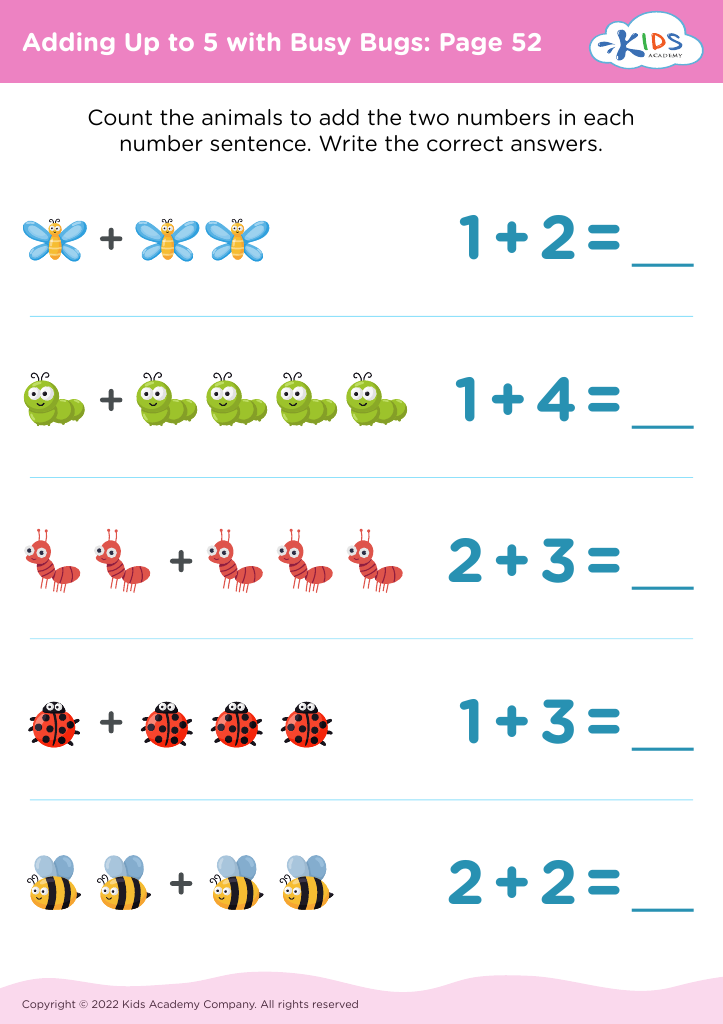








Problem-solving skills in math are crucial for 4-year-olds, as they form the foundation for critical thinking and reasoning abilities. At this age, children are naturally curious and enthusiastic about exploring their environment, making it the perfect time to introduce math concepts through playful activities. Engaging in problem-solving tasks fosters cognitive development, helping children learn how to identify problems, analyze situations, and devise strategies to find solutions.
Parents and teachers should care because these skills not only enhance mathematical understanding but also cultivate important life skills. Learning to approach problems systematically boosts a child's confidence and resilience, preparing them for future academic challenges. Math problem solving promotes collaboration and communication when working with peers, essential for social development.
Incorporating math-related activities into daily routines—such as counting objects, sorting shapes, or solving simple puzzles—embeds math into everyday life. This integration makes learning more meaningful and enjoyable. By emphasizing problem-solving skills in early education, parents and teachers can help children develop a positive attitude towards math, laying the groundwork for lifelong learning and success in various fields. Thus, nurturing these skills at a young age is an investment in a child's holistic development and future potential.








