
Spatial reasoning Math Worksheets for 4-Year-Olds
8 filtered results
Difficulty Level
Grade
Age
-
From - To
Subject
Activity
Standards
Unlock your child's potential with our engaging spatial reasoning math worksheets for 4-year-olds! Expertly crafted, these worksheets encourage young learners to develop critical thinking and problem-solving skills. Through fun exercises involving shape recognition, patterns, and spatial relations, your child will enhance their ability to visualize and manipulate objects mentally. Designed to capture and retain a child's interest, our printable activities make learning enjoyable and effective. Perfect for both home and classroom use, these foundational tools set the stage for future success in math and beyond. Explore our collection today and help your child build a strong spatial reasoning foundation!
Favorites
With answer key
Interactive
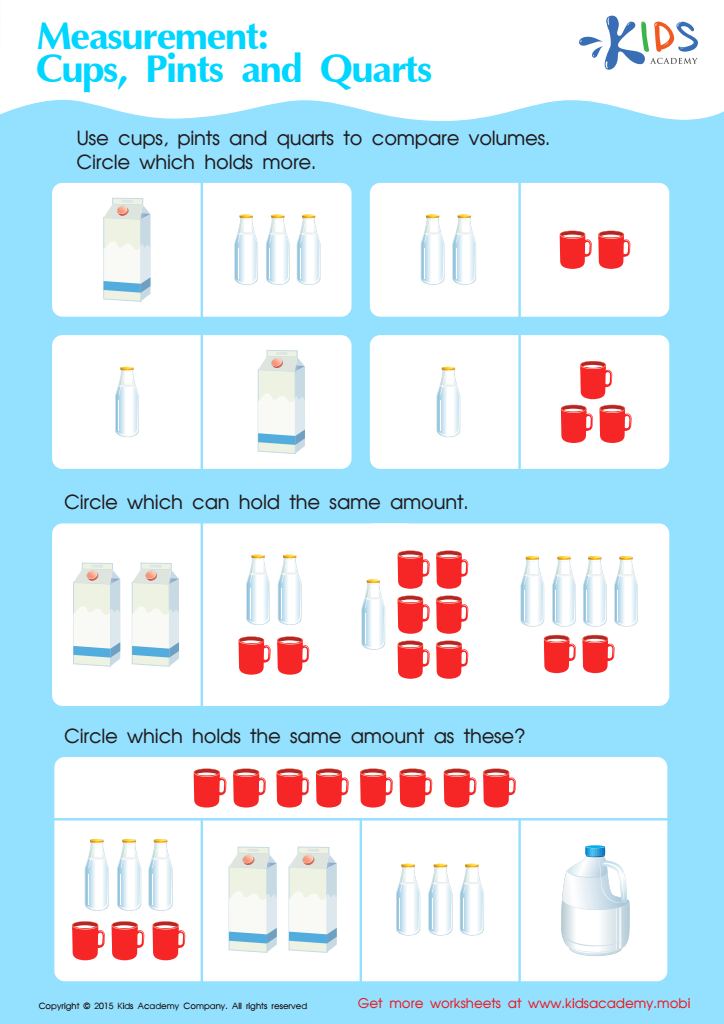
Measurement: Compare Volumes Worksheet
Compare volumes with Kids Academy and have fun! (80 words)
Practice measuring with Kids Academy and have fun! Compare volumes in pictures and circle which holds more. Keep learning with free math worksheets available on our website. Enjoy the process and have fun!
 Assign to My Students
Measurement: Compare Volumes Worksheet
Worksheet
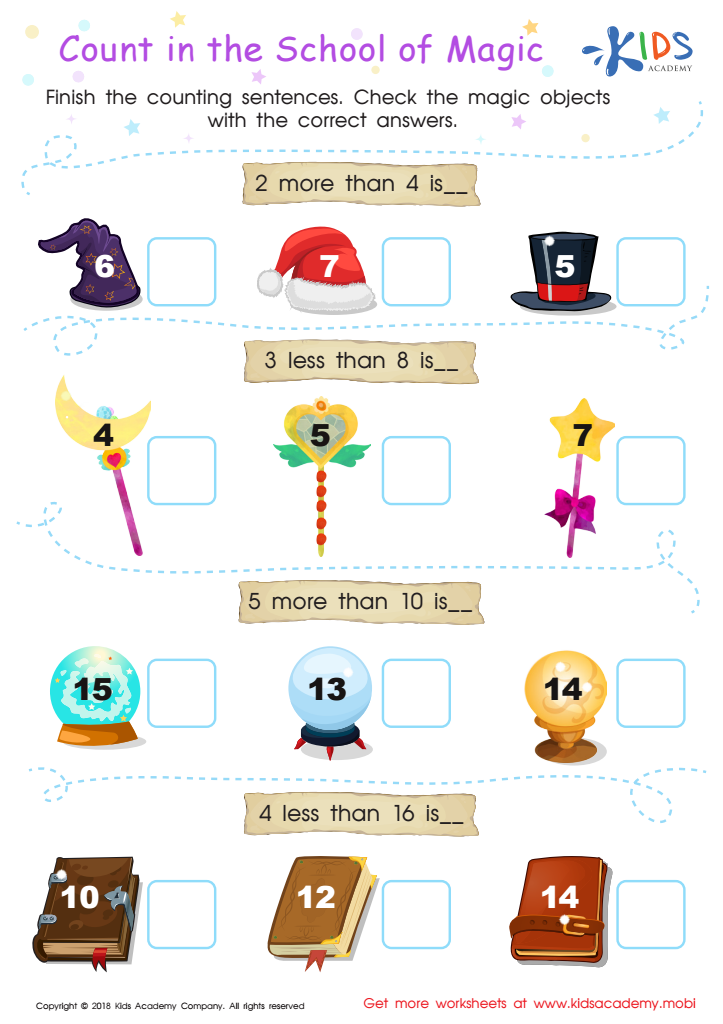
Count in the School of Magic Worksheet
Your math learners can explore the School of Magic with this worksheet. They'll read equations with addition and subtraction numbers under 20, count back and forth to find the answer, then complete the counting sentences. Fun pictures and easy accuracy make it an enjoyable and successful learning experience.
Count in the School of Magic Worksheet
Worksheet
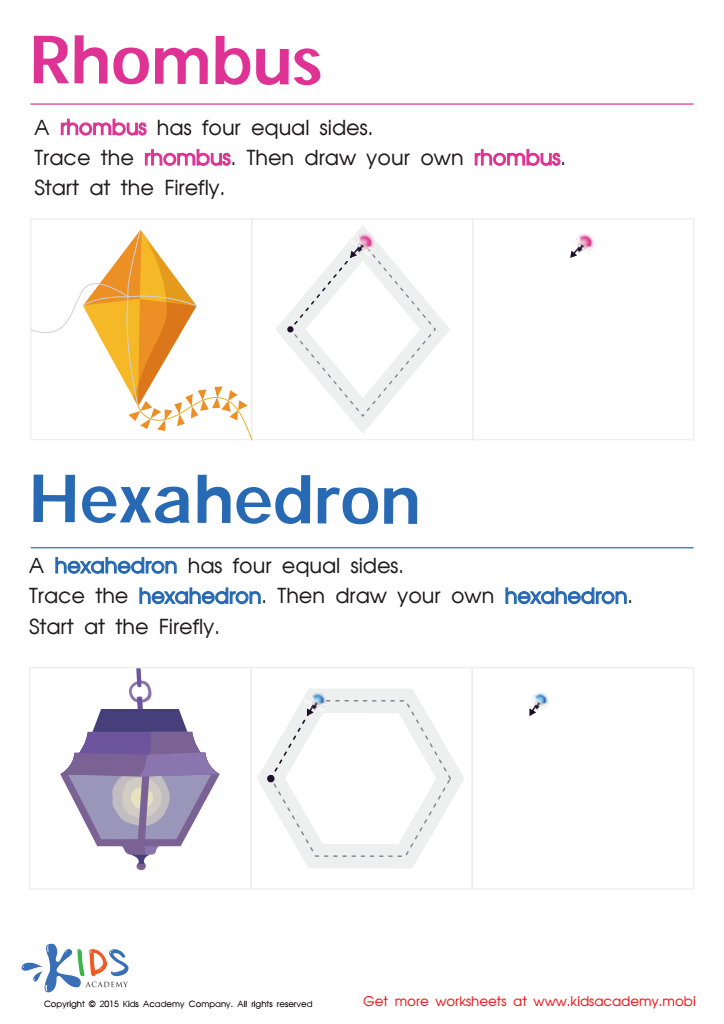
Draw a Rhombus And a Hexahedron Printable
Trace, draw and recognize shapes like rhombus, hexahedron and more! Start with the firefly to trace a rhombus, then use the yellow kite to remember the shape. Use the light to trace and draw a hexahedron. Learn with the best!
Draw a Rhombus And a Hexahedron Printable
Worksheet
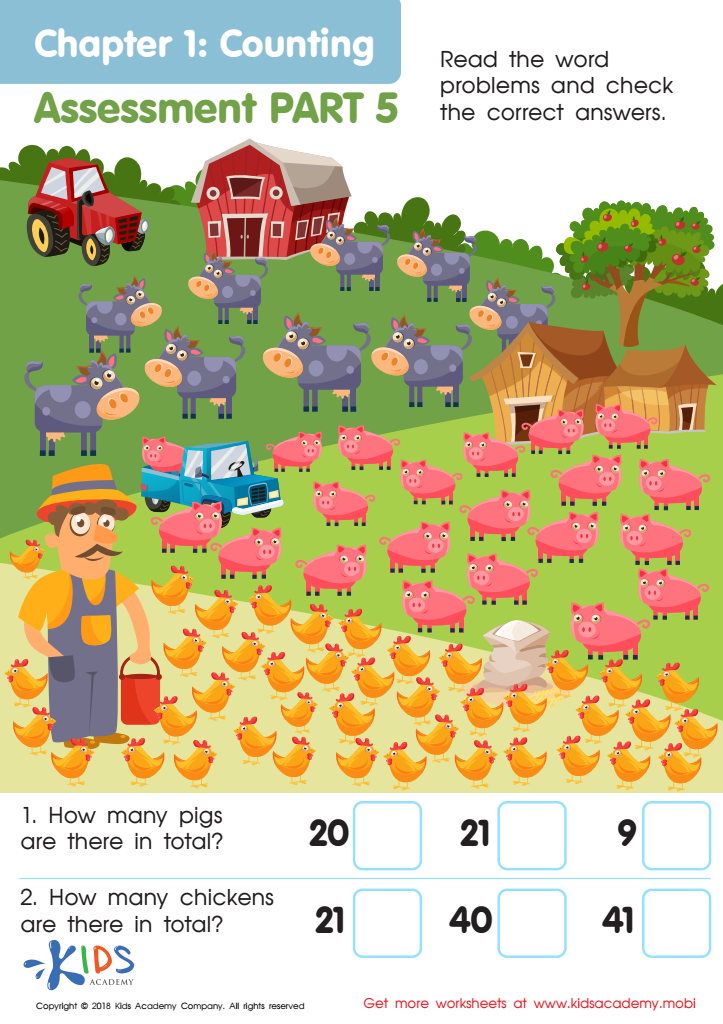
Counting: Assessment 5 Worksheet
Let your kids have fun counting farm animals on this worksheet! Help the farmer count the animals and have your child check the answers to assess their counting skills. Read the word problem at the bottom of the page and count the animals together. It's an entertaining way to practice counting and have a great time!
Counting: Assessment 5 Worksheet
Worksheet
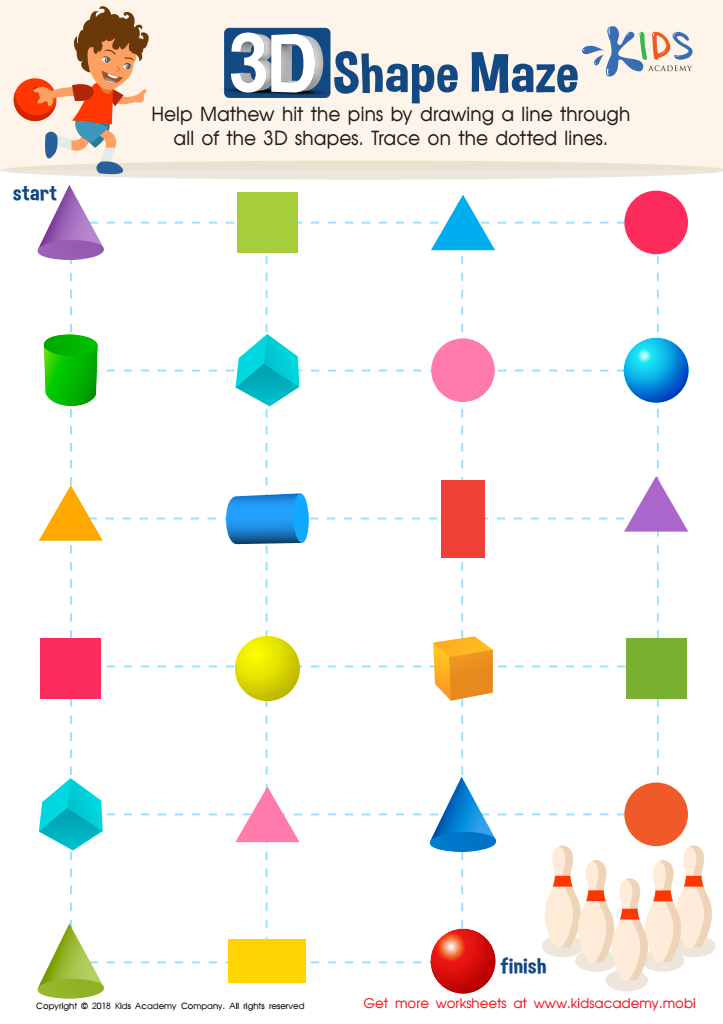
Shapes Maze Geometry Worksheet
Boost your child's geometry skills with this shapes maze worksheet! Help Matthew bowl a strike by guiding him through the maze to draw a line through every 3D shape. It's a fun and challenging way to practice foundational math skills!
Shapes Maze Geometry Worksheet
Worksheet
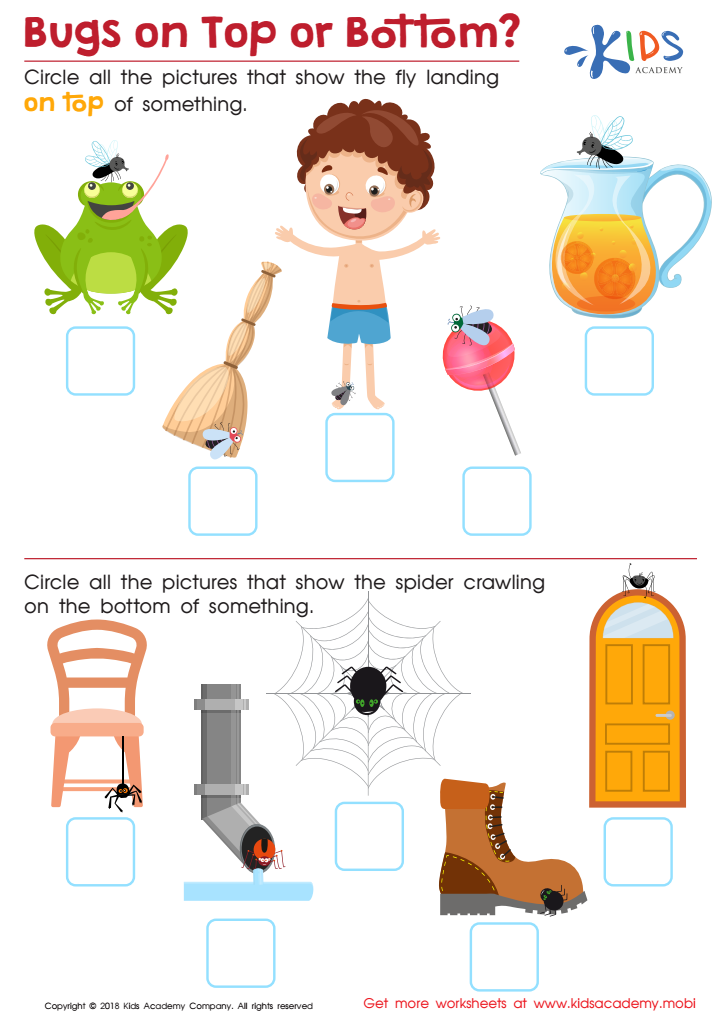
Bugs on Top or Bottom? Worksheet
Preschoolers need to learn directional skills such as top and bottom. This PDF worksheet helps them recognize bugs on the top or bottom using fun visuals. It builds their spatial reasoning while teaching prepositional words in an engaging way.
Bugs on Top or Bottom? Worksheet
Worksheet
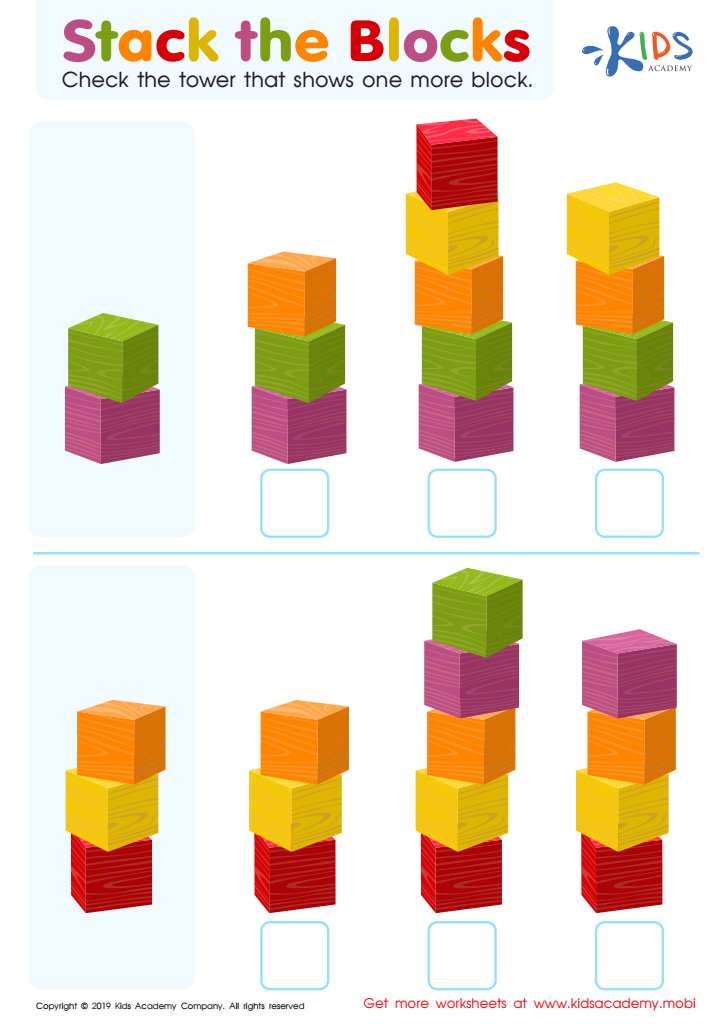
Stack the Blocks Worksheet
Playing with blocks is a great way for kids to learn! They can create patterns, shapes, and even count. In this worksheet, ask them to identify the colors and count each stack of blocks. If they can spot one extra block in the tower, even better! Encourage learning through play with these fun blocks.
Stack the Blocks Worksheet
Worksheet
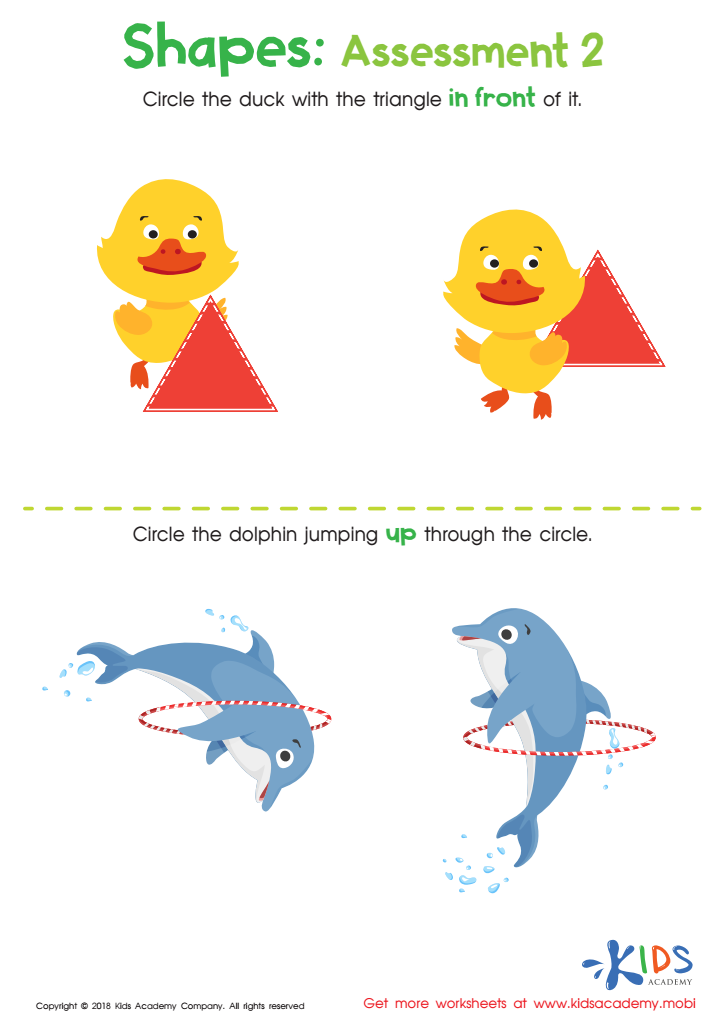
Geometry – Assessment 2 Worksheet
Preschoolers will learn to identify circles and triangles and practice using terms like "in front of" to place objects. This skill is key to further learning and is an important part of development.
Geometry – Assessment 2 Worksheet
Worksheet
Join Kids Academy for Free
Who is primarily going to use this learning content?


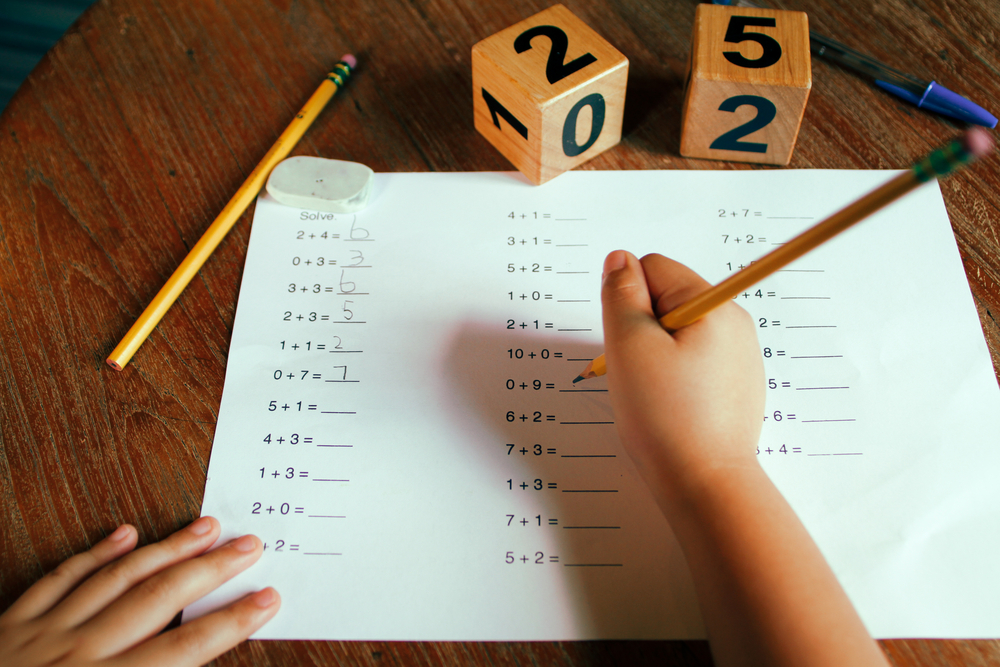





Spatial reasoning is a foundational skill that significantly benefits young children, including those as young as four years old. For parents and teachers, nurturing this ability is crucial because it directly influences a child's success in later academic and real-world tasks. Essentially, spatial reasoning involves understanding the relationships between objects, navigating space, and manipulating shapes.
Developing strong spatial skills at an early age helps children in numerous ways. First, it enhances their ability to solve problems and think critically. When children play with building blocks or solve simple puzzles, they learn to visualize and rotate objects in their minds. This sets the groundwork for more complex mathematical concepts such as geometry and algebra in their future education.
Moreover, spatial reasoning is closely linked to STEM (Science, Technology, Engineering, and Mathematics) success. Studies have shown that early proficiency in spatial tasks predicts better performance in STEM fields later on. For instance, engineers and architects rely heavily on spatial reasoning to design and understand complex structures.
Lastly, spatial skills are practical and beneficial in everyday life, from navigating new environments to assembling furniture. By engaging four-year-olds in activities that promote spatial reasoning, such as drawing, playing with blocks, or using spatial language, parents and teachers give them a head start in academic achievement and day-to-day problem solving. Therefore, investing in spatial reasoning development is a fundamental step towards a child’s holistic growth.








