Visual perception development Math Worksheets for 4-Year-Olds
3 filtered results
-
From - To
Enhance your child's visual perception skills with our engaging Math Worksheets designed specifically for 4-year-olds! These worksheets offer a fun and interactive way to develop critical visual-spatial awareness through colors, shapes, patterns, and matching exercises. By incorporating playful activities, kids will improve their ability to recognize and differentiate visual elements, laying a strong foundation for early math skills. Ideal for homeschoolers and classroom settings, our worksheets encourage cognitive development while keeping young learners entertained. Explore our curated collection today, and watch your child gain confidence in their visual perception abilities while having loads of fun with numbers!
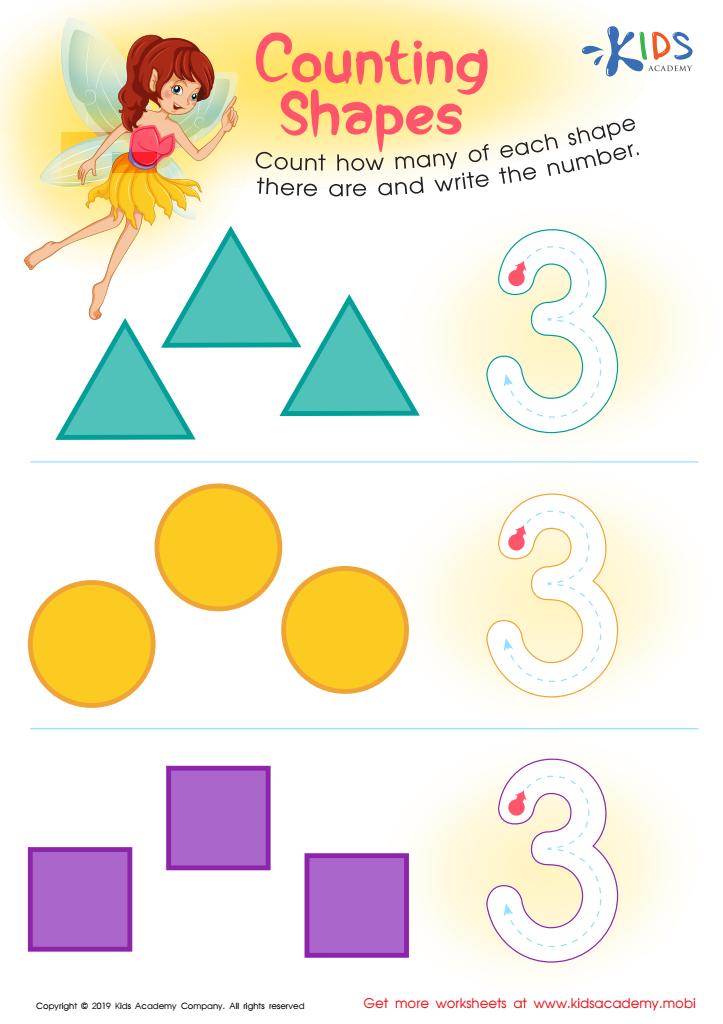
Counting Shapes Worksheet
 Assign to My Students

Math Matching Pairs Game: Monsterв's Socks Worksheet
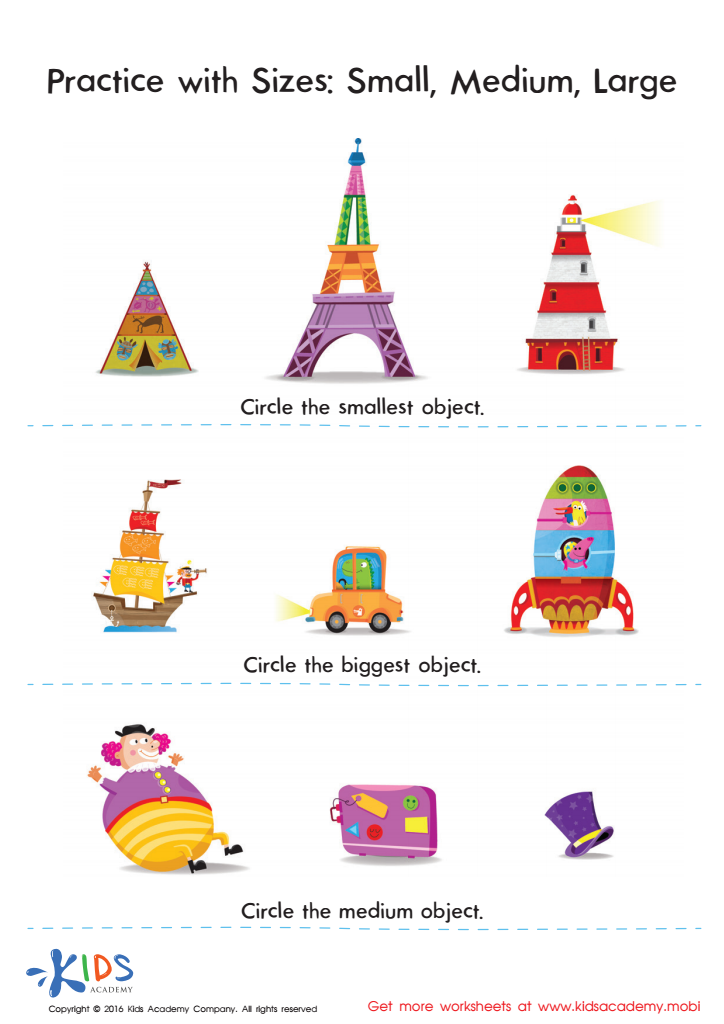







Visual perception development is a crucial aspect of early childhood learning, especially in mathematics for 4-year-olds. This developmental stage shapes how young children understand and interact with their environment, forming the foundation for more complex cognitive skills.
Children with well-developed visual perception skills can recognize shapes, sizes, patterns, and spatial relationships. These skills are essential for grasping basic mathematical concepts such as counting, sorting, and comparing quantities. By fostering visual perception in early math education, parents and teachers can help children identify numbers, understand numerical values, and successfully engage with problem-solving tasks.
Encouraging visual perception through interactive games, puzzles, and hands-on activities also promotes critical thinking and spatial reasoning. These skills not only support mathematical understanding but also enhance overall cognitive development. Moreover, strong visual perception can lead to improved reading ability as children learn to decode letters and understand their spatial arrangement on a page.
Ultimately, investing in visual perception development at this early age equips children with essential skills for school readiness and future academic success. Parents and teachers play a pivotal role in creating engaging learning experiences, ensuring that children have a solid foundation for their lifelong learning journey.








