Weather identification Math Worksheets for 4-Year-Olds
3 filtered results
-
From - To
Explore our engaging Weather Identification Math Worksheets specially designed for 4-year-olds! These worksheets blend early math skills with fun weather concepts, making learning both enjoyable and educational. Children will identify different weather conditions, such as sunny, rainy, or snowy, while enhancing their counting, matching, and sorting skills. Each activity encourages critical thinking and strengthens fine motor skills through coloring and tracing exercises. Perfect for at-home learning or preschool classrooms, our weather-themed worksheets foster a love for learning in a playful way. Download the worksheets today and watch your little ones shine as they discover the wonders of weather and math!
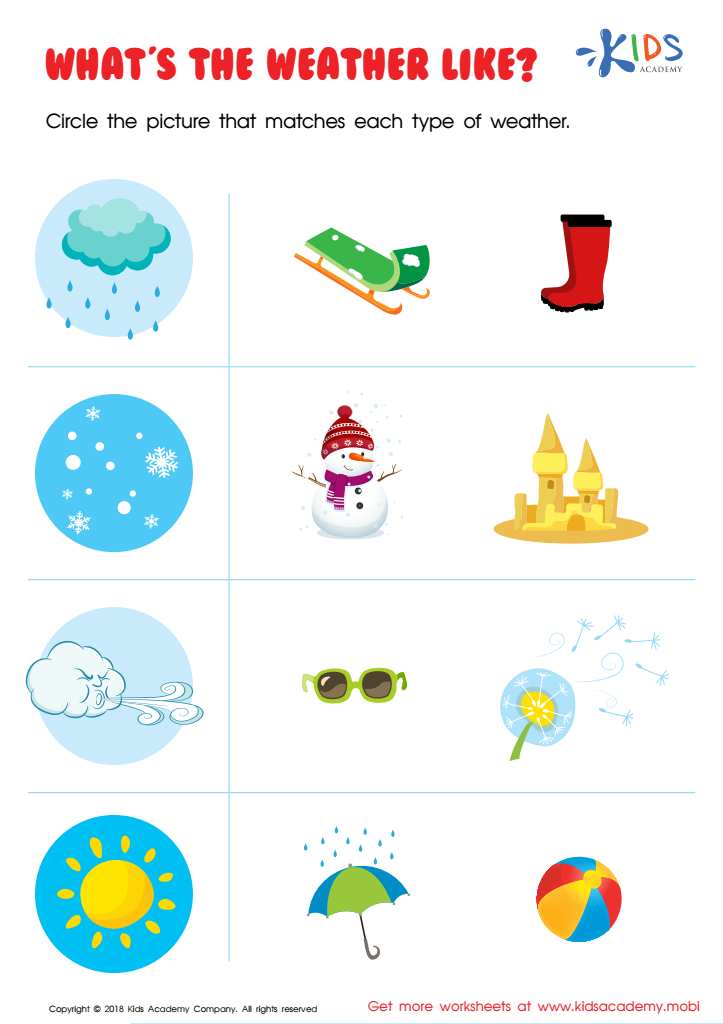
What's the Weather Like? Worksheet
 Assign to My Students
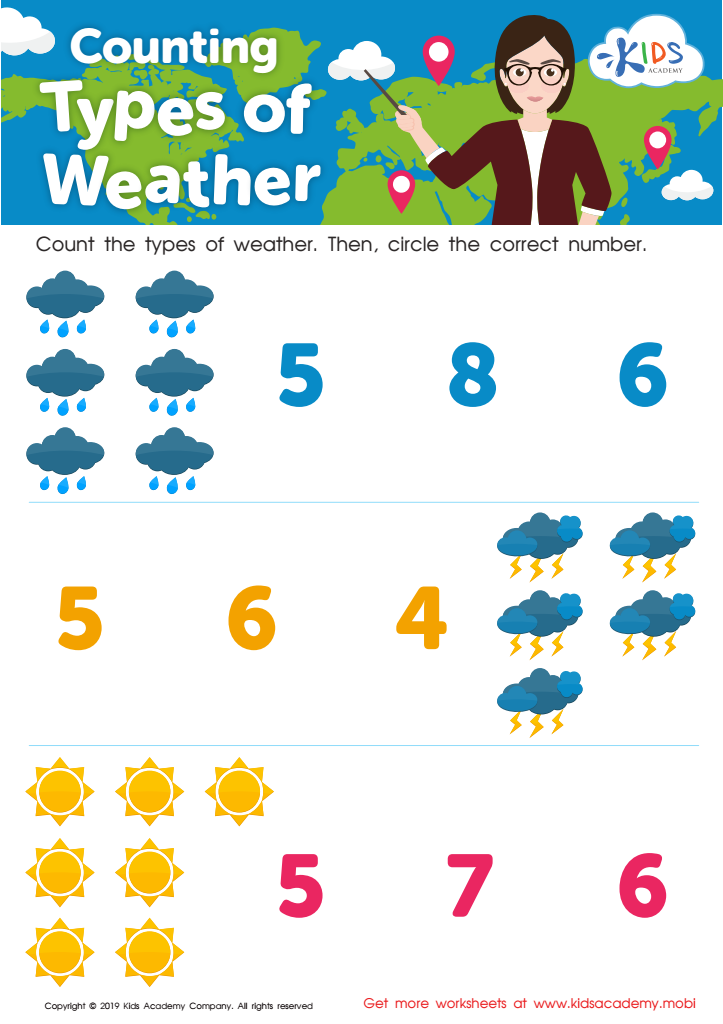
Counting Types of Weather Worksheet
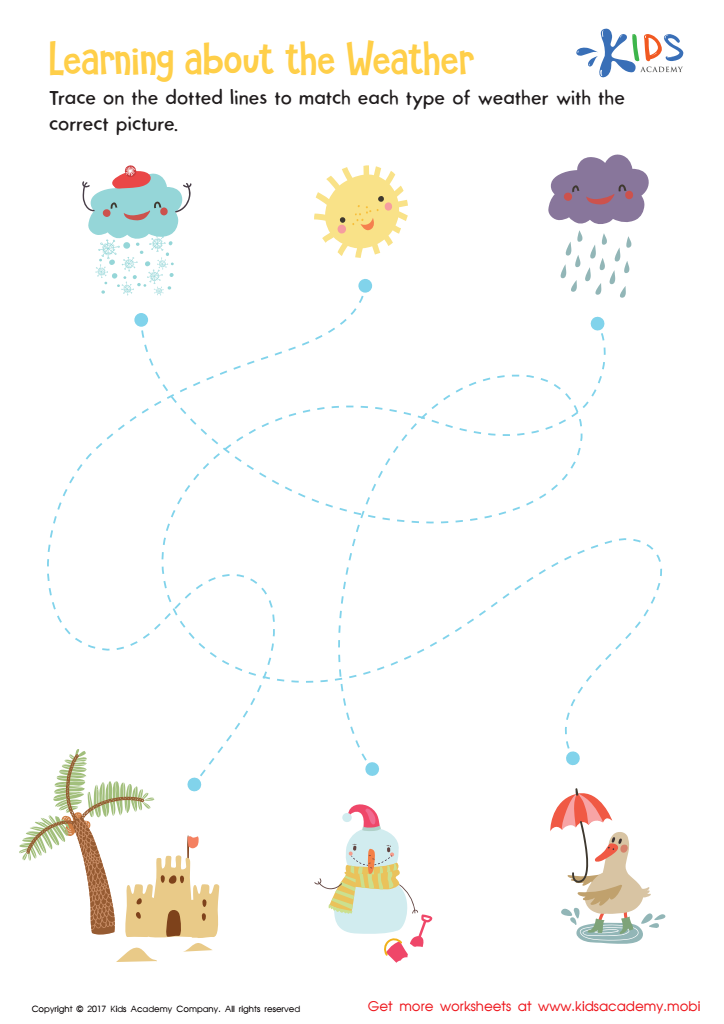








Teaching weather identification math to 4-year-olds offers a playful yet powerful way to foster early mathematical skills and scientific understanding. At this age, children are naturally curious about their environment, and weather offers an integrated learning opportunity that connects math to real-life experiences.
Understanding weather patterns and identifying types of weather (sunny, rainy, cloudy, etc.) helps children develop observational skills. By incorporating math—such as counting clouds, measuring rainfall using simple tools, or comparing temperatures—children learn basic mathematical concepts like numbers, shapes, and measurements in a fun context.
Additionally, weather education promotes critical thinking and vocabulary development. Children learn to articulate their observations and feelings about different types of weather, enhancing their language skills.
For parents and teachers, engaging children in weather identification math fosters a love for learning by blending exploration with education. It cultivates an early interest in science while building foundational math skills in an age-appropriate, enjoyable way. This dual emphasis not only aids cognitive development but also prepares children for future academic success. Encouraging children to think about the weather around them lays a solid groundwork for lifelong observational and analytical skills.








