Reading comprehension Multiplication Worksheets for 4-Year-Olds
3 filtered results
-
From - To
Introduce your preschooler to the exciting world of math with our Reading Comprehension Multiplication Worksheets designed specifically for 4-year-olds! These engaging worksheets combine fundamental multiplication concepts with reading comprehension skills, promoting both literacy and numeracy. Through fun illustrations and age-appropriate tasks, children will enhance their understanding of simple multiplication while practicing important reading skills. Each worksheet encourages kids to interpret clues and solve problems, making learning interactive and enjoyable. Foster a love for learning and set the stage for academic success with these carefully crafted resources. Engage your child’s mind today and watch them thrive in both reading and math!
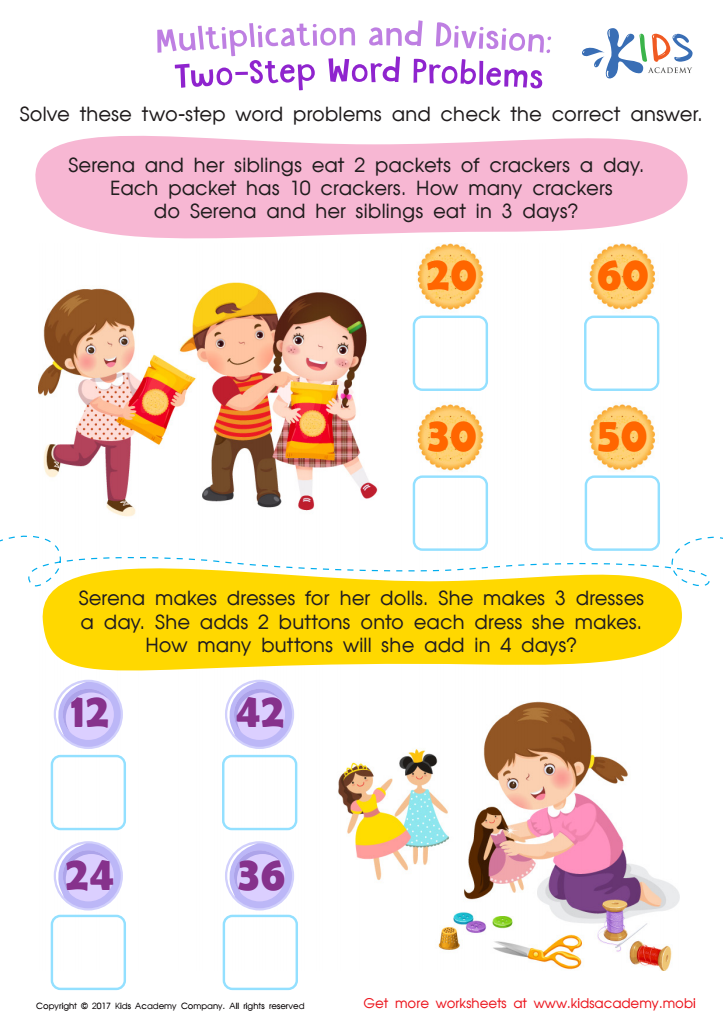
Two Step Word Problems Worksheet
 Assign to My Students
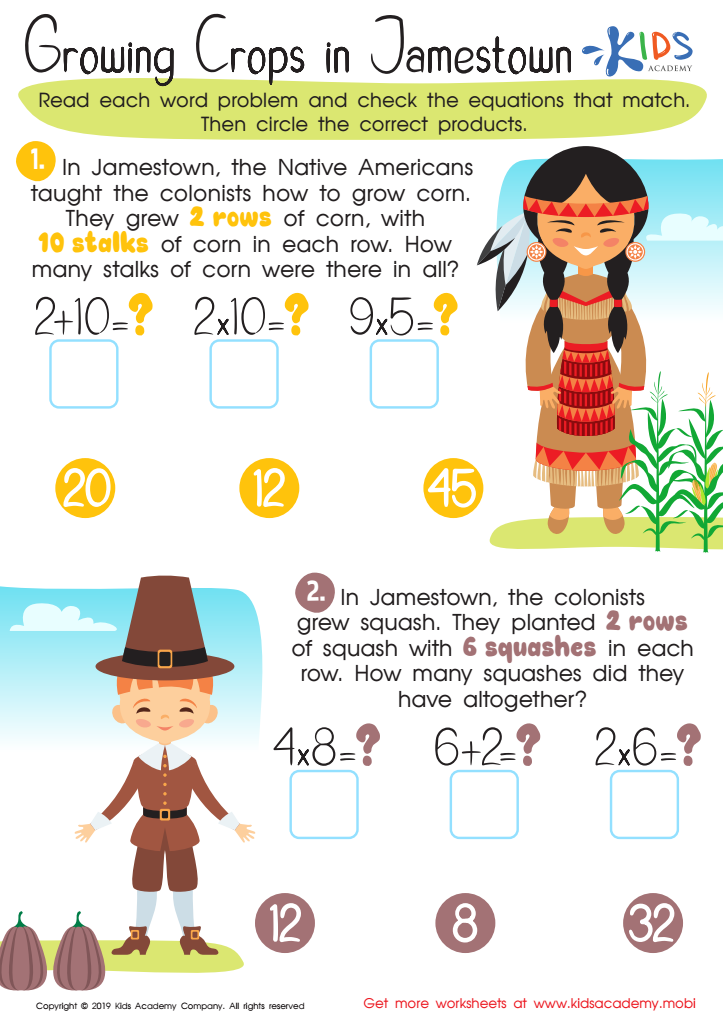
Growing Jamestown Worksheet
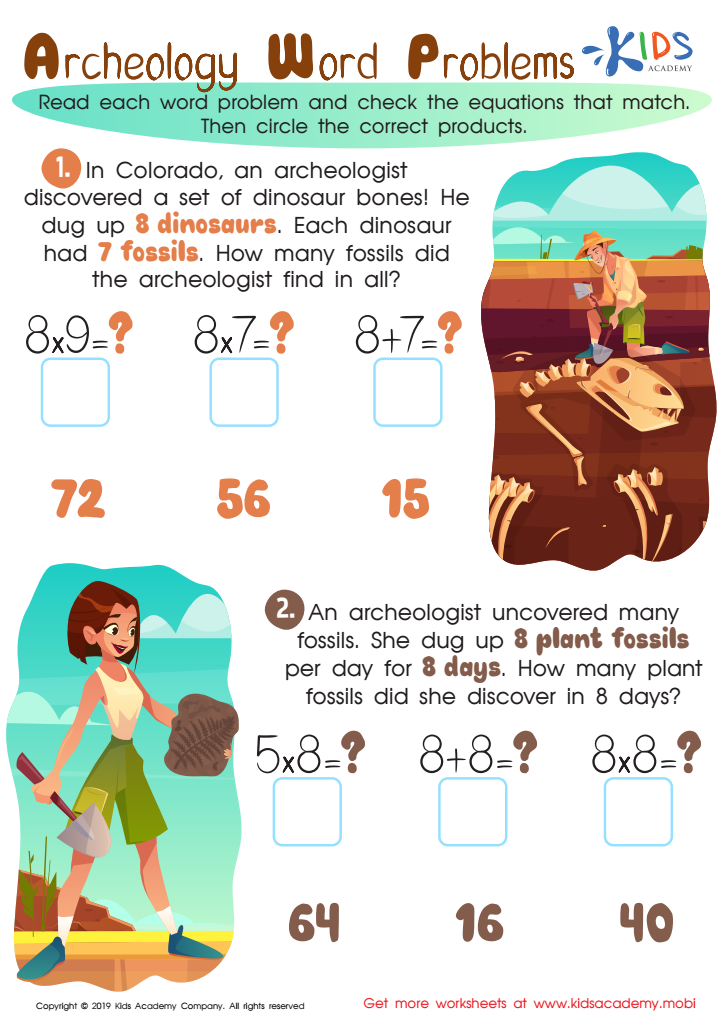
Archeology Word Problems Worksheet








Reading comprehension and early numeracy skills, such as multiplication, form the foundation for a child's lifelong learning journey. At age four, children's brains are exceptionally receptive, making this an ideal time for parents and teachers to nurture these crucial skills.
Reading comprehension is essential because it helps children make sense of the world around them. Engaging with stories boosts vocabulary, enhances critical thinking, and stimulates imagination. When children can connect ideas within the text, they develop the ability to analyze information, promoting profound cognitive development that lays the groundwork for future academic pursuits.
Introducing basic multiplication concepts at this early age can be equally beneficial. While formal multiplication knowledge is typically introduced later, playing with numbers through songs, stories, or games fosters an intuitive understanding of quantities and relationships. This mathematical foundation can alleviate future math anxiety and build confidence, as children learn to solve problems through exploration and play.
Ultimately, support in reading comprehension and basic numeracy from parents and teachers leads to a well-rounded educational experience, cultivates curiosity, and prepares young learners for success in school and beyond. Investing time in these areas during early development encourages a proactive approach to lifelong learning.








