Basic Math Skills Subtraction Worksheets for 4-Year-Olds
6 filtered results
-
From - To
Discover our engaging "Basic Math Skills: Subtraction Worksheets for 4-Year-Olds" designed to make learning subtraction fun and effective! These printable worksheets help young learners grasp essential math concepts, boosting their confidence and building a strong foundation for future math success. Through colorful illustrations and simple exercises, children will practice subtracting numbers, honing their counting skills, and improving their problem-solving abilities. Perfectly suited for preschoolers, these worksheets make math enjoyable and accessible. Join us at Kids Academy to support your child’s educational journey with our expertly crafted resources, tailored specifically for young minds. Welcome to the path of learning fun!
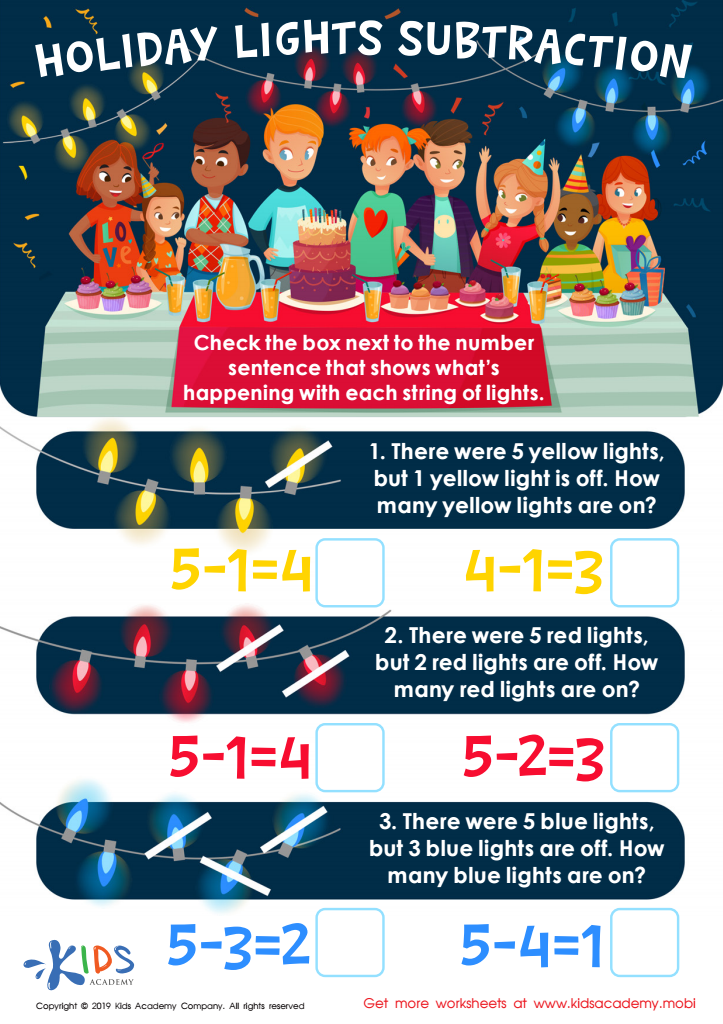
Holiday Lights Subtraction Worksheet
 Assign to My Students
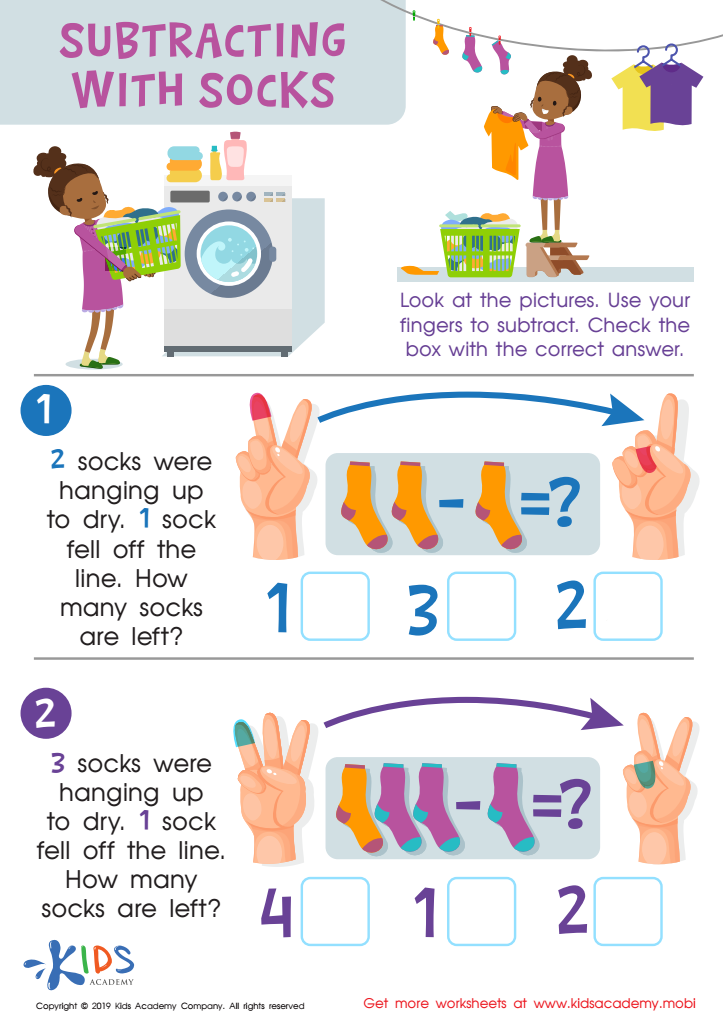
Subtracting Socks Worksheet
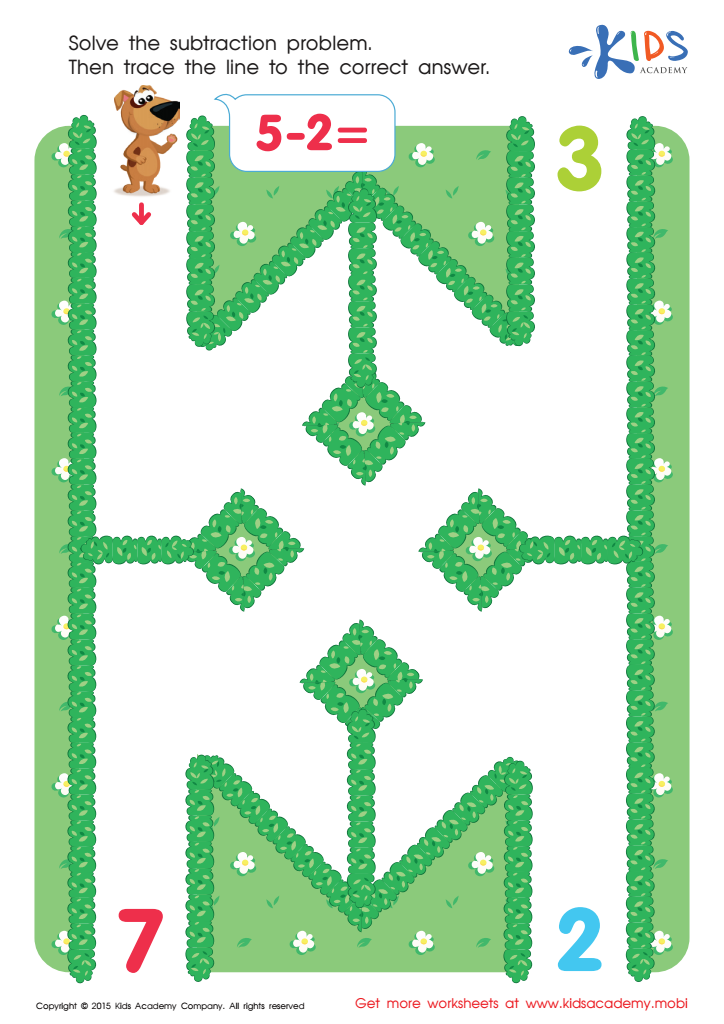
Five Minus Two Worksheet
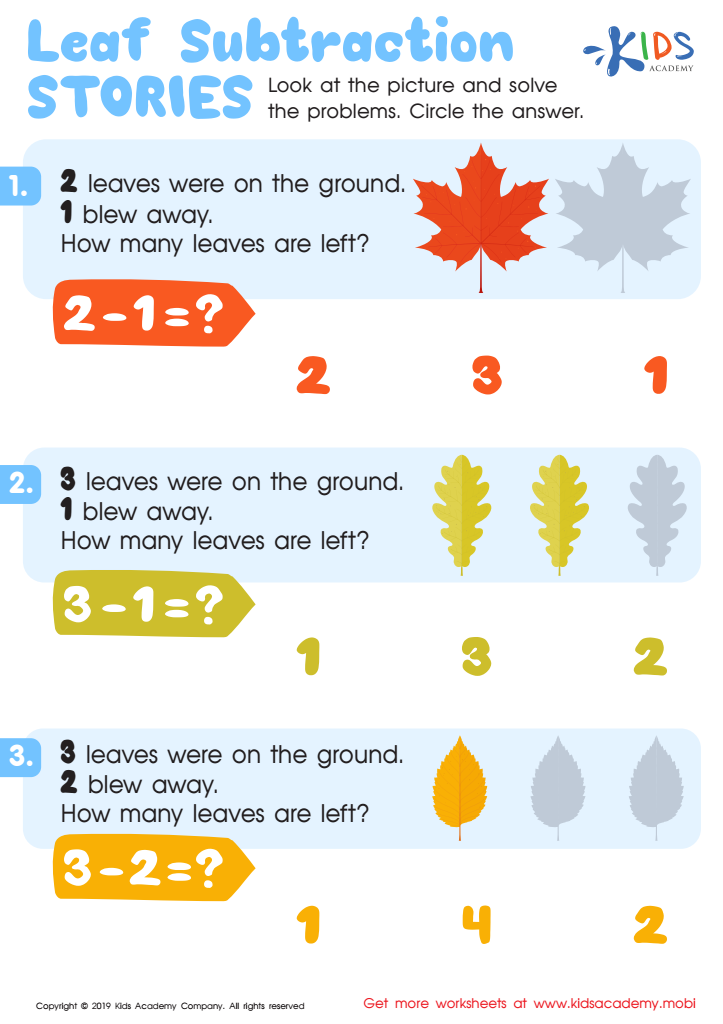
Leaf Subtraction Stories Worksheet
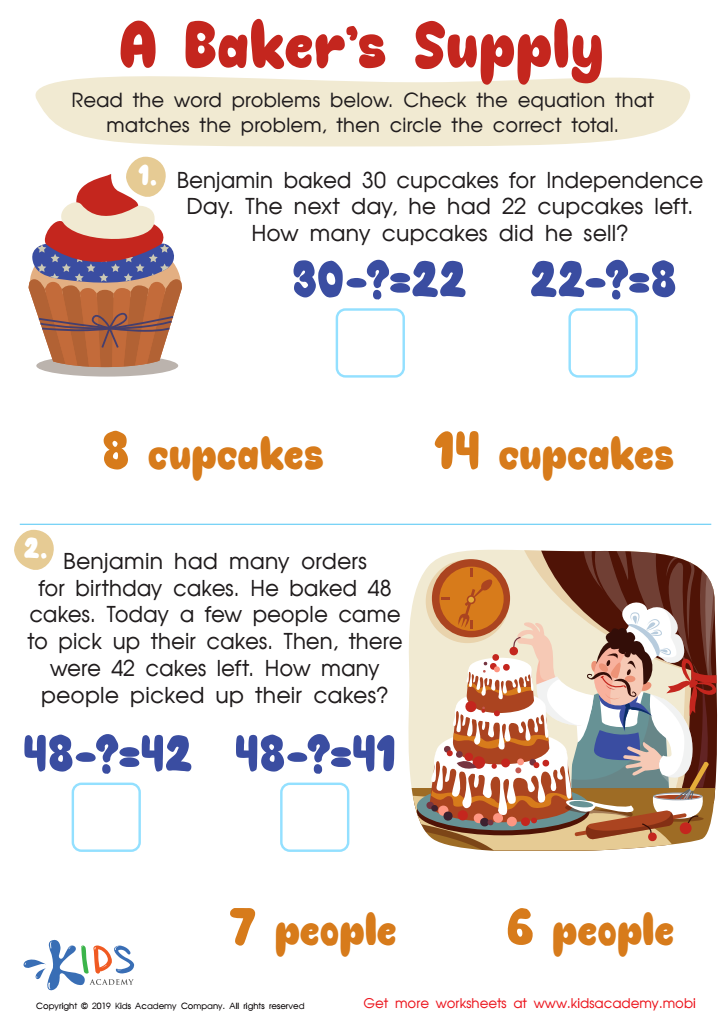
A Baker's Supply Worksheet
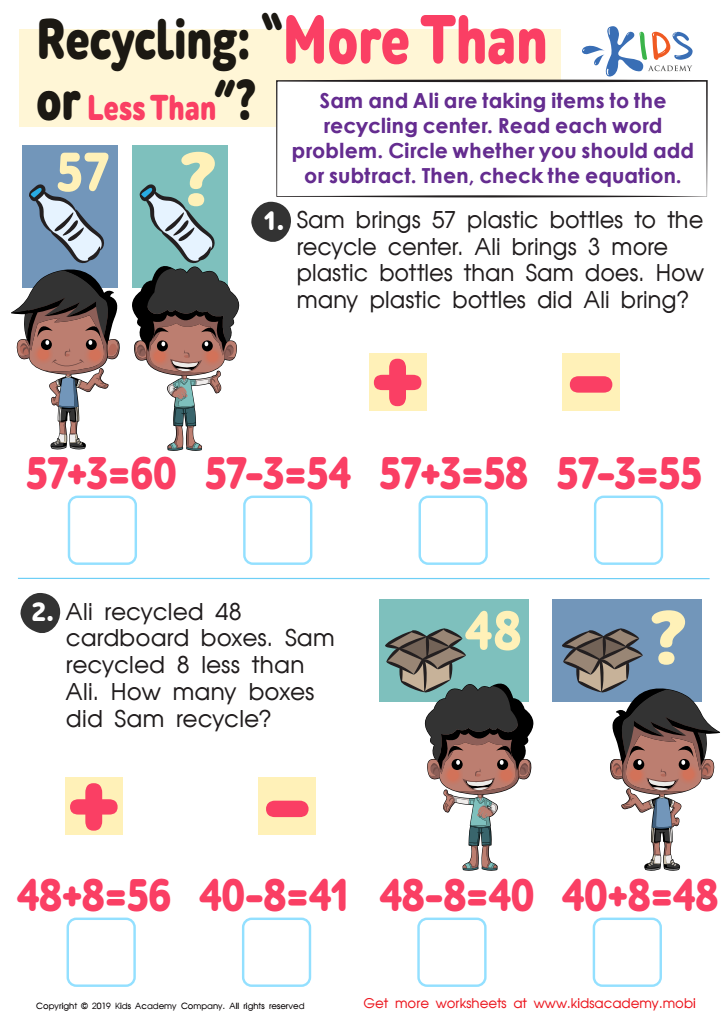
Recycling - More or Less Worksheet








Understanding basic math skills, including subtraction, is crucial for 4-year-olds, and both parents and teachers should prioritize this area for several significant reasons. Early math skills form the foundation for more complex mathematical concepts in the future. By mastering subtraction, young learners develop critical thinking and problem-solving skills that are applicable in everyday situations.
Subtraction helps children grasp the concept of quantities and understand number relationships, giving them a sense of how numbers interact with one another. This early exposure can enhance their cognitive abilities and improve their capacity for logical reasoning. Engaging in subtraction activities supports the development of fine motor skills and hand-eye coordination, which are essential for writing numbers and symbols accurately.
Furthermore, children who develop strong math skills early on are more likely to succeed academically, as these skills are linked to future achievement in both math and reading. Subtraction activities can also be an enjoyable way to bond with children, fostering a positive attitude towards learning and collaborative problem-solving. Introducing these concepts at a young age sets a solid foundation for lifelong mathematical proficiency, building their confidence and preparing them for a more structured educational environment. Therefore, parents and teachers alike should actively nurture these foundational skills through playful, supportive, and educational interactions.








