Cognitive Development Subtraction Worksheets for 4-Year-Olds
3 filtered results
-
From - To
Explore our engaging Cognitive Development Subtraction Worksheets designed specifically for 4-year-olds! These interactive worksheets aim to enhance early math skills by introducing the concept of subtraction in a fun and approachable way. Each worksheet incorporates colorful visuals and relatable scenarios, making it easier for young learners to understand the basics of subtraction. Our thoughtfully crafted activities not only support cognitive growth but also boost critical thinking and problem-solving skills. Perfect for preschool settings or at-home practice, these worksheets will captivate young minds while laying a foundation for future math success. Start your child's learning journey today!
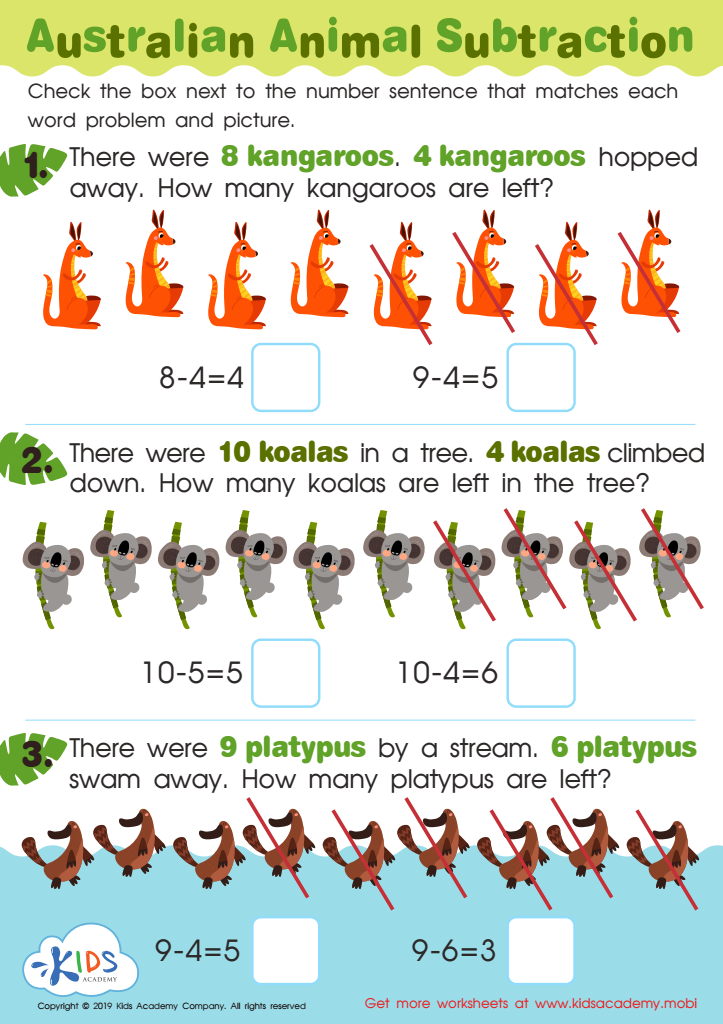
Australian Animal Subtraction Worksheet
 Assign to My Students
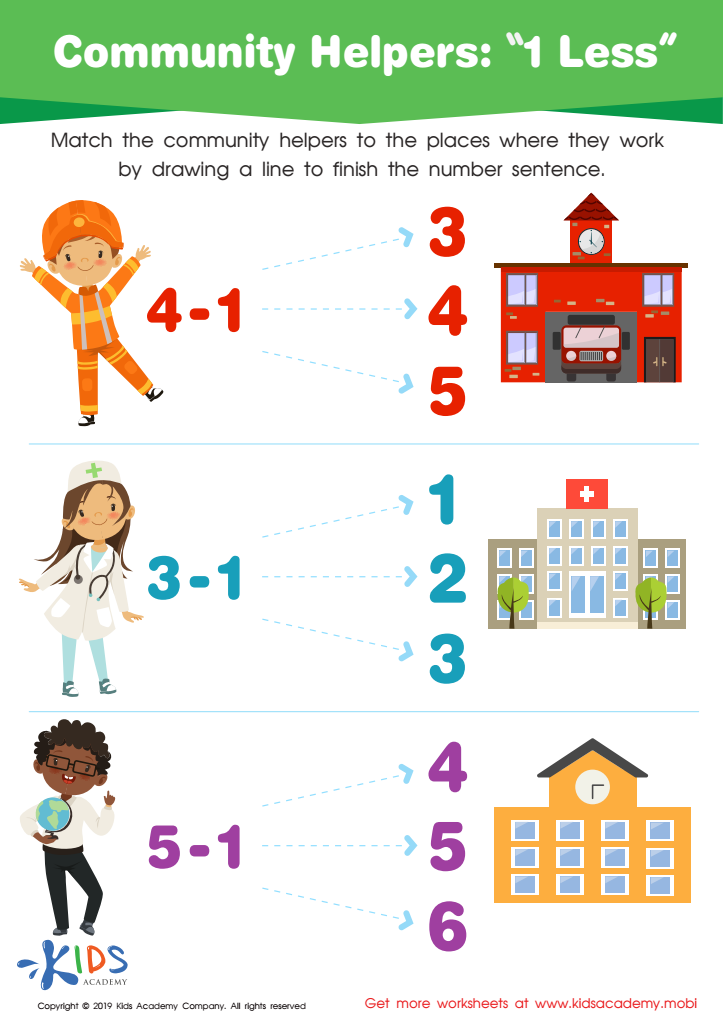
Community Helpers: 1 less Worksheet
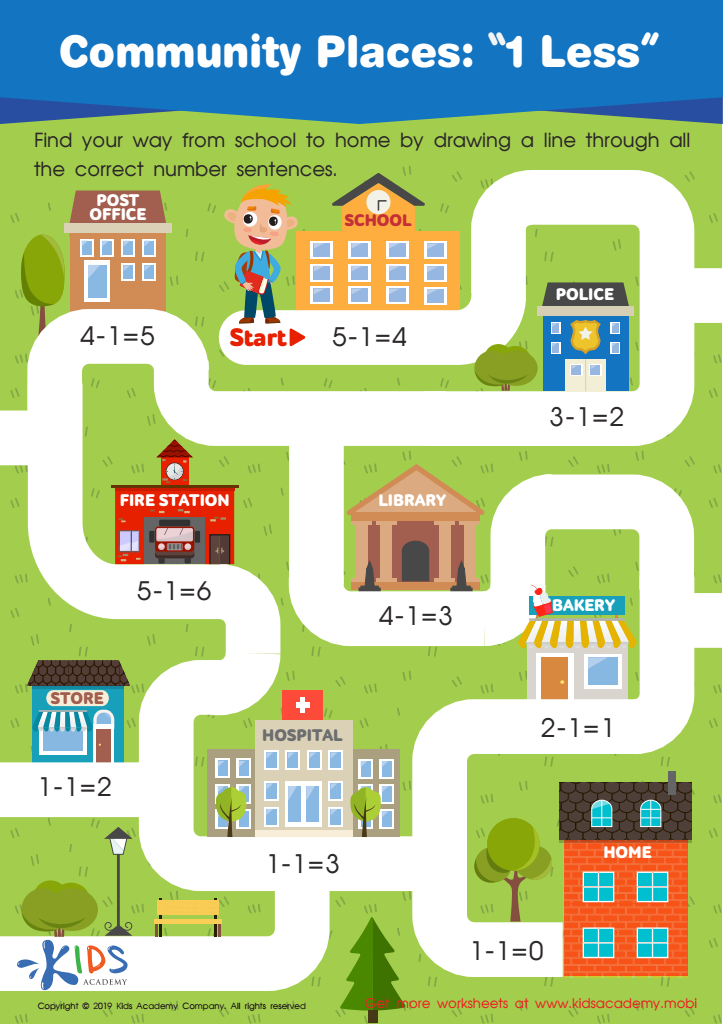
Community Places: 1 Less Worksheet








Cognitive development at the age of four is crucial as it lays the foundation for future learning and problem-solving skills. During this stage, children begin to develop their mathematical abilities, including subtraction, which plays a key role in understanding basic arithmetic and quantitative reasoning. It helps them grasp the concepts of more and less, fostering their critical thinking skills.
Fostering an early understanding of subtraction encourages children to explore numbers in a fun and engaging manner. Parents and teachers should care about this aspect of cognitive development because early experiences with math form attitudes toward learning and shape future academic performance. By incorporating early subtraction activities—such as using physical objects, visual aids, or games—children develop a sense of achievement and boost their self-confidence.
Moreover, these activities promote social skills as they often involve collaborative play, enhancing communication and teamwork abilities. Encouraging cognitive development in subtraction at this age helps children develop successful study habits and a love for learning, creating a strong foundation for future subjects in school. Ultimately, understanding subtraction contributes not only to academic success but also to real-world problem-solving contexts later in life. Hence, emphasizing this skill is essential for holistic child development.








